Whole life insurance earnings are credited through a combination of guaranteed minimum interest rates and discretionary dividends declared by the insurance company, which are tied to the financial performance of the insurer's general investment portfolio.
Understanding Whole Life Insurance and Cash Value
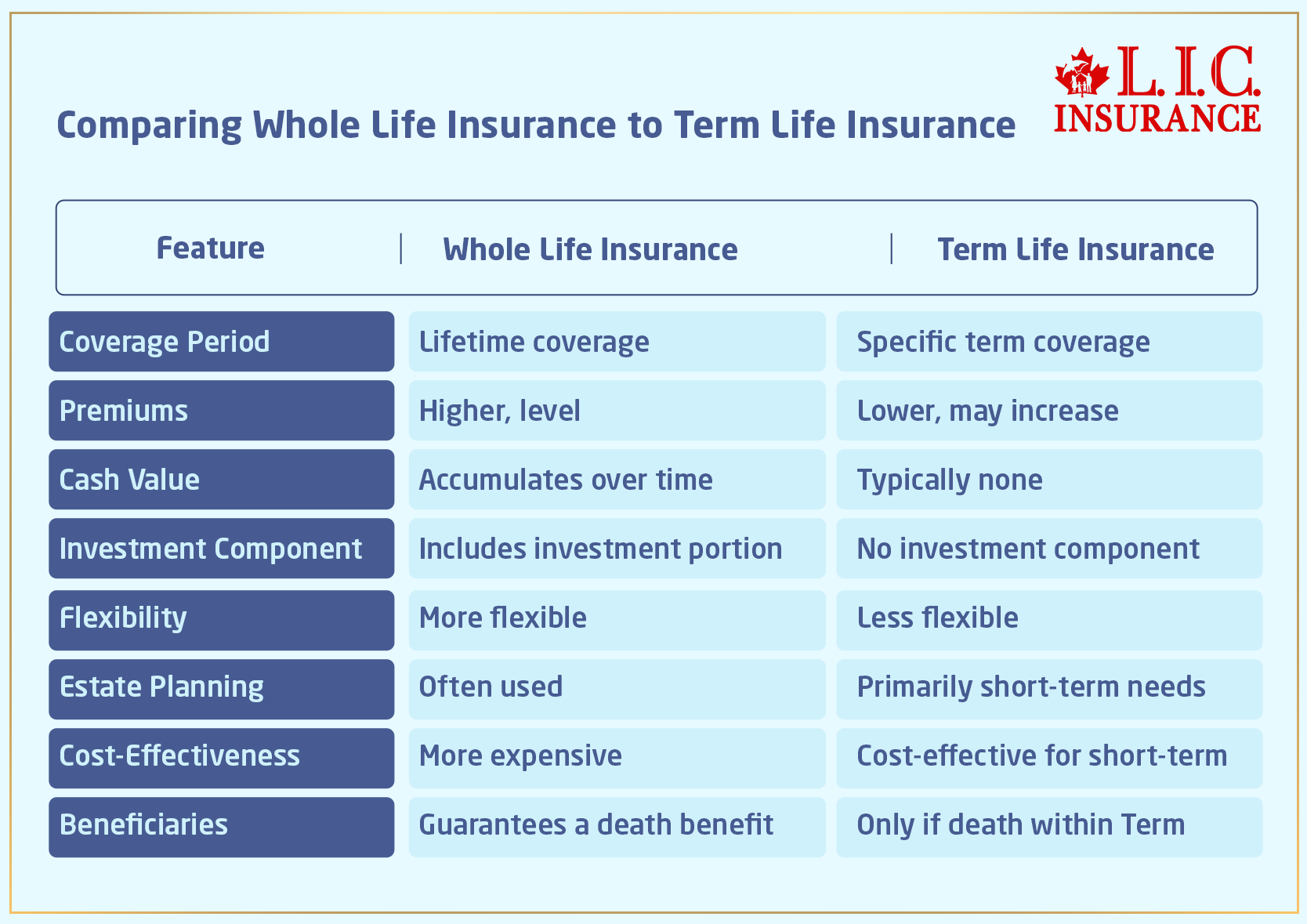
Whole life insurance is a type of permanent life insurance designed to provide coverage for the entire life of the insured, provided that the required premiums are paid. Unlike term life insurance, which only offers a death benefit for a specified period, whole life insurance features a savings component known as the cash value. A portion of every premium payment made by the policyholder goes toward covering the cost of insurance and administrative fees, while the remainder is allocated to this cash value account.
The cash value grows over time on a tax-deferred basis. This means the policyholder does not pay taxes on the growth of the cash value as long as the money remains inside the policy. Policyholders can access these accumulated funds during their lifetime through policy loans or withdrawals, or they can surrender the policy for its cash surrender value. Because the cash value serves as a cornerstone for both long-term financial planning and liquidity, understanding how earnings are credited to this account is essential for policyholders evaluating the performance and stability of their contracts.
The Mechanics of Guaranteed Interest Rates
At the foundation of whole life insurance earnings is the guaranteed interest rate. When a policy is issued, the insurance company contractually guarantees that the cash value will grow at a minimum specified annual rate, regardless of broader economic downturns, stock market volatility, or declining yields in fixed-income markets. This guarantee is backed by the financial strength and claims-paying ability of the issuing life insurance company.
How the Guarantee Works
- Minimum Floor: The guaranteed rate establishes a strict financial floor. Even if the economy experiences severe deflation or negative market returns, the credited rate to the policy's cash value will never drop below this stated minimum.
- Calculation Period: Interest is typically calculated on a daily or monthly basis and credited to the cash value account periodically, often compounded annually.
- Long-Term Stability: This feature makes whole life insurance a conservative asset class, protecting principal against market risk. However, the trade-off for this absolute safety is that the guaranteed rate alone is usually modest, often ranging between 1.5% and 4% depending on the prevailing interest rate environment at the time the policy was issued and the regulatory rules governing reserve requirements.
The Role of Dividends in Earnings Creditation
While the guaranteed interest rate provides a baseline, mutual life insurance companies and some stock companies issue participating whole life policies that offer dividends. Dividends represent the return of a portion of the premium paid by the policyholder, reflecting the difference between the insurance company's actual experience and the assumptions used to price the policy.
Insurance companies base their pricing on three primary factors: mortality (actual deaths versus projected deaths), expenses (the cost of running the business), and investment returns (how well the company's asset portfolio performs). If the insurer experiences lower mortality rates, reduced operating expenses, or higher-than-expected investment earnings, a surplus is generated. Portions of this surplus are distributed to eligible policyholders as dividends.
Dividend Options Available to Policyholders
Once dividends are credited to a policy, the policyholder typically has several options regarding how those funds are utilized to enhance the policy's value:
- Cash: The policyholder can elect to receive the dividend payment via check or direct deposit.
- Premium Reduction: Dividends can be applied directly to offset or reduce the out-of-pocket cost of upcoming premium payments.
- Paid-Up Additions (PUAs): Dividends can be used to purchase small, single-premium increments of additional whole life insurance. These additions increase both the overall death benefit and the cash value, which in turn generates more earnings in subsequent years.
- Accumulation at Interest: Dividends can be left on deposit with the insurance company to earn interest at a rate declared by the insurer, separate from the base policy's guaranteed interest rate.
How Insurers Manage the General Account
To understand how interest rates and dividends are credited, it is necessary to examine where the money goes. Premiums collected from whole life policyholders are pooled into the insurer’s general account. The insurance company's portfolio managers invest these pooled assets into a diversified mix of conservative, income-generating securities.
The primary objective of a general account is capital preservation and steady cash flow to meet future death benefit obligations and cash value growth requirements. Consequently, portfolios are heavily weighted toward:
- Investment-Grade Corporate Bonds: Providing stable, fixed interest income.
- Government and Municipal Bonds: Offering high security and predictable yields.
- Commercial Mortgages and Real Estate: Providing diversification and yield enhancement.
- Policy Loans: Loans taken by policyholders against their cash value, which earn interest paid directly back into the general account.
The overall yield generated by this general account forms the basis for the insurer's dividend scale interest rate. The dividend scale interest rate is the rate the company uses to calculate the investment component of participating policy dividends. While general account yields fluctuate with macroeconomic trends—such as Federal Reserve interest rate adjustments—the smoothing mechanisms employed by insurers help prevent wild swings in dividend payouts from year to year.
| Crediting Component | Description | Variability | Primary Driver |
|---|---|---|---|
| Guaranteed Interest Rate | The contractual minimum rate applied to the cash value. | Fixed | Policy contract terms and regulatory minimums. |
| Dividend Scale Interest Rate | The rate used to determine the investment portion of policy dividends. | Variable | Insurer's general account performance and surplus. |
| Paid-Up Addition Growth | Earnings generated by additional insurance purchased via dividends. | Variable | Dividend allocations and underlying mortality/interest factors. |
Factors That Influence Credited Rates Over Time
Several internal and external variables dictate how earnings are ultimately credited to a whole life insurance policy over its lifespan. Recognizing these factors helps policyholders set realistic expectations regarding cash value accumulation.
Macroeconomic Interest Rate Environment
Because insurance general accounts are dominated by fixed-income instruments like bonds, broad market interest rates exert a heavy influence. When prevailing interest rates rise, newly purchased bonds yield higher returns, which eventually feeds into higher general account yields and potentially higher dividend rates. Conversely, a prolonged low-interest-rate environment, such as the one experienced globally through much of the 2010s, compresses investment yields and can lead insurance companies to lower their dividend scale rates over time.
The Aging of the Block of Business
Insurance companies group policies into "cohorts" or blocks based on the year of issue and policy specifications. As a block of policies ages, the mortality costs increase because the insured population is growing older. However, the cash value of surviving policies also grows larger, generating more internal investment income. The net financial experience of these specific cohorts directly impacts the dividends distributed to that group.
Insurer Operating Efficiency and Financial Strength
An insurer's internal expense management plays a vital role. Companies that leverage modern technology, maintain disciplined underwriting standards, and keep administrative overhead low can retain a larger surplus. This efficiency directly supports more competitive dividend crediting. Additionally, an insurer's overall financial health, as evaluated by rating agencies like AM Best, Moody's, and Standard & Poor's, reflects its capacity to maintain stable crediting rates through economic cycles.
Comparing Whole Life Crediting to Other Insurance Types
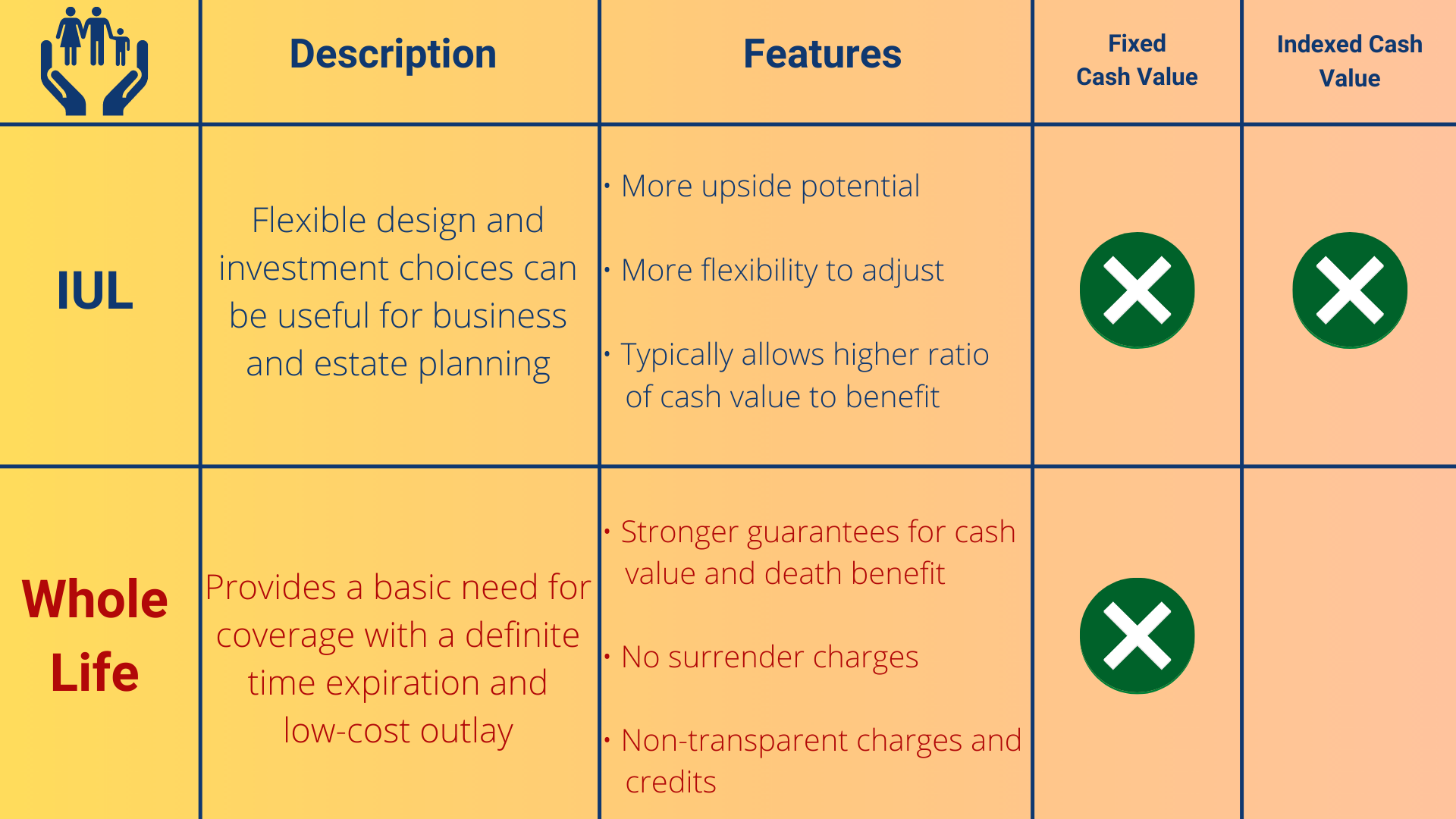
It is helpful to contrast how whole life insurance credits earnings with the mechanisms used by other permanent life insurance products, such as universal life or variable life, to fully grasp its distinct risk-return profile.
- Universal Life (UL): UL policies offer adjustable premiums and unbundled pricing. Interest credited to a universal life policy is typically tied to current market rates (often indexed to a short-term benchmark like the US Treasury yield) subject to a lower guaranteed floor. If market rates drop, the credited rate drops, which can require the policyholder to pay higher premiums to keep the policy from lapsing.
- Indexed Universal Life (IUL): IUL earnings are tied to the performance of an external market index, such as the S&P 500. While they feature a floor (often 0%) to protect against market losses, earnings are subject to participation rates and caps, meaning the policyholder does not receive the full upside of the market.
- Variable Life (VL): In a variable life policy, the cash value is directed into separate accounts that function similarly to mutual funds, holding stocks, bonds, and money market instruments. Earnings are completely dependent on market performance, offering higher potential growth coupled with the risk of principal loss.
In contrast, traditional whole life insurance removes market volatility from the equation entirely for the base cash value, relying on the insurer's conservative general account and dividend mechanisms to provide steady, predictable, albeit conservative, accumulation.
Frequently Asked Questions
Can the interest rate or cash value earnings on my whole life policy ever be negative?
No. The guaranteed minimum interest rate ensures that your cash value will never experience negative earnings due to market downturns or poor insurer performance. Even if the insurer's dividend rate drops to zero, the base guaranteed interest rate will continue to credit positive growth to your cash value each year.
Are the earnings credited to my whole life cash value taxable?
The earnings credited to your whole life insurance cash value are tax-deferred. You do not owe income tax on the interest or dividends as they accrue inside the policy. Taxes only apply if you surrender the policy for an amount exceeding your cost basis (total premiums paid) or if the policy lapses with an outstanding loan balance that exceeds the cost basis.
What is the difference between the guaranteed rate and the dividend scale interest rate?
The guaranteed rate is the absolute minimum rate of interest the insurance company is legally obligated to credit to your cash value by contract. The dividend scale interest rate is an estimated, non-guaranteed rate used to calculate dividends based on the actual performance of the insurer's investment portfolio, mortality experience, and operating expenses.
Can an insurance company change the guaranteed interest rate on an existing policy?
No. The guaranteed interest rate is established at the time the policy is purchased and remains locked in for the entire life of the contract. However, for participating policies, the dividend scale interest rate can change annually based on the insurer's financial performance.
How do policy loans affect the earnings credited to my cash value?
When you take a loan against your cash value, the insurance company typically uses a portion of your cash value as collateral. Many mutual insurers use a method called "direct recognition," where the cash value used as collateral receives a different (often lower) dividend interest rate compared to the unencumbered cash value. Non-direct recognition companies apply the same dividend rate regardless of whether a loan is outstanding, though the loan itself incurs an interest charge.
Next Actions for Policyholders
To effectively manage a whole life insurance policy and monitor its earnings performance, policyholders should review their annual policy anniversary statements closely. Examine the ledger to observe how much of the cash value growth is derived from the guaranteed interest rate versus paid-up additions or dividend accumulations. If you are considering purchasing a new policy, request a formal illustration from the insurance company that details both the guaranteed values and current scale projections, and evaluate the historical dividend performance of the insurer over the past several decades to gauge consistency.
Image Gallery
Select an image to open it in a new tab.



Omar Farooq
EdTech Innovation and Virtual Pedagogy Journalist
