What Is the Upper West Side Known For? Culture, Architecture, and Neighborhood Charm
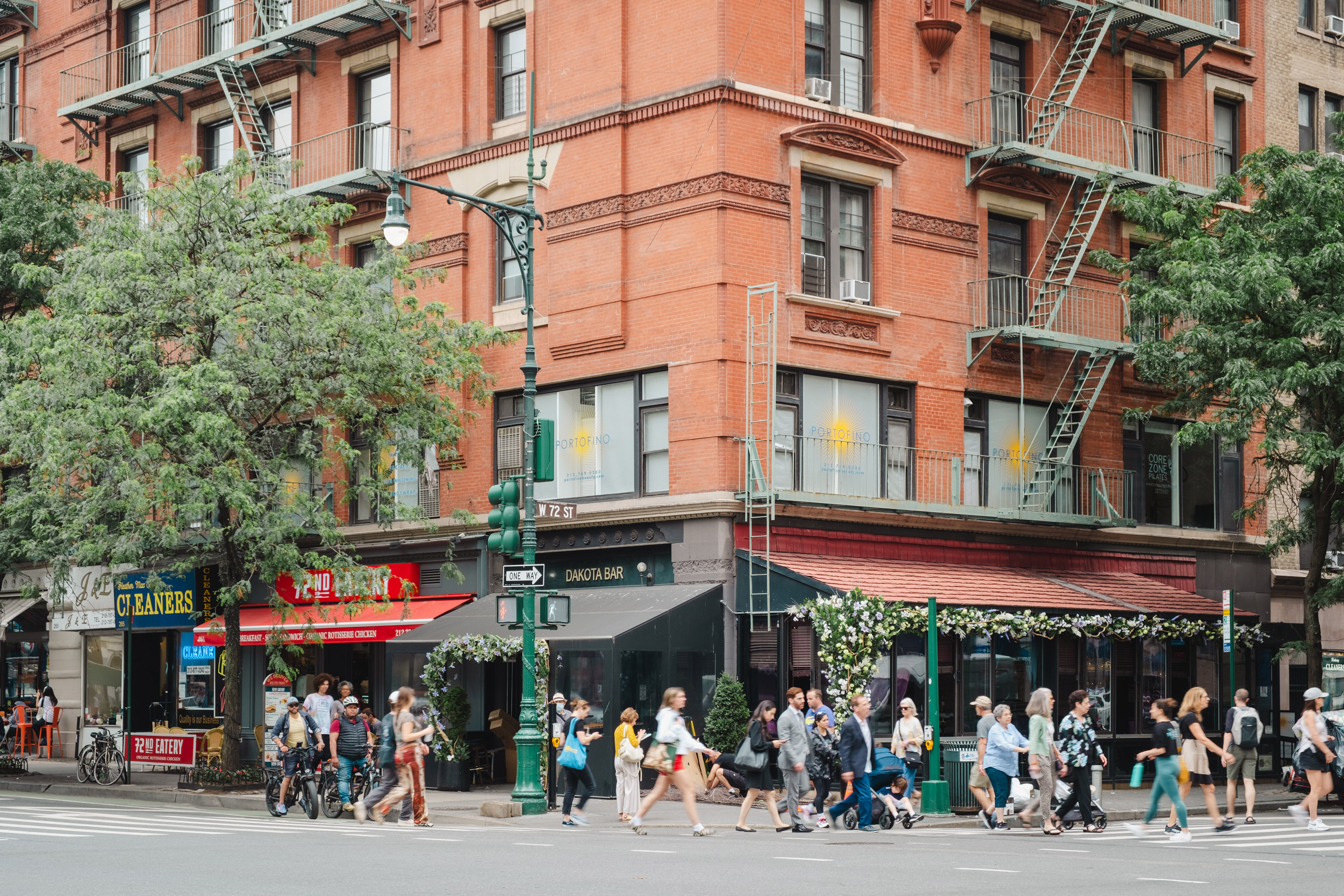
The Upper West Side of Manhattan is universally known for its rich cultural institutions, grand pre-war residential architecture, world-famous urban parks, and relaxed intellectual atmosphere. It houses iconic institutions like Lincoln Center and the American Museum of Natural History, alongside storied food landmarks like Zabar's and famous residential buildings like The Dakota.
Defining the Upper West Side: Location and Geography
The Upper West Side (UWS) occupies a prime parcel of Manhattan real estate. Geographically, the neighborhood is bounded by Central Park to the east, the Hudson River (and Riverside Park) to the west, 59th Street (Columbus Circle) to the south, and 110th Street (Cathedral Parkway) to the north.
Unlike many commercial centers in Midtown or Downtown Manhattan, the Upper West Side developed primarily as a residential haven. Its grid layout features several distinct avenues running north to south, each possessing its own personality:
- Central Park West: Lined with grand co-op towers, historic apartment buildings, and entrance points to Central Park.
- Columbus Avenue: A bustling commercial strip packed with boutiques, outdoor dining cafes, and local services.
- Amsterdam Avenue: Famous for its vibrant bar scene, casual eateries, and neighborhood gathering spots.
- Broadway: The wide commercial spine carrying subway lines, major retail outlets, and historic architectural landmarks.
- West End Avenue and Riverside Drive: Quiet, tree-lined residential corridors defined by elegant pre-war apartment buildings and classic brownstones facing Riverside Park.
This physical layout creates a balanced environment where peaceful residential living exists just steps away from world-class dining, shopping, and public transit.
World-Class Cultural and Educational Institutions
A primary defining feature of the Upper West Side is its concentration of internationally recognized cultural and performing arts institutions.
- Central Park West / Central Park
- Lincoln Center for Performing Arts (Met Opera, NY Philharmonic, NYC Ballet)
- American Museum of Natural History
- New-York Historical Society
Lincoln Center for the Performing Arts
Spanning 16 acres between West 62nd and 65th Streets, Lincoln Center is one of the premier performing arts complexes in the world. Established in the late 1950s and 1960s as part of urban renewal initiatives, it serves as the home base for major artistic organizations:
- The Metropolitan Opera: Performing in the iconic Metropolitan Opera House, renowned for its massive scale and acoustics.
- The New York Philharmonic: Housed in David Geffen Hall, representing one of the oldest musical institutions in the United States.
- The New York City Ballet: Performing at the David H. Koch Theater.
- The Juilliard School: One of the world's most prestigious conservatories for dance, drama, and music.
Lincoln Center hosts year-round indoor concerts, outdoor summer festivals, film screenings, and public arts programming that draw millions of global visitors annually.
American Museum of Natural History (AMNH)
Occupying a multi-block complex from 77th to 81st Street on Central Park West, the American Museum of Natural History is one of the largest and most famous science museums on Earth. Founded in 1869, the museum encompasses 45 permanent exhibition halls, the Hayden Planetarium within the Rose Center for Earth and Space, and the Richard Gilder Center for Science, Education, and Innovation. It is world-renowned for its extensive collections of dinosaur fossils, taxidermy dioramas, gems, minerals, and anthropological artifacts.
New-York Historical Society
Located adjacent to the AMNH at 77th Street and Central Park West, the New-York Historical Society is New York’s oldest museum, founded in 1804. It houses an extensive collection of American artwork, historical artifacts, manuscript archives, and educational exhibits detailing the history of New York City and the nation.

Iconic Pre-War Architecture and Historic Residential Buildings
The Upper West Side contains one of the highest concentrations of late-19th and early-20th-century residential architecture in North America. The neighborhood's skyline along Central Park West is recognized around the world for its iconic twin-towered co-op buildings and historic Beaux-Arts structures.
Famous Residential Landmarks
| Building Name | Address / Cross Street | Architectural Style | Historic Significance |
|---|---|---|---|
| The Dakota | 1 West 72nd Street | Renaissance Revival | Completed in 1884; home to John Lennon and Yoko Ono; site of Lennon's death in 1980. |
| The San Remo | 145–146 Central Park West | Neo-Renaissance | Features twin English Baroque towers; historic home to numerous celebrity residents. |
| The Ansonia | 2109 Broadway (73rd-74th St) | Beaux-Arts | Opened in 1904 as a grand residential hotel; features ornate balconies and thick soundproof walls. |
| The Beresford | 211 Central Park West | Neo-Renaissance / Baroque | Designed by Emery Roth; notable for its three octagonal corner towers overlooking Central Park. |
| The Eldorado | 300 Central Park West | Art Deco | Designed by Margon & Holder with Emery Roth; famous dual-tower skyline profile. |
Brownstones and Historic Districts
Away from the broad avenues, the UWS side streets between Central Park West and Riverside Drive are lined with thousands of late-19th-century brownstones and townhouses. These homes showcase architectural styles ranging from Romanesque Revival and Renaissance Revival to Queen Anne and Neo-Grec. Large portions of the neighborhood are designated as official historic districts by the New York City Landmarks Preservation Commission to safeguard their architectural integrity.
Dual Park Access: Central Park and Riverside Park
One of the greatest quality-of-life benefits of the Upper West Side is that it is sandwiched directly between two major New York City green spaces.
- RIVERSIDE PARK (Hudson River waterfront, bike paths, clay tennis courts)
- WEST END AVENUE
- BROADWAY
- AMSTERDAM AVENUE
- COLUMBUS AVENUE
- CENTRAL PARK WEST (Strawberry Fields, Bethesda Terrace, Great Lawn, Reservoir)
Central Park (Eastern Border)
The eastern boundary of the Upper West Side grants immediate access to some of Central Park’s most famous features:
- Strawberry Fields: The living memorial to John Lennon, featuring the famous "Imagine" mosaic located near 72nd Street.
- The Jacqueline Kennedy Onassis Reservoir: A popular 1.58-mile running track offering sweeping views of the UWS skyline.
- Belvedere Castle and Delacorte Theater: Home to the Public Theater's annual summer Shakespeare in the Park performances.
- Sheep Meadow: A expansive lawn used for picnicking and sunbathing during warmer months.
Riverside Park (Western Border)
Designed by renowned landscape architect Frederick Law Olmsted (co-designer of Central Park), Riverside Park stretches along the Hudson River from 72nd Street to 158th Street. Unlike the heavily visited lawns of Central Park, Riverside Park provides a quieter, neighborhood-oriented environment. Key highlights include waterfront promenade walking and biking paths, public clay tennis courts, community gardens, skate parks, and the historic Soldiers' and Sailors' Monument at 89th Street.
Legendary Culinary Heritage and Local Food Markets
The Upper West Side has played a pivotal role in New York City’s food history, particularly regarding traditional Jewish specialty foods, gourmet markets, and classic European-style bakeries.
- UPPER WEST SIDE CULINARY INSTITUTIONS
- Zabar's (80th & B'way)
- Barney Greengrass (84th & Amsterdam)
- Gray's Papaya (72nd & B'way)
Iconic Culinary Landmarks
- Zabar's (Broadway at 80th Street): Established in 1934 by Louis and Lillian Zabar, this family-owned gourmet food market spans nearly a full block. It is world-famous for its smoked fish counter, hand-sliced lox, freshly roasted coffee beans, imported cheeses, and traditional Jewish deli items.
- Barney Greengrass (Amsterdam Avenue at 84th Street): Known as "The Sturgeon King," this historic deli has operated on the UWS since 1929. It retains its vintage interior and is celebrated for smoked sturgeon, whitefish, bagels, and egg dishes.
- Gray's Papaya (Broadway at 72nd Street): A beloved 24-hour New York institution famous for serving classic natural-casing all-beef hot dogs alongside fruit juices like papaya, coconut, and banana.
- Levain Bakery (74th Street off Amsterdam): Famous worldwide for its massive, thick, 6-ounce chocolate chip walnut cookies, drawing daily lines of locals and tourists alike.
Additionally, Columbus and Amsterdam Avenues feature a high concentration of sidewalk cafes, Italian trattorias, French bistros, and modern American gastropubs.
Pop Culture, Film, and Television Legacy
The Upper West Side's distinctive pre-war aesthetic, tree-lined streets, and iconic parks have made it one of the most filmed neighborhoods in television and movie history. It is frequently depicted as a hub for academics, writers, artists, intellectuals, and upper-middle-class families.
Notable Film and TV Connections
- Seinfeld: Though filmed largely on soundstages in California, the show is set on the Upper West Side. Jerry's apartment is located on West 81st Street, and the exterior of the famous "Monk's Diner" is Tom's Restaurant at 112th Street and Broadway.
- You've Got Mail (1998): Nora Ephron’s classic romantic comedy showcases UWS locations including Cafe Lalo, Riverside Park, Zabar's, and the neighborhood's independent storefronts.
- When Harry Met Sally... (1989): Features classic scenes set around the UWS, including the PlantShed flower shop and Central Park West.
- Only Murders in the Building: The fictional "Arconia" apartment building is represented by the real-life Belnord, a historic landmark pre-war building occupying a full block between 86th and 87th Streets on Broadway.
- The Marvelous Mrs. Maisel: Features classic UWS pre-war apartments along Riverside Drive and classic neighborhood settings representing 1950s New York.
- West Side Story: The legendary musical is set in the mid-20th-century working-class UWS neighborhood of San Juan Hill, which was demolished to make way for the construction of Lincoln Center.
Residential Character and Real Estate Overview
The Upper West Side is widely recognized as one of Manhattan's most desirable residential neighborhoods. It offers a quieter, more relaxed atmosphere compared to Downtown Manhattan, while providing more civic activity and street life than the Upper East Side.
- UWS RESIDENTIAL CORRIDORS
- Central Park West
- Grand pre-war co-ops
- Historic towers
- Highest market valuations
- West End Ave / Riverside
- Quiet residential feel
- Brownstones & classical blocks
- Direct river park access
- Central Park West
Real Estate Dynamics
- Housing Stock: Dominated by pre-war cooperative apartment buildings (co-ops), condominiums, and historic brownstones. Modern high-rise luxury condos are primarily concentrated along Broadway, Columbus Circle, and the Riverside South development along the Hudson River.
- Community Vibe: Family-friendly, stroller-heavy, dog-friendly, and popular with long-term residents. The neighborhood historically maintained a strong political, literary, and intellectual culture due in part to its proximity to Columbia University just to the north in Morningside Heights.
Practical Tips for Visiting the Upper West Side
If you are planning to explore the Upper West Side, keeping a few practical guidelines in mind will help maximize your visit.
Getting Around
- Subway Lines: The 1, 2, and 3 trains run directly beneath Broadway, providing local and express service north and south. The A, B, C, and D trains run along Central Park West (8th Avenue line), offering quick access to Midtown, Financial District, and Brooklyn.
- Walking & Biking: The neighborhood is exceptionally walkable. Citi Bike docks are located along almost every avenue block, making cycling through Riverside Park or Central Park straightforward.
Recommended Half-Day Itinerary
Morning: AMNH & Central Park
Lunch: Zabar's or Barney Greengrass
Afternoon: Walk down Broadway & Lincoln Center Plaza
Morning: Begin at the American Museum of Natural History on Central Park West, followed by a short stroll into Central Park to visit Strawberry Fields.
Lunch: Walk west to Broadway or Amsterdam Avenue to pick up hand-cut lox and bagels at Zabar's or enjoy a seated lunch at a sidewalk cafe.
Afternoon: Stroll down tree-lined West End Avenue or through Riverside Park down to 65th Street to take in the architecture of Lincoln Center Plaza.
Frequently Asked Questions
What is the difference between the Upper West Side and the Upper East Side?
While both are historic, affluent residential neighborhoods bordering Central Park, they possess different atmospheres. The Upper West Side is generally viewed as more casual, liberal, artistic, and intellectually focused, with housing stock dominated by pre-war co-ops and brownstones. The Upper East Side is traditionally perceived as more formal, conservative, and fashion-oriented, housing major art museums along Fifth Avenue's "Museum Mile."
Is the Upper West Side safe for tourists and families?
Yes. The Upper West Side is consistently ranked among the safest residential neighborhoods in Manhattan. Its well-lit avenues, active foot traffic, high population of families, and strong precinct presence make it comfortable for visitors day and night.
What is the most famous building on the Upper West Side?
The Dakota, located at 72nd Street and Central Park West, is widely considered the neighborhood's most famous building. Completed in 1884, it is celebrated for its distinctive Gothic Revival architecture and its historic association with former Beatle John Lennon.
Where should I go for food on the Upper West Side?
For iconic neighborhood experiences, visit Zabar's (80th & Broadway) for gourmet foods and smoked fish, Barney Greengrass (84th & Amsterdam) for traditional Jewish deli classics, Gray's Papaya (72nd & Broadway) for hot dogs, and Levain Bakery (74th off Amsterdam) for cookies.
Can you walk to Columbia University from the Upper West Side?
Yes. Columbia University’s main campus is located in Morningside Heights, directly north of the Upper West Side at 116th Street and Broadway. You can easily walk north up Broadway or through Riverside Park to reach the campus.
Summary and Next Steps
The Upper West Side stands out as one of New York City's most classic, culturally rich neighborhoods. Whether your goal is to attend an opera at Lincoln Center, explore prehistoric fossils at the American Museum of Natural History, sample historic food institutions like Zabar's, or take a peaceful walk through Riverside Park, the neighborhood offers an authentic slice of residential Manhattan life.
For those planning a trip or a move, consider mapping out your travel around key subway stops along the 1/2/3 or B/C lines to easily navigate between Central Park West and the commercial corridors along Broadway and Amsterdam Avenue.
Image Gallery
Select an image to open it in a new tab.


Omar Farooq
EdTech Innovation and Virtual Pedagogy Journalist
