
Yes, it is possible to receive nothing from a variable life insurance policy if the underlying investments perform poorly and the cash value fails to cover the rising costs of insurance. If the cash value hits zero and you do not pay additional premiums, the policy will lapse, resulting in the loss of both the investment and the death benefit.
Variable life insurance (VLI) is often marketed as a versatile financial tool that combines permanent death benefit protection with an investment component. However, unlike traditional whole life insurance, which offers guaranteed cash value growth and fixed premiums, variable life insurance shifts the investment risk from the insurance company to the policyholder. As of 2026, many policyholders who purchased these products decades ago are discovering the hard way that "permanent" insurance is only permanent if the math holds up.
To understand why a policy might end up providing "nothing," one must look at the mechanical interplay between market performance, policy charges, and the contractual obligations of the insurer.
What is Variable Life Insurance?
Variable life insurance is a form of permanent life insurance that allows policyholders to allocate a portion of their premium payments to a variety of "sub-accounts." These sub-accounts function similarly to mutual funds, containing stocks, bonds, or money market instruments. Because the cash value is tied to these sub-accounts, the policy's value can grow significantly during bull markets. Conversely, during market downturns, the cash value can shrink.
The "variable" nature of the policy applies to both the cash value and, in some cases, the death benefit. While most policies offer a minimum guaranteed death benefit, that guarantee is often contingent on the policy remaining "in force." Staying in force requires the policy to have enough cash value to pay for the monthly mortality and expense (M&E) charges.
How a Variable Life Insurance Policy Can Result in Zero Value
The primary concern for any VLI owner is the risk of a "lapse." A lapse occurs when the cash value of the policy is no longer sufficient to cover the monthly deductions required by the insurance company, and the policyholder does not pay the necessary premiums to bridge the gap. When a policy lapses, it terminates. You receive no cash back, and your beneficiaries receive no death benefit.
Market Volatility and Investment Risk
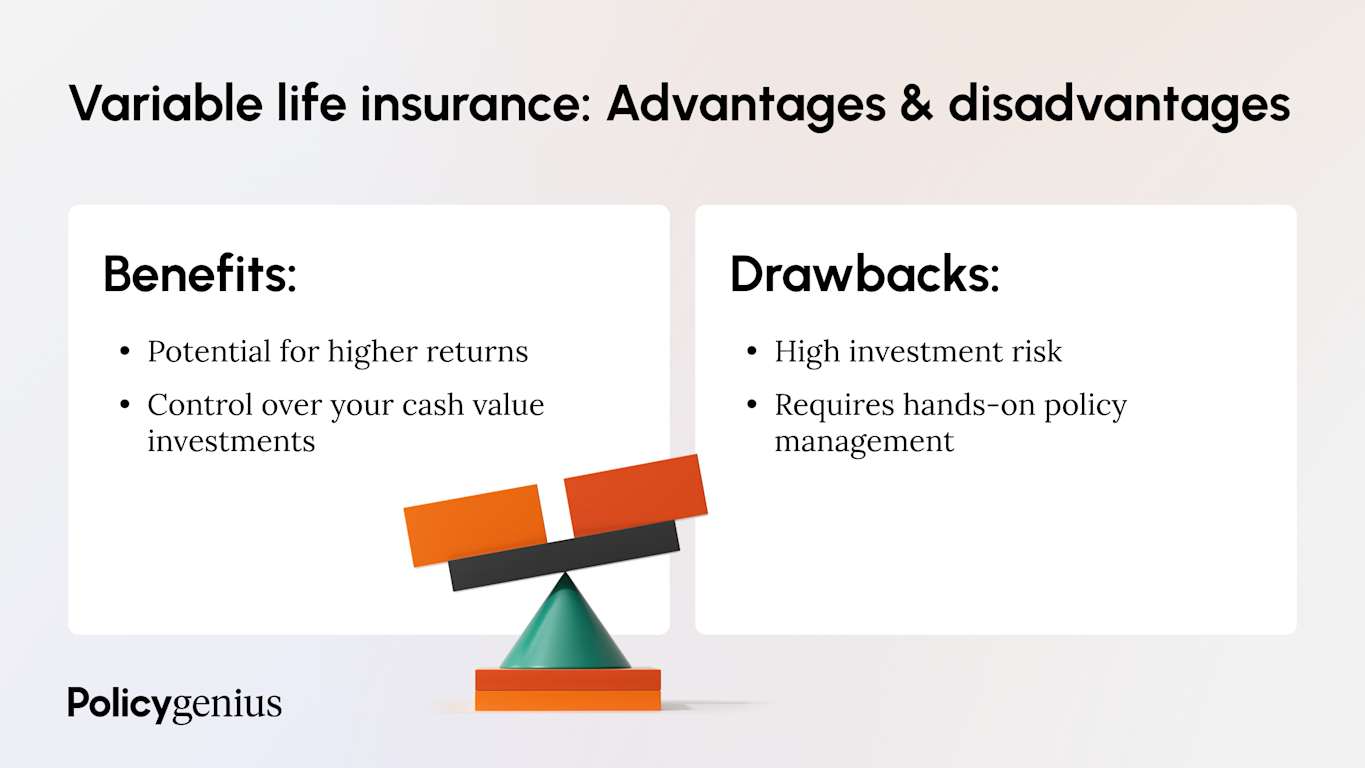
Because VLI sub-accounts are invested in the securities markets, they are subject to volatility. If a policyholder allocates their cash value heavily into aggressive equity sub-accounts and the market experiences a prolonged downturn, the cash value can plummet.
Unlike a standard brokerage account, where you can "wait out" a market crash, a life insurance policy continues to deduct costs every month. If the market is down and the insurance company is forced to sell units of your sub-accounts at low prices to cover monthly fees, it creates a "downward spiral." You are effectively liquidating your investment at the bottom of the market just to keep the lights on, making it incredibly difficult for the policy to recover when the market eventually turns around.
The Impact of Rising Cost of Insurance (COI)
Every life insurance policy has an internal "Cost of Insurance" (COI). This is the actual price the insurer charges to cover the risk of your death. This cost is not static; it increases every year as you get older. In the early years of a policy, the COI is relatively low. In the later years (ages 70, 80, and 90), the COI becomes exponentially more expensive.
In a healthy VLI policy, the investment returns from the early years are supposed to build a large enough "cushion" of cash value to pay for these expensive COI charges in old age. If the investments perform poorly, that cushion never forms. As the COI rises and the cash value remains low, the policy can "cannibalize" itself, eating through the remaining principal until nothing is left.
Policy Lapses and Unpaid Premiums
Many VLI policies are sold with "flexible premiums." This allows the owner to skip payments if the cash value is performing well. However, this flexibility is a double-edged sword. If a policyholder stops paying premiums during a period of market growth but fails to resume them when the market dips or when they get older, the policy will eventually run out of money. Once the grace period expires after a missed payment or a zero-balance notification, the policy is gone.

Key Factors That Drain Policy Value
While market performance is the most visible factor, several internal mechanisms can quietly erode the value of a variable life insurance policy until it is worth nothing.
Management Fees and Administrative Costs
Variable life insurance policies are among the most expensive financial products on the market. Policyholders typically pay:
- Sales Loads: A percentage of each premium payment taken off the top.
- Premium Taxes: State-mandated taxes on insurance premiums.
- Mortality and Expense (M&E) Risk Charges: Fees to compensate the insurer for the risk they assume.
- Administration Fees: Monthly flat fees for policy maintenance.
- Sub-account Management Fees: Fees paid to the investment managers of the sub-accounts (similar to mutual fund expense ratios).
Collectively, these fees can range from 2% to 5% of the policy's value annually. In years where the market is flat, these fees ensure the policy loses value.
Surrender Charges and Early Withdrawals
If you decide to cancel your policy because you are unhappy with its performance, you may still walk away with nothing due to surrender charges. These are penalties for terminating the policy during the first 10 to 20 years. In the early years of a VLI policy, the surrender charge often exceeds the entire cash value. If you try to close a policy with $5,000 in cash value but it has a $6,000 surrender charge, you receive zero.
Policy Loans and the "Tax Bomb"
Policyholders often take loans against their cash value, thinking they don't have to pay them back. However, these loans accrue interest. If the interest and the rising COI eventually exceed the cash value, the policy will lapse.
The danger here is that if a policy lapses with an outstanding loan, the IRS treats the forgiven loan amount as a "distribution." If the loan amount is greater than the total premiums you paid (your "basis"), you will owe income tax on the difference. In this scenario, you not only get "nothing" from the policy, but you actually end up owing the government money.
Comparing Variable Life to Other Insurance Types
To understand the specific risks of "getting nothing," it helps to compare VLI with other common life insurance structures.
| Feature | Variable Life (VLI) | Whole Life | Term Life |
|---|---|---|---|
| Cash Value Growth | Based on market sub-accounts; can be negative. | Guaranteed minimum growth plus dividends. | None. |
| Premium Flexibility | Often flexible, but risky if underfunded. | Fixed and mandatory. | Fixed for the term. |
| Risk Source | Policyholder (Market risk). | Insurer (Investment risk). | None (Pure insurance). |
| Likelihood of Zero Value | Moderate to High (if unmanaged). | Very Low (if premiums are paid). | 100% at the end of the term. |
| Death Benefit | Variable; can decrease but usually has a floor. | Guaranteed fixed amount. | Guaranteed for term duration. |
| Fees | High (Investment + Insurance fees). | Moderate (Bundled in premium). | Low (Purely for mortality). |
Strategies to Prevent Your Policy from Becoming Worthless
If you currently own a variable life insurance policy, you are not necessarily destined to lose everything. There are proactive steps you can take to stabilize the contract.
- Request an "In-Force Illustration": This is a projection based on your current cash value and realistic future interest rates (e.g., 0%, 4%, and 6%). It will show you exactly when the policy is projected to lapse if you don't change your premium payments.
- Increase Premium Payments: If the illustration shows the policy lapsing in 10 years, you may need to increase your monthly payments to shore up the cash value.
- Rebalance Your Sub-accounts: If you are nearing age 70 or 80, having your cash value 100% in aggressive stocks may be too risky. Moving a portion to fixed-interest or money market accounts can protect the "fuel" needed to pay for the rising COI.
- Reduce the Death Benefit: By lowering the face amount of the policy (e.g., from $500,000 to $250,000), you reduce the monthly COI charges, allowing the remaining cash value to last longer.
- Utilize a 1035 Exchange: Under Section 1035 of the Internal Revenue Code, you can trade your VLI policy for a different type of insurance (like a more stable Universal Life policy with a no-lapse guarantee) without triggering a tax event.
Legal and Financial Protections
Variable life insurance is considered both an insurance product and a security. This means it is regulated by both state insurance departments and the Securities and Exchange Commission (SEC). In 2026, the Financial Industry Regulatory Authority (FINRA) continues to enforce strict suitability standards for the sale of VLI.
If you feel the policy was misrepresented—for example, if the agent told you the premiums would "vanish" or that you could never lose money—you may have grounds for a complaint. FINRA's "Suitability" rule (Rule 2111) requires that brokers have a reasonable basis to believe that a recommended transaction or investment strategy involving a security is suitable for the customer.
FAQs
Can I lose my entire investment in a variable life policy?
Yes. Unlike a bank account or a whole life policy, the cash value in a variable life policy is not guaranteed. If the underlying investments lose value and the insurance costs continue to be deducted, the cash value can drop to zero. If this happens and you do not pay more premiums, the policy lapses and the death benefit is lost.
What happens if I stop paying premiums on my VLI policy?
If you stop paying premiums, the insurance company will deduct the monthly costs from your existing cash value. As long as there is money in the cash value, the policy remains active. Once the cash value is exhausted, the policy enters a grace period (usually 30-61 days). If you do not pay by the end of that period, the policy terminates with no value.
Is Variable Life Insurance a scam?
No, it is a legitimate financial product regulated by the SEC and FINRA. However, it is a complex, high-risk product that is often misunderstood by consumers. It is only appropriate for individuals who have a long-term need for life insurance, a high risk tolerance, and the discipline to monitor their investment allocations regularly.
Can the insurance company increase my fees?
Yes, within certain limits. Every VLI policy has a "current" cost of insurance and a "maximum" cost of insurance. While the company may charge the current rate for years, they reserve the contractual right to increase fees up to the maximum stated in the prospectus if their own mortality costs or expenses rise.
How do I find out if my policy is in danger of lapsing?
You should contact your insurance company and request a "policy check-up" or an "in-force illustration." Specifically, ask the representative: "Based on my current cash value and a 0% return, how long will this policy stay active without additional premiums?" This provides a "worst-case scenario" timeline.
Recommendation for Policyholders
As we navigate the financial landscape of 2026, the complexity of legacy variable life insurance policies remains a significant risk for retirees. If you are concerned that you might get "nothin" from your policy, do not wait for a lapse notice to arrive in the mail.
The most effective action is to hire a fee-only financial advisor who does not sell insurance to review your policy. They can provide an unbiased assessment of whether the policy is worth saving or if you should harvest the remaining cash value and seek a simpler, more guaranteed form of protection. Transparency and proactive management are the only ways to ensure that a variable policy fulfills its promise of protecting your heirs.
Image Gallery
Select an image to open it in a new tab.

Declan O'Connor
Higher Education and Campus Culture Reporter
