
While ultra-luxury watches are marvels of mechanical engineering, their multi-million dollar price tags rarely reflect material costs or functional superiority. Instead, these prices are driven by extreme brand heritage, artificial scarcity, and their status as Veblen goods, where high costs actually increase desirability despite offering diminishing returns in timekeeping accuracy and durability.
The Law of Diminishing Returns in High-End Horology
In the world of precision instruments, there is a clear point where increased spending no longer yields a better tool. For watches, this point is reached surprisingly early. A standard mechanical watch costing $500 can achieve a respectable level of accuracy, while a $5,000 chronometer-certified timepiece provides near-peak mechanical performance. Beyond this threshold, every additional dollar spent moves away from functional utility and toward the realm of art, prestige, and speculative investment.
By 2026, the gap between "functional value" and "market price" has widened further. As manufacturing technologies like CNC machining and 3D printing have reached near-perfect precision, the technical "difficulty" of making a movement that keeps time accurately has plummeted. Consequently, the massive premiums charged by brands like Richard Mille or Patek Philippe are no longer paying for a better clock; they are paying for the social signaling and the labor-intensive hand-finishing that, while beautiful, does nothing to help the watch tell time more effectively.
The reality is that a basic quartz movement—or even the atomic clock synchronization in a modern smartphone—will always outperform the most expensive mechanical escapement. When a consumer spends $100,000 on a tourbillon, they are paying for a solution to a problem (gravity’s effect on pocket watches) that was solved over 200 years ago and rendered moot by the invention of the wristwatch and the quartz crystal.
Material Costs vs. Retail Markups
One of the most common justifications for high prices is the use of "precious materials." However, a breakdown of the actual raw material value often reveals a staggering disconnect. A solid 18k gold sports watch may contain between 120 and 180 grams of gold. Even with gold prices at historical highs in 2026, the melt value of the metal represents only a small fraction of a $50,000 or $60,000 MSRP.
The situation becomes even more lopsided with stainless steel or "proprietary" materials.
- Stainless Steel: Most luxury brands use 316L or 904L steel. The cost of the raw steel in a luxury watch case is often less than $10.
- Carbon Composites and Ceramics: While marketed as aerospace-grade technology, the industrial production costs of these materials have dropped significantly. A watch sold for $200,000 because it is "lightweight carbon" relies on marketing narrative rather than the cost of the carbon fiber itself.
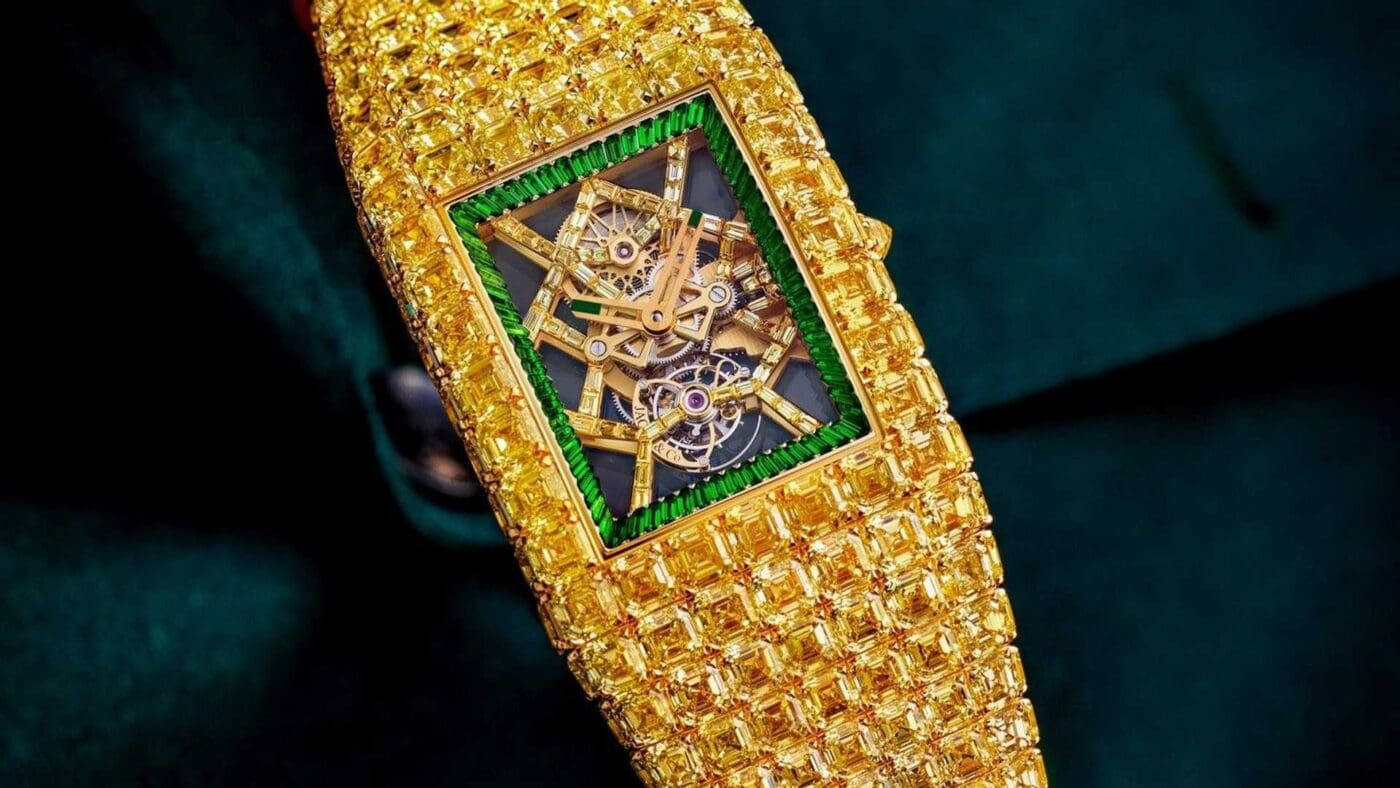
- Gemstones: While diamonds and rubies add value, the "factory set" markup—where the watch brand adds the stones—is often 300% to 500% higher than what a high-end jeweler would charge for the same stones and setting work.
The discrepancy suggests that the price is not a reflection of what the watch is made of, but rather the "rent" the brand charges for its logo to appear on that material.

The Myth of Total Hand-Craftsmanship
A prevailing narrative in the luxury watch industry is the image of a lone watchmaker hunched over a wooden desk, hand-filing every gear and spring. In 2026, this image is almost entirely a marketing construct for all but the most "haute horlogerie" independent brands (such as Philippe Dufour or Greubel Forsey).
The vast majority of watches from "Big Watch" conglomerates—LVMH, Richemont, and the Swatch Group—utilize highly automated production lines. Robotic arms handle the assembly of base plates, and CNC machines cut gears to tolerances that no human hand could match. While "hand-finishing" (anglage, perlage, and Geneva stripes) is applied to higher-end models, this is often the only part of the process where a human touch is involved. Even then, many brands use semi-automated "hand-finishing" techniques to speed up production while maintaining the "hand-made" label.
When a watch costs $500,000, the consumer is often led to believe thousands of hours of manual labor were involved. In reality, the industrial efficiency of modern Swiss manufacturing means the actual labor hours are far lower than the price would suggest.
The Veblen Effect and Artificial Scarcity
Luxury watches are classic examples of Veblen goods—commodities for which the demand increases as the price increases, contradicting the basic laws of supply and demand. This occurs because the high price tag is the primary feature of the product; it acts as a barrier to entry that ensures exclusivity.
To maintain this, brands engage in "controlled distribution" and "artificial scarcity." You may have the $30,000 required for a specific steel sports watch, but the manufacturer restricts supply to authorized dealers, creating years-long waiting lists. This scarcity drives up "grey market" prices, sometimes to double or triple the MSRP.
This environment does not justify the price based on the quality of the watch, but rather on the difficulty of acquisition. The "value" is derived from the fact that others cannot have it, turning a timekeeping tool into a trophy. By 2026, this trend has intensified, with brands increasingly moving toward "boutique-only" editions to exert total control over who is allowed to purchase their products.
Comparison of Watch Tiers and Value Propositions
To understand where the "justification" for price disappears, it is helpful to compare the different segments of the 2026 watch market.
| Watch Category | Typical Price Range | Primary Value Driver | Material/Labor Alignment |
|---|---|---|---|
| Entry-Level Tool | $200 – $1,000 | Functionality & Durability | High (Value matches utility) |
| Mid-Tier Luxury | $2,000 – $8,000 | Brand Heritage & Movement Quality | Moderate (Paying for "Swiss Made") |
| High-End Luxury | $15,000 – $50,000 | Status & Precious Metals | Low (Heavy brand premium) |
| Ultra-High-End / Independent | $100,000+ | Rarity & Artistic Complexity | Very Low (Price is purely speculative/status) |
The Cost of Maintenance and Ownership
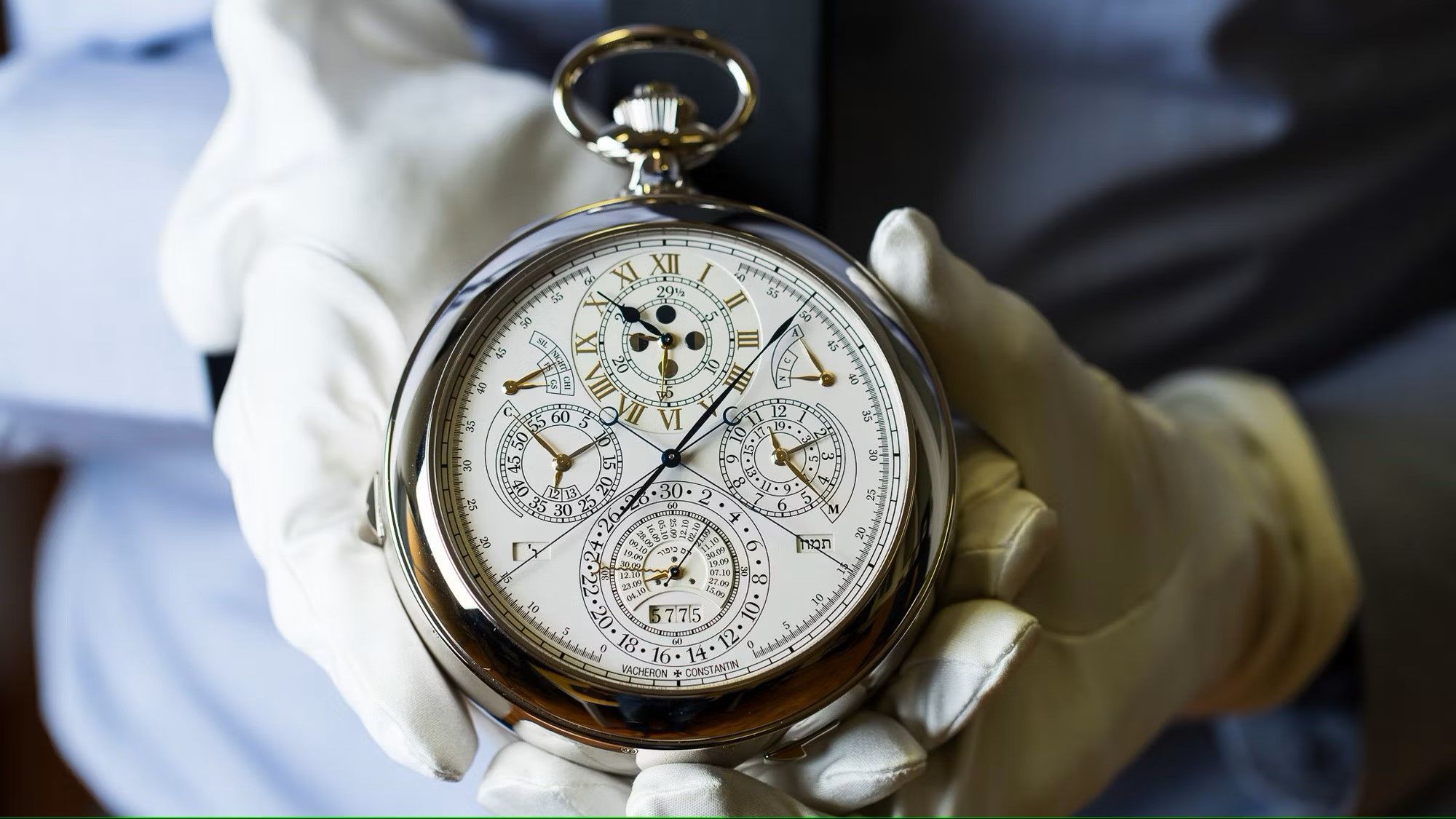
The "price" of an expensive watch is not a one-time expense. Unlike a digital device that is eventually recycled, a high-end mechanical watch requires specialized service every 5 to 10 years. For a standard luxury watch, a full service might cost between $600 and $1,200. However, for "grand complications" (watches with multiple complex features like minute repeaters or split-second chronographs), a single service can cost upwards of $5,000 to $10,000 and take six months to a year to complete.
These maintenance costs rarely translate to better performance. A serviced $100,000 watch will not keep better time than it did when new; the service is merely a "tax" to keep the complex machinery from seizing. For many owners, the total cost of ownership over 20 years can equal 50% or more of the original purchase price, further undermining the financial justification for the initial outlay.
Marketing and Ambassadorship Burdens
When you purchase a watch from a major global brand, a significant portion of your money goes toward their marketing budget. High-end watchmaking is one of the most advertising-intensive industries in the world.
- Sponsorships: Brands pay tens of millions of dollars to be the official timers of Formula 1, Wimbledon, or the Olympic Games.
- Ambassadors: Hollywood actors and elite athletes are paid multi-million dollar retainers to wear specific models on the red carpet or during interviews.
- Event Hosting: Exclusive galas in Geneva or Dubai add to the "prestige" but are ultimately funded by the margins on the watches sold to consumers.
In 2026, digital "influencer" marketing has also become a major expense. Brands pay for placement in social media feeds and "unboxing" videos, costs that are baked directly into the retail price. The consumer is not paying for better gears; they are paying for the ad they saw on their way to the boutique.
FAQ
Why do some expensive watches hold their value or increase in price?
Certain models from brands like Rolex, Patek Philippe, and Audemars Piguet act as "alternative assets." Their resale value is driven by brand equity and secondary market demand rather than the inherent cost of making the watch. However, this applies to a very small percentage of watches; most luxury watches lose 30-50% of their value the moment they are purchased.
Does a $50,000 watch keep better time than a $500 watch?
Generally, no. A $500 Seiko or Tissot is often just as accurate as a $50,000 solid gold watch. If the $500 watch has a quartz movement, it will be significantly more accurate—losing only seconds per month compared to several seconds per day for the expensive mechanical watch.
What is a "complication," and why does it make watches so expensive?
A complication is any function on a watch other than telling the time (e.g., date, stopwatch, moon phase). While they are mechanically impressive, most complications are unnecessary in the modern world. They drive up the price because they require more parts and more complex assembly, which brands use to justify "haute horlogerie" pricing.
Are "In-House" movements better than "Third-Party" movements?
"In-house" means the brand made the movement themselves. While this adds prestige and "justifies" a higher price to collectors, it does not always mean better quality. Many third-party movements (like those from ETA or Sellita) are incredibly robust and easier to repair, whereas in-house movements can be more temperamental and expensive to service.
Is a luxury watch a good investment in 2026?
Treating a watch as an investment is risky. While the "hype" market of the early 2020s saw massive gains, the market in 2026 has stabilized. Most watches should be viewed as luxury consumption rather than a financial vehicle. Only a handful of ultra-rare references consistently outperform traditional investments like index funds.
Practical Recommendation
If you are considering a high-end timepiece, do not look for "value" in the price tag. Instead, determine if the aesthetic, history, and mechanical soul of the watch provide you with enough personal satisfaction to offset the inevitable financial "loss" of the purchase. To get the most "justified" experience, look at mid-tier luxury brands ($2,000–$5,000) that offer high-quality movements and excellent finishing without the astronomical markups associated with the "ultra-high-end" status symbols. For those seeking true horological value, the pre-owned market remains the best way to acquire high-quality engineering without paying the "marketing tax" of a brand-new retail purchase.
Image Gallery
Select an image to open it in a new tab.




Declan O'Connor
Higher Education and Campus Culture Reporter
