As of 2026, the Grand Duke of Luxembourg is Henri, who has served as the nation's head of state since his accession on October 7, 2000. However, the monarchy is currently in a significant period of transition; in late 2024, Grand Duke Henri appointed his eldest son, Hereditary Grand Duke Guillaume, as "Lieutenant-Représentant," signaling the final stages of a gradual handover of constitutional powers.
Luxembourg holds a unique position on the world stage as the only remaining sovereign Grand Duchy. While the Grand Duke’s role is primarily representative and symbolic, he remains a vital figure in Luxembourgish national identity, serving as a bridge between the country’s rich medieval history and its modern status as a global financial and administrative hub. Understanding who the Grand Duke is requires looking beyond his title and examining his personal history, his constitutional duties, and the specific mechanics of the current transition of power.
The Life and Education of Grand Duke Henri
Born on April 16, 1955, at Betzdorf Castle, Henri Albert Gabriel Félix Marie Guillaume is the eldest son of the late Grand Duke Jean and Grand Duchess Joséphine-Charlotte. His lineage connects him to several of Europe’s most prominent royal houses, including the Belgian royal family (his mother was a Princess of Belgium).
Early Education and Military Training
Henri’s upbringing was designed to prepare him for the international demands of the Luxembourgish monarchy. He completed his secondary education in Luxembourg and France, obtaining his baccalaureate in 1974. Following the tradition of many European royals, he underwent rigorous military training at the Royal Military Academy Sandhurst in the United Kingdom.
This military background is not merely ceremonial; the Grand Duke holds the rank of General in the Luxembourg Army. Following his time at Sandhurst, he studied at the University of Geneva, where he earned a degree in Political Science in 1980. It was during his time in Geneva that he met his future wife, Maria Teresa Mestre.
Marriage and Family
The marriage of Henri and Maria Teresa on February 14, 1981, was seen as a modernization of the monarchy. Maria Teresa, born in Havana, Cuba, came from a non-noble background, though her family was part of the high-ranking Cuban bourgeoisie. Together, they have five children:
- Prince Guillaume (The Hereditary Grand Duke)
- Prince Félix
- Prince Louis
- Princess Alexandra
- Prince Sébastien
Throughout his reign, Henri has emphasized the importance of the family unit, often appearing with his children and grandchildren at national events, which has helped maintain the monarchy’s popularity in a rapidly changing social landscape.
The Path to Accession: 2000 to Present
Grand Duke Henri’s path to the throne followed a traditional Luxembourgish pattern of abdication. In Luxembourg, it is common for the reigning monarch to step down in favor of their heir to allow for a fresh perspective while the former monarch is still alive to provide counsel. Henri’s father, Grand Duke Jean, abdicated in 2000 after a 36-year reign.
Henri took his oath on October 7, 2000, swearing to observe the Constitution and the laws of the Luxembourgish people. His reign has been defined by a commitment to environmental issues, social progress, and the promotion of Luxembourg as a stable, multilingual gateway to Europe. As of 2026, he has occupied the throne for over 25 years, overseeing a period of immense economic growth and digital transformation in the country.

The Role of the Grand Duke: "Reigns but does not Govern"
The legal framework of the Luxembourgish monarchy is defined by the Constitution of 1868. The central tenet of the Grand Duke's role is that he is the head of state but does not participate in the day-to-day governance of the country. This distinction is vital for maintaining the democratic integrity of the nation.
Constitutional Responsibilities
The Grand Duke’s primary duties include:
- Promulgating Laws: While the Grand Duke no longer "sanctions" laws (a power removed after a constitutional crisis in 2008), he must still sign and promulgate laws passed by the Chamber of Deputies for them to become effective.
- Representing the State: He represents Luxembourg in international relations, conducting state visits and receiving foreign ambassadors. This is a crucial diplomatic function for a small nation that relies heavily on international cooperation.
- The Formation of Government: After national elections, the Grand Duke appoints the Prime Minister (typically the leader of the party with the most seats) and the members of the government based on the Prime Minister's proposal.
- Commander-in-Chief: He is the formal head of the Luxembourg Army, reflecting his role as the ultimate protector of the state's sovereignty.
The 2008 Constitutional Shift
A defining moment in Henri’s reign occurred in 2008 regarding a law on euthanasia. Citing a crisis of conscience, the Grand Duke indicated he could not sign the law into effect. To avoid a constitutional deadlock, the government and the Grand Duke agreed to amend Article 34 of the Constitution. The word "sanctions" (which implied royal approval) was removed, leaving only "promulgates." This effectively turned the royal signature into a purely administrative act, further distancing the monarch from political decision-making.
The 2024-2026 Transition: The Lieutenant-Représentant
In a surprise announcement during the National Day celebrations in June 2024, Grand Duke Henri informed the public that he would begin the process of handing over his duties to his eldest son, Prince Guillaume. In October 2024, Guillaume was officially sworn in as Lieutenant-Représentant.
What Is a Lieutenant-Représentant?
This title is a specific mechanism within the Luxembourgish monarchy. It allows the Grand Duke to delegate all or part of his powers to the heir apparent without formally abdicating. It serves as a "trial period" or a bridge, allowing the future monarch to take over the daily workload while the current Grand Duke remains the titular head of state.
By 2026, Guillaume has taken over the majority of public engagements and the signing of administrative documents. This process mirrors the transition Henri himself underwent before his father Jean abdicated in 2000. It ensures stability and continuity, preventing the sudden shock of a change in head of state.
The Grand Ducal Family and Line of Succession
The succession to the throne is governed by the pact of the House of Nassau, which was updated in 2011 to establish absolute primogeniture. This means the eldest child of the monarch succeeds to the throne, regardless of gender.
| Name | Relation to Grand Duke | Status in 2026 |
|---|---|---|
| Henri | Current Monarch | Head of State (titular) |
| Guillaume | Eldest Son | Lieutenant-Représentant / Heir Apparent |
| Prince Charles | Grandson (Son of Guillaume) | Second in Line |
| Prince François | Grandson (Son of Guillaume) | Third in Line |
| Prince Félix | Second Son | Fourth in Line |
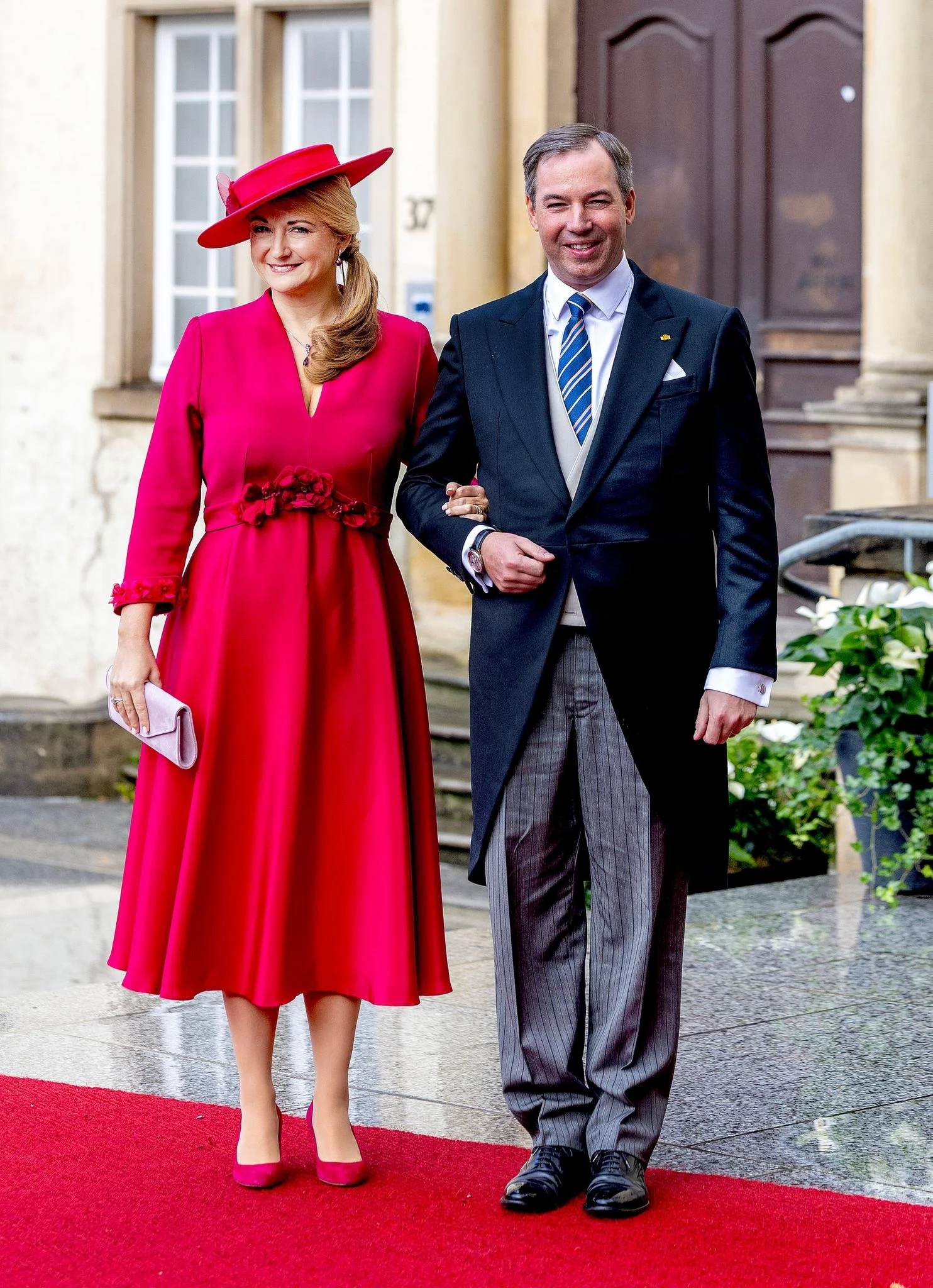
Hereditary Grand Duke Guillaume is married to Hereditary Grand Duchess Stéphanie (née Countess de Lannoy). Their children, Charles and François, represent the future of the monarchy into the late 21st century. The family resides primarily at Berg Castle (Château de Berg) in Colmar-Berg, which serves as the principal residence of the Grand Duke.
The Historical Context: The House of Nassau-Weilburg
The Grand Duke belongs to the House of Nassau-Weilburg. The history of the Luxembourgish monarchy is deeply intertwined with the shifting borders of Europe. Following the Congress of Vienna in 1815, Luxembourg was elevated to a Grand Duchy in a personal union with the Kingdom of the Netherlands.
This union ended in 1890 because the Netherlands followed different succession laws (allowing a female to inherit) than Luxembourg (which followed Salic Law at the time). When Queen Wilhelmina ascended the Dutch throne, the Grand Duchy passed to the Nassau-Weilburg branch, specifically to Adolphe, who became the first "exclusively" Luxembourgish Grand Duke. This historical separation is why the Luxembourgish flag and the Dutch flag are so similar, yet represent two distinct sovereign nations.
The Grand Duke’s International and Social Influence
Beyond constitutional duties, Grand Duke Henri is an active member of the International Olympic Committee (IOC) and is deeply involved in various charitable organizations. He has used his platform to advocate for:
- Environmental Protection: Henri has been a vocal supporter of the Galapagos Darwin Trust and various reforestation projects.
- Economic Diplomacy: He frequently leads economic missions to countries like Japan, China, and the United States to promote Luxembourg's tech and finance sectors.
- Human Rights: Through the Grand Duke Henri and Grand Duchess Maria Teresa Foundation, the family supports people with disabilities and promotes the integration of refugees.
The "Grand Ducal Court" (the administrative body supporting the monarch) maintains a high degree of transparency in 2026, publishing annual reports on its activities and expenses to ensure public trust in the institution. More information on their current schedule can be found on the Official Website of the Grand Ducal Court.
Common Misconceptions About the Grand Duke
Is the Grand Duke a King?
Technically, no. While a Grand Duke is a sovereign head of state equivalent in rank to a King in terms of international protocol, the title "Grand Duke" is specific to the history of Luxembourg. A Grand Duchy is a territory whose head of state is a Grand Duke or Grand Duchess.
Does he have political power?
As established in the 2008 constitutional changes, the Grand Duke does not have the power to veto laws based on personal or political preference. His role is to ensure the smooth functioning of the state according to the will of the elected Chamber of Deputies.
Who pays for the Monarchy?
The Grand Duke's activities are funded by the state budget of Luxembourg. This includes the maintenance of the Grand Ducal Palace in Luxembourg City and the staff required for state functions. However, the Grand Duke also possesses significant private wealth, which is managed independently of state funds.
Summary of the Current Status (2026)
In 2026, the question "Who is the Luxembourg Grand Duke?" has a dual answer. Henri remains the legal sovereign, but Guillaume is the functional face of the monarchy. This period of "Lieutenancy" is a hallmark of Luxembourgish political stability, allowing for a seamless transition of power that avoids the uncertainty often associated with changes in leadership.
For residents and observers, the Grand Duke remains the "first citizen" of Luxembourg—a symbol of the nation’s independence and its ability to balance ancient traditions with a forward-looking, globalized economy.
Frequently Asked Questions
1. Why is Luxembourg a Grand Duchy instead of a Kingdom?
The title was a result of the 1815 Congress of Vienna. European powers wanted to create a buffer state between France and the German states. Elevating Luxembourg to a Grand Duchy gave it higher status than a mere Duchy but kept it distinct from the larger surrounding Kingdoms.
2. When will Prince Guillaume become the Grand Duke?
While there is no fixed date, the period of being a Lieutenant-Représentant typically lasts between two and five years based on historical precedent. Given the transition started in late 2024, many analysts expect a full abdication by Grand Duke Henri by the late 2020s.
3. Does the Grand Duke live in the Grand Ducal Palace?
The Grand Ducal Palace in Luxembourg City is the official workplace where the Grand Duke conducts state business and receives foreign dignitaries. He and his family actually live in Berg Castle, located in the town of Colmar-Berg in central Luxembourg.
4. Can a woman become the Grand Duchess?
Yes. Since 2011, Luxembourg has followed absolute primogeniture. This means the first-born child of the monarch inherits the throne, regardless of gender. Luxembourg has had two reigning Grand Duchesses in the past: Marie-Adélaïde and Charlotte.
5. What language does the Grand Duke speak?
The Grand Duke is multilingual, as is typical for Luxembourgish citizens. He speaks Luxembourgish, French, German, and English fluently. He often uses Luxembourgish for national addresses and French for official state business and international diplomacy.
6. Is the Grand Duke related to the British Royal Family?
Yes, like most European royalty, they share common ancestors. Both Henri and King Charles III are descendants of King Christian IX of Denmark and Queen Victoria of the United Kingdom, making them distant cousins.
Practical Next Action for Researchers
If you are planning a visit to Luxembourg or researching the monarchy's impact on law, your next step should be to visit the Luxembourg City Tourist Office website or the Chamber of Deputies portal. The Grand Ducal Palace is open to the public for guided tours during the summer months (typically July to September), providing a rare look at the interior of the working residence of the head of state.
Image Gallery
Select an image to open it in a new tab.



Mateo Castillo
Decentralized Finance and E-Payments Strategist
