Israel is a Parliamentary Democracy: A Comprehensive Guide to its Government Structure

Israel is a parliamentary democracy where the executive branch, led by the Prime Minister, derives its legitimacy from and remains accountable to the unicameral legislature, known as the Knesset. In this system, the President serves as a ceremonial head of state, while the Supreme Court ensures the rule of law through the interpretation of Basic Laws.
As of 2026, the Israeli political system continues to operate under a framework that emphasizes multi-party representation, coalition governance, and a rigorous series of checks and balances. Unlike many Western democracies, Israel does not have a single formal written constitution. Instead, its democratic foundations are built upon a series of "Basic Laws" that function as a constitutional framework, guiding the nation’s governance and protecting individual liberties. Understanding how these components interact is essential for anyone seeking to grasp the complexities of Middle Eastern governance and democratic stability.
The Legislative Branch: The Knesset
The heart of the Israeli parliamentary system is the Knesset, a unicameral (one-chamber) legislature located in Jerusalem. The Knesset is composed of 120 members who are elected for four-year terms, though elections often occur sooner if the government loses a vote of confidence or chooses to dissolve the legislature.
Functions of the Knesset
The Knesset holds the ultimate sovereign power in the Israeli state. Its primary responsibilities include:
- Legislation: Proposing, debating, and passing laws that govern all aspects of Israeli life.
- Supervision: Overseeing the activities of the government through various standing and special committees.
- Electing Officials: The Knesset is responsible for electing the President of the State and the State Comptroller.
- Formation of Government: The government cannot function without the "confidence" of the Knesset, established through a formal vote.
The legislative process in Israel is rigorous. A bill must pass through three readings (and sometimes a preliminary reading for private member bills) and extensive committee reviews before becoming law. The committee system is particularly influential, as it allows for detailed technical scrutiny of proposed legislation, ranging from defense and foreign affairs to finance and education.
The Electoral System: Proportional Representation
One of the most defining characteristics of why Israel is a parliamentary democracy is its electoral system. Israel utilizes a nationwide proportional representation system. This means that voters do not cast ballots for individual candidates in local districts; instead, they vote for a party list.
How Seats Are Allocated
Following an election, the 120 seats in the Knesset are distributed among the parties in direct proportion to the percentage of the total national vote they received. However, a party must meet the "electoral threshold" to enter the Knesset. As of the current 2026 cycle, this threshold remains at 3.25%. This requirement is designed to prevent extreme fragmentation, though it still allows for a diverse multi-party landscape.
Implications of the System
This system ensures that nearly every sector of Israeli society—secular, religious, Jewish, Arab, and various ethnic minorities—has representation in the legislature. However, because no single party has ever won an absolute majority (61 seats) in Israel's history, the system necessitates the formation of coalition governments. This requirement fosters a culture of negotiation and compromise but can also lead to political instability if small parties withdraw their support from the ruling coalition.
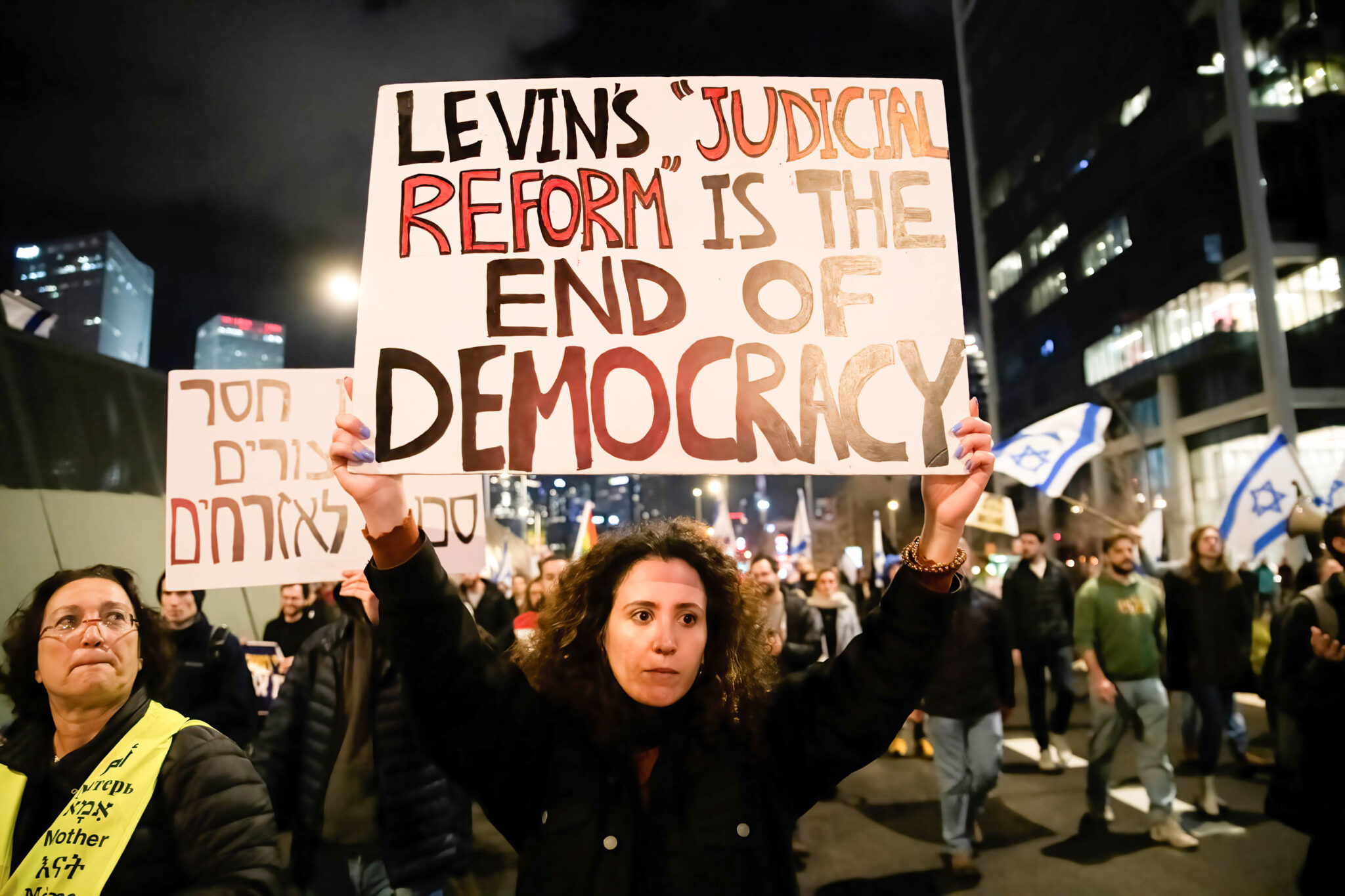
The Executive Branch: The Prime Minister and Cabinet
In the Israeli parliamentary model, the executive branch is not separate from the legislature; rather, it grows out of it. The government (the Cabinet) is the main policy-making body of the state.
The Role of the Prime Minister
The Prime Minister (PM) is the head of government and the most powerful political figure in the country. After an election, the President consults with the leaders of all parties represented in the Knesset and assigns the "mandate" to form a government to the member of the Knesset (MK) most likely to command a majority. Usually, this is the leader of the largest party.
The PM is responsible for:
- Leading the Cabinet and setting the national agenda.
- Managing foreign policy and national security.
- Representing the government before the Knesset.
The Cabinet
The Cabinet consists of ministers who are usually, but not always, members of the Knesset. Each minister is responsible for a specific government department (e.g., Defense, Finance, Health). The Cabinet must work collectively; under the principle of collective responsibility, all ministers are held accountable for the decisions made by the government as a whole, even if they personally disagreed with a specific policy.
The Presidency: A Ceremonial Head of State
While the Prime Minister holds the executive power, the President of Israel serves as the formal Head of State. The President is elected by the Knesset for a single seven-year term.
The role is largely ceremonial and intended to represent the unity of the nation above partisan politics. Key duties include:
- Signing laws passed by the Knesset.
- Appointing judges and the Governor of the Bank of Israel (upon recommendation).
- Accrediting diplomats.
- Granting pardons to prisoners.
- Formally assigning the task of forming a government to a member of the Knesset.
Though the President lacks direct legislative or executive power, the office carries significant moral weight. In times of political deadlock, the President often acts as a mediator between different party factions.
The Judicial System and the Rule of Law
Israel maintains a robust and independent judiciary, which is crucial for a democracy without a formal written constitution. The court system is divided into three levels: Magistrates' Courts, District Courts, and the Supreme Court.
The Supreme Court
The Supreme Court, sitting in Jerusalem, serves two primary roles. First, it is the highest appellate court in the land. Second, it sits as the High Court of Justice, a unique role where it hears petitions from any person (including non-citizens) against the actions of state authorities.
Because Israel lacks a formal constitution, the Supreme Court has historically used the Basic Laws as a benchmark for judicial review. If the court finds that a law passed by the Knesset or an action taken by the government violates the principles laid out in the Basic Laws—such as "Human Dignity and Liberty"—it has the authority to strike down that law or action.
The Attorney General
The Attorney General is another critical component of the legal system. This official serves as the head of the public prosecution and the legal advisor to the government. The Attorney General’s role is to ensure that the executive branch acts within the confines of the law, often providing "binding legal advice" that the government must follow.
The Basic Laws: Israel's "Unwritten" Constitution
Since its founding in 1948, Israel has intended to draft a constitution. However, due to disagreements over the role of religion and the state, the Knesset decided in 1950 (the "Harari Decision") to write the constitution chapter by chapter. These chapters are known as Basic Laws.
| Basic Law | Subject Matter | Year Enacted/Updated |
|---|---|---|
| The Knesset | Defines the powers and election of the legislature. | 1958 |
| Israel Lands | Regulation of state-owned land. | 1960 |
| The President of the State | Election and duties of the Head of State. | 1964 |
| The Government | Structure and function of the executive branch. | 1968 / 2001 |
| The Judiciary | Powers and independence of the courts. | 1984 |
| Freedom of Occupation | Right to engage in any profession or trade. | 1992 |
| Human Dignity and Liberty | Protection of basic human rights and privacy. | 1992 |
| The Military | Governance of the Israel Defense Forces (IDF). | 1976 |
| Jerusalem, Capital of Israel | Status of Jerusalem as the capital. | 1980 |
| Israel as the Nation-State | Defines the national character of the state. | 2018 |
These laws are given "semi-constitutional" status. Some require a special majority in the Knesset to be amended, ensuring that the fundamental rules of the state cannot be changed by a simple, fleeting majority.
Checks and Balances in the Israeli System
In a parliamentary democracy with only one legislative house (no Senate), the traditional "separation of powers" looks different than in a presidential system like that of the United States. In Israel, the primary checks on government power are:
- The Judiciary: As discussed, the Supreme Court acts as a check on both the Knesset and the Government.
- The State Comptroller: This official, elected by the Knesset, audits the activities of the government and all state bodies to ensure efficiency, legality, and moral integrity.
- The Press: Israel maintains a free and vibrant press that regularly investigates and critiques government actions.
- Civil Society: A wide array of non-governmental organizations (NGOs) and advocacy groups play an active role in the democratic process.
- Coalition Dynamics: Because governments are almost always coalitions, the different parties within the government act as internal checks on one another.
Local Government in Israel
While the national government handles defense and macroeconomics, local government is essential for daily life. Israel is divided into municipalities (cities), local councils (smaller towns), and regional councils (rural areas). Local elections are held every five years, and voters elect both a mayor and a local council list. These bodies are responsible for education, local infrastructure, water, and sanitation, operating under the supervision of the Ministry of the Interior.
Comparison: Parliamentary vs. Presidential Systems
To better understand why Israel is a parliamentary democracy, it is helpful to compare it to other models.
| Feature | Israeli Parliamentary System | Presidential System (e.g., USA) |
|---|---|---|
| Head of Government | Prime Minister (elected by legislature) | President (elected by voters/electoral college) |
| Head of State | President (ceremonial) | President (holds executive power) |
| Legislative Structure | Unicameral (The Knesset) | Bicameral (House and Senate) |
| Executive/Legislative Link | Executive is part of the legislature | Branches are strictly separated |
| Government Formation | Requires Knesset "confidence" vote | Fixed term, independent of legislature |
| Electoral Method | Proportional Representation (List) | First-Past-The-Post (District) |
Frequently Asked Questions
Can the government be toppled before its four-year term?
Yes. The Knesset can dissolve itself by passing a law, or it can pass a Vote of No Confidence. In a no-confidence vote, at least 61 members of the Knesset must support an alternative candidate for Prime Minister. If the government fails to pass the national budget by a specific deadline, the Knesset is also automatically dissolved, and new elections are called.
How does a party get into the Knesset?
A party must submit a list of candidates before the election. On election day, citizens vote for the party list they prefer. If that party receives at least 3.25% of the total valid votes cast nationwide, it is eligible for seats. The seats are filled by candidates in the order they appear on the party's submitted list.
Who can vote in Israel?
Every Israeli citizen aged 18 or older is eligible to vote, regardless of religion, ethnicity, or gender. Voting is done via paper ballots in a secret voting booth. Israel does not currently have an absentee ballot system for citizens living abroad, except for diplomats and sailors on Israeli ships.
What is the role of the "Opposition"?
The opposition consists of the parties in the Knesset that are not part of the governing coalition. The leader of the largest opposition party is formally recognized as the "Leader of the Opposition." This role includes receiving security briefings from the Prime Minister and representing a "shadow government" that critiques the ruling coalition’s policies.
Is there a limit on how many terms a Prime Minister can serve?
Historically, there were no term limits for the Prime Minister in Israel. However, discussions regarding the implementation of term limits have been a recurring theme in Israeli political discourse to prevent the over-concentration of power in a single individual over decades.
Practical Recommendation for Further Study
For those interested in the real-time functioning of Israel's democracy in 2026, the best course of action is to monitor official government portals and independent legal archives. The Knesset Official Website provides comprehensive access to the text of all Basic Laws and current legislation. For judicial perspectives, the Supreme Court of Israel publishes landmark rulings that define the boundaries of state power. Following reputable news outlets that cover the "Knesset Channel" provides a direct window into the debates and legislative maneuvers that define this vibrant parliamentary democracy.
Image Gallery
Select an image to open it in a new tab.


Zara El-Hashem
Sociocultural Dynamics and Academics Writer
