Chieka as a Model for Campus Sustainability: Empowering Student-Led Environmental Management
The Chieka model, pioneered by Chiba University, represents a transformative approach to campus sustainability where students take the lead in managing the institution’s Environmental Management System (EMS). By integrating ISO 14001 standards with student initiative, it transforms the campus into a living laboratory for ecological stewardship, administrative efficiency, and long-term institutional resilience.
Understanding the Chieka Philosophy: The Circle of Wisdom
The term Chieka (often associated with the Japanese concept of Chie-no-wa or "Circle of Wisdom") refers to a holistic management philosophy that prioritizes the collective intelligence of the campus community—specifically its students. Unlike traditional "top-down" sustainability initiatives, where facilities managers dictate policy to a passive student body, the Chieka model positions students as the primary auditors, planners, and executors of environmental policy.
As of 2026, the urgency of the climate crisis has forced higher education institutions to look beyond simple carbon offsetting. The Chieka model provides a framework for deep decarbonization by embedding sustainability into the very fabric of campus life. This is not merely an extracurricular activity; it is a structured, legally recognized management system. The philosophy posits that if students—the largest demographic on any campus—are given the authority to manage resources, the resulting solutions will be more innovative, better adopted by peers, and more cost-effective than those designed by external consultants.
In practice, this means students are responsible for tracking electricity consumption, managing waste reduction programs, and even negotiating with university vendors for greener procurement. The "wisdom" in Chieka is the realization that the most sustainable campus is one where every user is an active participant in the system's maintenance and improvement.
The Structural Pillars of the Chieka Model
To implement a Chieka-style model, a university must move beyond symbolic gestures. The model rests on three non-negotiable structural pillars: ISO certification, the Student Environmental Committee (SEC), and administrative integration.
ISO 14001 and the PDCA Cycle
The backbone of the Chieka model is the ISO 14001 international standard for environmental management systems. This provides the "Check" and "Act" phases of the Plan-Do-Check-Act (PDCA) cycle. By adhering to a globally recognized standard, the university ensures that student-led efforts are rigorous, measurable, and verifiable.
Students are trained as internal auditors. They don’t just suggest that people "turn off the lights"; they analyze smart meter data from 2025 and 2026 to identify specific buildings with high energy intensity. They then draft corrective action reports that must be addressed by the university’s facilities department. This level of technical engagement ensures that sustainability is treated with the same seriousness as financial accounting.
The Student Environmental Committee (SEC)
In the Chieka model, the SEC is not a "club"—it is a recognized governing body. Members of the SEC are often granted academic credit or stipends for their work, reflecting the professional nature of their responsibilities. The SEC is divided into specialized teams focusing on different aspects of campus life, such as:
- Energy Management: Monitoring HVAC systems and promoting renewable energy adoption.
- Waste and Resources: Overseeing composting programs and reducing single-use plastics in cafeterias.
- Education and Outreach: Integrating sustainability into the first-year orientation and core curricula.
- Green Procurement: Working with the university’s purchasing department to vet the environmental impact of campus suppliers.
Administrative Integration and Institutional Buy-in
For Chieka to work, the university president and board of directors must cede a degree of control to the student body. This requires a formal memorandum of understanding that grants the SEC the power to influence campus operations. Without this institutional authority, student efforts remain "peripheral" and are often abandoned once the most passionate student leaders graduate.
Operational Impact: Energy, Waste, and Social Sustainability
The practical results of the Chieka model are measurable and significant. By 2026, campuses following this model have reported higher rates of waste diversion and lower per-capita energy use compared to peers using traditional management styles.
Energy Efficiency and Decarbonization
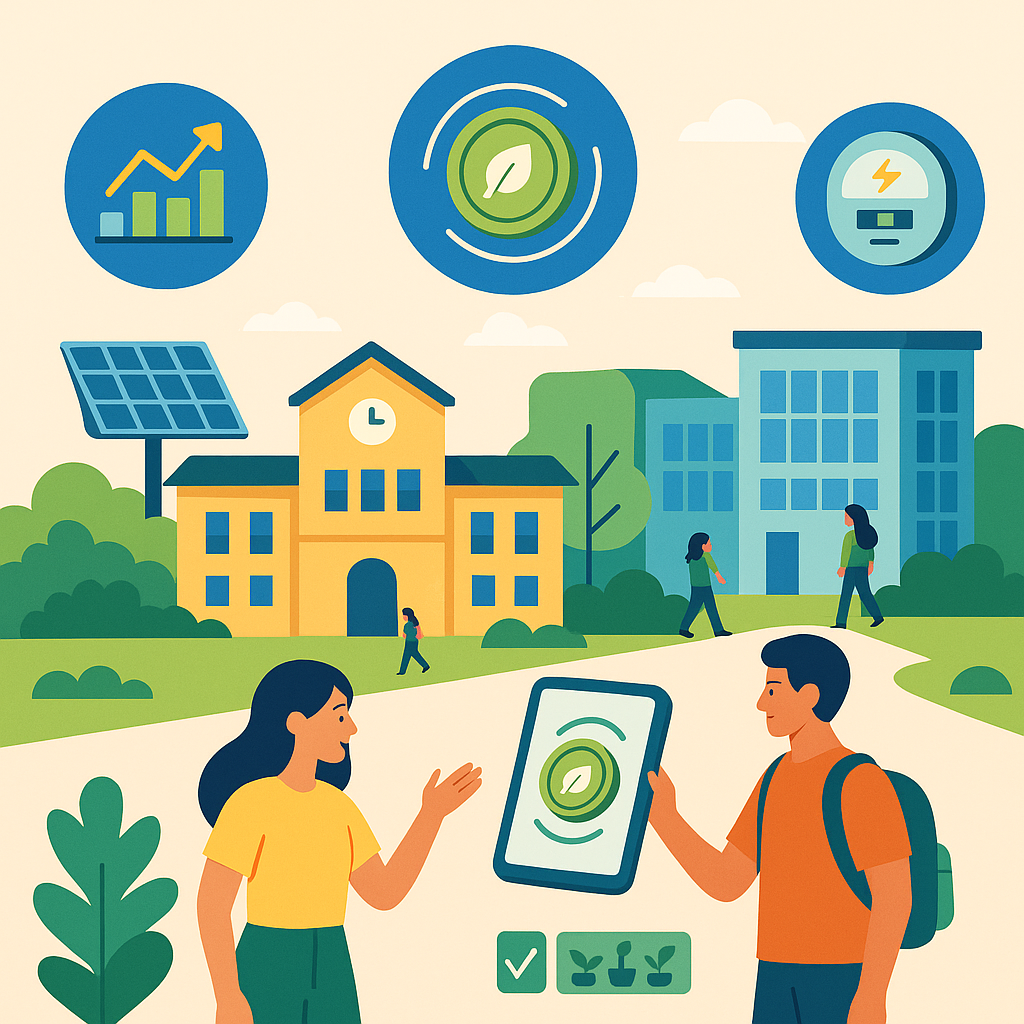
Because students live and work in campus buildings, they have a "ground-level" view of energy waste that facilities managers might miss. Student auditors in a Chieka model often identify "ghost energy" use—equipment left on during holidays or labs that are over-cooled at night. By implementing student-designed energy-saving campaigns and suggesting technical upgrades (such as motion-sensing LED lighting or high-efficiency heat pumps), universities can see a 5% to 15% reduction in annual energy costs.
Waste Reduction and Circular Economy
The Chieka model emphasizes the Circular Economy. Instead of simply recycling, students look for ways to eliminate waste at the source. This might involve setting up a campus-wide "reuse shop" for textbooks and dorm furniture or working with dining services to implement a zero-waste meal plan. The success of these programs relies on peer-to-peer influence; students are far more likely to follow waste-sorting guidelines when they see their fellow students managing the bins and reporting the results.
Social Sustainability and Career Readiness
Perhaps the most overlooked benefit of the Chieka model is its impact on the students themselves. Graduates who have participated in a student-led EMS enter the workforce with high-level competencies in:
- Environmental Auditing: Practical knowledge of ISO 14001 and GHG Protocol.
- Project Management: Leading complex initiatives with multiple stakeholders.
- Policy Advocacy: Navigating institutional bureaucracy to achieve measurable goals.
In the 2026 job market, these "green skills" are in high demand across all sectors, from manufacturing to finance.
Comparison: Chieka Model vs. Traditional Campus Management
The following table highlights the fundamental differences between the student-led Chieka approach and the conventional top-down management style common in many institutions.
| Feature | Traditional Administrative Model | Chieka (Student-Led EMS) Model |
|---|---|---|
| Primary Decision Makers | Facilities Managers & Administrators | Students in coordination with Admin |
| Incentive Structure | Budgetary constraints and compliance | Educational credit, skill-building, and ethics |
| Audit Process | External professional auditors | Trained student internal auditors |
| Communication | Top-down emails and signage | Peer-to-peer engagement and social media |
| Operational Goal | Compliance with local regulations | Continuous improvement (ISO 14001) |
| Cost Profile | High overhead (consultant fees) | Low overhead (integrated into education) |
| Longevity | Vulnerable to staff turnover | Robust (built into student culture/curriculum) |
Implementation Roadmap: How to Adopt the Chieka Model
Transitioning to a Chieka-style model is a multi-year process. For an institution starting in 2026, the following steps are recommended:
Phase 1: Foundation and Training (Year 1)
The university must first establish a core group of students and faculty advisors. This group should receive formal training in Environmental Management Systems. It is essential to secure a commitment from the university’s executive leadership to provide the SEC with a budget and the authority to access campus operational data.
Phase 2: Documentation and Initial Audit (Year 1-2)
The student committee begins by documenting the university’s current environmental footprint. This includes gathering data on electricity, water, gas, and waste. Using the ISO 14001 framework, the students conduct an "initial environmental review" to identify the most significant aspects of the university's impact.
Phase 3: Establishing the Management System (Year 2)
The university develops its formal Environmental Policy, signed by the President but drafted with significant input from the SEC. This policy sets clear, measurable targets (e.g., "Reduce carbon emissions by 20% by 2030"). The SEC then creates specific action plans to reach these targets.
Phase 4: Full Operation and Certification (Year 3+)
Once the system is running, the university should seek third-party certification. Maintaining this certification requires annual internal audits (conducted by students) and periodic external audits. The "Chieka" aspect matures here, as the system becomes self-sustaining through a revolving membership in the SEC.
Overcoming Common Implementation Challenges
While the Chieka model is highly effective, it faces specific hurdles that must be managed proactively.
- Student Turnover: The most common criticism is that students graduate, leading to a loss of institutional memory. To solve this, the SEC must have a structured "handover" process and a permanent administrative office that provides continuity and clerical support.
- Lack of Expertise: Students are learners, not experts. This is mitigated by providing professional training. In 2026, many universities offer "EMS Auditor" certifications as part of their environmental science or business degrees, ensuring a steady supply of qualified student leaders.
- Administrative Resistance: Facilities staff may feel threatened by students "checking their work." This requires a culture shift where the SEC is viewed as a supportive partner that helps the facilities team achieve their goals by handling data collection and behavioral change—tasks that facilities staff often lack the time to perform.
Frequently Asked Questions
What makes the Chieka model different from a standard sustainability club?
A sustainability club is usually an extracurricular activity focused on awareness and small-scale projects. The Chieka model is a formal, ISO-certified management system where students have a seat at the table of university governance. They perform technical audits, manage budgets, and have the authority to influence official university policy and operations.
Does the Chieka model require ISO 14001 certification?
While the Chieka model is built on the principles of ISO 14001, an institution can adopt the student-led management structure without seeking formal third-party certification. However, the certification provides a level of external validation and a standardized framework that makes the program more resilient and prestigious.
How much does it cost to implement this model?
The initial costs involve training for students and staff, as well as the potential cost of ISO certification. However, the model is designed to be cost-neutral or even profitable in the long run. Student-led energy-saving initiatives often result in significant utility bill reductions that far outweigh the administrative costs of the SEC.
Can this model be applied to non-educational institutions?
While Chieka was developed for campuses, its core principle—empowering the primary users of a facility to manage its environmental impact—is applicable to corporate offices, hospitals, and municipal buildings. The "student" role would be replaced by "employee-led" green teams with actual management authority.
Is the Chieka model recognized internationally?
Yes. The success of Chiba University has led to the adoption of student-led EMS models in various parts of Asia and Europe. Organizations like the Association for the Advancement of Sustainability in Higher Education (AASHE) recognize student engagement as a key component of their STARS rating system, which aligns well with the Chieka framework.
Practical Recommendation for 2026
For university administrators and student leaders looking to modernize their sustainability efforts in 2026, the first step should be a gap analysis. Evaluate your current sustainability initiatives: are they led by a small group of staff members, or is the student body actively involved in the decision-making process?
If your institution lacks a structured way for students to influence operations, begin by forming a "Shadow Environmental Committee." Task them with conducting a mock audit of a single building using ISO 14001 standards. The data they gather will likely reveal immediate opportunities for efficiency that justify the formalization of the Chieka model. By empowering students to become the architects of their own sustainable future, universities can move beyond "greenwashing" and achieve genuine, systemic change.
Image Gallery
Select an image to open it in a new tab.
Zara El-Hashem
Sociocultural Dynamics and Academics Writer
