Choosing between tubal reversal surgery and In Vitro Fertilization (IVF) depends primarily on your age, the condition of your fallopian tubes, and your long-term family goals. While tubal reversal offers the chance for natural conception every month, IVF provides higher per-cycle success rates and bypasses tubal issues entirely, making it often more effective for women over 35.
For many women who previously underwent tubal ligation but now desire another child, the decision between surgical restoration and laboratory-assisted reproduction is complex. As of 2026, medical advancements have refined both paths, offering more minimally invasive surgical options and higher success rates in the embryology lab. However, the "right" choice is rarely universal; it is a calculation of biological viability, financial investment, and the physical toll of the procedures.
Understanding Tubal Reversal: Restoring Natural Fertility
Tubal reversal, clinically known as tubal anastomosis, is a surgical procedure designed to reconnect the segments of the fallopian tubes that were cut, tied, or blocked during a tubal ligation. The goal is to restore the natural pathway, allowing the egg and sperm to meet in the tube and the resulting embryo to travel naturally to the uterus.
The Mechanics of the Surgery
In 2026, most tubal reversals are performed using robotic-assisted laparoscopy or traditional microsurgery. A surgeon uses specialized instruments to remove the scarred ends of the fallopian tubes and then uses microscopic sutures to join the healthy segments back together. The success of this reconnection depends heavily on the amount of healthy tube remaining. Generally, a minimum of 4 to 5 centimeters of healthy tube is required to maintain adequate function for egg transport and fertilization.
Eligibility and Prerequisites
Not every woman who has had her "tubes tied" is a candidate for reversal. The original method of ligation plays a critical role. For example, if the tubes were cauterized (burned) over a large area or if the ends (fimbriae) were removed (fimbriectomy), a reversal may be technically impossible or have a very low success rate.
Before proceeding, a semen analysis for the partner is mandatory. It would be counterproductive to undergo major surgery to open the tubes if the male partner has a low sperm count that would necessitate IVF anyway. Additionally, a baseline fertility assessment, including an Anti-Müllerian Hormone (AMH) test, is recommended to ensure the woman is still ovulating regularly.
Understanding IVF: The High-Tech Alternative
In Vitro Fertilization (IVF) takes the fallopian tubes out of the equation entirely. Instead of repairing the body’s natural machinery, IVF moves the process of fertilization into a controlled laboratory environment.
The IVF Process in 2026
The IVF journey begins with controlled ovarian hyperstimulation. A woman takes injectable hormones to encourage the ovaries to produce multiple eggs in a single cycle. Once the follicles reach the appropriate size, a "trigger shot" is administered, followed by an egg retrieval procedure performed under light sedation.
Once the eggs are harvested, they are fertilized in the lab using the partner's or a donor's sperm. In 2026, Intracytoplasmic Sperm Injection (ICSI)—where a single sperm is injected directly into an egg—is often the standard of care to maximize fertilization rates. The resulting embryos are monitored for several days. Often, a Preimplantation Genetic Testing for Aneuploidies (PGT-A) is performed to ensure the embryos have the correct number of chromosomes before one is transferred back into the uterus.
Why Bypassing the Tubes Matters
IVF is the primary treatment for "tubal factor infertility." Because the embryo is placed directly into the uterine cavity, the condition, presence, or absence of fallopian tubes is irrelevant to the success of the procedure. This makes IVF the default choice for women whose tubes were severely damaged or removed during their original ligation.

Key Comparison Factors: Success Rates, Age, and Cost
When weighing tubal reversal vs IVF, three main pillars dominate the decision-making process: the woman's age, the cumulative success rates, and the total financial commitment.
The Age Factor
Age is the most significant predictor of success for both procedures, but it impacts them differently.
- Tubal Reversal: This procedure is most successful for women under 35. Because the goal is natural conception, the woman must have the "time" to try for several months or years. A woman of 40 may have open tubes after surgery but may struggle to conceive due to declining egg quality, losing precious time in the process.
- IVF: IVF is often more efficient for women over 37. It allows for the screening of embryos (PGT-A), which can significantly reduce the risk of miscarriage and chromosomal abnormalities that become more common with age.
Success Rates: Monthly vs. Per Cycle
It is important to distinguish how success is measured. Tubal reversal success is measured cumulatively over one to two years. If the surgery is successful, the woman has a chance to conceive every month. IVF success is measured per cycle. While a single IVF cycle may have a 50% success rate, a tubal reversal might result in a 70% success rate—but that 70% is spread out over 24 months of trying.
Financial Considerations
In 2026, the cost of tubal reversal is generally a one-time fee ranging from $6,000 to $15,000, usually not covered by insurance as it is considered an elective reversal of a voluntary sterilization.
IVF is typically more expensive per attempt, ranging from $12,000 to $22,000 per cycle, including medications. However, more employers in 2026 offer fertility benefits that cover IVF, whereas tubal reversal coverage remains rare. If multiple children are desired, tubal reversal may actually be more cost-effective in the long run, as it allows for multiple pregnancies without additional medical intervention.
Comparison Summary: Tubal Reversal vs IVF
| Feature | Tubal Reversal (Micro-Anastomosis) | In Vitro Fertilization (IVF) |
|---|---|---|
| Primary Advantage | Allows for natural, repeated conception. | Bypasses all tubal issues; higher per-month success. |
| Invasiveness | Requires abdominal surgery (laparoscopic/robotic). | Multiple hormone injections and minor surgical retrieval. |
| Time to Pregnancy | May take 6–24 months of natural trying. | Can achieve pregnancy within 1–2 months (one cycle). |
| Risk of Multiples | Natural (approx. 1-2%). | Low with single embryo transfer (SET), but higher if multiple embryos are used. |
| Ectopic Risk | Higher (approx. 7–10% of pregnancies). | Very low (embryo is placed in the uterus). |
| Genetic Screening | Not possible. | PGT-A allows for chromosomal screening of embryos. |
| Cost (Estimated 2026) | $6,000 – $15,000 (One-time). | $12,000 – $22,000 (Per cycle). |
| Best For | Women <35 with healthy tubes and partner with good sperm. | Women >37, damaged tubes, or male factor infertility. |
Health Risks and Complications
Both paths carry specific medical risks that should be discussed with a reproductive endocrinologist or a fertility surgeon.
Risks Associated with Tubal Reversal
The most significant risk specific to tubal reversal is an ectopic pregnancy. Because the tube has been surgically repaired, there is a risk of scarring at the site of the connection. This scar tissue can trap a fertilized egg, causing it to implant in the tube rather than the uterus. An ectopic pregnancy is a medical emergency that requires immediate intervention.
Furthermore, as with any surgery, there are risks of infection, reaction to anesthesia, and injury to surrounding organs, though these are rare in the hands of experienced microsurgeons.
Risks Associated with IVF
IVF carries the risk of Ovarian Hyperstimulation Syndrome (OHSS), a condition where the ovaries overreact to the fertility medications, causing swelling and fluid retention. Modern protocols in 2026 have made severe OHSS very rare, but mild cases still occur.
There is also the psychological and physical toll of daily injections and the "waiting game" associated with embryo development. Additionally, while Single Embryo Transfer (SET) is the standard in 2026, the use of IVF historically carried a higher risk of twins or triplets, which increases pregnancy complications.
The "Number of Children" Argument
A often-overlooked factor in the "tubal reversal vs IVF" debate is how many more children a patient wants.
If a woman is 30 years old and wants three more children, tubal reversal is often the superior choice. Once the tubes are successfully repaired, she can conceive naturally for the remainder of her reproductive years without paying for additional medical procedures for each child.
Conversely, if a woman is 39 and only wants one more child, IVF is usually the more logical path. It provides a faster route to pregnancy during her remaining fertile years and allows for the freezing of any extra embryos, providing a "backup" if the first transfer is unsuccessful.
Prerequisites for a Successful Outcome
Before making a final decision, a thorough diagnostic workup is essential. This usually includes:
- Operative Report Review: Your surgeon must review the records from your original tubal ligation to determine how much of the tube was removed or damaged.
- Hysterosalpingogram (HSG): An X-ray that looks at the uterus and the "stub" of the fallopian tubes to check for health and length.
- Ovarian Reserve Testing: Measuring AMH and Follicle Stimulating Hormone (FSH) to determine if your egg supply is appropriate for your age.
- Male Fertility Testing: A semen analysis for the partner to ensure natural conception is possible.
FAQ: Common Concerns About Tubal Reversal and IVF
Can I have a tubal reversal if my tubes were burned?
It depends on the extent of the burn. Cauterization often damages a larger section of the tube than clips or rings. If at least 4cm of healthy tube remains after removing the damaged portion, a reversal may still be possible, but the success rates are generally lower than those with clip-based ligations.
Does insurance cover tubal reversal or IVF in 2026?
Most insurance plans categorize tubal reversal as an elective procedure to "undo" a voluntary sterilization, meaning it is rarely covered. IVF coverage has expanded significantly by 2026 due to various state mandates and competitive corporate benefits, but many patients still pay out-of-pocket for medications and genetic testing.
How long is the recovery after tubal reversal surgery?
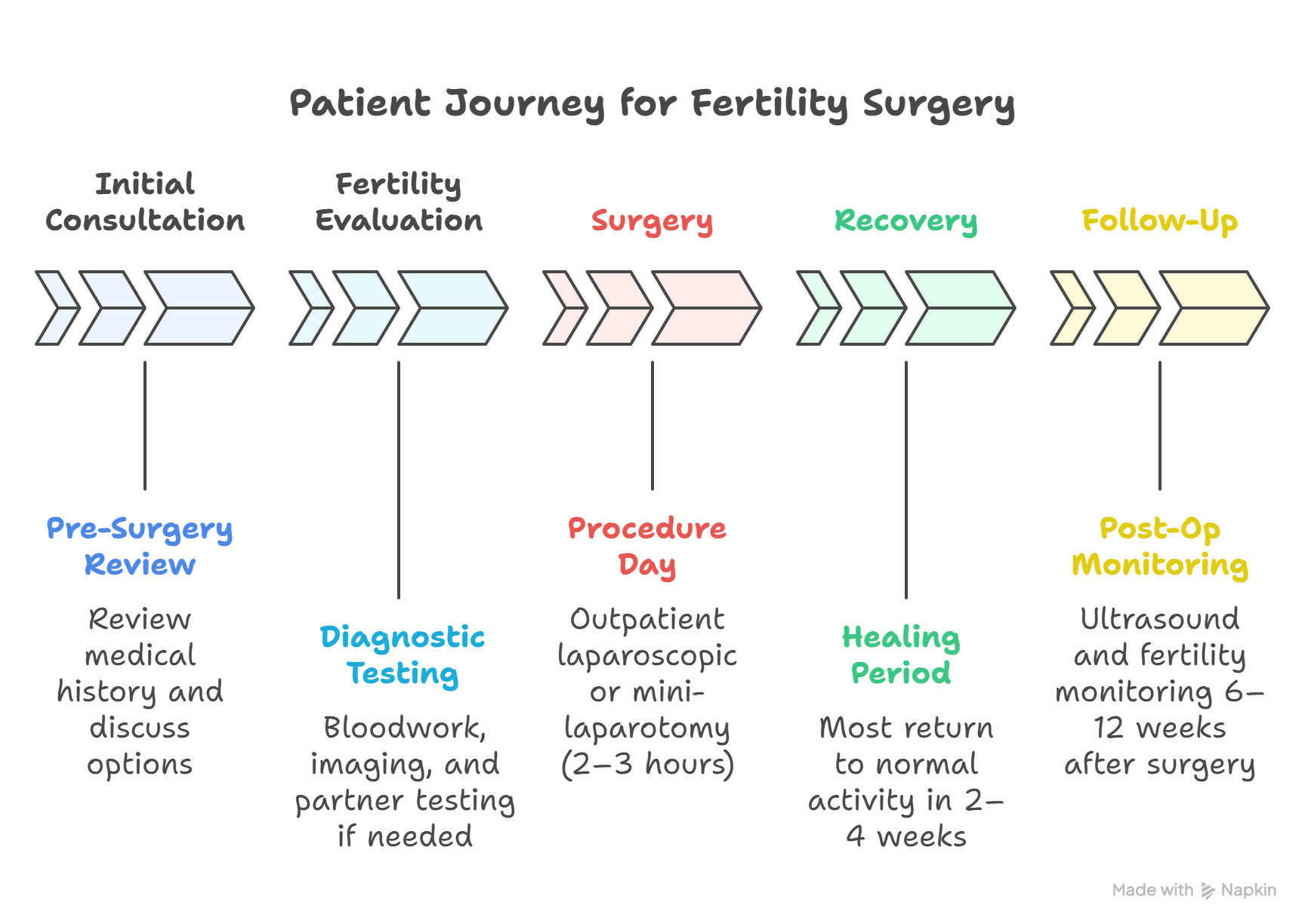
With modern robotic-assisted or laparoscopic techniques, most women can return to light activity within one week and full activity within two to three weeks. If a larger "mini-laparotomy" incision is used, recovery may take four to six weeks.
If tubal reversal fails, can I still do IVF?
Yes. Having an unsuccessful tubal reversal does not prevent you from pursuing IVF later. In fact, many women choose to try reversal first because of the lower cost and the chance for natural conception, moving to IVF only if they do not conceive within 12 to 18 months.
Which procedure has a higher risk of birth defects?
Neither procedure is significantly linked to an increased risk of major birth defects compared to natural conception. However, IVF allows for PGT-A screening, which can identify chromosomal abnormalities (like Down Syndrome) before pregnancy begins, a benefit that tubal reversal cannot offer.
Final Recommendation: How to Decide
The decision between tubal reversal and IVF is deeply personal and should be made in consultation with a fertility specialist.
- Choose Tubal Reversal if: You are under 35, your ligation was performed with clips or rings, you want more than one child, and you prefer natural conception over hormone injections.
- Choose IVF if: You are over 37, you have other fertility factors (like endometriosis or male factor infertility), your tubes are severely damaged, or you want the certainty provided by genetic testing of embryos.
Regardless of the path chosen, the first step is a comprehensive fertility evaluation to ensure that your chosen method aligns with your biological reality in 2026.
Image Gallery
Select an image to open it in a new tab.

Omar Farooq
EdTech Innovation and Virtual Pedagogy Journalist
