
A park model trailer, technically known as a Park Model RV (PMRV), is a unique class of recreational vehicle designed for long-term placement at a destination rather than frequent travel. While they look like small cottages, they are built on a permanent chassis and must remain under 400 square feet to maintain their legal status as an RV.
Understanding the PMRV Classification: More Than a Trailer
To understand what park model trailers are, one must first distinguish them from their more mobile cousins, such as travel trailers or fifth wheels. In the United States, the definition of a park model is strictly governed by the ANSI A119.5 standard. This standard dictates the health, fire, and life safety requirements for these units.
As of 2026, the primary regulatory boundary remains the size: a park model cannot exceed 400 square feet (approximately 37 square meters) of interior living space when measured at the largest exterior horizontal projections. If a unit exceeds this limit, it is no longer classified as an RV; instead, it falls under the jurisdiction of the Department of Housing and Urban Development (HUD) as a manufactured home. This distinction is critical because it changes everything from how the unit is taxed to where it can legally be parked.
In Canada, the regulations differ slightly under the CSA Z241 standard, where park models are allowed up to 540 square feet. Regardless of the region, the fundamental "why" behind the park model remains the same: it provides a bridge between the mobility of an RV and the residential comfort of a traditional home. Unlike standard RVs, they are often wider—typically 12 to 15 feet—which requires professional transportation and a "wide load" permit to move on public highways.
Design and Architectural Characteristics
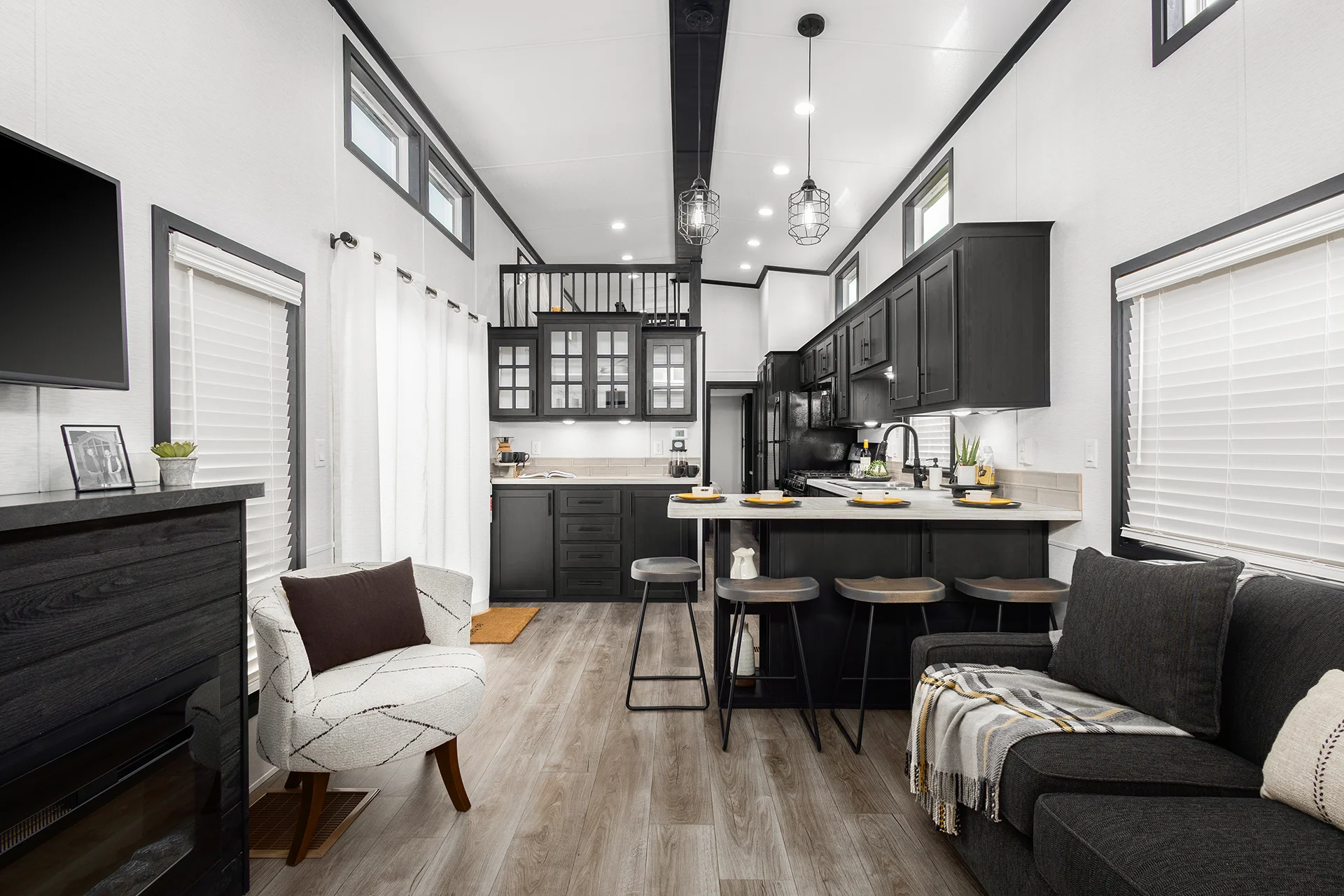
The most striking feature of a park model trailer is its "residential" aesthetic. While a standard travel trailer uses lightweight materials and aerodynamic shapes to facilitate towing, a park model is designed to be stationary. This allows manufacturers to use materials that are heavier and more durable, mimicking the look and feel of a site-built house.
Interior Layouts and Lofts
Most park models feature a single bedroom, a full bathroom, and a combined kitchen and living area. However, a popular design feature is the "loft." These elevated spaces are often built over the bedroom or the kitchen. Under RV regulations, lofts do not count toward the 400-square-foot limit as long as the ceiling height is below five feet. These spaces are ideal for storage or as sleeping quarters for children, effectively increasing the usable "footprint" of the trailer without triggering HUD regulations.
Standard Residential Amenities
Unlike traditional RVs that utilize compact, specialized appliances (like three-way refrigerators or small ovens), park models are equipped with standard household appliances. You will typically find:
- Full-sized 18-cubic-foot refrigerators.
- Standard 30-inch gas or electric ranges.
- Residential-grade cabinetry and countertops (often granite or high-quality quartz in 2026 models).
- Standard porcelain toilets and full-sized bathtubs or walk-in showers.
Exterior Finishes
The exterior of a park model is designed to blend into a resort or campground setting. They often feature gabled roofs with asphalt shingles, vinyl or fiber-cement siding (such as HardiePlank), and residential-style windows and doors. This "cottage" look is a primary selling point for retirees or families looking for a permanent vacation spot.
The Regulatory Landscape: RV vs. Manufactured Home
One of the most confusing aspects of park model ownership is the legal status of the unit. Because they are built to the ANSI A119.5 standard rather than the HUD Federal Manufactured Home Construction and Safety Standards, they are legally classified as personal property, not real estate.
Zoning and Placement
This classification means you cannot typically place a park model trailer on a standard residential lot in a city or suburb. Most local zoning ordinances view them as temporary dwellings. They are intended for placement in:
- RV Resorts and Parks: These are the most common locations, offering full utility hookups and community amenities.
- Private Rural Land: Some jurisdictions allow them as "secondary dwellings" or seasonal cabins, though this requires careful verification with local building departments.
- Campgrounds: Many modern campgrounds have dedicated sections for park models, often referred to as "seasonal sites."
Taxation and Insurance
Since they are RVs, they are usually subject to personal property taxes or annual registration fees similar to a car or boat, rather than real estate property taxes. Insurance also follows this path; owners typically purchase a "Specialty RV" policy that includes "adjacent structures" coverage for things like decks or sheds, rather than a traditional homeowners policy. For more information on these distinctions, the Recreational Vehicle Industry Association (RVIA) provides detailed breakdowns of current standards.
Logistics: Transport, Setup, and Utilities
A common misconception is that you can tow a park model trailer with a heavy-duty pickup truck. While technically possible for the smallest units, the vast majority of PMRVs require a professional hauling service.
Professional Transportation
Because park models can be up to 15 feet wide and 14 feet high, they are classified as oversized loads. Transport involves specialized semi-trucks, pilot cars, and specific route planning to avoid low bridges or tight turns. Once the unit arrives at its destination, it is "set" on a prepared site.
The Setup Process
Setup is more involved than simply leveling a travel trailer. It usually includes:
- Blocking and Leveling: The chassis is supported by concrete blocks or heavy-duty jacks to ensure stability.
- Tie-downs: In many regions (especially those prone to high winds or hurricanes), the unit must be anchored to the ground using steel straps and ground anchors to meet local safety codes.
- Skirting: To hide the wheels and chassis—and to protect the plumbing from freezing—owners install "skirting" around the perimeter. This is often made of vinyl, wood, or stone veneer.
- Utility Connections: Unlike standard RVs, most park models do not have onboard holding tanks for fresh water or waste. They must be hard-plumbed into a sewer or septic system and connected to a 50-amp or 100-amp electrical pedestal.
Financial Considerations: Costs and 2026 Market Trends
As of 2026, the price of park model trailers has stabilized following the supply chain fluctuations of previous years. However, they remain a significant investment.
Purchase Price
- Entry-Level Units: Simple designs without lofts or high-end finishes typically range from $65,000 to $90,000.
- Mid-Range Units: These often include lofts, better insulation, and upgraded appliances, costing between $95,000 and $130,000.
- Luxury Custom Units: High-end models with cedar siding, smart home technology, and premium interior finishes can exceed $160,000.
Ongoing Costs
Beyond the purchase price, owners must budget for site rent (if in a park), which can range from $400 to $1,200 per month depending on the location and amenities. Utilities are typically metered separately.
Depreciation
It is important to note that like all vehicles, park model trailers depreciate over time. Unlike a traditional house on a foundation, which generally appreciates in value, a PMRV's value will decrease as it ages. However, a well-maintained park model in a highly desirable resort can retain its value much better than a standard travel trailer because it is protected from the "road wear" of frequent towing.
Comparing Park Models to Other Mobile Dwellings
To help decide if a park model is the right choice, the following table compares them against two common alternatives: the Destination Trailer and the Tiny House on Wheels (THOW).
| Feature | Park Model RV (PMRV) | Destination Trailer | Tiny House on Wheels (THOW) |
|---|---|---|---|
| Primary Code | ANSI A119.5 | NFPA 1192 | Often IRC or local codes |
| Max Square Footage | 400 sq. ft. (US) | No strict limit (usually 400+) | Varies by state/local law |
| Mobility | Low (Needs Pro Hauler) | Moderate (Heavy-duty Pickup) | High (Varies by weight) |
| Holding Tanks | Usually None | Included | Varies (often includes) |
| Aesthetic | Residential/Cottage | RV/Aerodynamic | Custom/Residential |
| Width | 12' to 15' | 8.5' (Standard) | 8.5' to 10' |
| Typical Use | Long-term Seasonal | Extended Stay/Frequent Move | Full-time Living |
Ideal Use Cases and Suitability
Who is a park model trailer for? Given the restrictions on where they can be placed and how they are moved, they serve specific niches in the 2026 housing and leisure market.
The Seasonal Vacationer
The most common owner is someone who wants a "summer cottage" or a "winter nest" without the million-dollar price tag of traditional waterfront real estate. By placing a park model in a resort, the owner gets access to amenities like swimming pools, pickleball courts, and social clubs while owning their dwelling.
The Accessory Dwelling Unit (ADU) Alternative
In some forward-thinking jurisdictions, park models are being used as Accessory Dwelling Units (ADUs) on private property to house aging parents or adult children. This is only possible in areas where zoning laws have been updated to accept ANSI A119.5 units as valid secondary dwellings.
The "Work from Anywhere" Professional
With the continued rise of remote work in 2026, many professionals use park models as a mobile-yet-stable base. They provide a dedicated office space (often in the loft or a modified second bedroom) and a level of comfort that makes long-term stays much more productive than in a standard travel trailer.
Common Mistakes to Avoid
When venturing into the world of park models, buyers often fall into a few predictable traps. First is the failure to check local zoning. Never purchase a unit assuming you can put it on your private land; always get written confirmation from the county or city building department first.
Second is underestimating the setup costs. The price of the trailer is just the beginning. You must account for delivery fees (which can be thousands of dollars depending on the distance), site preparation (gravel or concrete pads), utility hookups, and the cost of skirting and decking.
Finally, ignore the insulation ratings at your peril. If you plan to use the unit in a cold climate, ensure it is built with a "North Zone" insulation package. Since many park models are built in the southern US, standard units may have thin walls and minimal floor insulation, leading to astronomical heating bills in the winter.
Frequently Asked Questions
Can I live in a park model trailer full-time?
Legally, it depends on the local zoning and the park's rules. Most park model trailers are manufactured as "recreational vehicles" intended for seasonal or temporary use. However, many people do live in them year-round in "full-timer" friendly RV parks or in jurisdictions that allow them as ADUs. You must verify that the park is open 12 months a year, as many seasonal resorts shut off water in the winter.
Do I need a special driver's license to tow a park model?
Since you generally do not tow a park model yourself, you do not need a special license. Professional transporters handle the movement. If you were to attempt to tow a unit that is over 8.5 feet wide yourself, you would need a commercial driver's license (CDL) and oversized load permits from every state you pass through.
How long do park model trailers last?
With proper maintenance, a park model trailer can last 30 to 50 years. Because they are not subjected to the vibration and stress of highway travel, their structural integrity remains sound for much longer than a standard RV. The most critical maintenance task is ensuring the roof remains sealed and the skirting remains intact to prevent pests and moisture from damaging the underside.
Are park models built better than standard RVs?
In many ways, yes. Because weight is less of a concern, manufacturers use 2x4 or 2x6 wall studs, standard residential insulation, and heavy-duty flooring. They are built to the ANSI A119.5 standard, which has different—and in some cases more stringent—requirements for permanent-site safety than the NFPA 1192 standard used for travel trailers.
Summary and Next Actions
Park model trailers offer a compelling solution for those seeking a high-quality, cottage-style living space without the permanence or cost of a traditional home. They provide the comforts of a residential interior within the regulatory framework of a recreational vehicle.
If you are considering a park model, your next steps should be:
- Identify a Location: Find an RV resort or private land where a PMRV is legally permitted.
- Verify Standards: Ensure the manufacturer provides the RVIA seal and proof of ANSI A119.5 compliance.
- Calculate Total Cost: Request a "turnkey" quote that includes delivery, setup, skirting, and any required permits.
For those looking for a fixed vacation spot or a high-end alternative to a tiny house, the park model trailer remains one of the most versatile options in the 2026 housing market.
Image Gallery
Select an image to open it in a new tab.
Declan O'Connor
Higher Education and Campus Culture Reporter
