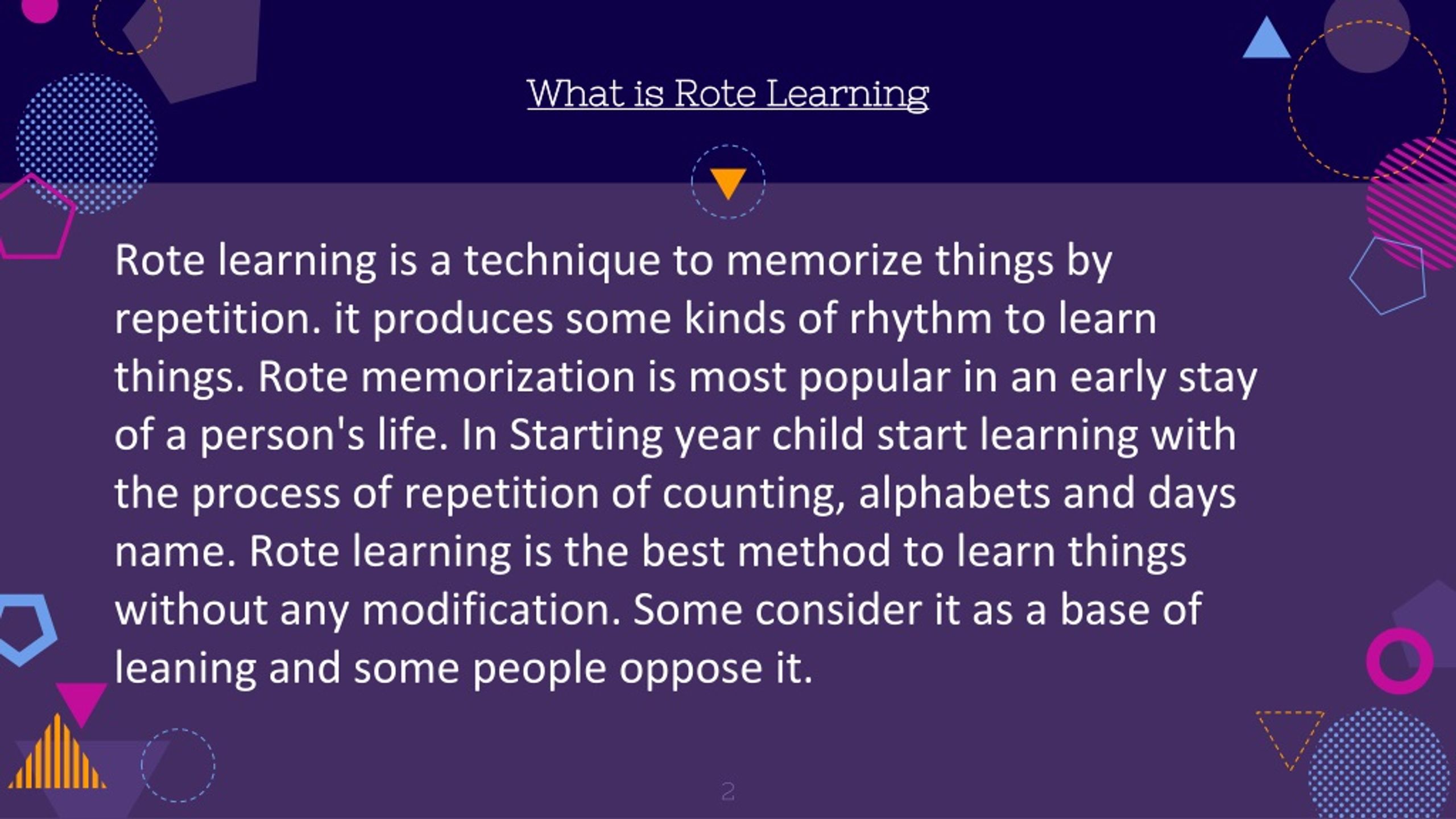
Rote knowledge is the process of memorizing information through repetition without necessarily understanding the underlying concepts or logical relationships. While often criticized in modern pedagogy, it remains a fundamental tool for establishing the baseline fluency required for higher-order cognitive processing and expert performance in fields ranging from mathematics to linguistic acquisition.
Defining Rote Knowledge in Cognitive Science
At its core, rote knowledge functions as a low-level encoding strategy. Unlike deep or semantic learning, which involves integrating new information into existing mental schemas, rote memorization prioritizes the storage of raw data points—such as vocabulary lists, multiplication tables, or historical dates—by reinforcing neural pathways through iterative exposure.
In the landscape of cognitive science, this process is frequently associated with "maintenance rehearsal." This is the practice of repeatedly verbalizing or mentally reviewing information to keep it active in short-term memory until it transitions into long-term storage. While the brain does not inherently "understand" the semantic value of the data during this phase, it effectively logs the sequence, sound, or visual pattern of the material.
The Role of Rote Knowledge in Foundational Skill Acquisition
The primary argument for the utility of rote knowledge lies in its ability to offload cognitive burden. When fundamental elements of a subject are committed to automatic memory, the human brain is freed from the need to "compute" these basics, allowing for greater focus on complex problem-solving.
For instance, consider the acquisition of a foreign language. Before a student can engage in nuanced literary analysis or complex conversation, they must achieve a degree of automaticity in basic vocabulary and irregular verb conjugations. By utilizing rote learning to internalize these building blocks, the learner reduces the "cognitive load"—the amount of effort currently being utilized in the working memory—which enables them to spend their mental resources on syntax, tone, and cultural context.
Comparing Rote Learning and Meaningful Learning
To understand the efficacy of rote knowledge, it is essential to distinguish it from meaningful or conceptual learning. While rote learning is characterized by memorization without context, meaningful learning involves the active construction of knowledge.
| Feature | Rote Knowledge | Meaningful Learning |
|---|---|---|
| Cognitive Goal | Retention of raw data | Understanding of concepts |
| Method | Repetition and drill | Integration with existing knowledge |
| Retention Duration | Often prone to rapid decay | High long-term retention |
| Application | Surface-level retrieval | Flexible problem-solving |
| Primary Utility | Foundational speed | Critical thinking and synthesis |
Prerequisites for Effective Memorization
Not all attempts at rote memorization are created equal. The efficacy of this approach is highly dependent on the learner’s method of engagement. To move rote information into long-term memory efficiently, the following practices are recommended:
- Spaced Repetition: Instead of "cramming," which relies on temporary synaptic sensitization, learners should utilize the spacing effect. By reviewing material at increasing intervals (e.g., 1 day, 3 days, 1 week, 1 month), the brain is forced to reconstruct the memory, which strengthens the neural connections.
- Active Recall: Rather than passively rereading material, the learner should force the brain to retrieve the information without prompts. This process of active retrieval is significantly more effective than passive review for solidifying rote data.
- Chunking: The brain struggles to remember long strings of unrelated data. By breaking large sets of information into smaller, manageable "chunks," the learner can more easily store the sequence.
- Mnemonics: Creating artificial associations—such as acronyms or visual narratives—can provide a "hook" for raw data, making the rote process feel less arbitrary and more structured.
Limitations and Risks of Over-Reliance
While rote knowledge is a valuable tool, an over-reliance on it as a primary educational philosophy presents significant risks. The most notable limitation is the "illusion of competence." Because a learner can recall a definition or a formula perfectly, they may mistakenly believe they possess a functional understanding of the subject matter.
This issue becomes apparent in disciplines like physics or engineering. A student might memorize the constant values of gravitational pull or electrical resistance but fail to apply them when the variables change in a real-world scenario. Without the deeper semantic understanding—knowing why a formula works—the rote-learned knowledge remains inert and brittle.
Furthermore, rote knowledge is highly susceptible to interference. If a learner memorizes a list of items through pure repetition without creating logical connections, they are more likely to confuse that list with other similar information, leading to retrieval errors.
Practical Applications Across Industries
Despite its limitations, rote knowledge is not merely an academic exercise; it is an essential professional requirement in various fields as of 2026:
- Healthcare: Medical students must memorize anatomical structures, pharmaceutical interactions, and triage protocols. This baseline knowledge is the prerequisite for diagnostic accuracy in high-pressure clinical environments.
- Aviation: Pilots memorize emergency checklists and instrument procedures. In a critical malfunction, there is no time to "reason out" a solution; the rote response must be automatic to ensure safety.
- Legal Practice: Attorneys memorize case precedents and statutory citations. This provides the mental database necessary for rapid litigation and negotiation.
Addressing the Common Criticisms
In recent years, the push for "student-centered" or "inquiry-based" learning has led to a devaluation of rote memorization. Critics argue that the digital age, characterized by ubiquitous information access via search engines and AI, renders rote memory obsolete. However, this perspective overlooks the distinction between "external storage" and "internal expertise."
Internalizing information through rote processes provides a framework for critical thinking. You cannot synthesize information you do not possess. Therefore, rote knowledge should not be viewed as the end goal of education, but rather as the essential "starter motor" for higher-level cognitive activity.
Frequently Asked Questions
Is rote knowledge the same as superficial learning? Not necessarily. While rote learning is a technique that focuses on memory without context, it can be a preliminary stage that facilitates deeper learning later. Superficial learning, conversely, implies a lack of effort to move beyond the surface, whereas rote learning can be an intentional effort to build foundational speed.
Can artificial intelligence replace the need for rote knowledge? AI tools currently provide excellent external memory retrieval. However, relying entirely on these tools for core facts creates a dependency that slows down decision-making. High-level performance in complex fields still requires an internal "library" of information to allow for intuitive and rapid responses.
How do I know if I am over-relying on rote knowledge? If you find that you can answer test questions or recite facts but struggle when asked to solve "what if" scenarios or explain a concept to someone else in your own words, you are likely relying too heavily on rote memorization without adequate conceptual integration.
What is the best way to transition from rote to deep knowledge? Once you have memorized the facts, immediately apply them. Solve problems, explain the concept to a peer, or look for patterns in the data you have memorized. This forces your brain to create logical connections between the "raw" data points.
Are some subjects more suited to rote knowledge than others? Yes. Subjects with high levels of nomenclature, formal syntax, or arbitrary standardizations (such as language learning, chemical nomenclature, or musical scales) rely more heavily on rote foundations than subjects focused on systemic logic, such as philosophy or advanced theoretical physics.
Recommendation for Effective Learning
To maximize the benefits of rote knowledge while avoiding its pitfalls, adopt a hybrid approach. First, identify the essential facts within your field that must be available for instant recall to improve your speed and efficiency. Use spaced repetition and active recall to commit these to memory. Once this "baseline" is established, immediately pivot your study habits toward "generative" tasks: practice problems, synthesis exercises, and teaching the material to others. By balancing the efficiency of rote retention with the depth of conceptual application, you create a robust, flexible, and highly functional intellectual foundation.
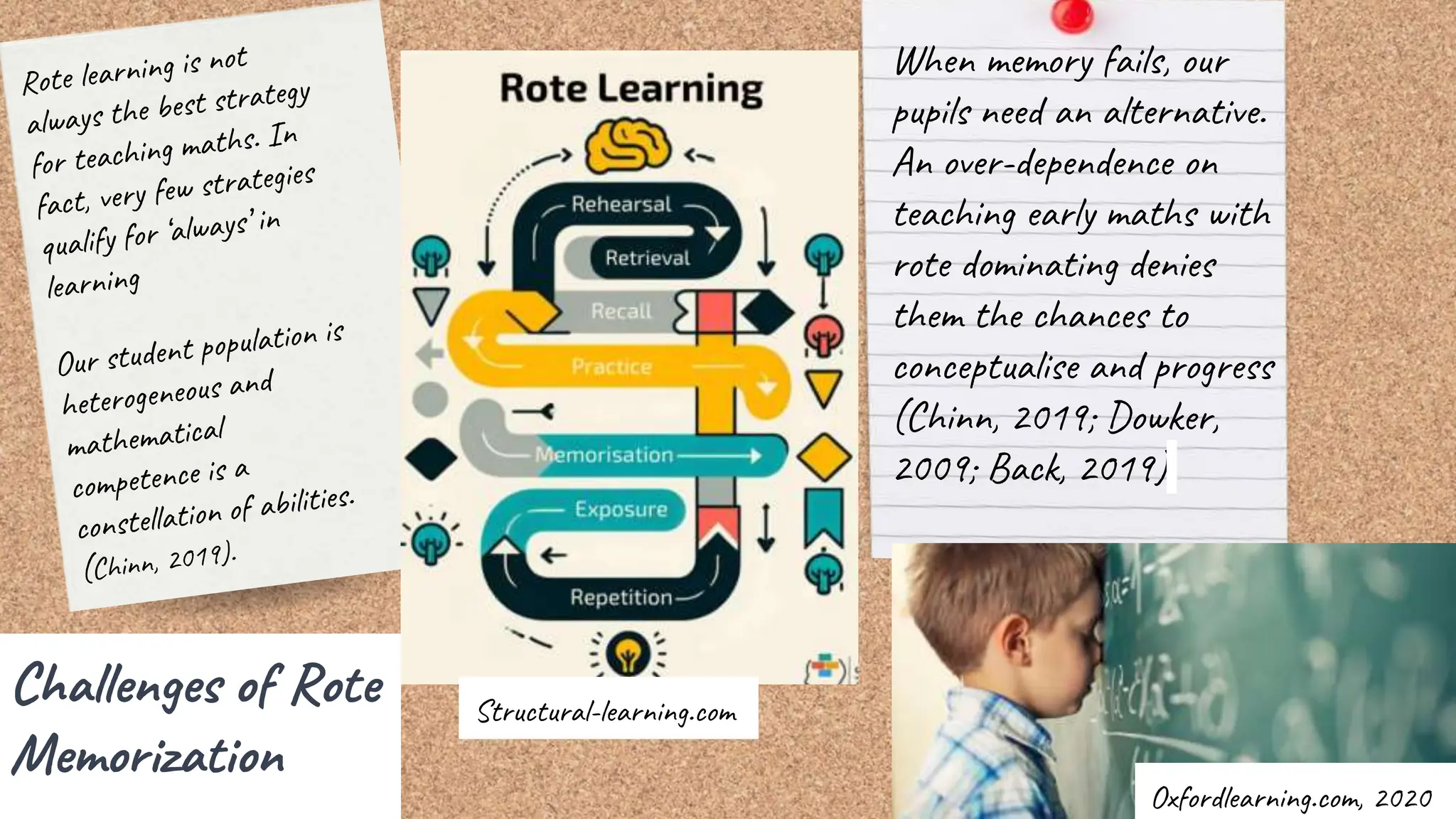
Image Gallery
Select an image to open it in a new tab.
Akira Tanaka
International Academic Trends Correspondent
