
The Chicago Bulls clinched the 1998 NBA title by defeating the Utah Jazz in Game 6 of the NBA Finals on June 14, 1998. Securing a 87–86 victory at the Delta Center in Salt Lake City, the Bulls claimed their sixth championship in eight years, cementing the second "three-peat" of the Michael Jordan era.
The Context of the 1998 NBA Finals
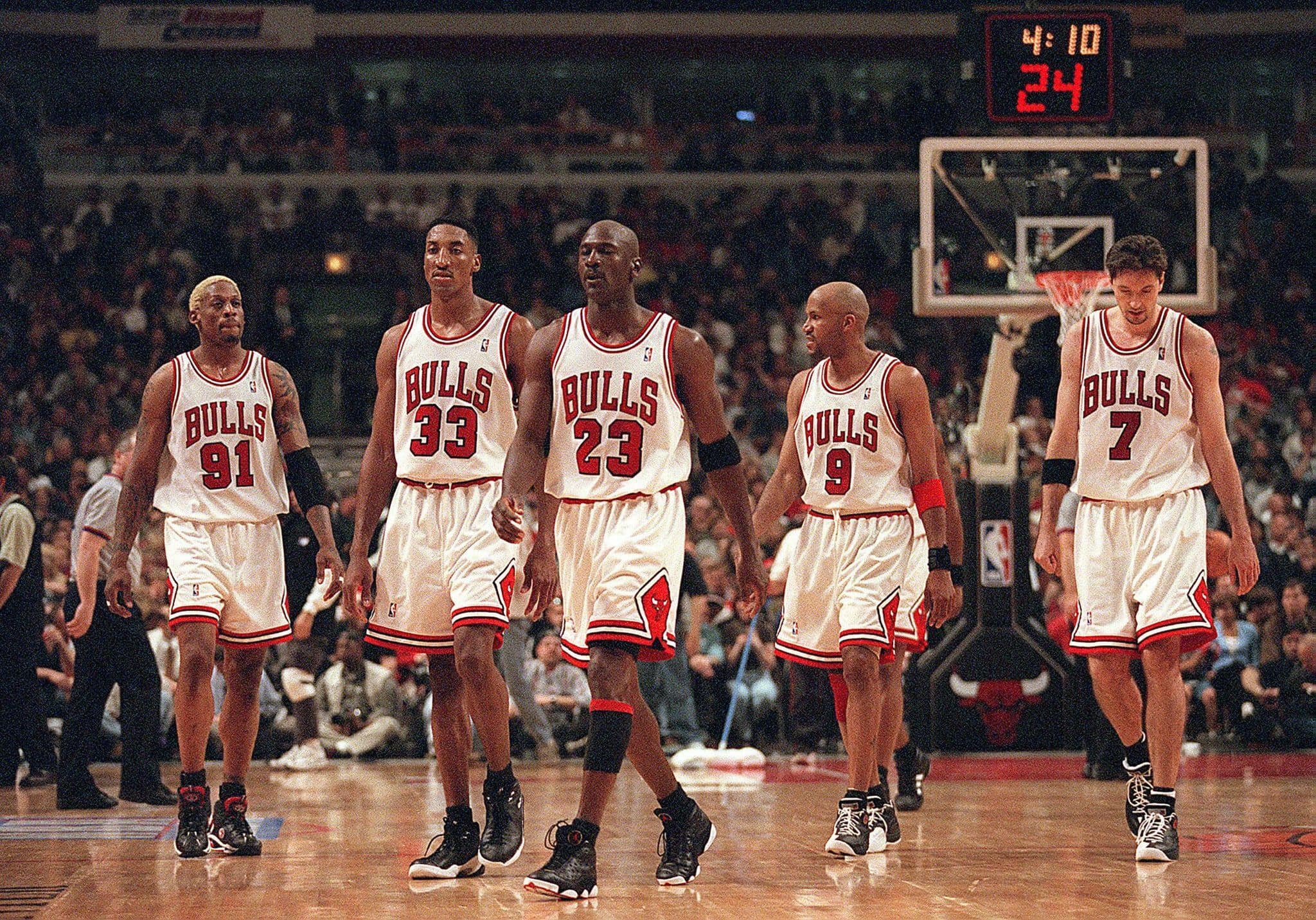
The 1998 NBA Finals served as a high-stakes rematch between the Chicago Bulls and the Utah Jazz. Having faced each other in the 1997 Finals—which the Bulls won in six games—the narrative heading into the 1998 series was defined by fatigue, expectation, and the impending uncertainty of the Bulls' future. By 1998, the core of the Bulls—Michael Jordan, Scottie Pippen, and Dennis Rodman—had been playing under the immense pressure of a long-running dynasty. Coach Phil Jackson frequently referred to this season as "The Last Dance," acknowledging that the roster would likely be dismantled following the conclusion of the playoffs.
The Utah Jazz, led by the legendary duo of Karl Malone and John Stockton, held home-court advantage throughout the 1998 playoffs after finishing the regular season with an identical 62–20 record as the Bulls. This gave them the psychological edge of potentially clinching the title in Salt Lake City. The series was a grueling, physical test of endurance, characterized by low-scoring games and intense defensive schemes that pushed both teams to their absolute limits.
The Path to Game 6
The series trajectory demonstrated the resilience of both franchises. The Jazz drew first blood by winning Game 1 in overtime, signaling that this series would be significantly different from the previous year. However, the Bulls responded by winning three consecutive games, including two at the United Center in Chicago, to take a 3–1 series lead.
Game 5, held in Chicago, provided the Jazz an opportunity to extend the series. With the Bulls on the verge of clinching, the Jazz secured a hard-fought 83–81 victory, forcing the series back to Utah for Games 6 and, if necessary, Game 7. The loss in Game 5 created a sense of anxiety for Chicago fans, as Scottie Pippen dealt with a debilitating back injury that limited his mobility and effectiveness in the final stages of the series. The weight of the series shifted entirely to Michael Jordan’s shoulders as the teams returned to the Delta Center.

Game 6: A Masterclass in Clutch Performance
On June 14, 1998, the atmosphere inside the Delta Center was electric. The Utah Jazz played with desperation, knowing that a loss would end their hopes of capturing the franchise's first NBA title. The game remained tight throughout, with both teams trading leads in a defensive stalemate.
The turning point occurred in the final minute of the fourth quarter. The Jazz held an 86–83 lead following a John Stockton three-pointer. Michael Jordan responded quickly with a layup to cut the deficit to 86–85 with roughly 40 seconds remaining. On the ensuing defensive possession, Jordan executed a legendary steal against Karl Malone, stripping the ball from the post.
With no timeouts remaining, Jordan brought the ball up the court. He drove toward the paint, hesitated, and executed his signature crossover move against Bryon Russell, creating just enough space to launch a jump shot from the top of the key. The ball sailed through the net with 5.2 seconds remaining, putting the Bulls up 87–86. A final attempt by John Stockton fell short, and the buzzer sounded, confirming the Bulls had clinched their sixth championship.
Key Statistical Breakdown of the 1998 Finals
The following table summarizes the competitive nature of the 1998 NBA Finals. The low point totals reflect the defensive intensity employed by both coaches, Phil Jackson and Jerry Sloan.
| Game | Winner | Score | Venue |
|---|---|---|---|
| 1 | Utah | 88–85 (OT) | Utah |
| 2 | Chicago | 93–88 | Utah |
| 3 | Chicago | 96–54 | Chicago |
| 4 | Chicago | 86–82 | Chicago |
| 5 | Utah | 83–81 | Chicago |
| 6 | Chicago | 87–86 | Utah |
The Aftermath and Legacy of the 1998 Championship
The 1998 victory is widely regarded as the perfect conclusion to the greatest dynasty in basketball history. Michael Jordan was named the NBA Finals Most Valuable Player (MVP) for the sixth time, an unprecedented accomplishment at the time. The victory meant that the Chicago Bulls had finished their run without ever requiring a Game 7 in the NBA Finals during their six championship seasons.
Following the championship, the organization underwent significant changes. Phil Jackson departed as head coach, and several key players, including Jordan and Pippen, either retired or moved to different teams. The 1998 title essentially closed the chapter on the 1990s dominance of the Chicago Bulls, leaving behind a legacy that continues to influence modern basketball strategies and the way championship windows are managed in the NBA.
Technical Factors Influencing the Bulls' Success
The Bulls' ability to clinch the 1998 title was not merely a result of individual brilliance but a product of specific technical advantages:
The Triangle Offense
Phil Jackson’s implementation of the Triangle Offense allowed the Bulls to maintain spacing even when Jordan was heavily guarded. By involving all five players in the offensive flow, the Bulls could move the ball to the "open man" when double teams were sent to Jordan or Pippen. This system was vital in 1998, as it allowed the team to remain functional despite the aging roster and persistent injury concerns.
Defensive Adaptability
The Bulls’ defensive identity was built on versatility. Players like Ron Harper and Dennis Rodman allowed Chicago to switch assignments seamlessly. By neutralizing the pick-and-roll game of Stockton and Malone through aggressive "hedging" and help defense, the Bulls minimized high-percentage opportunities for the Jazz.
Mental Fortitude
The experience of winning five previous titles provided the Bulls with a distinct advantage in pressure situations. In the final seconds of Game 6, while the Jazz appeared visibly tense, the Bulls operated with a sense of clinical efficiency. This poise is often cited as the defining characteristic of the 1998 team, as they navigated a season of immense external distraction and internal fatigue to reach their goal.
Frequently Asked Questions
Who led the scoring in the final game of the 1998 NBA Finals?
Michael Jordan led all scorers in Game 6 with 45 points. He accounted for 35 of the Bulls' 87 points in that game, carrying the offensive load during the second half as other players struggled to find their rhythm.
How many championships did the Chicago Bulls win during the 1990s?
The Chicago Bulls won six championships during the 1990s. They won in 1991, 1992, 1993, 1996, 1997, and 1998. This era is divided into two separate three-peats, separated by Michael Jordan’s temporary retirement to play baseball.
Why was the 1998 season referred to as "The Last Dance"?
The term "The Last Dance" was popularized by Phil Jackson to describe the 1997-1998 season. He recognized that the contract situations and age of the primary players meant the team would likely not be kept together for another season, making the 1998 playoff run the final opportunity for that specific group to win a title together.
What was the final score of the clinching game?
The final score was 87–86 in favor of the Chicago Bulls. The game ended after a final three-point attempt by Utah's John Stockton missed the rim as time expired.
Who were the key contributors to the Jazz in the 1998 Finals?
The Utah Jazz were led by their Hall of Fame duo, Karl Malone and John Stockton. Other notable contributors included Jeff Hornacek, Bryon Russell, and Antoine Carr, all of whom played significant roles in the Jazz's defensive and offensive sets throughout the series.
Moving Forward: Studying Championship Mindsets
If you are interested in analyzing how these championships shaped sports management, consider reviewing the official NBA archives for the 1998 playoffs. Understanding the mechanics of the "last shot" and the surrounding tactical decisions offers valuable insights into professional basketball development. Whether you are a student of sports history or a strategist, examining the 1998 Bulls provides a masterclass in high-stakes performance and organizational transition.
Image Gallery
Select an image to open it in a new tab.





Lars Thomsen
Global Labor Markets and Economic Strategy Editor
