
Navigating the American legal landscape requires understanding that the United States does not operate under a single, centralized judicial code. Instead, it is a complex federal republic featuring dual court systems, a hierarchy of governing authorities, and a unique reliance on both codified statutes and common-law judicial precedent.
The Dual-Court Architecture: State vs. Federal Jurisdictions
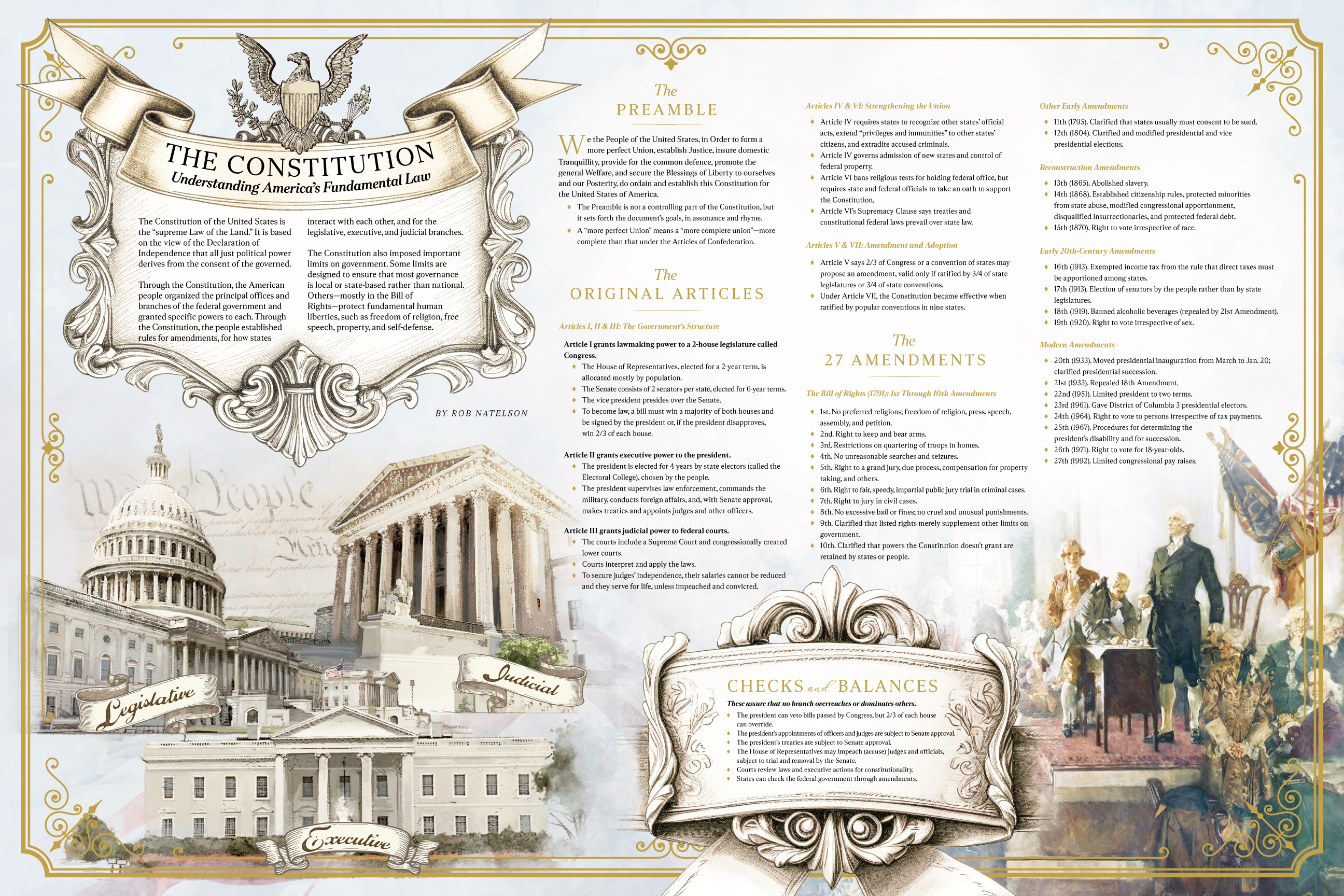
The most fundamental structural feature of the American legal ecosystem is the division of power between state governments and the federal government. This structure stems from the principle of federalism enshrined in the United States Constitution, which grants specific, enumerated powers to the national government while reserving all other powers to the individual states or the people.
State Courts and Jurisdiction
The vast majority of legal actions in the United States—ranging from family law and contract disputes to most criminal offenses—take place within state court systems. Each of the fifty states, alongside U.S. territories, maintains its own independent constitution, court structure, and body of substantive law.
- Trial Courts: Often known as courts of common pleas, district courts, or superior courts, these are the forums where trials take place, evidence is introduced, and juries or judges render initial verdicts.
- Appellate Courts: Intermediate courts of appeals review decisions from trial courts for procedural or legal errors.
- State Supreme Courts: The highest authority on interpretation of state law and state constitutional matters. Unless a federal question or constitutional right is implicated, a state supreme court's decision on state law is final.
Federal Courts and Jurisdiction
The federal court system operates in parallel with state courts. Its authority is strictly limited by Article III of the Constitution and federal statutes enacted by Congress. Federal courts possess limited jurisdiction, meaning they can only hear cases that involve specific subject matters.
- Federal Question Jurisdiction: Cases that arise under the U.S. Constitution, federal statutes, or treaties of the United States.
- Diversity of Citizenship Jurisdiction: Civil disputes between citizens of different states, or between a U.S. citizen and a foreign entity, where the amount in controversy exceeds a statutory threshold (currently established at $75,000 under 28 U.S.C. § 1332).
- Exclusive Federal Jurisdiction: Specialized matters where state courts have no authority, such as bankruptcy proceedings, patent and copyright infringement, federal antitrust actions, and maritime disputes.
The federal judiciary is structured into a three-tier hierarchy: the United States District Courts (trial level), the United States Courts of Appeals (regional circuit courts), and the Supreme Court of the United States as the ultimate appellate arbiter.
Sources of Law: Statutes, Regulations, and Common Law
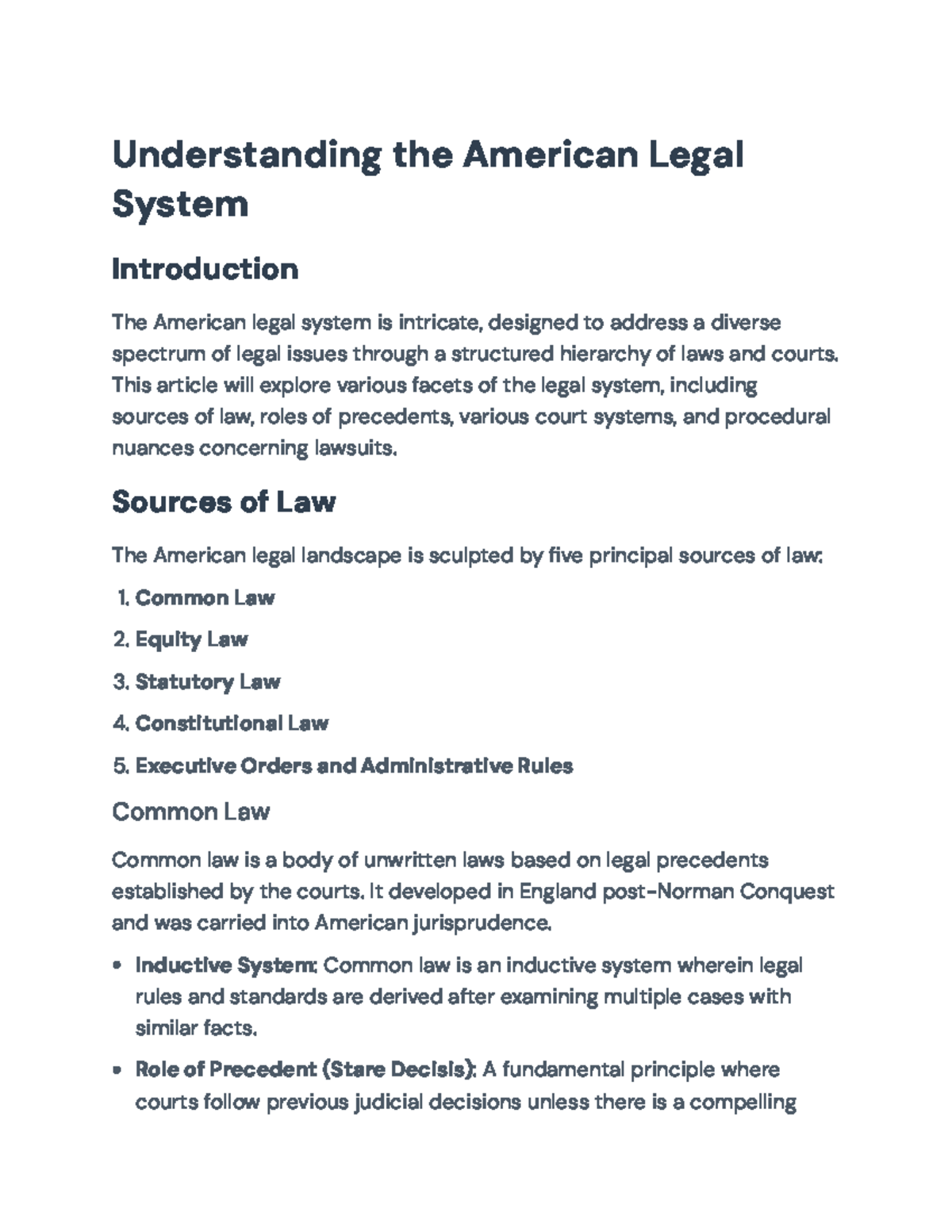
To understand how American law functions, one must examine the different forms and sources of legal authority. These sources do not carry equal weight; rather, they exist within a strict hierarchy where higher authorities supersede conflicting lower provisions.
| Source of Law | Origin / Body Responsible | Scope and Primary Application |
|---|---|---|
| Constitutions | Constitutional Conventions and Ratification Bodies | Supreme law of the land (Federal and State); establishes government structure and individual rights. |
| Statutory Law | Federal Congress and State Legislatures | Written laws and codes enacted by elected legislative bodies. |
| Administrative Law | Federal and State Regulatory Agencies | Rules, regulations, and decisions issued by executive agencies (e.g., EPA, SEC, OSHA). |
| Case Law / Common Law | Judicial Precedents from Court Decisions | Unwritten law derived from judicial opinions; establishes binding interpretations via stare decisis. |
The Power of Stare Decisis
A defining characteristic of the American legal system—inherited from the English common law tradition—is the doctrine of stare decisis (Latin for "to stand by things decided"). Under this doctrine, courts are generally bound to follow legal precedents established by prior decisions within their jurisdiction.
When a higher court interprets a statute or constitutional provision, lower courts within that hierarchy must apply that interpretation to similar factual scenarios. This promotes consistency and predictability, though courts possess mechanisms to distinguish cases or overturn outdated precedents when societal or constitutional standards demand evolution.
Navigating Regulatory and Administrative Frameworks
While legislatures pass broad statutes and courts resolve disputes, much of daily compliance and legal friction in the United States involves administrative law. Federal agencies such as the Environmental Protection Agency (EPA), the Securities and Exchange Commission (SEC), and the Federal Trade Commission (FTC)—alongside their state-level counterparts—possess delegated authority to promulgate detailed regulations.
These administrative rules carry the force of law. Navigating this sector of the legal landscape requires examining the Code of Federal Regulations (CFR) at the national level, as well as parallel state administrative codes. Administrative agencies also operate quasi-judicial internal tribunals, where administrative law judges hear disputes regarding regulatory compliance before parties ever escalate matters to Article III or state courts.
Legal Representation, Access, and Professional Standards
Accessing the American legal system typically involves navigating professional standards and representation requirements. The legal profession is strictly regulated at the state level.
- Admission to the Bar: To practice law within a specific state, an individual generally must earn a Juris Doctor (J.D.) degree from an accredited law school, pass that state's bar examination, and satisfy rigorous character and fitness reviews. A license granted by one state does not automatically grant the right to practice in another, though admission on motion or pro hac vice admissions allow for multi-jurisdictional practice under specific conditions.
- The Unauthorized Practice of Law (UPL): State laws prohibit non-lawyers from providing formal legal advice or representing others in court, a restriction designed to protect consumers from unqualified counsel.
- Alternative Dispute Resolution (ADR): Due to the cost, time, and adversarial nature of traditional litigation, a significant portion of American legal matters are resolved via mediation and arbitration. Many commercial contracts and consumer agreements contain mandatory arbitration clauses, routing disputes outside public courtrooms into private panels governed by organizations such as the American Arbitration Association (AAA) or JAMS.
Disclaimer: This article is intended for informational and educational purposes and does not constitute formal legal advice. Legal rules vary significantly by jurisdiction, factual context, and evolving legislative or judicial developments. Individuals facing specific legal challenges should consult a qualified attorney licensed in their relevant jurisdiction.
Frequently Asked Questions
What is the difference between civil law and criminal law in the U.S.?
Criminal law involves offenses against the state or society as a whole, prosecuted by government attorneys (prosecutors) where penalties can include incarceration or fines. Civil law involves disputes between private parties, corporations, or government entities regarding rights, obligations, or compensation (such as breach of contract or personal injury), typically resolved through monetary damages or equitable remedies.
Can a state law contradict a federal law?
Under the Supremacy Clause of the U.S. Constitution (Article VI, Clause 2), federal law is the supreme law of the land. If a state law directly conflicts with valid federal law, or if federal law occupies an entire regulatory field to the exclusion of state action, the federal law preempts the state law, rendering the conflicting state provision unenforceable.
How do federal judges get their positions?
Under Article II of the Constitution, federal judges—including Supreme Court Justices, circuit court judges, and district court judges—are nominated by the President of the United States and confirmed by the United States Senate. Once confirmed, they hold office during good behavior, which effectively means a lifetime appointment unless they resign, retire, or are impeached and convicted by Congress.
What role do juries play in the American legal system?
Juries serve as finders of fact in both criminal and certain civil trials. In a jury trial, the judge rules on matters of law and procedure, while the jury evaluates the evidence and testimony to determine the actual facts of the case and deliver a verdict. While the vast majority of criminal cases and civil disputes are resolved through plea bargains or settlements without reaching a jury, the right to a jury trial is constitutionally protected.
Mastering the mechanics of the American legal system requires recognizing that jurisdiction, statutory hierarchy, and procedural rules dictate the outcome of every dispute. Start by identifying whether your matter falls under state or federal authority, locate the applicable statutory or administrative codes, and consult qualified local counsel to evaluate your specific options and next steps.
Image Gallery
Select an image to open it in a new tab.





Vivian Cho
Executive IT and Emerging Technologies Reporter
