Evaluating the Worst Presidential Administrations in United States History
Historical consensus among presidential scholars and political scientists consistently identifies the administrations of James Buchanan, Andrew Johnson, and Franklin Pierce as the worst in United States history. These rankings generally prioritize a president’s failure to manage national crises, specific instances of systemic corruption, or actions that actively destabilized the constitutional order and national unity.
The Scholarly Framework for Presidential Rankings
To understand what constitutes the "worst" administration, one must first examine the metrics used by historians, biographers, and political scientists. Evaluations are not merely based on modern popularity or partisan affiliation; rather, they are calculated through a series of professional categories. Organizations such as C-SPAN, the Siena College Research Institute, and the American Political Science Association (APSA) conduct periodic surveys that quantify these assessments.
The primary categories for evaluation usually include:
- Public Persuasion: The ability to communicate a clear vision and maintain the trust of the electorate.
- Crisis Leadership: The effectiveness of the executive during wars, economic depressions, or civil unrest.
- Economic Management: The stability and growth of the national economy under the administration's policies.
- Moral Authority: The degree to which the president upholds the dignity of the office and sets a standard for ethical conduct.
- Administrative Skills: The efficiency of the Cabinet and the executive branch in implementing policy and avoiding scandal.
- Performance within the Context of the Times: How well the president managed the specific challenges of their era compared to what was reasonably possible.
As of 2026, these surveys provide a longitudinal look at how perceptions of failure evolve as new documents are declassified and historical distance provides greater clarity.
James Buchanan (1857–1861): The Failure of Inaction
James Buchanan is almost universally ranked as the worst president in American history. His administration is defined by its catastrophic failure to address the escalating tensions between the North and South, directly preceding the American Civil War. Buchanan’s primary failure was not just a lack of skill, but a fundamental misunderstanding of the constitutional and moral crisis facing the nation.
The Dred Scott Decision and Partisanship
Buchanan took office hoping to settle the issue of slavery through the judiciary rather than legislative compromise. He pressured a fellow Pennsylvanian justice to join the majority in the Dred Scott v. Sandford (1857) case, which ruled that African Americans could not be citizens and that Congress had no power to prohibit slavery in the territories. Instead of calming the nation, this intervention radicalized the North and convinced many that the executive branch was a tool of the "Slave Power" conspiracy.
The Secession Crisis
During the "Lame Duck" period following the election of Abraham Lincoln in 1860, Buchanan remained paralyzed. While he believed that secession was illegal, he also argued that the federal government lacked the constitutional authority to stop a state from seceding. This interpretation allowed the Confederate States of America to seize federal arsenals and forts with little resistance. His refusal to reinforce federal installations, most notably Fort Sumter, left his successor with a fractured nation and an unavoidable military conflict.
Andrew Johnson (1865–1869): The Failure of Obstruction
Andrew Johnson, who ascended to the presidency after the assassination of Abraham Lincoln, consistently ranks near the bottom due to his disastrous handling of Reconstruction. While the nation required a leader who could heal wounds while securing the rights of formerly enslaved people, Johnson chose a path of belligerent obstructionism.
Opposition to Civil Rights
Johnson was a staunch white supremacist who vetoed the Civil Rights Act of 1866 and the Freedmen’s Bureau Bill. He argued that the federal government had no business protecting the rights of Black citizens, putting him in direct conflict with the Radical Republicans in Congress. His rhetoric encouraged Southern states to implement "Black Codes," which effectively re-enslaved African Americans through vagrancy laws and forced labor contracts.
Impeachment and Loss of Authority
Johnson’s inability to work with Congress led to the first impeachment of a U.S. president. The primary trigger was his violation of the Tenure of Office Act when he fired Secretary of War Edwin Stanton. Although he avoided conviction in the Senate by a single vote, his remaining time in office was characterized by total legislative irrelevance. By failing to provide a framework for a just and lasting peace, Johnson’s administration allowed the seeds of Jim Crow to take root, a failure that haunted the nation for the next century.
Franklin Pierce (1853–1857): The Failure of Instability
Franklin Pierce entered office during a period of relative calm but left it on the brink of collapse. His administration is cited for its weakness and its susceptibility to the influence of radical pro-slavery factions within his Cabinet.
The Kansas-Nebraska Act
The defining moment of the Pierce administration was the signing of the Kansas-Nebraska Act in 1854. This legislation repealed the Missouri Compromise of 1820 and replaced it with "popular sovereignty," allowing settlers to vote on whether a territory would allow slavery. This led to "Bleeding Kansas," a period of violent guerrilla warfare between pro-slavery and abolitionist settlers. Pierce’s blatant favoritism toward pro-slavery groups in Kansas further delegitimized the federal government in the eyes of Northern citizens.
The Ostend Manifesto
Pierce’s foreign policy was equally problematic. The Ostend Manifesto, a confidential dispatch that suggested the U.S. should seize Cuba from Spain if it refused to sell, was leaked to the public. It was widely perceived as an attempt to expand slave territory, causing an international scandal and further domestic division. By the end of his term, Pierce was so unpopular that his own party refused to re-nominate him.
Modern Assessments and Recent Administrations
In recent decades, rankings have become increasingly polarized, reflecting the heightened political divisions of the 21st century. However, certain modern administrations frequently appear in the lower quartiles of scholarly surveys for specific procedural and ethical reasons.
Warren G. Harding (1921–1923)
Historically, Harding was long considered the worst president due to the rampant corruption of his "Ohio Gang" advisors. The Teapot Dome Scandal, involving the secret leasing of federal oil reserves, became the hallmark of his administration. While modern historians have slightly softened their view of Harding due to his support for civil rights and successful naval disarmament treaties, his lack of administrative oversight remains a textbook example of executive failure.
Donald Trump (2017–2021)
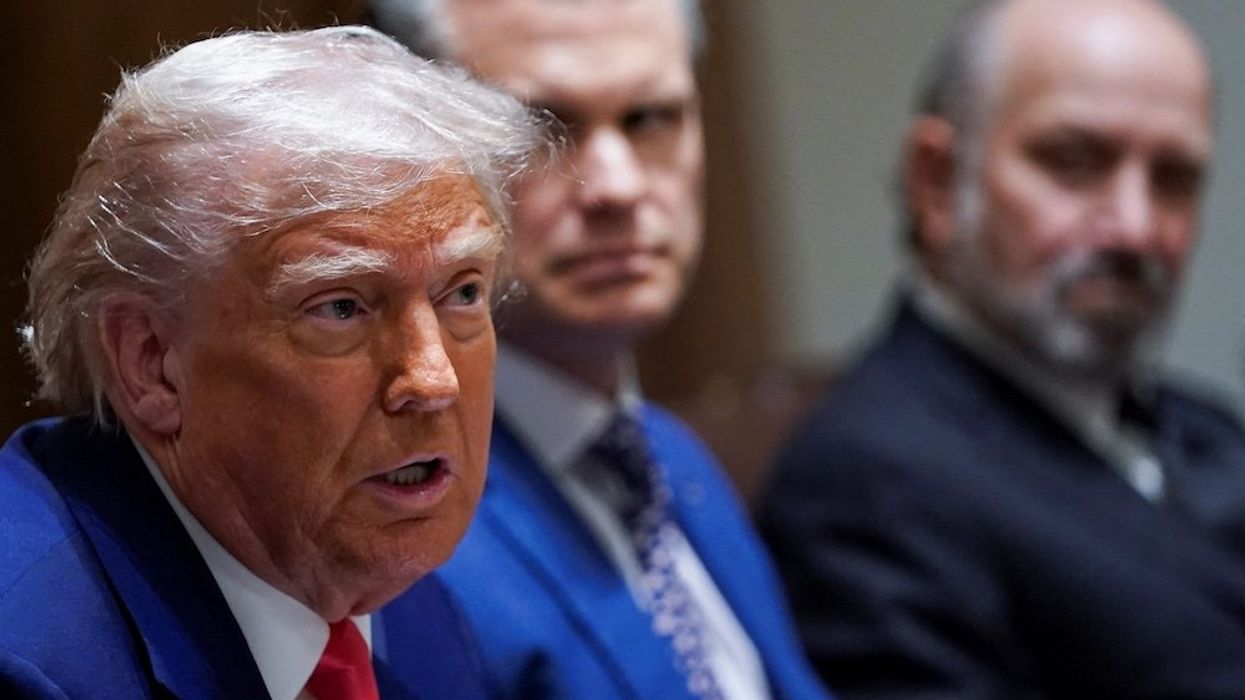
In surveys conducted between 2021 and 2026, Donald Trump has frequently appeared in the bottom five of scholarly rankings. Historians typically cite the unprecedented challenges to the peaceful transfer of power following the 2020 election, two impeachments, and the management of the COVID-19 pandemic as the primary factors. According to the Siena College Research Institute, Trump often ranks lowest in categories such as moral authority and administrative skills, though he receives higher marks from some segments for his judicial appointments and economic deregulation.
Herbert Hoover (1929–1933)
Hoover’s administration is inextricably linked to the onset of the Great Depression. While he was a talented administrator and humanitarian prior to his presidency, his adherence to "rugged individualism" and his reluctance to provide direct federal relief made him appear indifferent to the suffering of millions. The forced removal of the "Bonus Army"—WWI veterans seeking early payment of promised bonuses—remains a significant stain on his record of leadership.
Comparative Failure Metrics
The following table compares the bottom-ranked administrations based on the primary cause of their historical standing as of 2026.
| President | Term | Primary Failure Category | Key Historical Event |
|---|---|---|---|
| James Buchanan | 1857–1861 | Crisis Management | Failure to prevent Southern secession |
| Andrew Johnson | 1865–1869 | Moral Authority/Leadership | Obstruction of Reconstruction and Civil Rights |
| Franklin Pierce | 1853–1857 | Legislative Integrity | Signing the Kansas-Nebraska Act |
| Warren G. Harding | 1921–1923 | Administrative Ethics | The Teapot Dome Scandal |
| Donald Trump | 2017–2021 | Constitutional Stability | Challenges to the 2020 election results |
| Herbert Hoover | 1929–1933 | Economic Policy | Management of the 1929 Market Crash |
The Role of Revisionism: Can a "Worst" President Improve?
Historical rankings are not static. The "worst" administration of one era may be viewed more sympathetically by a later generation. This process, known as historical revisionism, occurs as new perspectives emerge.
A prominent example is Ulysses S. Grant. For much of the 20th century, Grant was ranked near the bottom because of the corruption within his administration. However, by 2026, his ranking has risen significantly. Modern historians place higher value on his aggressive protection of African American civil rights and his efforts to dismantle the first iteration of the Ku Klux Klan. This shift suggests that "failure" is often redefined as societal values change. Conversely, Woodrow Wilson, once ranked in the top ten for his internationalism, has seen a decline in rankings as scholars place greater weight on his regressive racial policies and the segregation of the federal workforce.
Common Characteristics of Failed Administrations
When analyzing the worst administrations, several recurring themes emerge that serve as warnings for future governance:
- Isolation from Reality: Failed presidents often surround themselves with "yes-men" or radical factions that insulate the executive from the actual state of the country.
- Inflexibility: An inability to adapt to changing circumstances—such as Hoover’s rigid economic philosophy or Johnson’s refusal to compromise with Congress—often leads to administrative paralysis.
- Moral Compromise: Administrations that prioritize personal loyalty or partisan gain over the rule of law inevitably succumb to scandals that erode public trust.
- Narrow Consituencies: The worst administrations often govern for a specific segment of the population (e.g., the "Slave Power" or specific corporate interests) rather than the nation as a whole.
Frequently Asked Questions
Who is consistently ranked as the absolute worst U.S. President?
James Buchanan is the most frequent occupant of the bottom spot in scholarly surveys. His failure to take any meaningful action to stop the secession of Southern states is viewed as a unique dereliction of duty that directly led to the bloodiest conflict in American history. Unlike other presidents who faced difficult circumstances, Buchanan’s actions—or lack thereof—actively exacerbated the crisis.
Can a president’s ranking change after they leave office?
Yes, rankings change frequently. As the C-SPAN Presidential Historian Survey demonstrates, a president's standing often fluctuates as historical distance allows for a more objective analysis. For example, Harry Truman left office with very low approval ratings but is now consistently ranked in the top ten. Conversely, presidents like Andrew Jackson have seen their rankings fall as his treatment of Native Americans is given more weight in modern evaluations.
How does corruption affect an administration's ranking?
Corruption is a major factor but not always the deciding one. While Warren G. Harding and Ulysses S. Grant oversaw very corrupt administrations, their rankings differ because Grant is credited with significant policy achievements in civil rights, whereas Harding’s policy legacy is considered much thinner. Systematic corruption usually lowers the "Administrative Skill" and "Moral Authority" scores significantly.
Are recent presidents more likely to be ranked poorly?
There is often a "recency bias" in presidential rankings. Recent presidents tend to have more polarized scores because their impact is still being felt, and the partisan passions of their era have not yet cooled. It typically takes 20 to 30 years for a stable historical consensus to form regarding a president's place in the hierarchy.
Does the economy determine if an administration is the "worst"?
Economic performance is a heavy factor but rarely the only one. Herbert Hoover is the primary example of a president ranked poorly due to the economy. However, if a president manages a poor economy but shows strong leadership in other areas (like FDR during the later stages of the Depression), they can still be ranked highly. A "worst" administration usually fails in multiple categories simultaneously.
Practical Recommendation for Further Study
To gain a deeper understanding of executive failure, readers should consult primary sources such as the Miller Center at the University of Virginia, which provides comprehensive archives on every U.S. presidency. Rather than relying on a single list, compare the Siena College Research Institute’s findings with those of C-SPAN to see where historians agree and disagree. This comparative approach reveals that "the worst administration" is often a reflection of the specific constitutional and ethical boundaries a leader chose to cross during their time in power.
Image Gallery
Select an image to open it in a new tab.
Declan O'Connor
Higher Education and Campus Culture Reporter
