Workers’ Compensation at the Federal Level: A Comprehensive Guide to Programs and Benefits

Workers’ compensation at the federal level is a specialized system of disability benefits and medical coverage designed for federal employees, maritime workers, coal miners, and energy employees. Unlike state-level programs for private sectors, federal programs are administered primarily by the U.S. Department of Labor’s Office of Workers’ Compensation Programs (OWCP) under four distinct statutory frameworks.
Workers’ compensation is not a singular, monolithic entity. While most private-sector employees look to their specific state laws for protection following a workplace injury, federal law carves out specific jurisdictions for those employed by the United States government or those working in industries of national importance. As of 2026, the complexity of these programs remains high, requiring a nuanced understanding of the different "pillars" of federal compensation, the specific eligibility criteria for each, and the administrative hurdles involved in securing benefits.
The Four Pillars of Federal Workers’ Compensation
Federal workers’ compensation is divided into four major programs, each governed by its own set of laws and serving a specific segment of the workforce. Understanding which program applies to a situation is the first step in any claim process.
1. The Federal Employees' Compensation Act (FECA)
FECA provides workers' compensation coverage to approximately 2.6 million federal and postal employees worldwide for employment-related injuries and occupational diseases. This is the most common form of federal workers’ comp. It functions as a "no-fault" system, meaning employees do not need to prove the government was negligent to receive benefits, but they generally forfeit the right to sue the federal government for damages.
FECA covers both traumatic injuries (specific events occurring within a single work shift) and occupational diseases (conditions produced by systemic infections, repeated stress, or toxins over a period longer than one work shift).
2. The Longshore and Harbor Workers' Compensation Act (LHWCA)
The LHWCA provides medical benefits, compensation for lost wages, and rehabilitation services to employees who are injured or contract occupational diseases while working on the navigable waters of the United States or in adjoining areas (such as piers, wharves, and terminals).
It is important to note that the LHWCA also extends to other specific groups through various extensions, most notably:
- The Defense Base Act (DBA): Covers employees of U.S. contractors working outside the United States.
- The Outer Continental Shelf Lands Act: Covers workers involved in the exploration and development of natural resources on the shelf.
- The Nonappropriated Fund Instrumentalities Act: Covers civilian employees of post exchanges and other military "morale" facilities.
3. The Energy Employees Occupational Illness Compensation Program Act (EEOICPA)
This program is highly specific, providing compensation to employees of the Department of Energy (DOE) and its contractors and subcontractors who were exposed to radiation, beryllium, or other toxins during the production and testing of nuclear weapons. It also covers certain survivors. As we move through 2026, many claimants under this act are dealing with long-term illnesses such as radiogenic cancer or chronic beryllium disease.
4. The Black Lung Benefits Act
This act provides compensation to coal miners who are totally disabled by pneumoconiosis (black lung disease) arising from their employment in or around the nation's coal mines. It also provides benefits to their surviving dependents. Claims under this act often involve rigorous medical testing to prove "total disability" caused by the occupational disease.
Eligibility and Coverage Requirements
Determining eligibility at the federal level involves meeting several "burdens of proof." The Office of Workers' Compensation Programs (OWCP) typically looks for five specific elements in every claim:
- Time: Was the claim filed within the statutory time limits? For FECA, this is generally three years from the date of injury, though "Continuation of Pay" (COP) requires notice within 30 days.
- Civilian Status: Was the injured person a "civilian" employee of the United States? (Military members have a separate disability system through the VA).
- Fact of Injury: Did the accident or exposure actually occur? This requires factual evidence of the event.
- Performance of Duty: Did the injury occur while the employee was acting in the scope of their employment?
- Causal Relationship: Is there a direct link between the medical condition and the work-related event or exposure? This must be supported by a physician’s reasoned medical opinion.
Comparison of Federal Workers’ Compensation Programs
The following table outlines the key differences between the primary federal programs administered by the Department of Labor as of 2026.
| Program | Primary Statute | Target Audience | Primary Benefits |
|---|---|---|---|
| FECA | 5 U.S.C. 8101 | Federal/Postal Employees | Wage loss (66-75%), medical care, vocational rehab, schedule awards. |
| LHWCA | 33 U.S.C. 901 | Maritime & Harbor Workers | Medical care, disability compensation, death benefits to survivors. |
| EEOICPA | 42 U.S.C. 7384 | DOE Nuclear Workers | Lump sum payments ($150k-$250k), medical expenses for related illness. |
| Black Lung | 30 U.S.C. 901 | Coal Miners | Monthly cash payments, comprehensive medical care for lung issues. |
Types of Benefits Available
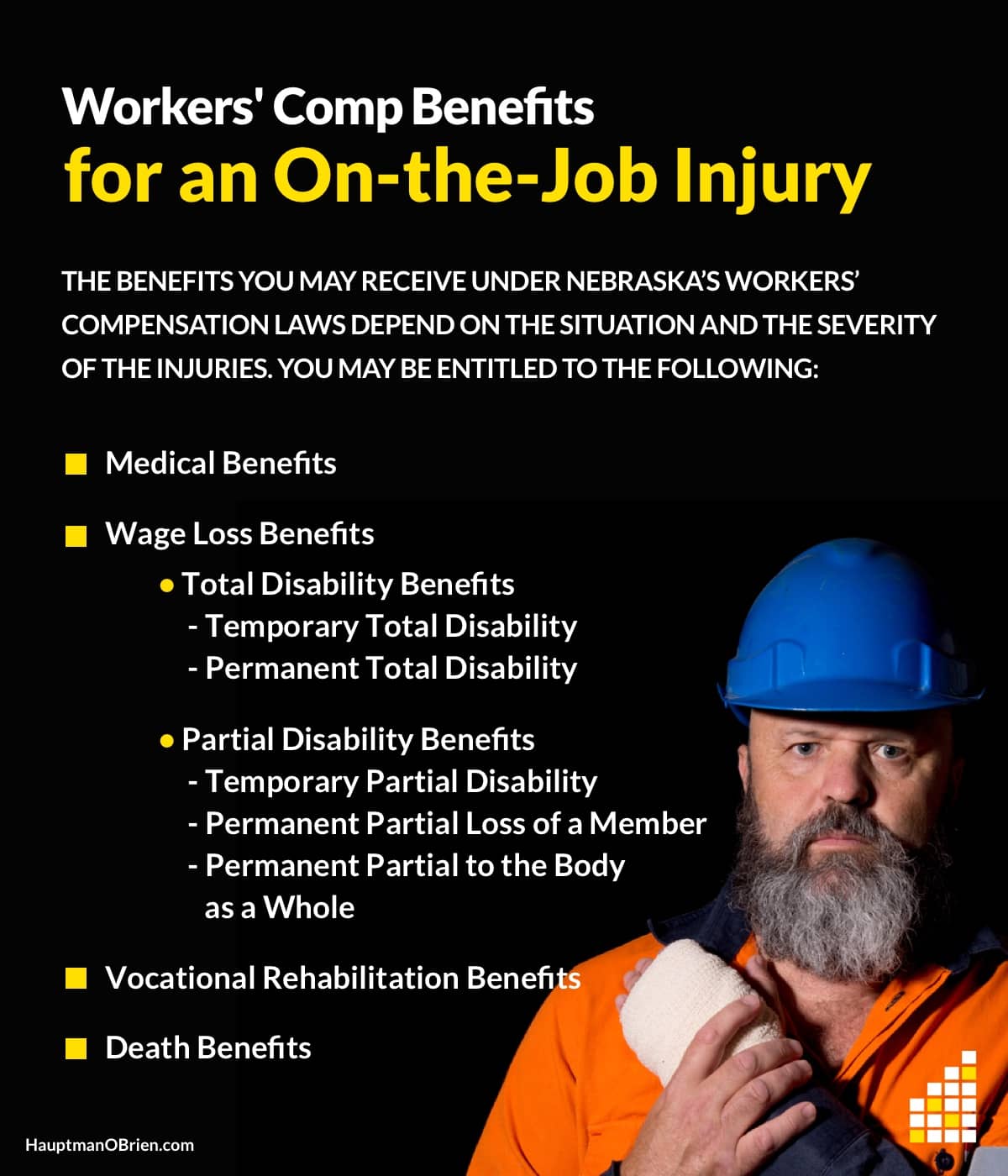
Federal workers’ compensation provides a "benefit package" rather than a single payout. These benefits are designed to address both the immediate and long-term consequences of a workplace injury.
Medical Benefits
Under all federal programs, an injured worker is entitled to all medical, surgical, and hospital services deemed necessary by the OWCP to treat the injury. This includes physical therapy, medications, and medical devices. One distinct advantage of the federal system (specifically FECA) is that employees often have the initial right to choose their own physician, provided the physician is not on a "debarred" list.
Wage Loss Compensation
If an employee is unable to work due to their injury, they are eligible for wage loss compensation. Under FECA:
- If the employee has no dependents, they receive 66 2/3% of their pre-disability pay.
- If the employee has one or more dependents (spouse or children), they receive 75% of their pay. These benefits are generally tax-free at the federal level, making the "take-home" amount comparable to the employee's previous net income.
Continuation of Pay (COP)
Specific to FECA and traumatic injuries, COP allows an agency to continue an employee’s regular pay for up to 45 days while the claim is being processed. This prevents the immediate financial hardship often associated with state-level claims where there is a "waiting period" before checks arrive.
Schedule Awards
If an injury results in the permanent impairment of a specific body part or function (such as loss of use of an arm or hearing loss), the worker may be eligible for a "Schedule Award." This is a monetary payment for a set number of weeks based on the severity of the permanent impairment, as determined by the AMA Guides to the Evaluation of Permanent Impairment.
The Claims Process and Administrative Hurdles
The process for filing a federal workers' compensation claim is rigorous and highly dependent on documentation.
Filing the Initial Forms
For FECA, the process starts with Form CA-1 (Federal Employee's Notice of Traumatic Injury and Claim for Continuation of Pay/Compensation) or Form CA-2 (Notice of Occupational Disease and Claim for Compensation). These must be submitted to the supervisor, who then forwards them to the OWCP.
For maritime workers under LHWCA, Form LS-201 (Notice of Employee's Injury or Death) must be filed within 30 days.
The Role of Medical Evidence
The most common reason for claim denial is "insufficient medical evidence." A doctor’s note saying an employee "cannot work" is rarely enough. The OWCP requires a narrative report that includes:
- A complete medical and employment history.
- Results of physical examinations and laboratory tests.
- A firm diagnosis.
- A "rationalized" medical opinion explaining how the work event caused the diagnosis.
Appellate Rights
If a claim is denied, federal employees have specific avenues for appeal. They can request an oral hearing or a "review of the written record" from the OWCP Branch of Hearings and Review. They can also request Reconsideration if they have new evidence. The final level of appeal is the Employees' Compensation Appeals Board (ECAB), which is a three-judge panel that reviews the legal application of the law to the facts of the case.
Challenges and Common Mistakes in Federal Claims
Navigating the federal system in 2026 involves avoiding several common pitfalls that can lead to delayed or denied benefits.
- Missing Deadlines: While the statutory limit for FECA is three years, missing the 30-day window for a traumatic injury can result in the loss of Continuation of Pay (COP).
- Vague Incident Descriptions: Statements like "my back hurt after my shift" are often rejected. Claims should be specific: "I felt a sharp pain in my lower back while lifting a 40-pound mail tray at 10:15 AM."
- Inadequate Physician Selection: Not all doctors understand the requirements of the OWCP. It is critical to work with a physician who is willing to write detailed narrative reports rather than just simple "check-the-box" forms.
- Interruption of Treatment: Gaps in medical treatment can be used by the OWCP as evidence that the injury has resolved or that the current symptoms are not related to the original work injury.
Frequently Asked Questions
Can I sue the federal government if I am injured on the job?
Generally, no. FECA acts as an "exclusive remedy." In exchange for the guaranteed benefits provided by the act, federal employees forfeit the right to sue the United States under the Federal Tort Claims Act (FTCA) for workplace injuries. This provides stability for both the government and the employee.
How long does it take for a federal workers' comp claim to be approved?
As of 2026, the OWCP aims to process "simple" traumatic injury claims within 45 to 60 days. However, occupational disease claims (CA-2) can take six months or longer due to the complexity of the medical evidence required. Continuation of Pay (COP) is designed to bridge this gap for traumatic injuries.
What happens if my injury is partially my fault?
Federal workers' compensation is a "no-fault" system. Benefits are not reduced or denied because an employee was careless or violated a safety rule, provided the injury was not caused by willful misconduct, intent to bring about injury to oneself or another, or intoxication.
Can I receive both federal workers' comp and OPM disability retirement?
You generally cannot receive both FECA wage loss compensation and an Office of Personnel Management (OPM) disability annuity at the same time for the same period. You must usually "elect" between the two. However, you can often receive a FECA Schedule Award concurrently with OPM retirement benefits.
Is there a limit to how long I can receive medical benefits?
No. Under FECA and LHWCA, medical benefits continue for as long as the work-related condition requires treatment. There is no "settlement" that ends medical coverage unless it is a specific, rare "Lump Sum" buyout under LHWCA, which is strictly regulated.
Summary and Next Actions
Understanding federal workers' compensation requires recognizing that it is an administrative process governed by strict statutes rather than a standard insurance negotiation. If you are a federal employee or a covered contractor, your primary focus should be on the timely filing of notice and the securing of detailed medical documentation.
If you have been injured:
- Notify your supervisor immediately and request the appropriate form (CA-1 or CA-2).
- Seek medical attention from a provider who understands the OWCP’s narrative report requirements.
- Maintain a personal file of all correspondence, medical records, and travel expenses for treatment.
- If your claim is complex or has been denied, consider consulting with a qualified representative or attorney who specializes specifically in federal (not state) workers' compensation law.
For further information or to access official forms, visit the Department of Labor OWCP website.
Image Gallery
Select an image to open it in a new tab.


Omar Farooq
EdTech Innovation and Virtual Pedagogy Journalist
