Understanding the Redemptoris Mater Seminary: Mission, Formation, and Global Impact

A Redemptoris Mater seminary is a diocesan missionary institution dedicated to training priests for the "New Evangelization" within the Catholic Church. Founded through the Neocatechumenal Way, these seminaries produce diocesan priests who are internationally recruited and remain permanently available to be sent by their Bishop to any part of the world.
The Redemptoris Mater (Mother of the Redeemer) seminaries represent one of the most significant structural developments in Catholic priestly formation since the Second Vatican Council. As of 2026, these institutions have proliferated across the globe, answering the Church's urgent call for a missionary spirit that transcends national and diocesan borders. Unlike traditional seminaries that primarily train men to serve a specific local geographic area, the Redemptoris Mater model integrates a universal missionary mandate into the very heart of the diocesan priesthood.
The Origins and Vision of Redemptoris Mater
The first Redemptoris Mater seminary was established in Rome in 1987 by Pope John Paul II. The concept arose from the Neocatechumenal Way, an "itinerary of Christian formation" founded by Kiko Argüello and Carmen Hernández in the 1960s. The initiators recognized a growing need for priests who were not only intellectually prepared but also spiritually forged within a community and ready to travel to secularized regions or "mission territory" (missio ad gentes).
The vision was to create a "diocesan" seminary that was also "missionary." This distinction is critical in canon law. While members of religious orders (like Jesuits or Franciscans) are naturally missionary, secular or diocesan priests are typically tied—or "incardinated"—to one specific diocese. Redemptoris Mater seminaries bridge this gap: the priests are incardinated into a local diocese and remain under the authority of the local Bishop, yet they are ordained specifically for the mission. This allows a Bishop to help other dioceses in need by sending his priests abroad, embodying the spirit of "collegiality" among bishops.
Core Characteristics: Internationality and Mission
Three primary pillars define the identity of every Redemptoris Mater seminary: it is diocesan, it is missionary, and it is international.
Diocesan Identity
Each Redemptoris Mater seminary is legally and ecclesiastically a seminary of the local diocese. It is not an independent entity or a "Neocatechumenal" seminary in a proprietary sense. The Rector is appointed by the local Bishop, and the students are candidates for the local presbyterate. This ensures that the priests are fully integrated into the life of the local Church, serving in parishes and diocesan offices like any other priest.
Missionary Spirit
The "missionary" aspect refers to the total availability of the priest. Upon ordination, the priest makes a promise to go wherever the Bishop deems necessary. This might mean serving in a local parish for five years and then being sent to a remote village in Siberia, a secularized suburb in Northern Europe, or a mission in the Amazon. This mobility is a direct response to the "priest shortage" in many parts of the Western world.
Internationality
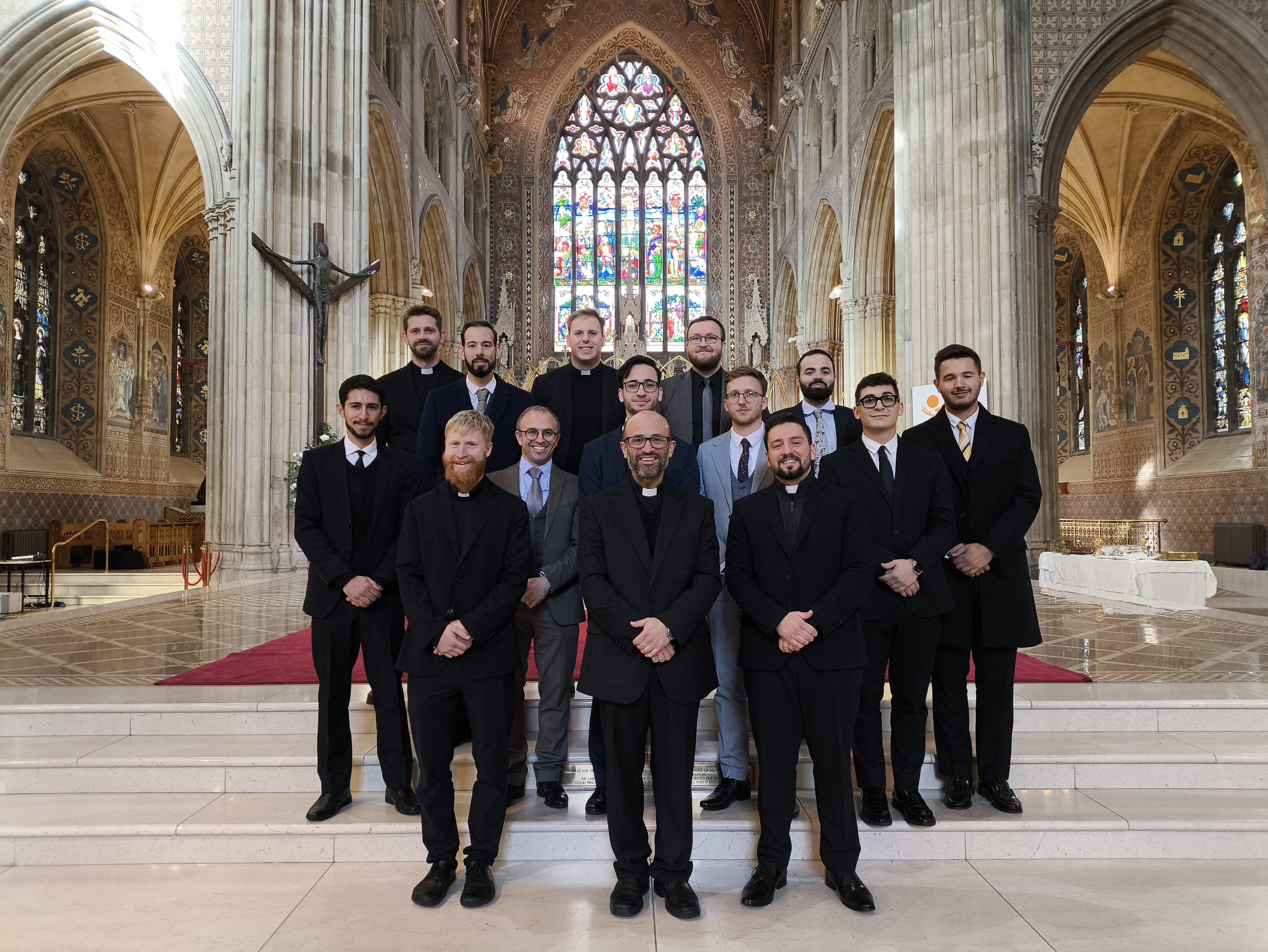
A hallmark of the Redemptoris Mater model is the mixture of cultures. In any given seminary, one might find 30 seminarians representing 15 different nationalities. This is intentional. By living, studying, and praying with men from different backgrounds, the seminarian learns to strip away nationalistic prejudices and discovers a "catholic" (universal) identity. This environment prepares them to serve in any cultural context without being limited by their own cultural upbringing.
The Formation Process: The "Tripod" of the Way
Formation in a Redemptoris Mater seminary follows the Ratio Fundamentalis Institutionis Sacerdotalis, the universal Church's guidelines for priestly training, but it adds a unique layer: the Neocatechumenal Way. This is often described as a "tripod" of Word of God, Liturgy, and Community.
1. Human and Spiritual Formation
Seminarians continue to participate in their own Neocatechumenal communities. This is a vital distinction from traditional seminaries where the student is often removed from his home community to live a monastic-style existence. In the Redemptoris Mater model, the seminarian remains part of a small community of laypeople—families, youth, and the elderly. This helps the candidate maintain a grounded "human" formation, preventing the "clericalism" that the Church has warned against in recent decades.
2. Intellectual Formation (Philosophy and Theology)
The academic rigor is identical to that of any other Catholic seminary. Candidates typically undergo two years of philosophical studies followed by four years of theological studies. Most Redemptoris Mater seminaries are affiliated with local Catholic universities or have their own faculty accredited by the Holy See. They study Sacred Scripture, Dogmatic Theology, Moral Theology, Canon Law, and Church History.
3. The "Itinerancy" Period
A unique feature of this formation is the "itinerancy" or missionary year. Between the study of philosophy and theology, or during the theological years, seminarians are sent out for one to two years to serve on a mission team. They might accompany a priest and a family in mission to a foreign country or assist in the "New Evangelization" efforts in another diocese. This period tests their vocation and their ability to live in "precarious" or difficult missionary conditions before they commit to permanent ordination.
Admission Requirements and Selection
Becoming a seminarian at a Redemptoris Mater is not a standard application process. It is deeply tied to the "calling" within the Neocatechumenal Way.
- Participation in the Way: A candidate must be an active member of a Neocatechumenal community and have reached a certain stage in their "itinerary" of faith.
- The "Convivence": Every year, thousands of young men who feel a call to the priesthood attend an international "convivence" (a retreat). Through prayer and discernment, they offer their lives for the mission.
- The Lot: In a practice mirroring the early Church (Acts 1:26), candidates are often assigned to specific seminaries around the world by lot. This emphasizes that the mission is not a personal choice of location, but a response to where the Church needs them.
- Vetting: Once assigned to a seminary, the candidate undergoes the standard vetting required by the Church, including psychological evaluations, health checks, and interviews with the Rector and the Bishop.
Comparing Redemptoris Mater and Traditional Seminaries
| Feature | Redemptoris Mater Seminary | Traditional Diocesan Seminary |
|---|---|---|
| Recruitment | International (from the NC Way) | Local (usually from the diocese) |
| Scope of Service | Universal/Missionary | Local/Diocesan |
| Community Life | Tied to a lay community (The Way) | Centered within the seminary walls |
| Governance | Local Bishop + NC Way Initiators | Local Bishop |
| Missionary Break | Required (1-2 years Itinerancy) | Optional (Pastoral year) |
| Primary Goal | New Evangelization & Missio ad Gentes | Pastoral care of existing parishes |
Financial Support: Living by Providence
A significant aspect of the Redemptoris Mater seminaries is their financial model. Most do not have large endowments or guaranteed state funding. They rely heavily on what they call "Providence"—voluntary donations from the Neocatechumenal communities, families, and benefactors. This creates a bond of solidarity between the laypeople and the future priests. The laypeople support the seminarians financially, and in return, the priests dedicate their lives to the spiritual care of the people.
In 2026, as economic shifts have impacted traditional Church funding, this model of grassroots support has proven resilient. It reinforces the idea that the seminary is not an "ivory tower" but an institution sustained by the very people the priests will eventually serve.
Common Challenges and Criticisms
Despite their growth, Redemptoris Mater seminaries have faced challenges. Some critics have expressed concerns about the "separatism" of the Neocatechumenal Way, arguing that the formation might prioritize the "Way" over the broader diocesan life. However, the Holy See has consistently defended the model, provided that the seminaries remain strictly under the authority of the local Bishop.
Another challenge is the cultural adjustment. Bringing men from 20 different countries into one house requires immense pastoral sensitivity and strong leadership from the Rector. Language barriers, different liturgical customs, and varying food and social norms must be navigated to build a unified "presbyterate."
Global Presence and Impact
By 2026, there are over 125 Redemptoris Mater seminaries on five continents. Major hubs include:
- Rome: The flagship seminary serving the Pope's diocese.
- Newark, USA: One of the most prominent in North America.
- Madrid, Spain: A primary source of vocations in Europe.
- Takamatsu, Japan: Serving the difficult mission in highly secularized Asia.
- Sydney, Australia: A key center for the Oceania region.
The impact of these seminaries is felt most strongly in "de-Christianized" areas. In cities where parishes were closing due to a lack of priests, Redemptoris Mater graduates have often been the catalyst for revival, bringing with them a "community-based" model of parish life that attracts young families and the youth.
Frequently Asked Questions
Can a man join a Redemptoris Mater seminary if he is not in the Neocatechumenal Way?
Generally, no. The formation is specifically designed to complement the spiritual journey of the Neocatechumenal Way. Because the "tripod" of formation relies on the candidate attending community meetings and celebrations, someone not familiar with this itinerary would find the structure confusing and the spiritual requirements difficult to fulfill.
Are Redemptoris Mater priests different from other Catholic priests?
In terms of their sacramental power and "legal" standing, they are identical to any other diocesan priest. They celebrate the same Mass, hear confessions, and perform the same duties. The difference lies primarily in their "charism" or focus: a heightened emphasis on missionary availability and a background in small-community faith formation.
Where can I find a list of all Redemptoris Mater seminaries?
Because these are diocesan institutions, there is no single "corporate" website. Instead, they are listed on the official websites of the respective Catholic Archdioceses (e.g., the Archdiocese of Washington, the Archdiocese of London, etc.). The official website of the Neocatechumenal Way also provides information on the global distribution of these seminaries.
Do these seminaries only teach the Neocatechumenal Way?
No. They are required by the Holy See to teach the full curriculum of Catholic Theology and Philosophy. Their academic standards are overseen by the Congregation for Catholic Education. While the "Way" provides the spiritual and communal context, the intellectual content is the universal teaching of the Catholic Church.
What is the role of the "Rector" in this specific model?
The Rector of a Redemptoris Mater seminary has a complex role. He must ensure the seminarians meet all diocesan and canonical requirements for ordination while also facilitating their continued growth in the Neocatechumenal Way. He acts as a bridge between the Bishop, the seminary, and the initiators of the Way.
Summary of Next Steps for Interested Candidates
If you are a young man discerning a vocation within the Neocatechumenal Way, the first step is to speak with your community catechists. They will guide you through the process of "scrutiny" and discernment. For those interested in supporting these seminaries, contacting your local diocese or the nearest Redemptoris Mater directly is the most effective way to provide financial or material assistance. The mission of these seminaries remains a critical component of the Church's strategy to navigate the spiritual landscape of the 21st century.
Image Gallery
Select an image to open it in a new tab.


Simon Caldwell
Enterprise Technology and Systems Editor
