
The Boeing 727 is an aviation icon, but its cabin configuration, passenger comfort, and safety features are frequently misunderstood. Examining the aircraft's physical layout reveals that popular perceptions of cramped space, outdated life support, and primitive ergonomics often clash with the actual historical and engineering reality of this legendary trijet.
Introduction to the Boeing 727 Interior Legacy
The Boeing 727 stands as one of the most successful commercial jetliners in history. Introduced in the 1960s, it revolutionized regional and trunk-line air travel by introducing high-lift wing devices that allowed it to operate out of shorter runways while maintaining high cruise speeds. Yet, decades after its peak commercial operational era, the aircraft is subject to numerous urban legends regarding its cabin. From misconceptions about extreme noise levels to exaggerated claims about passenger capacity and bizarre interior layouts, the reality of the Boeing 727 interior deserves careful historical and technical examination.
Resolving these misconceptions requires looking past cinematic tropes and nostalgic anecdotes. By examining Federal Aviation Administration (FAA) records, original Boeing engineering documentation, and operator configurations, this analysis separates aviation lore from verifiable physical fact.
Myth 1: The Boeing 727 Cabin Was Unbearably Loud Everywhere
The Origin of the Noise Myth
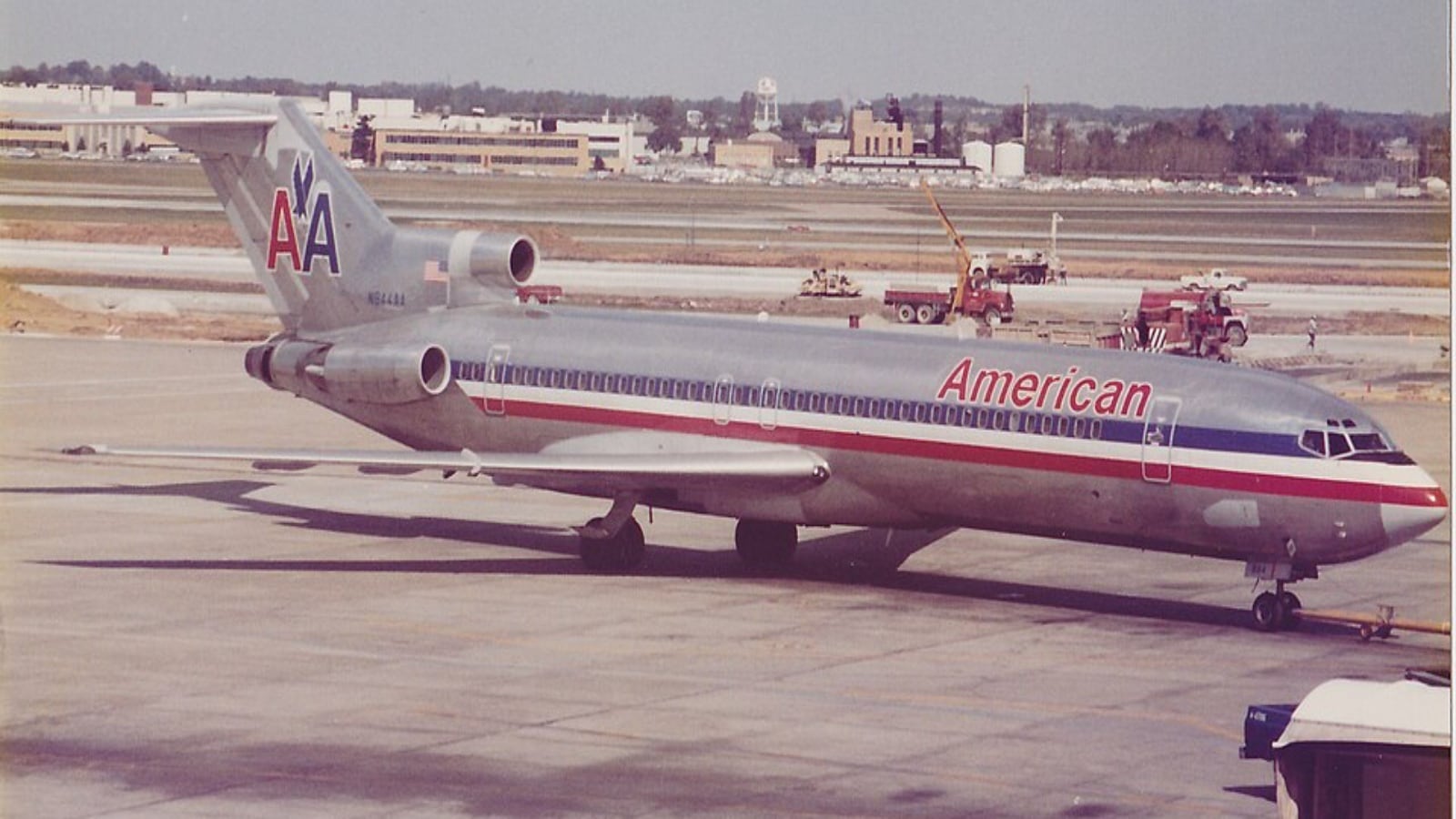
Because the Boeing 727 features three Pratt & Whitney JT8D turbofan engines mounted directly at the rear of the fuselage, a common assumption is that the entire cabin acted as an acoustic nightmare. Passengers often recall the aircraft as a deafening tube of metal.
The Engineering Reality
While it is historically accurate that seats located in the aft rows—particularly rows 20 and back—experienced substantial engine roar and high decibel levels, the forward and mid-cabin sections were remarkably quiet for their era.
- Aft Section: Dominated by low-frequency exhaust rumble and mechanical vibration from the center engine's S-duct intake and exhaust.
- Forward Section: Forward of the wing roots, the cabin was insulated by thick fiberglass blankets and distanced significantly from the powerplants. In first class or the forward coach section, ambient noise levels were comparable to, or even lower than, many turboprops and early twinjets of the same generation.
Furthermore, airline operators frequently upgraded interior insulation packages during heavy maintenance overhauls, further mitigating cabin noise as technology progressed through the 1970s and 1980s.

Myth 2: Overhead Bins Were Non-Existent, Forcing All Bags Into the Hold
The Evolution of Overhead Stowage
A prevalent misconception suggests that 1960s airliners like the 727 required passengers to check all luggage because the cabin lacked overhead space entirely. This belief stems from modern experiences with regional jets and low-cost carriers, projecting current constraints backward in time.
The Reality of 1960s Carry-On Culture
The Boeing 727 interior did feature overhead bins, but their design and function differed radically from modern pivot or space-bin systems.
- Open Racks: Early 727 models utilized open luggage racks equipped with elastic netting or hinged retaining doors. These were designed for hats, coats, briefcases, and small parcels.
- Enclosed Bins: Later production blocks and aftermarket retrofits introduced enclosed overhead bins.
- Capacity Constraints: The primary limitation was not the absence of bins, but their shallow depth and low weight limits. Passengers in the 1960s and 1970s traveled with smaller, structured suitcases, garment bags, and briefcases that easily fit these smaller compartments, while larger items were routinely checked at the gate or ticket counter.
Myth 3: The 727 Interior Featured Only One Massive, Unpartitioned Coach Cabin
The Uniformity Fallacy
Many assume that because the 727 was a narrow-body aircraft, its interior was a simple, monotonous tube featuring identical seating from front to back, devoid of modern cabin division flexibility.
Flexible Configuration and Class Structuring
Airlines utilized the Boeing 727 across vastly different route structures, from dense short-haul commuter routes to premium transcontinental corridors. Consequently, the interior was highly modular:
- Multi-Class Layouts: Standard configurations often featured a 4-abreast first class (2-2 layout) separated by a movable curtain or bulkhead from a 6-abreast tourist/coach section (3-3 layout).
- Galley and Lavatory Placement: Gallelies were typically split between the forward entry area and the rear service areas. Lavatories were similarly distributed, with a common setup placing one or two lavatories in the extreme rear tailcone area, adjacent to the airstair mechanism.
- Customization: Because Boeing delivered the 727 green or customized to airline specifications, interior styling—including bulkhead panels, reading lights, and seat pitch—varied wildly between carriers like Eastern Air Lines, United Airlines, and Delta Air Lines.
Myth 4: The Built-in Airstair Entered Directly Into a Pressurized Passenger Cabin
The Mechanics of the Tailcone Stair
The iconic ventral airstair—the staircase built into the tail of the Boeing 727—is frequently misunderstood regarding its interaction with cabin pressurization. A persistent myth claims that lowering the stair mid-flight was possible or that the door compromised cabin seal integrity.
Engineering Safe-Guards and Layout
The 727 tailcone airstair is located in an unpressurized aft ventral fairing.
- Pressure Seal: A heavy, inward-opening pressure door sealed the cabin from the unpressurized airstair housing during flight.
- Interlocks: Mechanical and electrical interlocks made it physically impossible to deploy the airstair while the aircraft was pressurized or operating at high engine power settings.
- Boarding Efficiency: Ground operations benefited immensely from this feature, allowing passengers to deplane independently of terminal jetbridges, particularly at smaller regional airports.
Myth 5: The 727 Interior Had No Emergency Oxygen Systems or Modern Safety Gear
Safety Regulation Misconceptions
Some modern travelers believe that vintage airliners lacked the automated safety systems found today, assuming oxygen masks and emergency floor lighting were absent on the 727.
Regulatory Compliance and Evolution
The Boeing 727 was continuously updated to meet evolving FAA and international airworthiness directives throughout its multi-decade service life.
- Drop-Down Oxygen: While early configurations utilized supplemental oxygen bottles or localized drop-down boxes, subsequent cabin overhauls introduced automated drop-down oxygen passenger service units (PSUs) above every seat row.
- Emergency Lighting: Cabin flooring, exit signs, and emergency evacuation paths were retrofitted with battery-backed photoluminescent strips and electric lighting channels to comply with post-1980s fire safety mandates.
Myth 6: Middle Seats on the Boeing 727 Were Wider Than Modern Seats
The Nostalgia Factor
A common trope in aviation commentary is that "the good old days" of flying featured expansive, luxurious seating where even economy passengers enjoyed sprawling legroom and wide middle seats.
Comparative Seating Dimensions
While seat pitch (legroom) in economy class during the regulated airline era of the 1960s and 70s was often slightly more generous (averaging 33 to 34 inches compared to today's standard 30 to 31 inches), the physical width of the seats tells a different story.
- Cabin Width Constraint: The Boeing 727 cabin interior width at armrest height is approximately 12 feet 4 inches.
- The 3-3 Configuration: In a standard 6-abreast economy layout, this restricted width meant individual seat widths typically hovered around 17 to 17.5 inches.
- Middle Seat Reality: Far from being wider, middle seats on the 727 were often identical to or slightly narrower than window and aisle seats to maximize total passenger capacity, matching or slightly trailing modern narrow-body dimensions.
Myth 7: The Flight Deck Was Completely Isolated From the Passenger Cabin
The Isolation Theory
With modern security door regulations, commercial flight decks are treated as secure, closed-off vaults. A misconception exists that the 727 flight deck was similarly cut off from the cabin experience.
Openness and Flight Engineer Integration
In historical context, the relationship between the 727 cabin and flight deck was far more fluid:
- Three-Person Crew: The 727 required a pilot, copilot, and a flight engineer. The flight engineer’s panel faced sideways against the right side of the cockpit, managing complex fuel, electrical, and environmental control systems.
- Cockpit Door Policy: Prior to modern security enhancements enacted after 2001, cockpit doors on the 727 were routinely opened during flight for meals, pilot rotation, or to allow curious passengers (especially children) a brief look at the instruments.
- Cabin Environmental Control: The flight engineer directly monitored cabin pressure, temperature, and airflow, serving as the literal bridge between mechanical systems and passenger comfort.
Comparative Analysis of 727 Interior Realities vs. Modern Narrow-Bodies
To contextualize the Boeing 727 interior against modern aircraft like the Boeing 737 or Airbus A320, reviewing key cabin metrics clarifies structural trade-offs.
| Interior Feature | Boeing 727 Historical Reality | Modern Single-Aisle Equivalent (e.g., A320/737) |
|---|---|---|
| Typical Economy Pitch | 33–34 inches (historically variable) | 29–32 inches (airline dependent) |
| Cabin Width (Interior) | 12 feet 4 inches | 12 feet 4 inches (737) / 12 feet 11 inches (A320) |
| Overhead Stowage | Open racks or shallow enclosed bins | Large pivot/space-bins for rolling bags |
| Aft Cabin Acoustics | High noise level due to rear-mounted engines | Quieter due to under-wing high-bypass turbofans |
| Airstair Capability | Built-in ventral airstair standard on many variants | Optional, rarely specified on modern fleets |
Frequently Asked Questions
What was the maximum passenger capacity of a Boeing 727 interior?
The Boeing 727 was typically certified to carry up to 189 passengers in a high-density, single-class charter configuration (such as the 727-200 variant). Standard domestic airline configurations usually ranged from 130 to 155 passengers spread across a multi-class layout.
Were all Boeing 727 interiors equipped with the tail airstair?
No. While the ventral airstair was a signature feature of the 727 and standard on many variants, airlines could order the aircraft with a sealed tailcone to save weight and maintenance costs if their intended route network relied entirely on jetbridges and airstair-equipped ground stations.
Why did the Boeing 727 cabin feel different from a modern 737?
The psychological feel of the 727 cabin was influenced by lower ceiling heights relative to modern sculptured sidewalls, smaller overhead bins, and distinct lighting aesthetics typical of mid-century industrial design. Additionally, the interior acoustic profile shifted dramatically depending on whether a passenger sat forward of the wing or near the tail engines.
Could passengers access the baggage hold from inside the 727 cabin?
No. Like almost all conventional commercial transport category aircraft, the cargo and baggage holds on the Boeing 727 were located beneath the passenger cabin floor and were entirely inaccessible during flight.
Where is the best place to sit on a Boeing 727 if taking a heritage flight today?
For passengers fortunate enough to fly on an operational or museum-preserved Boeing 727, seats located forward of the wing (Rows 1 through 10) offer the smoothest ride and the lowest ambient noise levels, avoiding the high-frequency vibration and exhaust rumble associated with the aft engine installation.
Practical Next Steps for Aviation Enthusiasts
For those researching historical aviation layouts or planning visits to museum aircraft featuring intact Boeing 727 interiors:
- Verify Variant Specifications: Confirm whether the aircraft is a shorter 727-100 or a stretched 727-200, as interior lengths and exit door placements differ.
- Consult Aviation Museums: Visit recognized preservation sites, such as the Museum of Flight in Seattle or the Aviation Hall of Fame, where intact 727 cabins allow visitors to directly inspect historical seating pitch, overhead bin design, and flight engineer stations.
- Review Original Manuals: Examine digitized historical flight operations manuals and airline seating charts to appreciate the engineering compromises required for mid-century jet travel.
Image Gallery
Select an image to open it in a new tab.
Ingrid Bjornson
Global Cyber Policy and Regulation Analyst
