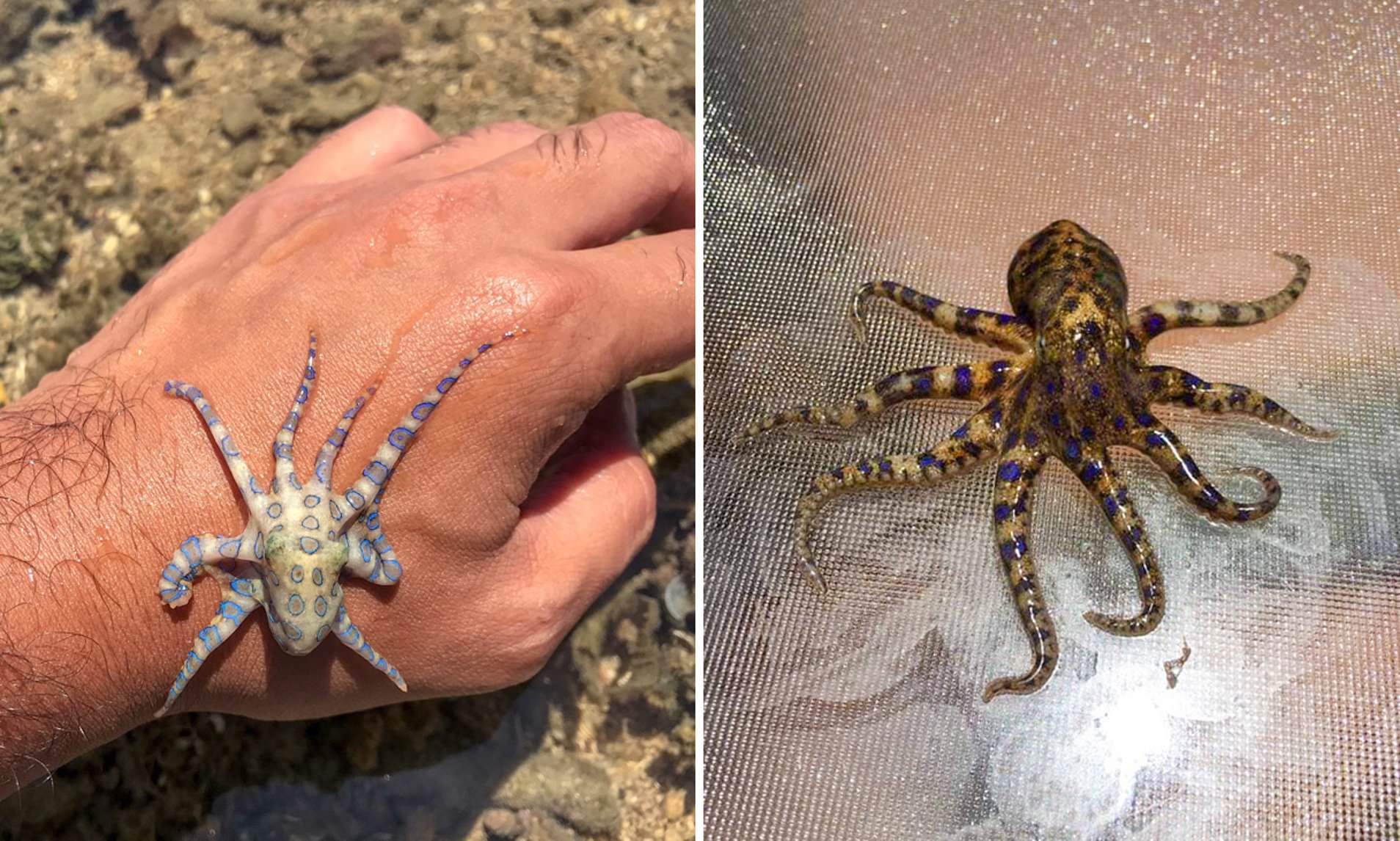
The blue-ringed octopus does not technically sting; it delivers a potent neurotoxin through a bite from its parrot-like beak. This bite is often painless and nearly invisible, injecting tetrodotoxin-laden saliva directly into the victim’s bloodstream, which quickly leads to respiratory paralysis and potential death without immediate medical intervention.
The Anatomy of the Attack: Why It Is a Bite, Not a Sting
Commonly misunderstood as a "stinging" creature similar to a jellyfish, the blue-ringed octopus (genus Hapalochlaena) employs a sophisticated envenomation system located in its head, not its tentacles. While many marine invertebrates use specialized cells called nematocysts to sting, the blue-ringed octopus relies on its posterior salivary glands and a sharp chitinous beak.
The beak is located at the center of the octopus’s eight arms. It is remarkably strong, capable of piercing through the shells of crustaceans and even through human-grade neoprene wetsuits. When the octopus feels threatened—usually due to being stepped on or handled—it bites the perceived aggressor. Because the beak is so small and the injection is so swift, many victims do not even realize they have been bitten until the systemic effects of the toxin begin to manifest. There is often no swelling, no discoloration, and no immediate pain at the site of the puncture.
The venom is not "sprayed" or "shot." Instead, it is secreted by the salivary glands and travels through a duct to the beak. As the beak breaks the skin, the saliva enters the wound. This delivery method is highly efficient, ensuring that the neurotoxin enters the interstitial fluid and subsequently the circulatory system with minimal waste.
The Neurotoxic Payload: Understanding Tetrodotoxin (TTX)
The primary agent responsible for the lethality of a blue-ringed octopus bite is tetrodotoxin (TTX). This is the same toxin found in pufferfish (fugu), but the blue-ringed octopus carries it in much higher concentrations. Interestingly, the octopus does not produce the toxin itself. Instead, the TTX is synthesized by symbiotic bacteria residing in its salivary glands, such as Vibrio and Alteromonas species.
The Biochemical Mechanism
Tetrodotoxin is a potent sodium channel blocker. In a healthy human body, nerve impulses travel via the movement of sodium ions through specific channels in the cell membrane. When TTX enters the system, it binds to these voltage-gated sodium channels, effectively "plugging" them. This prevents the initiation and propagation of action potentials—the electrical signals that allow the brain to communicate with the muscles.
As of 2026, research continues into the extreme affinity TTX has for these channels. Because the toxin does not cross the blood-brain barrier effectively, the victim's brain remains fully functional and conscious while the body's peripheral nervous system shuts down. This creates a "locked-in" state where the individual can see, hear, and feel everything but is unable to move or breathe.
Toxicity Levels
A single blue-ringed octopus, which rarely exceeds 20 centimeters in length, carries enough tetrodotoxin to kill 26 adult humans within minutes. TTX is estimated to be 1,200 times more toxic than cyanide. There is currently no known antivenom for tetrodotoxin, making the management of the bite a race against time focused on life support rather than neutralization of the poison.
Recognizing the Warning Signs: Aposematism and Behavior
The blue-ringed octopus is naturally a reclusive and well-camouflaged creature. In its relaxed state, it appears a dull, sandy yellow or brown, blending perfectly with coral reefs and tide pools. The "stinging" or biting incident almost always occurs after the animal’s warning signals have been ignored.
Aposematic Coloration
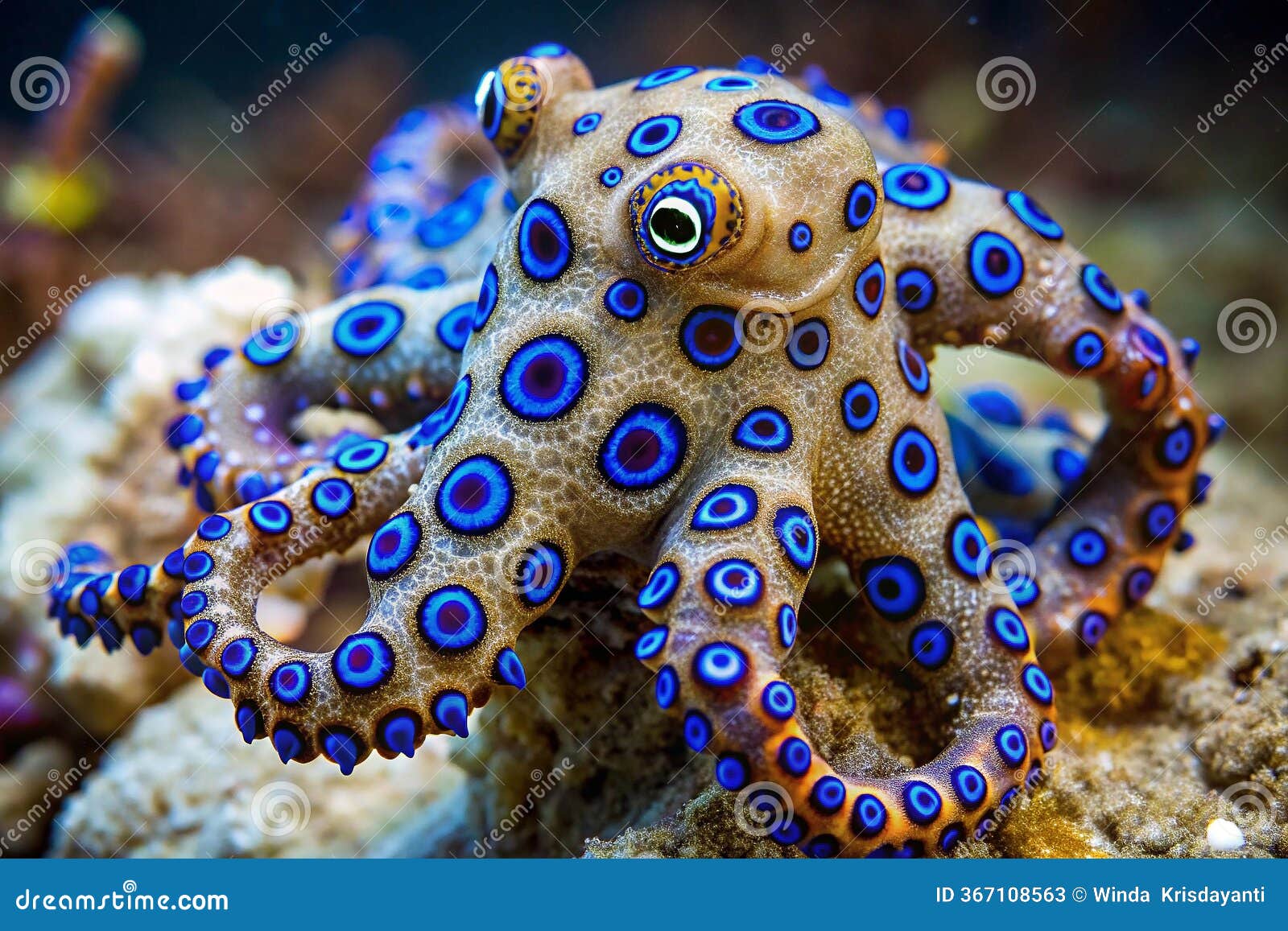
When the octopus is provoked or feels cornered, it undergoes a dramatic physiological change. It uses specialized pigment-containing cells called chromatophores and reflective cells called iridophores to flash bright, iridescent blue rings or lines across its body. This is a classic example of aposematism—a biological signal warning predators that the animal is highly toxic.
If you see these blue rings, the octopus is already in a high-stress state and is prepared to defend itself. Most incidents occur in the intertidal zones of the Pacific and Indian Oceans, particularly around Australia and Japan, where beachgoers accidentally disturb the animals hiding in shells, discarded bottles, or rock crevices.
Clinical Progression: What Happens to the Human Body
The progression of symptoms following a blue-ringed octopus bite is predictable but terrifyingly rapid. Because the toxin targets the nervous system, the symptoms radiate from the head downward (descending paralysis).
- Phase 1: Sensory Changes (1–10 minutes): The victim may notice a tingling sensation or numbness around the lips, tongue, and face. This is often accompanied by a "light" feeling or dizziness.
- Phase 2: Motor Impairment (10–20 minutes): Muscle weakness begins. The victim may find it difficult to speak (dysarthria) or swallow (dysphagia). Vision may become blurred or doubled as the muscles controlling the eyes begin to fail.
- Phase 3: Respiratory Distress (20–30 minutes): The muscles responsible for breathing, including the diaphragm and intercostal muscles, become paralyzed. This leads to hypoxia (lack of oxygen).
- Phase 4: Full Paralysis and Potential Death: Without intervention, the victim loses all voluntary muscle control. If artificial respiration is not provided, death occurs from respiratory failure and subsequent cardiac arrest.
It is critical to note that the heart is a different type of muscle (cardiac muscle) and its electrical system is somewhat more resistant to TTX than skeletal muscle. Therefore, a victim's heart may continue to beat for some time after they have stopped breathing, providing a vital window for life-saving first aid.
Comparison of Marine Toxins and Delivery Methods
To understand the unique danger of the blue-ringed octopus, it is helpful to compare it to other notorious marine hazards encountered by divers and coastal residents.
| Creature | Delivery Method | Primary Toxin | Major Effect | Treatment |
|---|---|---|---|---|
| Blue-Ringed Octopus | Bite (Beak) | Tetrodotoxin | Respiratory Paralysis | Mechanical Ventilation |
| Box Jellyfish | Sting (Nematocysts) | Chironex Toxin | Cardiac Arrest / Skin Necrosis | Vinegar & Antivenom |
| Stonefish | Dorsal Spines | Verrucotoxin | Extreme Pain / Shock | Hot Water & Antivenom |
| Cone Snail | Proboscis (Harpoon) | Conotoxins | Paralysis / Vision Loss | Supportive Care |
| Sea Snake | Bite (Fangs) | Neurotoxins / Myotoxins | Muscle Breakdown | Antivenom |
First Aid and Emergency Protocols (2026 Guidelines)
If a blue-ringed octopus bite is suspected, immediate action is required. The primary goal is to maintain oxygenation until the toxin is naturally metabolized and excreted by the body, a process that usually takes between 15 and 24 hours.
The Pressure Immobilization Technique (PIT)
The most effective field treatment for a blue-ringed octopus bite is the Pressure Immobilization Technique. This is the same method used for funnel-web spider and certain snake bites.
- Apply a broad pressure bandage: Wrap the entire limb, starting from the bite site and moving upward. The bandage should be as tight as one for a sprained ankle—not so tight that it cuts off circulation (you should still feel a pulse).
- Immobilize the limb: Use a splint to prevent any movement. Movement accelerates the spread of the toxin through the lymphatic system.
- Do not remove the bandage: The bandage should only be removed in a hospital setting where a ventilator is ready.
Artificial Respiration
The most common cause of death is respiratory failure. If the victim stops breathing:
- Perform Rescue Breathing: Provide mouth-to-mouth or use a bag-valve-mask if available. Because the victim’s heart may still be beating, keeping the lungs inflated with oxygen can keep the brain and organs alive.
- Continue indefinitely: Do not stop until professional medical help arrives. Victims have been known to make a full recovery after hours of manual ventilation, provided oxygen levels were maintained.
Clinical Management
Once at the hospital, the patient will likely be intubated and placed on a mechanical ventilator. Since there is no antivenom, doctors provide supportive care, monitoring blood pressure and hydration while the kidneys clear the TTX from the system. Because the victim is often conscious but paralyzed, medical staff must provide sedation and communicate clearly to the patient that they are being treated, as the psychological trauma of "being buried alive" (paralyzed but aware) is significant.
Prevention and Habitat Awareness
Prevention is the only foolproof way to survive a blue-ringed octopus encounter. These animals are not aggressive; they are defensive.
- Avoid Handling Shells: Blue-ringed octopuses love to hide in empty gastropod shells or soda cans. If you are shelling, use a tool to inspect the interior before picking it up.
- Wear Protection: When wading in tide pools, wear sturdy reef shoes. While the beak can pierce neoprene, thick rubber soles provide a significant barrier.
- Observe Distance: If you spot an octopus, do not attempt to poke it or "make it show its rings." The flash of blue is a sign of extreme distress.
- Educate Children: In endemic areas (like the Australian coastline), children should be taught never to pick up small octopuses or "pretty" shells from the water’s edge.
Common Misconceptions
Several myths persist regarding the blue-ringed octopus sting that can lead to dangerous outcomes:
- "Vinegar helps": This is false. Vinegar is used for box jellyfish stings to neutralize undischarged stinging cells. It has no effect on a tetrodotoxin bite and may waste precious seconds.
- "You'll feel it immediately": Many victims describe the bite as a "tiny prick" or nothing at all. Never assume you are safe just because there is no pain.
- "Suctioning the wound works": Attempting to suck the venom out with your mouth or a device is ineffective and potentially dangerous to the person providing aid.
- "Alcohol or Heat works": Neither has been proven to neutralize TTX. Heat is effective for protein-based toxins like stonefish venom, but TTX is a non-protein alkaloid that is heat-stable.
Related Questions
How long does it take for a blue-ringed octopus bite to kill you?
In severe cases, respiratory failure can occur within 20 to 90 minutes. However, if the dose is high or the victim is a child, the onset of life-threatening symptoms can happen even faster. Prompt first aid involving the Pressure Immobilization Technique and artificial respiration is the only way to extend this window until hospital care is reached.
Can you survive a blue-ringed octopus bite?
Yes, the survival rate is very high if the victim receives immediate and continuous respiratory support. Because the toxin eventually leaves the body, patients who are kept oxygenated through mechanical ventilation usually recover completely within 24 to 48 hours without long-term neurological damage.
Where are blue-ringed octopuses most commonly found?
They are primarily found in the Indo-West Pacific, ranging from the waters of Japan down to the southern coast of Australia. They prefer shallow coastal waters, tide pools, and coral reefs, often hiding under rocks or inside debris during the day.
Is the blue-ringed octopus venomous or poisonous?
It is technically venomous because it actively injects the toxin into its prey or attacker through a bite. However, it can also be considered poisonous if ingested, as the tetrodotoxin remains active throughout the animal's tissues.
Next Steps for Safety
If you plan to visit coastal regions in the Pacific or Indian Oceans, familiarize yourself with the appearance of the Hapalochlaena species. Always carry a first-aid kit containing broad elastic bandages (compression bandages) and ensure at least one member of your group is trained in CPR and rescue breathing. If an encounter occurs, prioritize immobilization and immediate transport to an emergency facility.
Image Gallery
Select an image to open it in a new tab.
Mateo Castillo
Decentralized Finance and E-Payments Strategist
