The Knowledge Management Role in Organizations: Functions, Skills, and Strategic Impact

The knowledge management role is responsible for the systematic capture, organization, and dissemination of an organization’s collective expertise. By bridging the gap between siloed data and actionable insights, KM professionals ensure that the right information reaches the right person at the right time, fostering innovation, reducing rework, and improving operational efficiency across the enterprise.
The Evolution of the Knowledge Management Role
As of 2026, the knowledge management (KM) role has transitioned from a niche administrative function to a core strategic pillar within modern organizations. Historically, the role was often associated with librarianship or basic document management—archiving files and maintaining digital repositories. However, in the current landscape, where information volume grows exponentially, the KM role serves as the connective tissue between human intelligence and machine learning.
The primary objective of the KM professional is to manage the lifecycle of both tacit knowledge (the experience, intuition, and "know-how" stored in people's heads) and explicit knowledge (documented data, manuals, and reports). In 2026, this involves not just managing documents, but curating the "organizational memory" to ensure that as employees retire or move on, their critical insights remain accessible to the collective.
Organizations now recognize that "knowledge leak"—the loss of proprietary information when staff depart—is a significant financial risk. The KM role mitigates this risk by building frameworks that encourage continuous sharing and collaborative learning.
Core Responsibilities of the KM Professional
The daily functions of a knowledge management practitioner are multifaceted, balancing technical orchestration with human-centric cultural change. To understand the depth of the role, one must look at the specific domains they oversee.
Knowledge Auditing and Mapping
Before any system can be implemented, the KM role must identify what the organization knows and, more importantly, what it doesn’t know. This involves conducting knowledge audits to find gaps in documentation or expertise. Mapping follows, which visualizes how information flows between departments, identifying bottlenecks where critical insights are getting trapped in silos.
Content Curation and Lifecycle Management
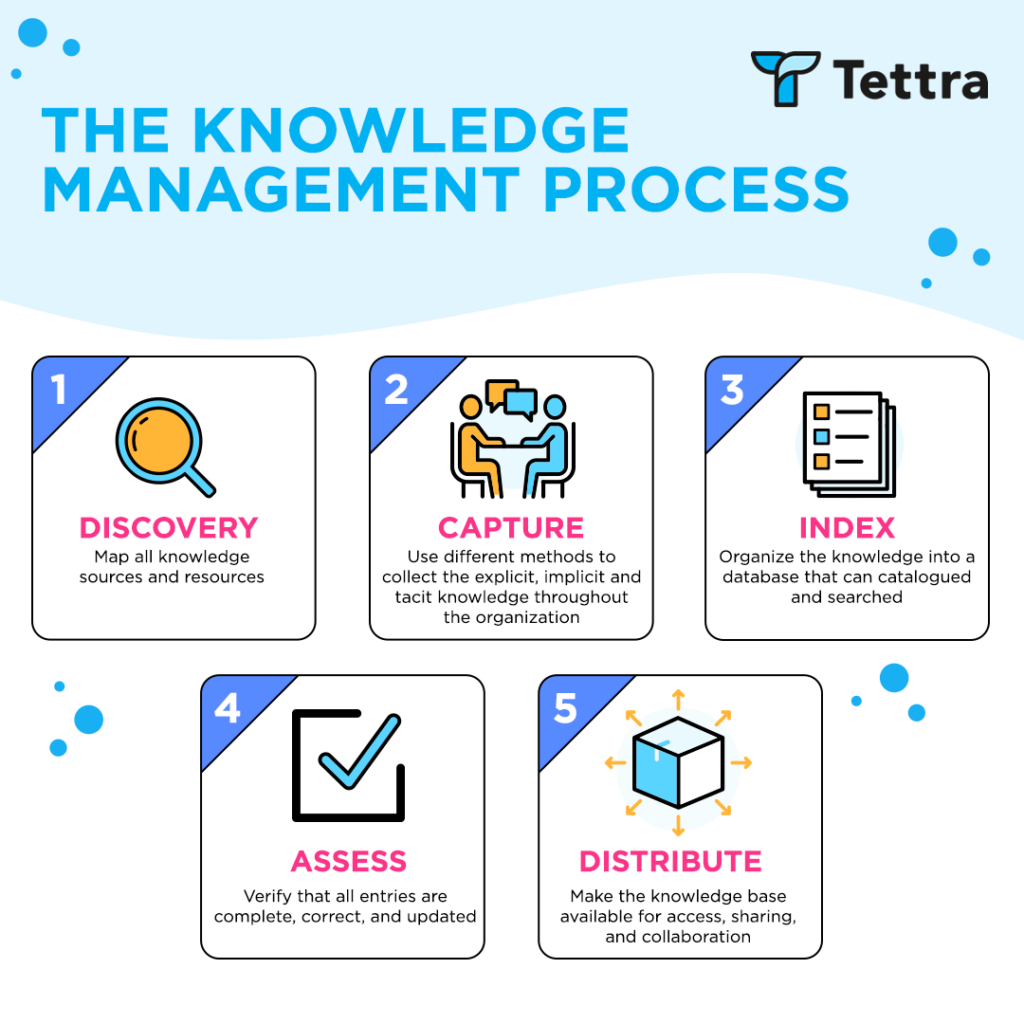
Knowledge is not static; it has an expiration date. KM professionals are responsible for the entire content lifecycle:
- Creation: Providing templates and guidelines for high-quality documentation.
- Capture: Utilizing tools to record meetings, discussions, and decision-making processes.
- Refinement: Ensuring information is accurate, tagged correctly, and easy to find.
- Storage: Managing the technical infrastructure, such as internal wikis, intranets, or knowledge bases.
- Dissemination: Proactively pushing relevant information to users based on their specific projects or roles.
Governance and Taxonomy Development
Without a standardized language, searchability fails. The KM role involves creating and maintaining taxonomies and ontologies—structured naming conventions and categories that allow different departments to use a unified language. In 2026, this responsibility has expanded to include "AI readiness," where KM professionals ensure that data is labeled in a way that large language models (LLMs) can accurately parse for internal retrieval-augmented generation (RAG) systems.

The Strategic Importance of KM in 2026
In the current business environment, the KM role is no longer just about "keeping files." It is about competitive advantage. There are three primary areas where the KM role provides high-level strategic value:
- Accelerating Onboarding and Time-to-Productivity: By providing a structured "source of truth," new hires can self-serve information, reducing the training burden on senior staff and shortening the time it takes for a new employee to become billable or productive.
- Enhancing Decision-Making: When leaders have access to historical data, past project post-mortems, and expert insights, they make fewer mistakes. The KM role ensures that "lessons learned" are not just documents in a folder but are integrated into future project planning.
- Facilitating Innovation: Innovation rarely happens in a vacuum. It occurs at the intersection of different fields of expertise. By facilitating Communities of Practice (CoPs) and cross-departmental knowledge sharing, the KM role creates the "collision points" necessary for new ideas to form.
Required Skills and Competencies for KM Practitioners
The successful KM professional must possess a unique blend of "hard" technical skills and "soft" interpersonal abilities. Because KM is 20% technology and 80% people and process, the role requires a versatile candidate.
Technical Proficiency
Knowledge managers must be comfortable with sophisticated software ecosystems. This includes Enterprise Content Management (ECM) systems, collaborative platforms like Microsoft SharePoint or Slack, and increasingly, AI-driven search engines. Proficiency in data analytics is also crucial, as KM professionals must use data to track engagement and identify which knowledge assets are being underutilized.
Change Management and Empathy
The biggest hurdle in KM is culture. Many employees are hesitant to share their "secret sauce" for fear of becoming obsolete. A KM professional must be a skilled change manager, capable of convincing staff that knowledge sharing increases their own value rather than diminishing it. This requires high emotional intelligence and the ability to design incentive structures that reward collaboration.
Information Architecture
Understanding how people search for information is a science. KM roles require a foundation in information science to design intuitive navigation paths and search experiences. If an employee cannot find an answer in three clicks, they often give up, leading to "shadow knowledge" (unverified information) or unnecessary rework.
Knowledge Management Roles and Hierarchies
The scale of an organization typically determines the structure of its KM team. In 2026, these roles are frequently found within the "Operations," "HR," or "IT" departments, though larger enterprises often have a dedicated "Knowledge and Innovation" division.
| Role Title | Primary Focus | Key Deliverables |
|---|---|---|
| Chief Knowledge Officer (CKO) | High-level strategy and ROI | KM roadmap, cultural alignment, executive buy-in. |
| KM Manager | Operational implementation | System selection, team management, process design. |
| Knowledge Architect | Technical structure | Taxonomy design, metadata standards, search optimization. |
| Knowledge Broker | Facilitating exchange | Connecting people with experts, managing Communities of Practice. |
| KM Specialist / Analyst | Content maintenance | Documentation updates, user training, engagement analytics. |
Integrating Knowledge Management with Artificial Intelligence
A defining characteristic of the knowledge management role in 2026 is the orchestration of AI. The rise of generative AI has not replaced KM; rather, it has made the role more critical. AI models are only as good as the data they are trained on. If an organization's internal documentation is messy, outdated, or contradictory, the AI will produce "hallucinations" or incorrect guidance.
The KM professional now acts as a curator for AI. They ensure that the proprietary data fed into internal bots is verified and high-quality. They also manage the ethical considerations of AI, such as ensuring that sensitive knowledge (like HR files or legal trade secrets) is excluded from general internal AI queries while remaining accessible to authorized personnel.
Measuring the ROI of Knowledge Management
Because KM is often an intangible asset, measuring its success requires specific Key Performance Indicators (KPIs). The KM role involves reporting on these metrics to justify ongoing investment:
- Search Success Rate: How often do users find what they are looking for on the first attempt?
- Time-to-Competency: How many days/weeks does it take for a new hire to work independently compared to pre-KM benchmarks?
- Contribution Rate: What percentage of employees are actively contributing to the knowledge base?
- Cost of Rework: Measuring the reduction in projects that failed or needed corrections due to a lack of available information.
Challenges Facing the KM Role
Despite its importance, the KM role faces several persistent challenges. Information overload is a primary concern; when too much information is captured without strict curation, the knowledge base becomes a "data graveyard." The KM professional must be ruthless in archiving and deleting obsolete content.
Another challenge is the hybrid work environment. With teams spread across time zones, the "water cooler" conversations where tacit knowledge was naturally shared have disappeared. The KM role must find digital equivalents—such as "knowledge cafes" or asynchronous video updates—to ensure that spontaneous learning still occurs.
Finally, there is the ISO 30401:2018 standard. As the international standard for Knowledge Management Systems, KM professionals are increasingly tasked with ensuring their organization’s processes meet these global requirements for certification and compliance. More information on these standards can be found through the International Organization for Standardization.
Frequently Asked Questions
What is the difference between Knowledge Management and Information Management?
Information management focuses on the storage and retrieval of data and objects (the "what"). Knowledge management focuses on the application of that information, the context behind it, and the human expertise required to act on it (the "how" and "why"). While information management might store a manual, KM ensures that the manual is used to solve a specific business problem and captures the user's feedback for improvement.
Can a small organization benefit from a dedicated KM role?
Yes. While a small business may not need a full-time "Chief Knowledge Officer," assigning KM responsibilities to a specific lead is vital. Without it, small teams often rely on "oral tradition," which leads to catastrophic failure if a key employee leaves. In smaller settings, the KM role often focuses on creating a "Single Source of Truth" to keep everyone aligned.
How does AI change the skills required for KM?
AI requires KM professionals to develop "Prompt Engineering" skills and a deeper understanding of data hygiene. In 2026, KM professionals need to understand how LLMs interact with structured and unstructured data. They must move from being "librarians" who organize files to "data stewards" who ensure the organizational knowledge used by AI is trustworthy and secure.
How do you encourage employees to share knowledge?
The KM role involves building a culture of psychological safety where employees feel their expertise is valued. This is often achieved through "gamification" (points or badges for sharing), making sharing part of the performance review process, and simplifying the technology so that contributing takes as little effort as possible.
What are the first steps to starting a KM function?
The first step is a needs assessment. Instead of buying software, the KM lead should interview employees to find out where they struggle most to find information. Once the pain points are identified, the role focuses on a "pilot project"—targeting one department or one specific problem—to demonstrate value before scaling enterprise-wide.
Recommended Next Actions
To effectively implement or enhance the knowledge management role within your organization, consider the following steps:
- Conduct a Knowledge Audit: Identify where critical information is stored and where it is being lost. Use tools like the APQC Knowledge Management Framework to benchmark your current maturity.
- Define the Hierarchy: Decide whether you need a dedicated CKO or if KM responsibilities should be integrated into existing roles.
- Audit Your Tech Stack: Ensure your current tools support "discoverability." If users cannot find information easily, the system will fail regardless of how much data is stored.
- Formalize Knowledge Capture: Integrate "Project Debriefs" or "Post-Mortems" into every department's workflow to ensure lessons learned are documented in real-time.
Image Gallery
Select an image to open it in a new tab.


Zara El-Hashem
Sociocultural Dynamics and Academics Writer
