Where Is the Best Internet in the World? A Global Analysis of Speed, Infrastructure, and Access
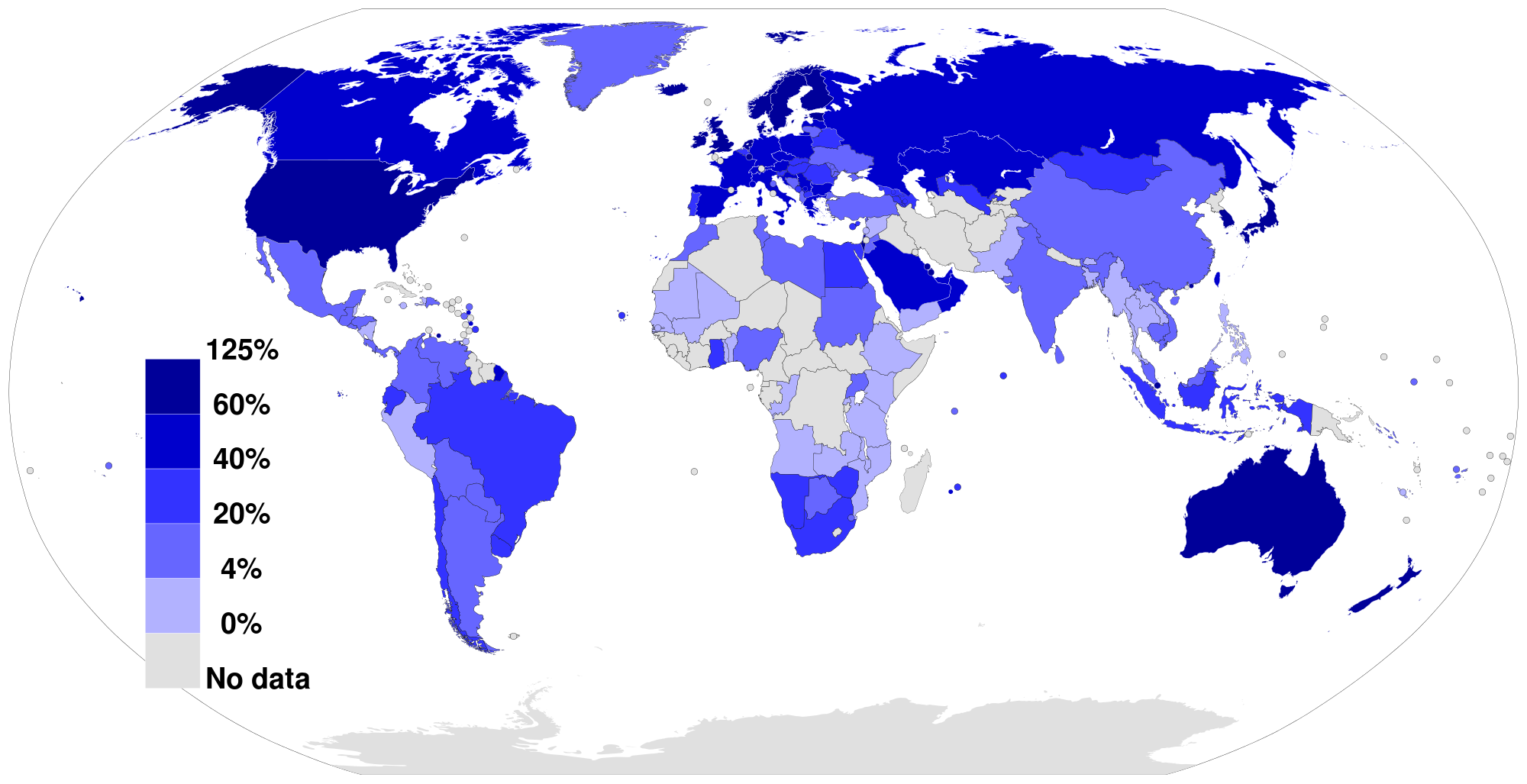
Determining where the best internet in the world is located requires looking beyond simple peak download speeds to evaluate a combination of average connection speeds, infrastructure stability, fiber-optic penetration, and pricing accessibility. According to global telemetry and Ookla Speedtest Intelligence data, nations and territories such as Singapore, Hong Kong, Iceland, and various European Union states consistently rank at the top for fixed broadband performance, while countries like South Korea and the United Arab Emirates lead in mobile connectivity metrics.
Evaluating the quality of global internet requires an understanding of how telecommunications networks operate, the physical limitations of transmission mediums, and the regulatory frameworks that foster technological advancement. This comprehensive analysis breaks down the metrics, geographic leaders, underlying technologies, and structural challenges that define the current state of global internet connectivity.
Understanding Global Internet Performance Metrics
To determine which country offers the best internet service, telecommunications researchers rely on standardized performance metrics rather than marketing claims made by internet service providers (ISPs). These metrics provide a transparent, objective foundation for cross-border comparisons.
Download and Upload Speeds
Download speed, measured in megabits per second (Mbps), dictates how quickly data transfers from a remote server to a local device. This affects activities like streaming high-definition video, downloading large software packages, and loading complex web pages. Upload speed, also measured in Mbps, measures how fast data travels from a local device to the internet. While standard residential users often prioritize download speeds, robust upload speeds are essential for cloud backups, video conferencing, and hosting data.
Latency and Jitter
Speed is only part of the equation. Latency, measured in milliseconds (ms), is the time it takes for a data packet to travel from its source to its destination and back. Low latency is critical for real-time applications such as online gaming, financial trading, and Voice over IP (VoIP) communications. Jitter measures the variability in packet arrival times over a network connection. High jitter causes packet loss and connection instability, severely degrading real-time application performance even if raw bandwidth numbers are exceptionally high.
Consistency and Reliability
A connection that achieves 1,000 Mbps for one minute but drops out entirely the next is less valuable than a stable, symmetrical 300 Mbps connection. Consistency scores measure the percentage of a provider's samples that meet minimum threshold requirements (typically 25 Mbps download and 3 Mbps upload). Global leaders in internet infrastructure boast exceptionally high consistency percentages due to deep fiber penetration and redundant network routing.
Top-Ranking Nations for Fixed Broadband
Fixed broadband remains the gold standard for high-bandwidth, low-latency residential and commercial internet use. Governments and private enterprises in several territories have spent decades deploying fiber-optic infrastructure directly to homes, yielding the world's most performant fixed networks.
Singapore
Singapore consistently dominates global fixed broadband rankings, frequently holding the number one spot in the Ookla Speedtest Global Index with average download speeds exceeding 250 to 300 Mbps. This dominance stems from Singapore's Next Generation Nationwide Broadband Network (Next Gen NBN), an initiative heavily supported by the Infocomm Media Development Authority (IMDA). The city-state's dense urban layout makes it economically and logistically feasible to roll out Fiber-to-the-Home (FTTH) architecture across nearly 100% of the island. Competition among multiple telecommunications providers keeps pricing relatively affordable and drives continuous innovation in consumer packages.
Hong Kong and Macau
Special Administrative Regions like Hong Kong boast average fixed broadband speeds rivaling Singapore. High-density high-rise residential architecture allows ISPs to connect thousands of households within a single building using minimal physical infrastructure. Gigabit-plus packages are standard offerings, and the widespread adoption of symmetric fiber connections means upload speeds match download speeds.
Iceland and Liechtenstein
European microstates and Nordic countries punch well above their weight in telecommunications infrastructure. Iceland benefits from abundant, low-cost geothermal and hydroelectric energy, which powers massive data centers and local internet exchange points (IXPs). Furthermore, high digital literacy, a geographically concentrated population in the Reykjavik capital region, and early government-backed modernization initiatives have enabled Iceland to maintain top-tier fiber penetration. Liechtenstein similarly provides ubiquitous high-speed fiber connectivity to its citizens, supported by advanced regulatory frameworks and high average household incomes that facilitate early technology adoption.
Other Notable Performers: Romania, France, and Spain
While Asian and Nordic nations often capture headlines, several European countries excel in fixed broadband performance and value. Romania, for instance, has historically ranked near the top for raw fixed broadband speed relative to cost. This phenomenon occurred because early broadband expansion was driven by nimble, independent local operators who deployed unshielded twisted pair and later fiber cables directly across apartment blocks, forcing major national carriers to modernize rapidly. France and Spain have also achieved near-universal fiber coverage outside remote rural areas, driven by aggressive national broadband plans such as France's Plan France Très Haut Débit.

Leading Markets for Mobile Connectivity
While fixed broadband anchors static households and offices, mobile internet performance dictates the quality of connectivity for people on the move. Mobile standards have evolved rapidly, with 5G deployments now serving as the primary benchmark for mobile network quality.
United Arab Emirates and Qatar
The United Arab Emirates (UAE) and Qatar consistently lead global mobile speed rankings, frequently recording median mobile download speeds well over 200 to 300 Mbps. State-backed telecommunications operators, such as e& (Etisalat) in the UAE and Ooredoo in Qatar, have invested aggressively in nationwide 5G standalone (SA) core infrastructure. Because these nations feature highly urbanized populations concentrated along major transport corridors, mobile network operators can maximize cell tower efficiency and backhaul capacity with minimal dead zones.
South Korea
South Korea maintains a legendary reputation for telecommunications infrastructure. While it occasionally trades the top spot in raw mobile speed metrics with Gulf nations, South Korea was among the first countries to commercialize 4G LTE and 5G technologies. The country's dense urban centers, advanced domestic electronics manufacturing ecosystem (featuring companies like Samsung), and heavy government subsidies for research and development have created an environment where high-speed mobile data is ubiquitous on subways, high-speed rail lines, and rural mountains alike.
Technical Factors Behind Superior Internet Infrastructure
Achieving the best internet in the world is not a matter of luck; it requires specific engineering paradigms, physical mediums, and regulatory structures.
| Technology Type | Average Speed Range | Latency Profile | Primary Strengths | Main Limitations |
|---|---|---|---|---|
| Fiber-to-the-Home (FTTH) | 1 Gbps to 10+ Gbps | Ultra-low (1–5 ms) | Symmetrical speeds, immune to electromagnetic interference, highly scalable. | High initial deployment cost in rural or rocky terrain. |
| Hybrid Fiber-Coaxial (HFC) | 100 Mbps to 1.2 Gbps | Low (10–25 ms) | Leverages existing cable television infrastructure, reducing rollout costs. | Asymmetrical speeds (lower upload), shared bandwidth bottlenecks in neighborhoods. |
| 5G Mobile Broadband | 50 Mbps to 1+ Gbps | Moderate (15–40 ms) | High mobility, rapid deployment without physical ground cabling. | Signal attenuation through walls, weather interference, capacity drop with distance. |
| Low Earth Orbit (LEO) Satellite | 50 Mbps to 250+ Gbps | Moderate-Low (25–50 ms) | Reaches remote geographic locations where terrestrial cables are impossible. | Equipment cost, susceptibility to severe weather obstructions. |
The Supremacy of Fiber Optics
The fundamental bottleneck of internet transmission has always been the physical medium. Copper telephone lines (Digital Subscriber Line - DSL) degrade rapidly over distance due to electrical resistance. Coaxial cables, used by cable television operators, offer higher bandwidth but still suffer from signal loss and shared-node congestion.
Fiber-optic cables, which transmit data as pulses of light through strands of ultra-pure glass or plastic, eliminate these physical limitations. Light signals experience minimal attenuation over long distances, allowing fiber networks to deliver symmetric multi-gigabit speeds. Nations with the best internet have systematically replaced legacy copper infrastructure with Fiber-to-the-Home (FTTH) and Fiber-to-the-Building (FTTB) architectures.
Internet Exchange Points (IXPs) and Content Delivery Networks (CDNs)
Speed is determined not only by the local connection to the home but also by how efficiently data travels to its final destination (such as video streaming servers, gaming platforms, or cloud storage). Countries with top-tier internet performance host robust Internet Exchange Points (IXPs) where local and international networks interconnect directly. By keeping local traffic within national borders rather than routing it through foreign hubs, IXPs drastically reduce latency. Furthermore, the presence of localized Content Delivery Networks (CDNs) caches popular media close to the end-user, ensuring instantaneous load times.
Economic and Geographic Disparities
While elite technology hubs enjoy multi-gigabit fiber connections, global internet access remains uneven. Understanding the best internet in the world requires examining why certain regions lag behind and how those barriers are being overcome.
Urban-Rural Divides
Even in countries with world-class national averages, a pronounced digital divide often exists between dense metropolitan areas and remote rural regions. Deploying fiber cables across hundreds of miles of rural farmland or mountainous terrain carries a prohibitive capital expenditure (CapEx) for private ISPs. To bridge this gap, governments frequently implement public subsidy programs, universal service funds, or municipal broadband initiatives.
The Rise of Low Earth Orbit (LEO) Satellite Internet
For isolated communities where terrestrial fiber or cellular towers are economically unviable, Low Earth Orbit (LEO) satellite constellations—such as SpaceX’s Starlink and Amazon’s Project Kuiper—have transformed internet access. Operating at altitudes between 500 and 2,000 kilometers above Earth, LEO satellites reduce latency to between 25 and 50 milliseconds, a massive improvement over traditional geostationary satellites orbiting at 35,786 kilometers. While LEO systems cannot match the raw throughput capacity or pricing efficiency of dense urban fiber networks, they provide reliable broadband to maritime vessels, remote research stations, and isolated rural towns globally.
Frequently Asked Questions
Which country has the fastest internet in the world?
Singapore consistently ranks number one for fixed broadband internet speeds, boasting median download speeds exceeding 250 to 300 Mbps. For mobile internet speeds, the United Arab Emirates (UAE) and Qatar frequently alternate leading positions, with median mobile download speeds regularly surpassing 200 Mbps due to advanced nationwide 5G infrastructure.
Why is fiber-optic internet better than cable or DSL?
Fiber-optic internet uses pulses of light transmitted through glass fibers, whereas cable relies on copper coaxial lines and DSL uses legacy copper telephone wires. Light signals experience virtually no electrical resistance or signal degradation over standard distances. This enables fiber to deliver symmetrical speeds (equal download and upload rates), ultra-low latency, and massive bandwidth capacity that copper cables cannot match.
Can individuals get the same internet speeds found in top-ranking countries everywhere?
No. Individual internet speeds depend heavily on local infrastructure, the specific technology deployed to the premises (FTTH versus DSL), ISP subscription tiers, and internal home networking hardware (such as Wi-Fi router standards like Wi-Fi 6 or Wi-Fi 7). Even within countries that rank near the top globally, older apartment buildings or remote rural zones may still rely on legacy copper lines.
How does mobile internet speed compare to fixed broadband?
Historically, fixed broadband offered significantly higher speeds and lower latency than mobile connections. However, the commercial deployment of 5G Standalone (SA) networks has closed this gap in many urban markets. While mobile networks can achieve multi-gigabit peak speeds, fixed broadband generally remains more stable, free from data throttling caps, and better suited for heavy, continuous household data consumption.
What role do governments play in determining internet quality?
Governments heavily influence internet quality through regulatory policies, spectrum allocation for mobile operators, public funding for rural broadband expansion, and the enforcement of open-access rules that encourage competition among ISPs. Countries with top-tier internet performance almost universally feature proactive national broadband strategies supported by public-private cooperation.
Conclusion and Recommendations for Consumers
The best internet in the world is defined by a combination of symmetric fiber-optic speeds, minimal latency, high consistency, and ubiquitous availability. While Singapore and Hong Kong set the benchmark for fixed-line performance, and the UAE leads in mobile connectivity, technological advancements continue to narrow the gap for underserved populations worldwide. When evaluating internet performance for a home or business, prioritize verified fiber-optic availability over maximum theoretical speeds, ensure local routing infrastructure supports low latency, and verify that upload speeds match your operational requirements.
Image Gallery
Select an image to open it in a new tab.
Lars Thomsen
Global Labor Markets and Economic Strategy Editor
