
Navigating FAA guidelines requires a methodical understanding of Title 14 of the Code of Federal Regulations (14 CFR). By identifying your specific operational category—whether general aviation, commercial transport, or unmanned systems—you can isolate the applicable subchapters, advisory circulars, and airworthiness directives necessary to maintain legal compliance and ensure the highest standards of aeronautical safety.
Understanding the Regulatory Framework
The Federal Aviation Administration (FAA) operates under a mandate to ensure the safety and efficiency of the National Airspace System (NAS). For pilots, mechanics, and operators, "navigating aviation standards" is not merely about reading a manual; it is about interpreting the hierarchy of regulatory documents.
At the top of this hierarchy are the Federal Aviation Regulations (FARs), found in Title 14 of the Code of Federal Regulations. These are legally binding rules. Below these are Advisory Circulars (ACs), which provide guidance on how to comply with regulations, and Airworthiness Directives (ADs), which are legally enforceable rules issued by the FAA to correct an unsafe condition in a product.
Successfully navigating these standards involves a three-step assessment process:
- Identification: Determining which Part of 14 CFR governs your specific activity (e.g., Part 91 for general aviation, Part 121 for scheduled air carriers).
- Interpretation: Reviewing the associated Advisory Circulars that offer the FAA’s recommended "means of compliance" for specific regulations.
- Verification: Confirming that your operational procedures match the current technical specifications and safety benchmarks outlined in the latest FAA handbooks and policy updates as of 2026.
Categorizing Your Aviation Operations
The FAA regulates based on the type of operation, not just the type of aircraft. A Cessna 172 flown for personal pleasure is subject to a significantly different set of constraints than the same aircraft being used for flight instruction or commercial photography.
General Aviation (Part 91)
Part 91 of 14 CFR sets the "rules of the road" for all aircraft operating in the United States. This includes visual flight rules (VFR) and instrument flight rules (IFR). Key areas of focus under Part 91 include maintenance requirements, pre-flight actions, and fuel requirements. In 2026, emphasis remains high on "preventive maintenance," which allows pilots—under specific, limited conditions—to perform certain routine tasks themselves, provided those tasks are documented in the aircraft’s maintenance logs in accordance with Part 43.
Commercial Operations (Part 119, 121, 135)
If you are operating for compensation or hire, the regulatory burden increases exponentially. Part 121 governs scheduled air carriers (the airlines), while Part 135 governs commuter and on-demand operations (charter flights). These standards include rigorous training, drug and alcohol testing programs, and stringent maintenance scheduling. Operators in this category must maintain a "Certificate of Authority," which acts as a license to conduct their specific business model.
Unmanned Aircraft Systems (Part 107)
The integration of drones into the NAS has led to the robust development of Part 107. These guidelines cover everything from remote pilot certification to operational limitations, such as altitude caps and beyond-visual-line-of-sight (BVLOS) waivers. If you are operating a drone for commercial purposes, you must navigate the FAA’s DroneZone portal, which serves as the centralized interface for registration, waiver applications, and accident reporting.
Key Documents for Compliance
To navigate these standards effectively, you must have access to the primary sources of authority. Relying on third-party interpretations often leads to confusion. The following table highlights the essential documents required for standard operations.
| Document Type | Purpose | Binding/Guidance |
|---|---|---|
| 14 CFR (FARs) | Establish the legal mandates for safety and conduct. | Binding |
| Advisory Circulars (AC) | Explain methods to comply with regulations. | Guidance |
| Airworthiness Directives (AD) | Mandate specific repairs or inspections for safety. | Binding |
| Flight Standards Info Manuals | Provide standardized operational procedures. | Guidance |
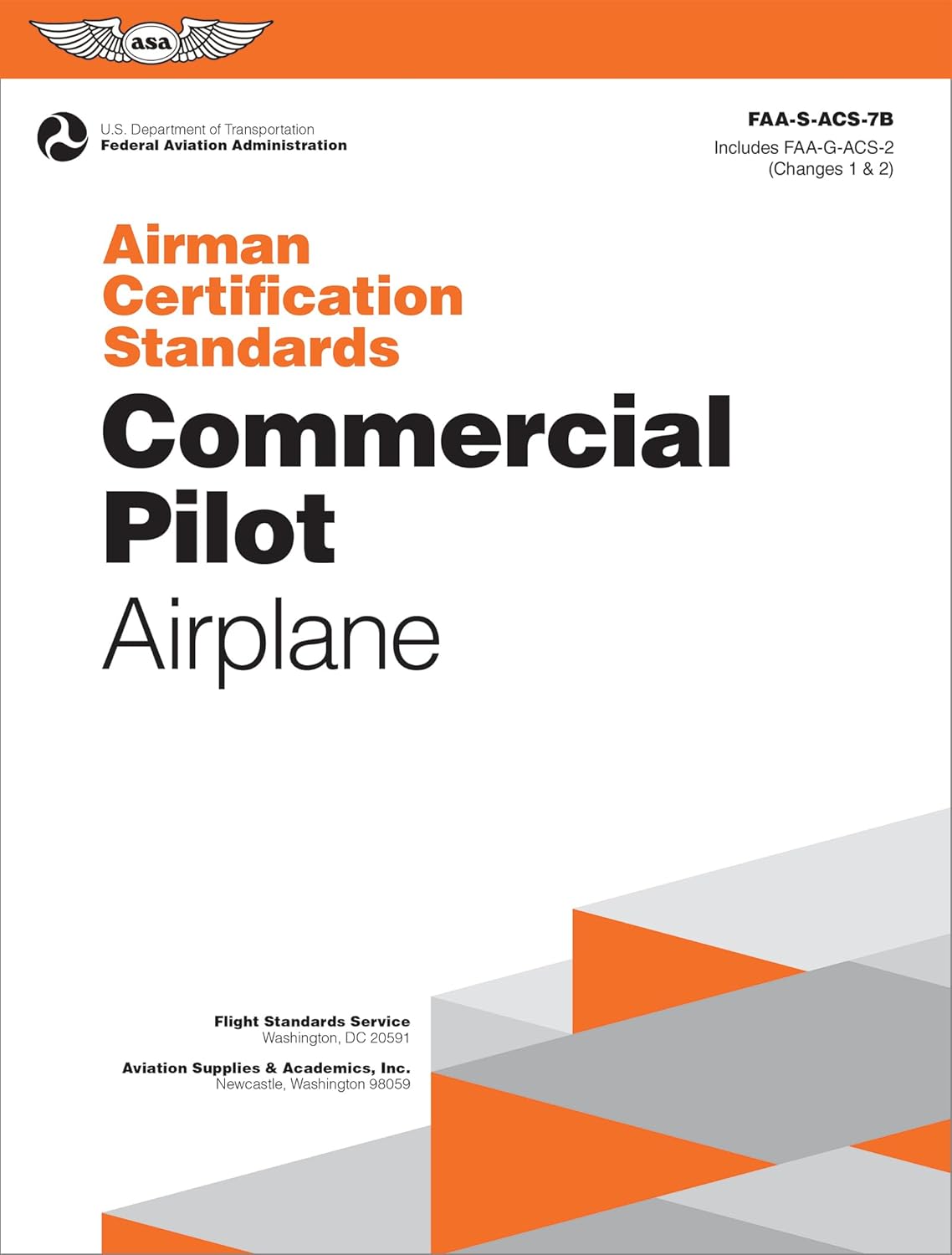
| Practical Test Standards (PTS/ACS) | Define the requirements for pilot certification. | Binding/Guidance |
The Role of Advisory Circulars (ACs)
While the regulations themselves (the "what") are often dry and technical, Advisory Circulars are the "how." The FAA issues these documents to provide clarity. For instance, if a regulation mandates that an aircraft must be "airworthy," an AC will define what the FAA considers to be an acceptable inspection program to prove that airworthiness.
In 2026, many operators find that following an AC—even when it is technically optional—is the best protection against regulatory scrutiny. If you follow an AC, the FAA generally accepts that you have met the underlying regulation. If you choose a different path, the burden of proof rests on you to demonstrate that your "equivalent level of safety" meets or exceeds the regulatory intent.
Maintenance and Airworthiness Standards
Maintenance is perhaps the most scrutinized aspect of FAA compliance. The standards for maintaining an aircraft are found in Part 43, while the standards for the airworthiness of the aircraft are found in Part 21.
A common pitfall is the failure to maintain complete logbooks. An aircraft is not considered "airworthy" in the eyes of the FAA simply because it flies; it is airworthy when it conforms to its type design and is in a condition for safe operation. This requires:
- Compliance with ADs: Checking the FAA’s RGL (Regulatory and Guidance Library) regularly for new directives applicable to your engine, airframe, or avionics.
- Tracking Life-Limited Parts: Ensuring that components with a mandatory replacement time have not exceeded their hours or cycles.
- Annual/100-Hour Inspections: Ensuring that certified mechanics document all repairs according to the specific standards listed in your aircraft’s maintenance manual.
Technology and the National Airspace System
As of 2026, the integration of NextGen technology and digital flight planning tools has changed how pilots navigate standards. Modern avionics suites, such as those integrated with ADS-B (Automatic Dependent Surveillance-Broadcast), provide the FAA with real-time tracking data. Compliance is no longer just about paper logs; it involves ensuring that your transponder and ADS-B out equipment are tested biennially (every 24 months) under 14 CFR 91.411 and 91.413.
Common Compliance Mistakes and How to Avoid Them
Even experienced operators often fall into traps regarding documentation. Here are the most common areas of failure:
- Ignoring "Current" Status: Regulations change. Relying on a printed copy of the FAR/AIM from 2022 is a major liability. Always use the official Electronic Code of Federal Regulations (eCFR) website to ensure you are referencing the most current language.
- Incomplete Maintenance Records: If it is not written down, it did not happen. Every repair, alteration, or inspection must be recorded with a description of the work, the date, the mechanic’s signature, and their certificate number.
- Misinterpreting Special Airworthiness Certificates: Many experimental aircraft have different operating limitations than standard-category aircraft. Owners often assume they can operate under the same rules as a Cessna, failing to realize their "Experimental" operating limitations are unique to their specific aircraft and are often more restrictive.
Navigating Enforcement Actions
If you are ever subject to an FAA investigation or a Notice of Proposed Certificate Action, the most important standard to understand is your due process. The FAA’s "Compliance Philosophy" focuses on fixing the underlying problem rather than strictly punitive measures, provided the deviation from standards was unintentional and not the result of reckless behavior.
If you believe you have violated a regulation, reporting it through the Aviation Safety Reporting System (ASRS)—often referred to as "NASA reports"—can provide significant protection against administrative sanctions. This program encourages the voluntary reporting of safety issues, providing a "get out of jail free" card for certain inadvertent violations, provided the report is filed within the required timeframe (typically 10 days).
Frequently Asked Questions
How often do I need to update my compliance documentation? Regulatory updates happen throughout the year. While the Federal Register publishes changes daily, you should check for amendments to your specific Part of the CFR at least quarterly or whenever you are planning a significant change to your operations.
Are Advisory Circulars legally binding? No, ACs are not binding in the same way as the CFR. However, they carry significant weight. If you deviate from an AC, you must be prepared to prove that your alternative method achieves the same level of safety as the method described by the FAA.
What is the best way to verify if an AD applies to my aircraft? The FAA’s Regulatory and Guidance Library (RGL) is the official source. You should search by your aircraft make, model, and serial number. Never rely on forums or third-party websites to confirm whether an AD applies, as these can be outdated or incorrect.
Can a student pilot navigate these standards alone? While student pilots are expected to learn these regulations, they are under the direct supervision of a Certified Flight Instructor (CFI). Your CFI is responsible for ensuring that your training flights comply with all FAA standards. If you are unsure about a rule, the safest course of action is to consult your instructor or the local Flight Standards District Office (FSDO).
How does the FAA handle international aviation standards? The FAA works with the International Civil Aviation Organization (ICAO) to harmonize standards globally. If you are flying internationally, you must comply with both FAA regulations and the specific rules (Annexes) of the country where you are operating.
Conclusion and Next Actions
Navigating FAA guidelines is a process of continuous education. The complexity of the National Airspace System is designed to prioritize safety, but the responsibility for compliance ultimately rests with the pilot and the operator.
To ensure your operations are compliant as of 2026:
- Visit the official FAA Regulations website and bookmark the Part(s) of 14 CFR that apply to your operations.
- Sign up for the FAA’s "Regulatory and Guidance Library" notifications to receive updates on ADs specific to your aircraft.
- Conduct a "compliance audit" of your logbooks and aircraft records. If you find gaps, contact a local Designated Airworthiness Representative (DAR) or a reputable maintenance facility to bring your documentation up to speed.
By proactively managing your compliance, you not only avoid the stress of potential enforcement actions but also contribute to the overall integrity and safety of the aviation community.

Image Gallery
Select an image to open it in a new tab.


Zara El-Hashem
Sociocultural Dynamics and Academics Writer
