The AUTOSAR (AUTomotive Open System ARchitecture) Operating System, or AUTOSAR OS, provides a standardized, scalable runtime environment for automotive electronic control units (ECUs). By decoupling application software from underlying hardware, it enables seamless component reuse, simplifies complex integration, and ensures functional safety, fundamentally shifting how automotive manufacturers develop and maintain vehicle software in the modern era.
The Evolution of Automotive Software Architecture
For decades, automotive software development followed a hardware-centric model. Each new feature, from anti-lock braking systems to infotainment, required a dedicated ECU with bespoke software tailored specifically to that processor. As the complexity of vehicles grew, this "siloed" approach became unsustainable. Manufacturers faced "spaghetti code" scenarios where updating a minor function in one part of the vehicle risked breaking another because the software was tightly coupled to proprietary hardware drivers.
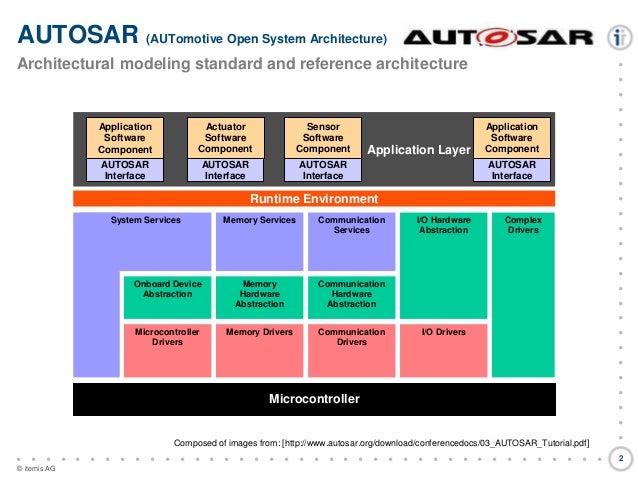
The industry required a shift toward a modular, standardized architecture. This led to the formation of the AUTOSAR development partnership in 2003, which sought to define a common language for automotive software. At the heart of this initiative is the AUTOSAR OS, a specialized real-time operating system (RTOS) designed to meet the rigorous constraints of the automotive environment. It provides the abstraction layer necessary to allow the same software components to run on different microcontrollers with minimal modification, effectively separating the "what" (the application logic) from the "how" (the hardware implementation).
Core Functions of the AUTOSAR OS
The AUTOSAR OS is not a monolithic program; it is a highly configurable, statically defined kernel that prioritizes predictability over dynamic flexibility. Its design philosophy centers on two primary variants: the Classic Platform and the Adaptive Platform.
The Classic Platform OS
The Classic Platform is the industry standard for deeply embedded, safety-critical systems. It is based on a static architecture, meaning that all tasks, resources, and communication paths are defined at design time. This static nature is a deliberate choice for functional safety, as it allows the OS to be validated against strict standards like ISO 26262.
Key features include:
- Task Scheduling: It supports preemptive, priority-based scheduling. The OS ensures that critical tasks—such as airbag deployment or engine timing—always take precedence over non-critical tasks like climate control data processing.
- Resource Management: By using mechanisms like the Priority Ceiling Protocol, the OS prevents priority inversion, where a low-priority task holds a resource needed by a high-priority task, causing a system hang.
- Memory Protection: On hardware that supports it, the OS enforces spatial isolation, ensuring that a fault in one software component cannot overwrite the memory space of another.
The Adaptive Platform OS
With the rise of autonomous driving and connected car services, vehicles require high-performance computing capabilities that the Classic Platform cannot efficiently provide. The AUTOSAR Adaptive Platform addresses this by utilizing a POSIX-compliant interface. This allows for dynamic process management, service-oriented communication (using SOME/IP), and the ability to update software over-the-air (OTA) more fluidly.
Why Standardization Reduces Development Costs
Before the widespread adoption of AUTOSAR, "porting" software from one vehicle model to another was an expensive, manual engineering effort. If a Tier 1 supplier changed a microcontroller, the OEM often had to rewrite the drivers and potentially the application code.
The AUTOSAR OS changes this through the Runtime Environment (RTE). The RTE acts as a middleware that maps the application’s requirements to the specific OS calls. Because the application interacts only with the RTE, the developer does not need to know the specific details of the underlying OS or hardware. This enables:
- Software Reuse: An algorithm developed for a braking controller can theoretically be ported to a different chassis controller with significantly reduced rework.
- Scalable Development: Suppliers can focus on developing high-quality features rather than reinventing hardware abstraction layers for every project.
- Faster Time-to-Market: By utilizing a standard stack, teams can begin application development before the final hardware is even finalized.
Comparison: Traditional ECU Software vs. AUTOSAR
| Feature | Traditional Proprietary OS | AUTOSAR OS |
|---|---|---|
| Hardware Coupling | Tightly coupled to specific chip | Hardware-independent via abstraction |
| Portability | Low; requires major rewrites | High; reusable across platforms |
| Integration Complexity | High; manual mapping required | Low; managed by standardized XML/ARXML files |
| Safety Certification | Difficult and siloed | Streamlined by standardized safety profiles |
| Maintenance | Costly; vendor-dependent | Cost-effective; modular ecosystem |
The Role in Functional Safety (ISO 26262)
The most critical factor in automotive software is safety. The AUTOSAR OS supports the implementation of ASIL (Automotive Safety Integrity Level) requirements. The OS is designed to be "certified" or "qualified," meaning the software has undergone rigorous testing to ensure it behaves predictably under fault conditions.
The OS provides "freedom from interference," a key concept in ISO 26262. It ensures that even if a non-safety-relevant application (like a radio function) crashes, it cannot interfere with the memory or execution timing of a safety-critical application (like steering control). This level of partitioning is only possible through an OS that explicitly manages task execution and resource access with strict timing guarantees.
Challenges and Operational Limitations
While the benefits are significant, the AUTOSAR OS is not without its hurdles. The primary challenge is the sheer complexity of the configuration process.
- Steep Learning Curve: Configuring an AUTOSAR stack requires specialized toolchains and a deep understanding of XML-based configuration files (ARXML). The learning curve is notoriously steep for engineers moving from traditional C-based firmware development.
- Resource Overhead: Because AUTOSAR provides a robust abstraction layer, it can introduce overhead in terms of CPU cycles and memory usage. For very small, low-cost microcontrollers, this overhead can be prohibitive.
- Tooling Costs: Development requires professional-grade toolchains, which can be expensive. For smaller projects or startups, the license costs of industry-standard AUTOSAR tools can be a barrier to entry.
Troubleshooting Common Integration Issues
Integration in an AUTOSAR environment often fails due to misconfiguration rather than code errors. Common issues include:
- Timing Mismatches: If task priorities are not perfectly aligned with the execution time requirements, the system may suffer from deadline misses. Always perform a Worst-Case Execution Time (WCET) analysis during the design phase.
- Communication Gaps: When using the Virtual Function Bus (VFB) to connect components, ensure that signal definitions are consistent across all ECU descriptions. Mismatched signals are the most common cause of communication failure during the integration of third-party software components.
- Memory Fragmentation: In the Adaptive platform, failing to properly manage process life cycles can lead to memory leaks. Employing static memory allocation policies is highly recommended for safety-critical parts of the software.
Future Outlook and Best Practices
As of 2026, the automotive industry continues to move toward Software-Defined Vehicles (SDV). The AUTOSAR OS will remain a foundational technology, but it will be increasingly complemented by cloud-native development practices.
To maximize the value of the AUTOSAR OS, organizations should:
- Invest in Automated Toolchains: Rely on CI/CD (Continuous Integration/Continuous Deployment) pipelines to handle the generation of configuration files, reducing human error in the manual configuration process.
- Prioritize Modular Design: Build software components that are agnostic of the OS platform whenever possible, treating the OS as a commodity service provider.
- Cross-Training: Encourage engineers to bridge the gap between "embedded systems" expertise and "IT/Cloud" software engineering to handle the hybrid nature of the Classic and Adaptive platforms effectively.
The importance of the AUTOSAR OS lies in its ability to bring order to the chaos of modern vehicle electronics. By providing a common foundation, it allows manufacturers to focus on delivering safer, more intelligent vehicles rather than struggling with the underlying plumbing of thousands of disjointed software components.
Frequently Asked Questions
What is the difference between AUTOSAR Classic and Adaptive?
The Classic Platform is designed for real-time, resource-constrained ECUs requiring high safety integrity. The Adaptive Platform is designed for high-performance computing units (like ADAS or infotainment) that need POSIX compliance, dynamic software updates, and high data throughput.
Does every ECU in a modern car need an AUTOSAR OS?
No. Simple sensors or actuators may still use basic firmware or "bare metal" code for cost reasons. AUTOSAR is most effective in complex ECUs where integration, scalability, and functional safety are paramount.
Is the AUTOSAR OS the same as QNX or Linux?
No. QNX and Linux are general-purpose or real-time operating systems themselves. AUTOSAR is an architecture standard that can run on top of various operating systems. Many vendors provide an AUTOSAR-compliant "stack" that interfaces with the underlying OS kernel.
Can I use AUTOSAR for non-automotive projects?
While it is technically possible, AUTOSAR is purpose-built for the automotive domain. Its safety standards, communication protocols (CAN, LIN, Ethernet), and diagnostic models are specific to vehicles, making it likely "overkill" or mismatched for general industrial automation.
How does the AUTOSAR OS handle over-the-air updates?
The Adaptive Platform is designed specifically for OTA, supporting the ability to update individual applications without needing to reflash the entire system. The Classic Platform often requires more involved bootloader management to handle safe, secure updates.
Recommendation: For engineering teams initiating new vehicle software projects, the best path forward is to adopt a model-based design approach. Use standardized AUTOSAR configuration tools to automate the creation of the RTE and basic software layers, ensuring that your architecture remains flexible enough to migrate between different hardware vendors throughout the 2026–2030 product life cycle.
Image Gallery
Select an image to open it in a new tab.
Akira Tanaka
International Academic Trends Correspondent
