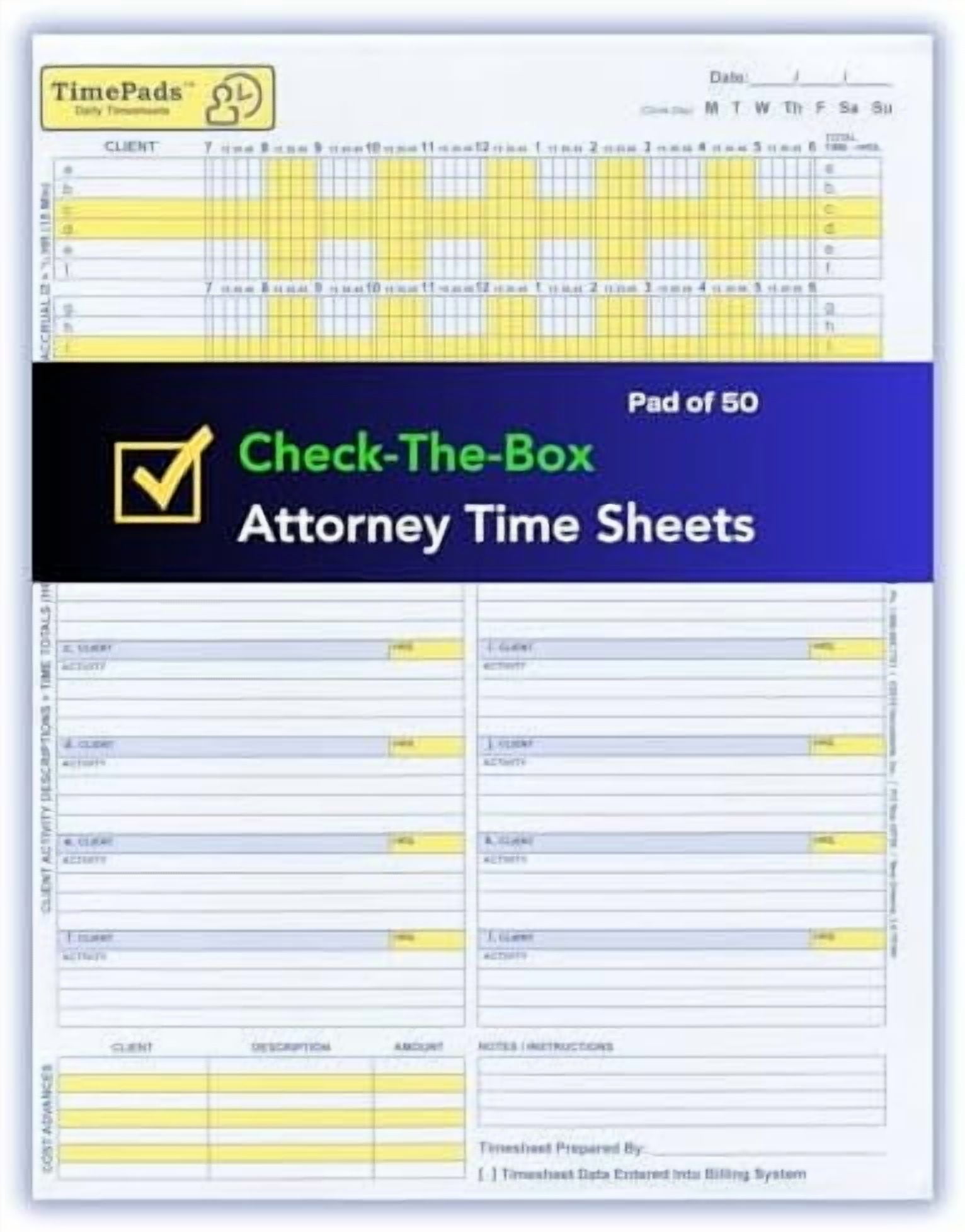
An attorney time sheet is a structured record used by legal professionals to track billable and non-billable hours, document specific client activities, and calculate legal fees. Accurate, contemporaneous time entries are essential for maintaining ethical billing compliance, preventing client fee disputes, satisfying corporate or court audit requirements, and maximizing law firm operational efficiency.
Understanding the Structure and Function of Attorney Time Sheets
At its core, an attorney time sheet serves two primary functions: it acts as a detailed ledger of professional work performed for clients and functions as the baseline record for internal law firm accounting and fee recovery. Whether recorded on paper logs, electronic spreadsheets, or specialized legal practice management software, every professional time entry must contain specific foundational data points to ensure financial and legal validity.
Essential Components of a Valid Legal Time Entry
A compliant attorney time sheet record requires five core elements:
- Date of Service: The exact date on which the specific task was performed. Aggregating multiple days of work into a single entry violates basic legal accounting standards.
- Client and Matter Identification: Unique alphanumeric identifiers representing the specific client file, case, or transaction.
- Timekeeper Identification: The name or initials of the attorney, partner, associate, or paralegal performing the work, along with their associated hourly billing rate.
- Time Increment (Duration): The precise time expended on the task, expressed in designated billing increments.
- Narrative Description: A detailed, active-voice summary of the work completed, explaining what was done, who was involved, and why the task was necessary to advance the client's matter.
Time Increments: Tenths of an Hour vs. Quarter Hours
Law firms generally measure billable time using standardized mathematical fractions of an hour. The two most common conventions are:
- Tenths of an Hour (0.1 / 6-Minute Increments): This is the overwhelming standard across the legal industry, particularly for litigation, corporate representation, and insurance defense. In a 0.1 system, 6 minutes equals 0.1 hours, 12 minutes equals 0.2 hours, 18 minutes equals 0.3 hours, and so on.
- Quarter Hours (0.25 / 15-Minute Increments): Some transactional or small-firm practices use 15-minute billing increments (0.25, 0.50, 0.75 hours). However, quarter-hour billing faces heavy resistance from corporate clients, legal fee auditors, and courts because it inherently inflates short tasks (such as a 2-minute phone call) into a 15-minute billable charge.
The following reference table maps actual minutes spent to standard billable hour increments:
| Exact Minutes Worked | 6-Minute Increment (Tenths) | 15-Minute Increment (Quarters) |
|---|---|---|
| 1 – 6 minutes | 0.1 hours | 0.25 hours |
| 7 – 12 minutes | 0.2 hours | 0.25 hours |
| 13 – 18 minutes | 0.3 hours | 0.25 hours |
| 19 – 24 minutes | 0.4 hours | 0.50 hours |
| 25 – 30 minutes | 0.5 hours | 0.50 hours |
| 31 – 36 minutes | 0.6 hours | 0.75 hours |
| 37 – 42 minutes | 0.7 hours | 0.75 hours |
| 43 – 48 minutes | 0.8 hours | 0.75 hours |
| 49 – 54 minutes | 0.9 hours | 1.00 hour |
| 55 – 60 minutes | 1.0 hour | 1.00 hour |
Under modern judicial standards, billing a 0.25 minimum for a 60-second email is frequently classified as unreasonable fee rounding. Transitioning to 0.1 increments protects law firms from mandatory fee write-downs during legal spend reviews.
Ethics and Legal Rules Governing Legal Timekeeping
Timekeeping is not merely an administrative procedure; it is heavily governed by professional ethics rules and judicial oversight. Imprecise or dishonest time sheets expose attorneys to disciplinary action, fee forfeiture, legal malpractice claims, and judicial sanctions.
ABA Model Rule 1.5 and Reasonable Fees
The primary ethical standard governing legal charges is codified under Rule 1.5 of the American Bar Association (ABA) Model Rules of Professional Conduct. The rule mandates that a lawyer shall not make an agreement for, charge, or collect an unreasonable fee or an unreasonable amount for expenses.
When courts or state bar disciplinary committees evaluate whether an attorney's time sheet entries comply with Rule 1.5, they consider factors such as:
- The time and labor required, the novelty and difficulty of the questions involved, and the skill requisite to perform the legal service properly.
- The fee customarily charged in the locality for similar legal services.
- The experience, reputation, and ability of the lawyer or lawyers performing the services.
- Whether the task represents clerical overhead or genuine substantive legal work.
Prohibition of Double-Billing and Padding
Two common timekeeping violations frequently result in ethical sanctions:
- Double-Billing: Billing two clients for the exact same block of time. For example, if an attorney spends two hours on a flight traveling for Client A and uses that same two hours to draft a brief for Client B, the attorney cannot bill two hours to Client A and two hours to Client B simultaneously. ABA Formal Ethics Opinion 93-379 explicitly forbids billing multiple clients for the same time segment or billing a client for work previously completed for another client without adjusting the fee.
- Padding and Synthetic Time: Adding artificial time to tasks (e.g., logging 0.8 hours for a task that took 0.2 hours). Billing for work not actually performed constitutes professional misconduct and fraud under state licensing rules.
Judicial Scrutiny and the Lodestar Method
In statutory fee-shifting cases, class actions, and bankruptcy proceedings, courts evaluate attorney time sheets using the Lodestar Method. The lodestar amount is calculated by multiplying the number of hours reasonably expended on the litigation by a reasonable hourly rate.
Courts routinely audit time sheets submitted in fee petitions. Judges will unilaterally reduce or eliminate hours from time sheets that exhibit:
- Vague or inadequate descriptions.
- Block-billed time entries.
- Excessive internal conferencing between co-counsel.
- Substantive legal rates applied to clerical work (e.g., filing court papers, organizing binders, scanning documents).

Billing Narrative Standards: Syntax and LEDES/UTBMS Requirements
The quality of an attorney time sheet depends heavily on how narratives are written. As corporate clients adopt automated legal spend management software and third-party billing audit engines, vague narrative entries face high rejection rates.
The Syntax of an Audit-Proof Narrative
A compliant billing narrative must immediately communicate the necessity and substance of the work. The industry standard format follows a strict syntactic structure:
$$\text{Action Verb} + \text{Specific Subject Matter/Document} + \text{Purpose or Context}$$
- Non-Compliant (Vague) Entry: "Worked on file (1.5 hrs)" or "Call with Client (0.4 hrs)"
- Compliant (Detailed) Entry: "Drafted responses to defendant's first set of interrogatories regarding liability issues (1.5 hrs)" or "Telephone conference with J. Smith regarding strategy for upcoming deposition of expert witness (0.4 hrs)"
Common red-flag words that trigger corporate billing software rejections include: attention to file, review email, legal research, trial prep, work on brief, strategy, miscellaneous, and internal meeting.
[POOR ENTRY]Date: 10/12/2026 | Time: 2.0 hrs | Narrative: Research for motion.Issue: Vague verb, no issue identified, high risk of rejection.
[EXCELLENT ENTRY]Date: 10/12/2026 | Time: 2.0 hrs | Narrative: Conducted legal research regarding statutory exceptions to the statute of limitations in breach of contract claims for drafting opposition to motion to dismiss.Issue: Specific action, concrete topic, clear legal purpose.
LEDES Standards and UTBMS Coding
For enterprise accounts, corporate legal departments, and insurance carriers, traditional free-text time sheets are insufficient. Electronic billing requires adherence to the LEDES (Legal Electronic Data Exchange Standard) format, maintained by the LEDES Oversight Committee.
LEDES data structures rely on UTBMS (Uniform Task-Based Management System) codes to classify every time sheet entry by category. Under UTBMS, timekeepers must tag each entry with three distinct codes:
- Phase Code: Identifies the broader stage of the representation (e.g.,
L100for Pre-Trial Pleadings/Motions,P100for Patent Prosecution). - Task Code: Pinpoints the precise structural objective (e.g.,
L110for Fact Investigation,L120for Pleadings). - Activity Code: Describes the specific professional activity executed (e.g.,
A101for Plan and prepare,A103for Draft/revise,A105for Communicate with client).
When an attorney submits a LEDES billing file (such as a .ledes or XML file), an e-billing portal automatically parses the time sheet entries against predefined corporate billing guidelines. If an associate logs time under an administrative activity code or fails to attach required UTBMS tags, the line item is flagged or automatically rejected.
Block Billing vs. Itemized Timekeeping
One of the most persistent issues in law firm timekeeping is block billing—the practice of combining multiple distinct, unrelated tasks performed across a single day into a single total time entry.
Why Block Billing Creates Operational and Legal Vulnerabilities
An example of a block-billed entry:
4.5 Hours: "Drafted summary judgment brief; phone call with client regarding settlement offer; reviewed emails from opposing counsel; conducted legal research on admissibility of expert testimony."
Block billing creates significant friction for several reasons:
- Lack of Transparency: Neither the client, the auditor, nor a court can determine how much time was spent on any individual task within the block. It is impossible to evaluate whether the 4.5 hours was reasonable for the work accomplished.
- Automatic Judicial Discounts: Trial and appellate courts across jurisdictions regularly penalize block-billed time sheets submitted in fee petitions. Courts frequently apply across-the-board percentage reductions ranging from 10% to 30% to all block-billed entries.
- Auditor Line-Item Rejections: Corporate legal spend management platforms automatically flag entries containing conjunctions (e.g., and, also, plus) combined with multiple distinct verbs, causing immediate invoice rejections.
Implementing Itemized Time Entry Rules
To maintain defensible time sheets, law firms should enforce a One Task, One Entry rule within their billing policies. The previous 4.5-hour block should be split into distinct items on the attorney time sheet:
- 1.8 hrs: Conducted legal research on admissibility of expert testimony under Rule 702 for summary judgment response.
- 1.7 hrs: Drafted section II of summary judgment brief addressing causation arguments.
- 0.6 hrs: Reviewed and analyzed 12 emails from opposing counsel regarding discovery production schedule.
- 0.4 hrs: Telephone conference with client (M. Davis) reviewing terms of opposing party's initial settlement offer.
Itemizing time entries ensures that if a client or auditor questions a specific item (such as email review), only that individual line item is discussed, rather than placing the entire 4.5-hour block at risk of write-down.
Comparing Timekeeping Methods: Manual vs. Automated Systems
Law firms handle time recording through various technical implementations ranging from physical paper logs to automated software. Choosing the appropriate approach directly impacts billing accuracy, administrative overhead, and unbilled revenue leakage.
| Evaluation Metric | Paper & Excel Logs | Manual Digital Timers | Practice Management (LPM) Software | AI-Driven Automated Time Capture |
|---|---|---|---|---|
| Data Capture Method | Manual end-of-day/week transcription | Manual Start/Stop timers in web app | Integrated timers linked to matter files | Background monitoring of desktop/mobile activity |
| Time Leakage Risk | High (20% – 40% loss of billable hours) | Moderate (10% – 15% loss) | Low (5% – 10% loss) | Minimal (< 5% loss) |
| Audit & LEDES Compliance | Very Low (Requires manual reformatting) | Moderate (Requires manual UTBMS tagging) | High (Native UTBMS & LEDES file exports) | High (Auto-suggests UTBMS codes via AI) |
| Administrative Overhead | High (Hours spent typing/editing time sheets) | Moderate | Low | Very Low |
| Implementation Complexity | Zero | Low | Moderate | Moderate to High |
| Best Suited For | Solo practitioners with simple flat-fee structures | Micro-firms & contract attorneys | Small-to-midsize law firms | Large firms & complex litigation practices |
Analysis of Technical Approaches
1. Manual Systems (Paper & Spreadsheets)
Relying on manual memory or physical paper sheets introduces significant capture error. Studies in legal practice management show that attorneys who reconstruct their time sheets at the end of the day lose approximately 10% to 15% of their billable time. Attorneys who wait until the end of the week or month lose 25% to 50% of billable time due to forgotten phone calls, quick emails, and brief document reviews.
2. Integrated Legal Practice Management (LPM) Platforms
Modern LPM applications (such as Clio, MyCase, PracticePanther, and TimeSolv) embed time capture directly into the attorney's core workflow. Timers can be launched directly from an open document, an email thread, or a scheduled calendar event. Because the timer is pre-linked to the specific client matter, errors in allocation are significantly reduced.
3. Passive / Automated Time Capture Systems
Advanced automated time tracking technology operates passively in the background of an attorney's computer and mobile devices. These systems monitor active desktop applications, tracking time spent drafting in Microsoft Word, researching in LexisNexis/Westlaw, reading specific email threads in Outlook, or participating in video conferences. The system then uses machine learning to construct a draft time sheet, assigning work to the correct client matter for attorney review and approval.
Step-by-Step System for Managing Law Firm Time Sheets
To ensure billing integrity and optimize realization rates (the percentage of recorded billable time actually paid by clients), law firms must establish standard operating procedures for time entry.
- Step 1: Capture Contemporaneous Time
- Step 2: Apply Standard Syntax & UTBMS Codes
- Step 3: Conduct Weekly Pre-Bill (Proforma) Review
- Step 4: Execute Compliance Check (LEDES / Guidelines)
- Step 5: Final Invoice Generation & Record Retention
Step 1: Enforce Same-Day (Contemporaneous) Time Entry
Establish an absolute firm rule: Time must be logged on the day the work is performed. Contemporaneous entries are demonstrably more accurate and far more resilient against client billing challenges and judicial audits. Firms should set an automated system lock at midnight or at the end of the business week, requiring management approval to log late entries.
Step 2: Utilize Standardized Narrative Syntax
Provide all timekeepers—including associates, partners, and paralegals—with a clear narrative style guide. Train staff to avoid vague verbs, eliminate block billing, and include necessary contextual details.
Step 3: Implement Internal Pre-Billing (Proforma) Reviews
Before invoices are finalized and dispatched to clients, billing partners must review proformas (draft time sheets). The proforma review serves as an internal quality control check to:
- Identify and correct unbilled time or incorrect matter codes.
- Write down or write off entries that reflect internal inefficiency or duplicate effort.
- Adjust narratives that violate specific client billing guidelines.
Step 4: Audit Against Client Billing Guidelines
Major corporate clients often issue written billing guidelines that restrict what can be billed. Common restrictions include limiting the number of attendees at internal meetings, capping daily travel billing, or prohibiting charges for legal research databases. Ensure timesheets are checked against these specific parameters before submission.
Step 5: Secure Record Archival and Audit Trails
Maintain clear historical audit logs of all time sheets, including original entries and subsequent adjustments made during proforma reviews. This documentation provides critical evidentiary support if a fee dispute, state bar inquiry, or tax audit arises.
Common Attorney Time Sheet Mistakes and Prevention Strategies
Even experienced legal professionals fall into recurring timekeeping traps. Recognizing these patterns helps firms prevent loss of revenue and maintain client trust.
1. Memory Billing (Reconstructing Time)
- The Error: Waiting until Friday afternoon or the end of the billing cycle to fill out time sheets from memory, calendar appointments, and sent email folders.
- The Impact: Massive under-reporting of short tasks, alongside inaccurate time estimates that invite billing disputes.
- Prevention: Mandate real-time tracking software or require physical desktop logs where time is recorded immediately upon task completion.
2. Billing for Administrative Overhead
- The Error: Logging time spent on routine administrative tasks, such as printing documents, formatting tables of contents, setting up file folders, opening new client files, or preparing invoices.
- The Impact: Immediate invoice rejection by fee auditors and potential ethical violations under ABA Rule 1.5.
- Prevention: Assign purely administrative tasks to support staff or classify them strictly as non-billable overhead within the practice management software.
3. Uncaptured Mobile Work
- The Error: Answering urgent client phone calls, reading emails, or reviewing documents on a smartphone while out of the office, but failing to log the time later.
- The Impact: Significant loss of legitimate billable hours over the course of a year.
- Prevention: Deploy mobile legal timekeeping applications that allow attorneys to convert phone calls and mobile email threads into billable time entries with a single tap.
4. Vague Overhead Pass-Through Descriptions
- The Error: Writing entries such as "Attention to trial strategy" or "Preparation for case."
- The Impact: Clients perceive these entries as subjective padding, leading to delayed payments and requests for fee write-downs.
- Prevention: Require timesheet entries to specify the precise activity, such as "Drafted opening statement outline focusing on witness credibility and chain of custody evidence."
Frequently Asked Questions
What is the standard time increment used on attorney time sheets?
The standard increment across the legal industry is 0.1 hours (6-minute increments). This breakdown allows attorneys to measure short activities accurately (e.g., 1 to 6 minutes equals 0.1, 7 to 12 minutes equals 0.2) without excessively overcharging clients, which often occurs under 0.25-hour (15-minute) minimum billing systems.
Why do enterprise clients and insurance companies require LEDES billing formats?
Enterprise clients use LEDES formats because they structure time sheet data into standardized digital fields. This allows automated billing platforms to instantly verify task codes, check for compliance with corporate rules (such as block billing prohibitions or capped partner hours), and process thousands of line items efficiently without manual paper reviews.
Can an attorney bill a client for administrative tasks like preparing an invoice?
Generally, no. Preparing, reviewing, and sending bills is considered a cost of doing business (administrative overhead) and cannot be charged to the client unless there is an explicit, pre-existing agreement permitting it under unique circumstances. Courts and state bar association guidelines regularly disallow time charged for invoice generation.
How do courts handle block billing when reviewing fee petitions?
When evaluating fee petitions, courts routinely reduce requested attorney fee awards if time sheets rely on block billing. Rather than parsing through entangled entries, judges frequently apply an across-the-board percentage reduction (typically between 10% and 30%) to the entire block-billed portion of the fee request due to a lack of clarity.
What does "contemporaneous time entry" mean, and why is it legally significant?
Contemporaneous time entry means recording billable work at or near the exact time it occurs, rather than reconstructing hours days or weeks later. It is legally significant because courts and fee auditors consider contemporaneous records to be far more reliable and accurate evidence of work actually performed.
What is the difference between billable hours, non-billable hours, and billable utilization?
Billable hours represent time spent directly on legal work for a client that can be charged to an account. Non-billable hours include necessary business activities such as legal research for general knowledge, firm administrative work, business development, and continuing legal education (CLE). Utilization is the percentage of an attorney's total working time spent on billable tasks compared to their overall billable targets.
Operational Recommendations for Law Firms
To maintain high financial realization and protect firm operations from billing audits:
- Adopt a 0.1 Billing Standard: Ensure all timekeepers record work using 6-minute increments to maintain accuracy and align with client billing expectations.
- Enforce Same-Day Time Capture: Require attorneys to complete daily time sheets. Moving from weekly reconstruction to daily contemporaneous recording can increase captured billable time by up to 20%.
- Mandate Detailed Narratives: Eliminate vague entries by enforcing the Action Verb + Subject Matter + Purpose syntax across all departments.
- Deploy Modern Practice Management Technology: Upgrade from manual spreadsheets to integrated timekeeping tools that capture background activity, support UTBMS tagging, and generate clean LEDES files automatically.
Image Gallery
Select an image to open it in a new tab.
Lars Thomsen
Global Labor Markets and Economic Strategy Editor
