Year of the Horse Overview: Characteristics, Cultural Significance, and Astrology

The Year of the Horse is a prominent fixture in the Chinese 12-year zodiac cycle, symbolizing energy, independence, warmth, and relentless forward momentum. Representing the seventh sign in the lunar calendar, those born under this sign are traditionally characterized by adventurous spirits, sharp intellects, and a strong drive for personal freedom, influencing cultural celebrations, astrological readings, and generational planning worldwide.
Understanding the Chinese Zodiac and the Lunar Calendar
The Chinese zodiac, known as Shengxiao, operates on a repeating 12-year cycle grounded in the lunar calendar. Unlike the Western solar calendar, the lunar calendar aligns with the phases of the moon, meaning that Chinese New Year—and the official transition from one zodiac animal to the next—falls on a different Gregorian date each year, usually between January 21 and February 20.
The 12 animals of the zodiac appear in a fixed sequence established by ancient folklore and astronomical observations: Rat, Ox, Tiger, Rabbit, Dragon, Snake, Horse, Goat, Monkey, Rooster, Dog, and Pig. Each animal is associated with specific personality traits, cultural expectations, and elemental influences derived from the traditional Chinese philosophy of Wu Xing (the Five Elements: Wood, Fire, Earth, Metal, and Water).
The Horse holds a special place in agrarian and historical societies because of its vital role in transportation, agriculture, and military logistics. As a result, cultural interpretations of the Horse often emphasize endurance, swift action, loyalty to communities, and a formidable capacity for hard work.
The Five Elements of the Horse
In Chinese astrology, the zodiac sign is only one component of a person’s astrological profile. Each year is also governed by one of the five elements, which rotates every 12 years and interacts with the Horse sign to create distinct behavioral and psychological profiles. A complete elemental cycle takes 60 years.
| Elemental Type | Associated Years (Recent Examples) | Core Characteristics |
|---|---|---|
| Wood Horse | 1954, 2014 | Imaginative, cooperative, stable, and deeply analytical. More flexible than other elemental horses. |
| Fire Horse | 1966, 2026 | Passionate, highly energetic, charismatic, and fiercely independent. Prone to intense ambition and impulsivity. |
| Earth Horse | 1978, 2038 | Optimistic, hardworking, reliable, and practical. Balances freedom-seeking with steady financial stewardship. |
| Metal Horse | 1990, 2050 | Kind, outspoken, sharp-witted, and exceptionally determined. Enjoys overcoming difficult challenges. |
| Water Horse | 2002, 2062 | Gentle, persuasive, adaptable, and socially magnetic. Highly intuitive and responsive to changing environments. |
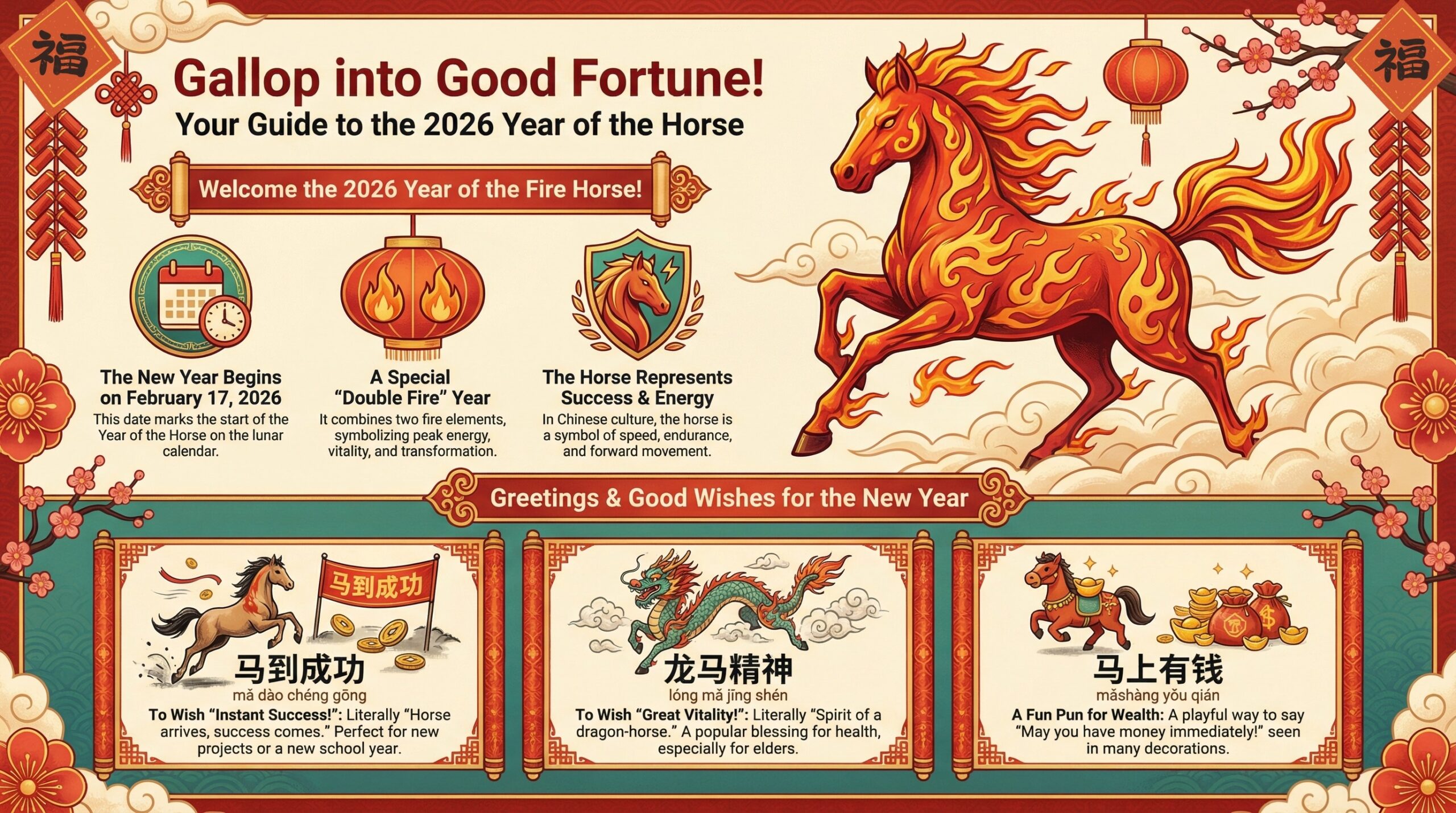
The interaction between the animal's innate nature and the governing element shapes how years associated with the Horse unfold culturally and interpersonally. For instance, Fire Horse years are historically viewed with a mix of awe and caution due to the compounding intensity of double fire energy.
Personality Traits Associated with the Horse
Astrological traditions attribute a distinct set of strengths and weaknesses to individuals born in a Year of the Horse. These traits guide traditional interpretations of career suitability, interpersonal relationships, and personal development.
Core Strengths
- Independent and Confident: Horses naturally dislike being micromanaged. They possess strong self-reliance and prefer charting their own courses in professional and personal endeavors.
- Energetic and Active: A high physical and mental stamina defines the sign. Horses thrive in fast-paced environments and often engage in sports, travel, or dynamic careers.
- Warm and Sociable: Quick-witted and humorous, Horses are natural conversationalists who enjoy being part of vibrant social circles and community events.
- Direct and Honest: Valuing authenticity, Horses tend to speak their minds clearly and expect the same transparency from others.
Common Weaknesses
- Impatience: Because they move quickly, Horses can become frustrated with delays, bureaucratic red tape, or slow-moving peers.
- Inconsistent Follow-Through: Their enthusiasm can burn out as quickly as it ignites. If a project loses its novelty, a Horse may struggle to maintain focus through the completion phase.
- Stubbornness: Once a Horse forms an opinion or makes a decision, convincing them to change direction requires substantial evidence and a respectful approach.
- Restlessness: A deep-seated fear of boredom or confinement can lead to abrupt changes in jobs, residences, or relationships.
Compatibility Within the Zodiac
In traditional Chinese compatibility matchmaking, animals are grouped into trines based on shared outlooks and complementary energy, while opposing signs require careful navigation.
- Most Compatible Partners: The Tiger and the Dog share a mutual appreciation for action, loyalty, and justice, making relationships between Horses and these signs exceptionally harmonious. The Goat (Sheep) is also traditionally viewed as an ideal match, as the Goat’s gentle, nurturing demeanor balances the Horse’s fiery independence.
- Least Compatible Partners: The Rat stands in direct opposition to the Horse on the zodiac wheel, leading to potential friction rooted in contrasting approaches to security and risk. Encounters with the Ox and the Rooster can also require extra patience due to differing communication styles and pacing.
Cultural Observances and Traditions
When a Year of the Horse arrives, communities around the world engage in celebrations that highlight the animal's dynamic attributes. Lunar New Year festivities incorporate lion and dragon dances, family banquets, and the distribution of red envelopes (hongbao) containing money for good fortune.
In visual arts and literature, the Horse is frequently depicted galloping across waves or through open plains. These motifs—known idiomatically as Ma Dao Cheng Gong ("success upon the arrival of the horse")—are popular gifts for entrepreneurs, students, and professionals entering new ventures, symbolizing rapid progress, overcoming obstacles, and achieving immediate victory.
Frequently Asked Questions
Which years are considered the Year of the Horse?
Recent Years of the Horse include 1942, 1954, 1966, 1978, 1990, 2002, and 2014, with 2026 marking the next occurrence in the lunar cycle. Because the lunar new year shifts between late January and mid-February, individuals born in January or February must check precise lunar calendar conversion charts to confirm their exact zodiac animal.
What are the lucky colors and numbers for the Horse?
Traditional Chinese astrology associates the Horse with lucky colors such as yellow and green, and lucky numbers including 2, 3, and 7 (as well as combinations containing them, such as 23 or 37). Conversely, cultural lore often advises caution regarding certain colors like blue and white, and numbers like 1 and 6, depending on the specific birth year and element.
How does elemental theory change the meaning of a Horse year?
Elemental theory modifies the base traits of the zodiac sign by introducing natural forces—Wood, Fire, Earth, Metal, or Water. For example, a Water Horse is typically more adaptable and communicative, whereas a Fire Horse exhibits heightened passion, assertiveness, and creative drive. This framework allows for a more granular and individualized astrological profile than the animal sign alone.
Are there specific career fields recommended for those born in the Year of the Horse?
Astrological traditions suggest that Horses excel in dynamic, independent, and people-oriented professions. Common career paths include journalism, public relations, sales, travel coordination, athletics, piloting, and entrepreneurship, where quick decision-making and high energy are distinct advantages.
What is the significance of the "Fire Horse" myth?
The Fire Horse (Hinoe Uma), occurring once every 60 years (such as in 1966), is historically associated with intense folklore, particularly in East Asian cultures like Japan. Superstitions historically claimed that women born in this year were overly independent or strong-willed, though modern sociological data shows these demographic beliefs have faded significantly as contemporary societies prioritize gender equality and individual capability.
Next Actions for Further Exploration
To deepen your understanding of the lunar zodiac, examine a reliable lunar calendar conversion tool to identify the precise animal and elemental pairing for your birth date. If you are researching compatibility or planning life events around a specific zodiac year, consult comprehensive Chinese astrology references that account for both the earthly branch and the heavenly stem.
Image Gallery
Select an image to open it in a new tab.


Zara El-Hashem
Sociocultural Dynamics and Academics Writer
