Understanding Semi Truck GVWR: Definitions, Regulations, and Operational Impact

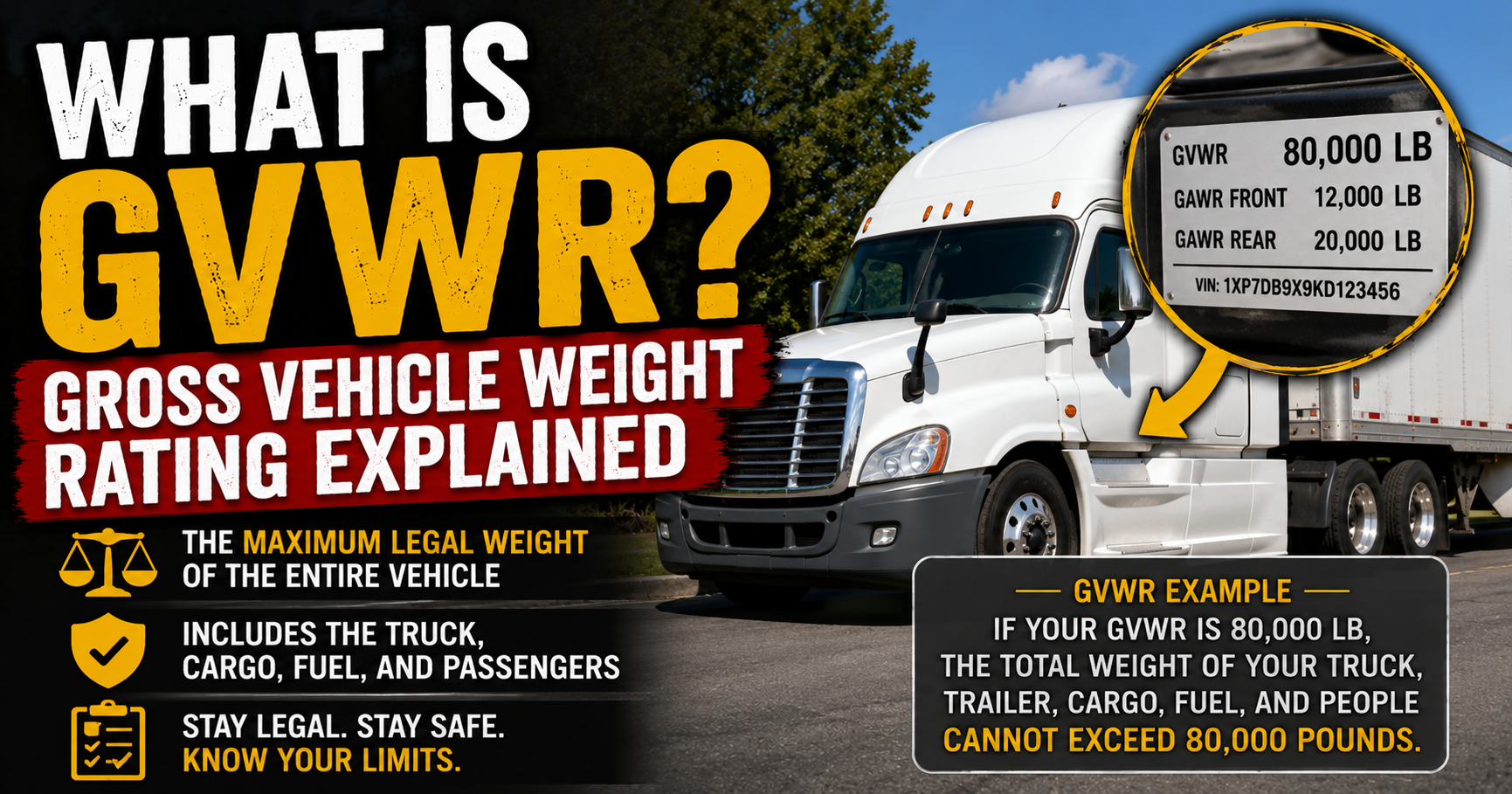
The Gross Vehicle Weight Rating (GVWR) of a semi-truck is the maximum allowable total weight of a vehicle as specified by the manufacturer, including the chassis, engine, fluids, driver, and the maximum cargo load the vehicle is engineered to carry safely. While often confused with Gross Combination Weight Rating (GCWR), the GVWR serves as the critical baseline for determining a vehicle's legal payload capacity and its structural safety limits under federal and state transport regulations.
Defining GVWR in the Context of Commercial Transportation
To understand the operation of heavy-duty vehicles, one must distinguish between the various weight metrics used by regulators and manufacturers. GVWR is an engineering specification, not a variable weight. It is the numerical value assigned by the vehicle manufacturer representing the structural integrity of the truck's components—such as the frame, axles, suspension, tires, and braking system—when operating at maximum capacity.
Unlike a scale reading taken at a weigh station, the GVWR is permanently affixed to the vehicle, usually on the driver-side door pillar or a dedicated chassis plate. This rating is non-negotiable; even if a truck is modified with aftermarket parts, the original manufacturer’s GVWR remains the legal ceiling for that specific chassis configuration. Operating a vehicle above this rating not only invites severe legal penalties but also accelerates component fatigue and compromises the integrity of critical safety systems.
The Distinction Between GVWR, GCWR, and GVW
The terminology surrounding heavy vehicle weights can be confusing. To maintain compliance with the Department of Transportation (DOT) and the Federal Motor Carrier Safety Administration (FMCSA) standards, operators must clearly differentiate between three primary weight categories:
- GVWR (Gross Vehicle Weight Rating): This is the maximum weight of the power unit itself (the tractor) when fully loaded.
- GCWR (Gross Combination Weight Rating): This is the maximum weight of the entire road train—the tractor plus the trailer and all cargo. In the trucking industry, this is the figure most drivers associate with the "80,000-pound limit" commonly seen on highways.
- GVW (Gross Vehicle Weight): This is the actual, real-time weight of the vehicle as it sits on a scale at any given moment.
A semi-truck tractor often has a GVWR lower than the GCWR because the tractor's primary purpose is to pull weight rather than carry it all on its own frame. If a tractor has a GVWR of 40,000 pounds and a GCWR of 80,000 pounds, it means the tractor's chassis is built to support 40,000 pounds of weight (including itself), while the remaining weight of the load is distributed across the trailer axles.
Why GVWR Matters for Regulatory Compliance
The GVWR acts as the primary filter for determining what licensing and safety regulations apply to a driver and their vehicle. In the United States, the threshold for a Commercial Driver’s License (CDL) is heavily tied to this rating.
Under federal law, a vehicle with a GVWR of 26,001 pounds or more is generally classified as a Commercial Motor Vehicle (CMV) requiring a CDL. This distinction is vital for owner-operators and fleet managers. If you operate a vehicle with a GVWR exceeding this limit, you are subject to:
- Mandatory Hours of Service (HOS) logging: Using Electronic Logging Devices (ELDs) to track driving and rest periods.
- Drug and Alcohol Testing: Participation in a clearinghouse and random testing pools.
- Periodic Inspection Requirements: Annual vehicle inspections to ensure the chassis and safety equipment remain within the manufacturer’s design specifications.
Exceeding the GVWR is a safety violation. If law enforcement determines a vehicle is being operated beyond its rated capacity, they may place the vehicle "out of service" immediately. This results in costly downtime, potential fines, and a negative impact on the carrier’s Compliance, Safety, Accountability (CSA) score.
Structural Components Influenced by GVWR
The GVWR is not an arbitrary number; it is the sum of the load-carrying capacity of the vehicle's individual structural components. Understanding this helps operators understand the "why" behind maintenance intervals.
- Axle Ratings (GAWR): The Gross Axle Weight Rating (GAWR) represents the maximum weight an individual axle can support. The GVWR is essentially the sum of the GAWRs for all axles on the vehicle, adjusted for the structural capacity of the frame.
- Tire Load Index: Tires are rated for specific weights at specific inflation pressures. A truck’s GVWR must be supported by tires that meet or exceed that rating. If an operator replaces tires with lower-rated versions to save costs, the effective safe operating weight of the vehicle decreases, regardless of the chassis's original GVWR.
- Braking Systems: The air brake system on a semi-truck is designed to decelerate a specific mass. When a vehicle is loaded beyond its GVWR, the thermal energy generated during braking increases exponentially, leading to "brake fade," where the friction material loses its ability to grip the drum or rotor.
Comparing Weight Classifications for Commercial Vehicles
The following table provides a breakdown of how commercial vehicles are categorized by their weight ratings, which is essential for understanding where semi-trucks sit in the broader automotive landscape.
| Vehicle Class | GVWR Range (lbs) | Common Examples |
|---|---|---|
| Class 3 | 10,001 – 14,000 | Heavy-duty pickups, step vans |
| Class 4 | 14,001 – 16,000 | Medium-duty trucks |
| Class 6 | 19,501 – 26,000 | Single-axle box trucks |
| Class 7 | 26,001 – 33,000 | Heavy-duty city delivery trucks |
| Class 8 | 33,001+ | Standard semi-truck tractors |
As shown, Class 8 vehicles—which include virtually all long-haul semi-trucks—occupy the highest weight category. Because these vehicles often operate at the extreme end of engineering specifications, adherence to GVWR is the primary factor in preventing structural frame failure and premature chassis fatigue.
Operational Risks of Exceeding Rated Capacity
Operating a vehicle at or near its GVWR requires a high degree of discipline. Operators frequently make the mistake of assuming that because a truck has a powerful engine, it can pull more than its rated weight. However, weight ratings are about the chassis and brakes, not the engine's torque.
When you exceed the GVWR, you encounter several critical risks:
- Accelerated Frame Fatigue: Over time, the constant stress of overloading causes micro-fractures in the frame rails. These are often invisible until a catastrophic failure occurs while the truck is in motion.
- Increased Stopping Distance: Even with high-performance air brakes, the physics of inertia cannot be ignored. A vehicle exceeding its GVWR will inevitably require significantly more distance to reach a complete stop, increasing the risk of rear-end collisions.
- Suspension Damage: Overloading compresses the leaf springs or air bags beyond their intended travel range, leading to a loss of handling precision and potential contact between the axle and the chassis, which can destroy the suspension geometry.
Practical Steps for Verification
For drivers and fleet managers, verifying the weight of a vehicle is a regular task. To ensure you stay within the legal and structural bounds:
- Locate the Certification Label: Always check the OEM (Original Equipment Manufacturer) sticker. It is the final word on your vehicle's capacity. If it has been painted over or removed, consult the vehicle’s VIN (Vehicle Identification Number) with the manufacturer to obtain the original build sheet.
- Use Certified Scales: Do not rely on estimates. Use CAT scales or other certified truck scales. When weighing, ensure the vehicle is on level ground and that the driver is in the cab (as the GVWR includes the driver's weight).
- Monitor Component Wear: If you notice consistent issues with tire wear or braking performance, have a technician inspect the chassis for signs of stress or improper load distribution. Even if you are under the legal GCWR, improper weight distribution can overload specific axles, causing local structural stress.
Frequently Asked Questions
Does a trailer's weight count toward the truck's GVWR? No. The GVWR specifically applies to the power unit (the truck itself). The weight of the trailer is accounted for in the GCWR (Gross Combination Weight Rating). However, the "tongue weight" or "kingpin weight" of the trailer does press down on the truck, so that portion of the trailer's weight must be subtracted from the truck's available cargo capacity to stay within its GVWR.
Can I increase my truck's GVWR by upgrading the suspension? No. A vehicle's GVWR is set by the manufacturer based on the entire system—frame, drivetrain, and brakes. Replacing springs or adding airbags may change how the truck handles a load, but it does not legally or structurally increase the manufacturer-certified GVWR.
What happens if I operate a truck over its GVWR? Beyond safety risks, you face potential DOT citations, impoundment of the vehicle, and insurance complications. In the event of an accident, if it is discovered that the truck was operated above its rated weight, your insurance provider may deny the claim, leaving the operator or the company liable for all damages.
Is there a difference between "curb weight" and GVWR? Yes. Curb weight is the weight of the truck with all standard equipment and full fluids, but without cargo or passengers. GVWR is the maximum amount the vehicle can weigh. The difference between GVWR and curb weight is your "payload capacity."
Does the GVWR include the weight of the fuel? Yes. Since the GVWR represents the total maximum mass of the vehicle, it includes the weight of the fuel in the tanks, the coolant, oil, and the driver. Always calculate your load capacity based on a full tank of fuel to ensure you remain compliant regardless of your fuel level.
Professional Recommendation for Operators
To ensure long-term equipment reliability and regulatory compliance, treat the manufacturer’s GVWR as an absolute limit rather than a suggestion. Fleet managers should implement a "weight-aware" culture where drivers are trained to check load distribution—not just total weight—at every loading dock. Regularly reviewing your vehicles' weight ratings during annual preventive maintenance inspections helps catch structural issues before they lead to mechanical failures on the road. When in doubt, scale the vehicle, weigh each axle independently to check for distribution imbalances, and ensure that your total combination weight remains within the safer, lower of your truck's GCWR or the road-specific weight limits.

Image Gallery
Select an image to open it in a new tab.



Declan O'Connor
Higher Education and Campus Culture Reporter
