
An insurance COI, or Certificate of Insurance, is a formal document issued by an insurance company or broker that serves as verified proof of insurance coverage. It summarizes the essential details of an active insurance policy, including the types of coverage, policy limits, effective dates, and the parties protected under the agreement.
In the commercial landscape of 2026, the COI remains an indispensable tool for risk management. Whether you are a small business owner, a freelance contractor, or a large corporation, understanding how to read, request, and manage these documents is critical for legal compliance and financial protection. A COI is not an insurance policy itself, but rather a snapshot that confirms a policy exists and is in good standing at the time of issuance.
Understanding the Fundamentals of a COI
The primary function of an insurance COI is to provide "evidence of insurance" to a third party. In most business transactions, one party (the client or hiring entity) wants to ensure that the other party (the contractor or vendor) has sufficient insurance to cover potential losses, accidents, or professional errors. Instead of handing over a 100-page insurance policy full of complex legal jargon, the insured party provides a one-page COI.
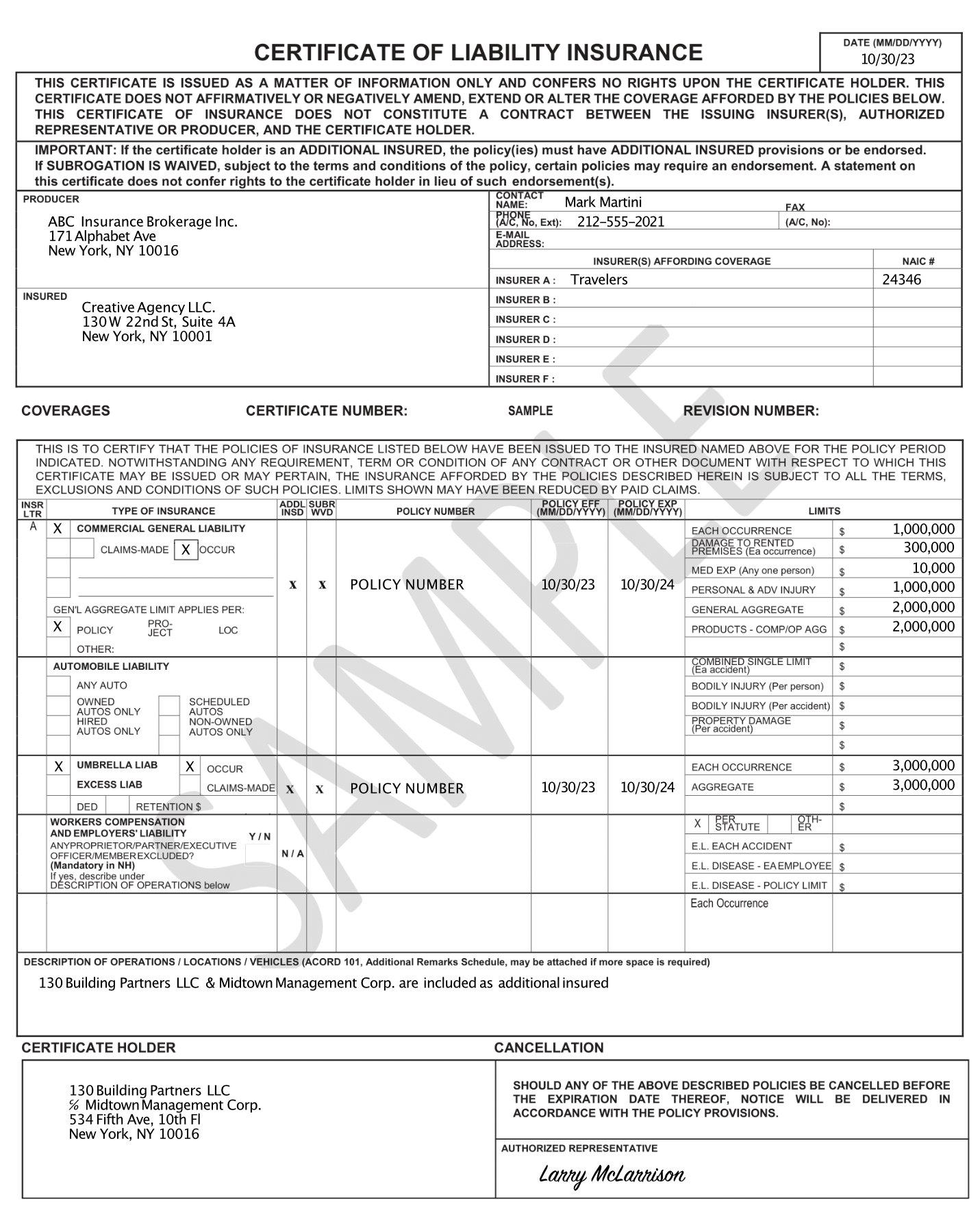
While there are various formats for these certificates, the most widely recognized is the ACORD 25 form. ACORD (the Association for Cooperative Operations Research and Development) is a global non-profit organization that sets the standards for the insurance industry. In 2026, while digital formats and automated verification systems have streamlined the process, the underlying structure of the ACORD 25 remains the industry benchmark for clarity and standardization.
It is vital to distinguish between the Certificate Holder and the Insured. The "Insured" is the person or business that purchased the policy. The "Certificate Holder" is the entity requesting the proof of insurance—usually the party that wants to be protected if the insured party causes damage or injury.
Why Is an Insurance COI Necessary?
The necessity of a COI stems from the need to transfer risk. When a business hires a contractor to perform work, they inherit a degree of liability for that contractor's actions. If a contractor accidentally starts a fire at a job site or if a consultant provides faulty advice that leads to financial loss, the hiring entity could be held liable.
Risk Mitigation and Liability
By requiring a COI, the hiring party ensures that if something goes wrong, the contractor’s insurance company—not the hiring party’s own insurance—will bear the financial burden. This protects the hiring entity’s loss history and prevents their own premiums from skyrocketing due to the mistakes of a third party.
Contractual Compliance
Most professional contracts in 2026 contain specific insurance requirements. A COI acts as the physical verification that these contractual obligations have been met. Without a valid COI on file, many companies will refuse to move forward with a project, and some automated accounting systems may even block payments to vendors whose insurance has expired.
Professional Credibility
For contractors and small businesses, having a COI ready to go demonstrates professionalism and financial stability. It shows potential clients that you are a legitimate operation that takes responsibility for its risks. In competitive bidding processes, the ability to provide proof of high-limit coverage can often be the deciding factor between winning or losing a contract.

Key Components of an Insurance COI
To effectively use a COI, you must understand the specific data points included on the form. A standard ACORD 25 form is divided into several critical sections, each serving a distinct purpose in the verification process.
1. Producer and Insured Information
The "Producer" is the insurance agency or broker that issued the certificate. This section includes their contact information, which is essential if the certificate holder needs to verify the document's authenticity. The "Insured" section identifies the exact legal name and address of the business covered by the policy. It is crucial that this name matches the name on the service contract exactly.
2. Insurers Affording Coverage
This section lists the various insurance companies providing the coverage. Each company is usually assigned a letter (A, B, C, etc.) which corresponds to the specific policies listed further down the form. This allows one COI to summarize multiple policies from different carriers.
3. Types of Insurance and Policy Limits
This is the "meat" of the COI. It lists the categories of insurance held by the insured, such as:
- General Liability: Covers bodily injury, property damage, and personal injury.
- Automobile Liability: Covers vehicles used for business purposes.
- Workers' Compensation: Covers medical costs and lost wages for injured employees.
- Professional Liability (E&O): Covers errors in professional services or advice.
- Umbrella/Excess Liability: Provides additional limits above the primary policies.
For each type, the form lists the Policy Number, the Effective Date, and the Expiration Date. Most importantly, it lists the Limits of Liability, such as "$1,000,000 per occurrence" or "$2,000,000 general aggregate."
4. Description of Operations
This text box allows the producer to add specific details. It is often used to reference a specific project number or to state that the certificate holder has been added as an "Additional Insured." This is one of the most scrutinized sections of a COI during a contract review.
5. Certificate Holder and Cancellation
The bottom-left box identifies the person or company receiving the certificate. The bottom-right section contains the "Cancellation" clause. This traditionally stated that the insurer would "endeavor" to provide 30 days' notice if the policy was canceled, though modern forms have moved toward more standardized legal language regarding notification.
Types of Insurance Commonly Included on a COI
A COI is versatile and can represent a wide array of coverages. Depending on the industry—whether it’s construction, healthcare, or IT—the specific policies listed will vary.
| Insurance Type | Standard 2026 Limits | Purpose of Coverage |
|---|---|---|
| General Liability | $1M Occurrence / $2M Aggregate | Protects against third-party bodily injury and property damage. |
| Workers' Compensation | Statutory Limits / $1M EL | Mandatory in most states; covers employee injuries on the job. |
| Professional Liability | $1M to $5M | Protects against financial loss resulting from professional errors. |
| Commercial Auto | $1M Combined Single Limit | Covers business-owned vehicles or personal vehicles used for work. |
| Cyber Liability | $1M to $10M | Protects against data breaches, ransomware, and digital theft. |
| Umbrella/Excess | $1M to $10M+ | Provides extra protection when primary policy limits are exhausted. |
The Critical Role of Additional Insured Status
One of the most important aspects of a COI is the Additional Insured (AI) endorsement. Being a certificate holder does not automatically make you an additional insured. An AI endorsement is a specific amendment to the policy that grants the certificate holder coverage under the insured’s policy for certain claims. In 2026, most commercial contracts require the contractor to name the client as an "Additional Insured on a primary and non-contributory basis."
How to Obtain an Insurance COI
If you are a business owner and a client requests a COI, the process is generally straightforward. However, it requires coordination with your insurance representative.
- Review the Requirements: Your client will usually provide a list of insurance requirements or a sample COI. Pay close attention to the required limits and specific endorsements (like the Waiver of Subrogation).
- Contact Your Broker: Send the requirements to your insurance agent or broker. Most modern agencies provide online portals where you can request a COI 24/7.
- Policy Adjustments: If your current coverage does not meet the client’s requirements (e.g., they want $5 million in coverage and you only have $2 million), your broker will need to quote an increase in limits or an umbrella policy before the COI can be issued.
- Issuance and Delivery: The broker generates the COI and sends it to you or directly to your client. In 2026, digital COIs are often delivered via secure links or integrated into project management software.
Most brokers do not charge a fee for issuing a standard COI. However, if you need to add specific endorsements or increase coverage limits, your insurance premium will likely increase.
How to Verify and Review a COI
If you are the party receiving the COI, you have a responsibility to verify its accuracy. A fraudulent or expired COI provides zero protection.
Verification Checklist
- Check the Dates: Ensure the policy is currently active. If the expiration date is only a few weeks away, set a reminder to request a renewal certificate.
- Validate the Insurer’s Rating: Use services like A.M. Best to ensure the insurance company is financially stable (usually a rating of A- or better is required).
- Confirm Policy Limits: Do the limits meet or exceed the requirements in your contract? Ensure the "Aggregate" limit hasn't been depleted by other claims.
- Look for Special Endorsements: If your contract requires a "Waiver of Subrogation" or "Primary and Non-Contributory" language, ensure it is clearly stated in the "Description of Operations" or that the appropriate boxes are checked.
- Authenticate the Document: If anything looks suspicious—such as mismatched fonts, blurry logos, or altered dates—contact the issuing "Producer" listed at the top of the form to verify that the policy is legitimate and active.
Common Mistakes and Red Flags
Managing COIs can be complex, and errors are frequent. Recognizing these red flags early can prevent massive liability gaps.
- Expired Policies: This is the most common issue. Many businesses collect a COI at the start of a project but fail to track its expiration.
- Incorrect Named Insured: If the COI is issued to "John Doe" but the contract is with "John Doe Construction, LLC," the coverage may not apply to the entity performing the work.
- Missing Additional Insured Status: As noted previously, simply holding a piece of paper that says someone has insurance doesn't mean you are protected by it. You must be added as an Additional Insured if the contract requires it.
- Inadequate Limits: Often, contractors have a general liability policy with a $1 million limit, but the project risk requires $5 million. Without an umbrella policy, the contractor is underinsured.
- Claims-Made vs. Occurrence: This is a technical but vital distinction. "Occurrence" policies cover incidents that happen during the policy period, regardless of when the claim is filed. "Claims-made" policies only cover claims filed while the policy is active. For professional liability, this is a critical detail to monitor.
The Legal Limitations of a COI
It is a common misconception that a COI is a legally binding contract that guarantees coverage. In reality, the COI is for informational purposes only.
The standard ACORD 25 form explicitly states: "This certificate is issued as a matter of information only and confers no rights upon the certificate holder. This certificate does not affirmatively or negatively amend, extend or alter the coverage afforded by the policies below."
What does this mean for you? If there is a conflict between what the COI says and what the actual insurance policy says, the policy always wins. For example, if a COI incorrectly states that you have coverage for "Professional Liability" but your actual policy excludes that type of work, the insurance company is not obligated to pay the claim. To truly ensure protection, sophisticated organizations in 2026 often request copies of the actual policy endorsements in addition to the COI.
Frequently Asked Questions
Does a COI mean I am fully protected?
No. A COI is merely evidence that a policy exists. It does not provide the full details of exclusions, conditions, or specific policy language that could limit a payout. Furthermore, unless you are named as an "Additional Insured," you may have no direct right to claim against the policy.
How much does it cost to get a COI?
In most cases, insurance brokers do not charge for the document itself. It is considered part of their service. However, if the COI request requires you to change your policy (such as adding an endorsement or increasing your limits), you will have to pay the additional premium associated with those changes.
How long is a COI valid?
A COI is only valid as long as the underlying insurance policies are active. Most certificates show an expiration date for the policy. However, a policy could be canceled for non-payment a day after the COI is issued. This is why many companies use automated tracking software to monitor the real-time status of their vendors' insurance.
What is the difference between a Certificate Holder and an Additional Insured?
A Certificate Holder is simply the recipient of the document; they are kept "on notice" about the policy's existence. An Additional Insured is actually granted coverage under the policy for specific risks. You want to be both if you are hiring a contractor.
Can I use an old COI for a new project?
No. Each project often has specific requirements, and the "Certificate Holder" section must be updated to reflect the current project owner or client. Additionally, insurance policies renew annually, so a COI from a previous year is likely expired.
What happens if a contractor’s insurance cancels?
If a policy is canceled, the insurer used to be required to notify certificate holders. However, current industry standards place the burden of notification on the insured party. In 2026, it is best practice to use a digital monitoring service that pings the insurer's database to verify the policy remains in "Active" status throughout the duration of the contract.
Practical Recommendation for 2026
To manage insurance risks effectively in 2026, do not rely on manual filing systems. For business owners, maintain a digital relationship with your broker to ensure rapid issuance of COIs. For those hiring contractors, implement a COI Tracking System. These platforms automatically verify the dates, limits, and ratings of the insurance policies submitted to you, alerting you the moment a policy lapses or a coverage limit falls below your requirements. Always ensure that the legal name on the COI matches your contract and that you have secured "Additional Insured" status to ensure the highest level of protection.
Image Gallery
Select an image to open it in a new tab.



Mateo Castillo
Decentralized Finance and E-Payments Strategist
