To get really cheap auto insurance in Missouri, purchase the state mandatory liability minimums (25/50/25 plus required uninsured motorist coverage), opt for a higher deductible on full coverage policies, enroll in telematics discount programs, and shop quotes across both national carriers and Midwest regional insurers like Shelter Insurance and State Farm.
Finding affordable car insurance in the Show-Me State requires balancing statutory legal mandates with strategic cost-cutting techniques. While state minimums provide the lowest initial price tag, long-term savings stem from leveraging carrier-specific discounts, managing your credit-based insurance score, and selecting coverage tiers that match your vehicle's actual cash value.
Disclaimer: This guide is for educational purposes only and does not constitute formal legal or financial advice. Insurance regulations, state minimums, and policy offerings are subject to change. Always consult a licensed insurance professional or the Missouri Department of Commerce and Insurance (DCI) to address your specific situation.
Missouri Auto Insurance Requirements and Minimums
To legally operate a motor vehicle in Missouri, drivers must maintain financial responsibility. The Missouri Department of Revenue (DOR) requires minimum liability coverage limits, often abbreviated as 25/50/25, along with mandatory Uninsured Motorist protection.
Missouri Mandatory Minimum Auto Insurance
| Coverage | Minimum Requirement |
|---|---|
| Bodily Injury Liability | $25,000 per person |
| Bodily Injury Liability | $50,000 per accident |
| Property Damage Liability | $25,000 per accident |
| Uninsured Motorist (UM) | $25,000 per person |
| Uninsured Motorist (UM) | $50,000 per accident |
Mandatory Minimum Coverage Breakdown
- $25,000 Bodily Injury Liability per person: Pays for medical bills and lost wages for a single individual injured in an accident you cause.
- $50,000 Bodily Injury Liability per accident: The maximum total payout for bodily injuries caused to all individuals in a single crash you cause.
- $25,000 Property Damage Liability: Covers repair costs for damage you inflict on another person's vehicle, property, or public infrastructure.
- $25,000/$50,000 Uninsured Motorist (UM) Coverage: Missouri law explicitly mandates bodily injury UM coverage to protect you and your passengers if struck by a hit-and-run driver or an uninsured motorist.
Minimum Liability vs. Full Coverage
Opting for minimum liability coverage yields the cheapest baseline premium. However, liability coverage pays only other people's damages when you are at fault. It provides zero financial assistance for repairing or replacing your own vehicle.
Full Coverage adds two primary physical damage protections:
- Collision Coverage: Pays for damage to your car resulting from an impact with another vehicle or object, regardless of fault.
- Comprehensive Coverage: Protects against non-collision incidents, including hail damage, tornado destruction, deer strikes, vandalism, theft, or falling tree limbs—risks that are particularly common in the Midwest.
If your vehicle is paid off and its market value has dropped below $4,000 to $5,000, dropping Collision and Comprehensive coverages can immediately slash your premium by 30% to 50%.
Proven Strategies to Lower Your Missouri Auto Insurance Rate
1. Leverage Telematics and Usage-Based Insurance (UBI)
Most major insurers in Missouri offer telematics programs that monitor real-time driving habits via a mobile app or plug-in OBD-II device. These programs track metrics such as hard braking, rapid acceleration, late-night driving, and cornering speed.
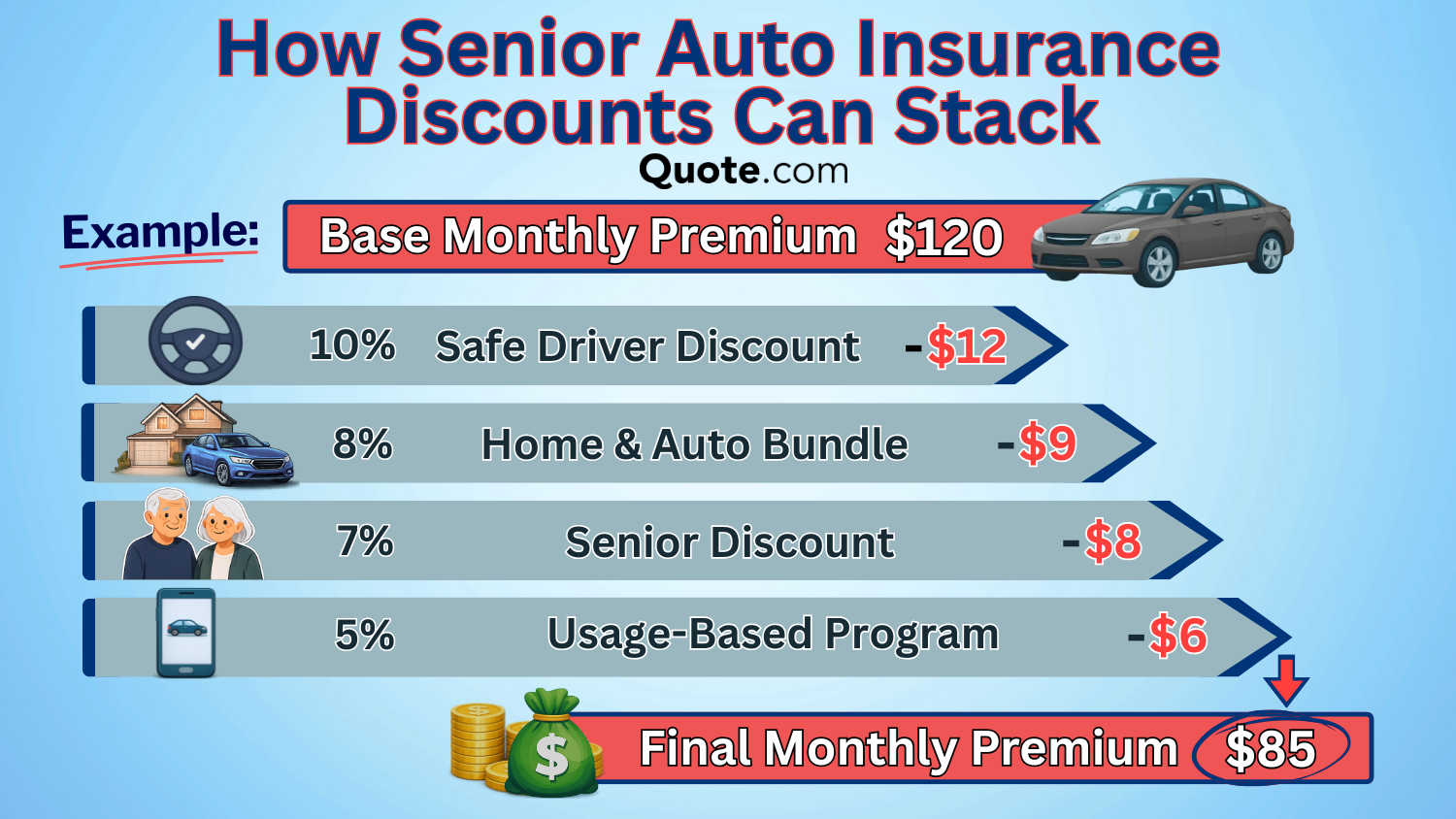
Participating typically grants an instant signup discount of 5% to 10%, with potential safe-driver savings reaching up to 30% upon policy renewal. Drivers with low annual mileage or predictable commute times gain the highest savings from UBI enrollment.
2. Maximize Policy Bundling and Multi-Car Discounts
Combining your auto policy with home, renters, or condo insurance through the same company is one of the easiest ways to secure discounts. Carriers routinely reduce total premiums by 15% to 25% across all linked policies. Adding multiple vehicles under a single primary policy yields similar multi-car savings.
3. Increase Physical Damage Deductibles
If maintaining full coverage is necessary—such as when a lender requires it for a financed or leased car—raising your deductible yields substantial savings. Moving your deductible from $250 or $500 up to $1,000 can reduce your Comprehensive and Collision premiums by 15% to 30%. Always keep the chosen deductible amount accessible in an emergency savings fund.
4. Optimize Your Credit-Based Insurance Score
Under Missouri law (RSMo § 379.888), insurance companies are permitted to evaluate your credit history to calculate a credit-based insurance score. Statistical actuarial data links higher credit scores to lower insurance loss ratios.
To improve your score and lower your rate:
- Pay off revolving credit card balances to keep utilization below 30%.
- Ensure zero late payments on loans and bills.
- Regularly review your credit report for errors and dispute inaccuracies.
5. Complete an Approved Defensive Driving Course
Drivers in Missouri—particularly young drivers and seniors aged 55 and older—can take a state-approved defensive driving course to earn a premium discount. Verify with your carrier before enrolling to ensure the specific course curriculum qualifies for their discount program.
Missouri-Specific Factors Influencing Premium Costs
Geographic Location: Urban vs. Rural Rates
Where you park your vehicle overnight in Missouri heavily impacts your monthly premium. High-density urban centers experience higher collision rates, vehicle theft, and traffic congestion, leading to elevated premiums compared to rural communities.
- Higher-Cost Zones: St. Louis City, Kansas City Metro, and St. Louis County.
- Moderate-Cost Zones: Springfield, Columbia, Independence, and St. Charles.
- Lower-Cost Zones: Rural areas in North Missouri, the Ozarks region, and small agricultural towns.
Weather and Environmental Hazards
Missouri routinely experiences severe weather events, including convective storms, damaging hail, tornadic winds, and flash flooding. Because comprehensive claims spike following major storm systems, carriers adjust physical damage rates based on regional weather risk profiles across specific Missouri zip codes.
Vehicle Inspection and Registration Compliance
The Missouri Department of Revenue mandates safety and emissions inspections for specific vehicles prior to registration or renewal. Vehicles older than 10 years or exceeding statutory mileage thresholds require safety inspections, while residents in St. Louis City, St. Louis County, St. Charles County, Jefferson County, and Franklin County must also complete Gateway Vehicle Inspection Program (GVIP) emissions testing. Keeping your vehicle legally registered and compliant prevents administrative lapses that can trigger non-renewal or penalty rates from insurers.
Comparing Top Auto Insurers for Cheap Rates in Missouri
Carrier rates vary significantly based on individual driver profiles, credit brackets, and zip codes. The table below outlines major insurers operating in Missouri, their target driver segments, and signature discount offerings.
| Insurer | Target Driver Segment | Notable Discount Features | Relative Price Rating |
|---|---|---|---|
| Progressive | High-risk drivers, low-mileage drivers, digital-first shoppers | Snapshot telematics, Name Your Price tool, continuous coverage discount | Competitive |
| State Farm | Families, multi-policy holders, young safe drivers | Drive Safe & Save, Steer Clear (under 25), home/auto bundling | Very Low |
| GEICO | Budget-conscious drivers, military personnel, federal employees | Multi-vehicle, military affiliation, defensive driving completion | Very Low |
| Shelter Insurance | Midwest suburban and rural drivers, home-and-auto bundlers | Companion policy discount, safe driver discount, good student deal | Low |
| American Family | Homeowners, families, drivers seeking robust agent support | KnowYourDrive telematics, multi-product, steering clear of lapses | Moderate to Low |
| Auto-Owners | Drivers with clean records seeking local independent agency service | Advance quote discount, paid-in-full discount, paperless billing | Low |
How to Shop and Compare Auto Insurance Quotes Step-by-Step
Step-by-Step Quote Comparison Process
- Step 1: Gather VIN, driver records & mileage
- Step 2: Establish base coverage requirements
- Step 3: Solicit 4-5 quotes (National & Local)
- Step 4: Verify DCI complaint records & ratings
- Step 5: Finalize policy & avoid coverage lapse
Step 1: Gather Accurate Personal and Vehicle Information
Before requesting quotes, compile all necessary documentation to ensure precise rate quotes:
- Vehicle Identification Numbers (VIN) for all covered automobiles.
- Exact current odometer readings and estimated annual commuting mileage.
- Driver’s license numbers for all household members.
- Driving history details for the past 3 to 5 years (including moving violations, at-fault accidents, and prior insurance claims).
Step 2: Establish Your Baseline Coverage Amounts
Select consistent coverage limits across every quote you request so you can compare pricing accurately. Deciding on $50k/$100k/$50k liability limits with a $500 deductible on one quote while requesting $25k/$50k/$25k liability with a $1,000 deductible on another will skew your evaluation.
Step 3: Solicit Quotes from Direct, Captive, and Independent Agents
- Direct Carriers (e.g., GEICO, Progressive): Allow you to generate online quotes directly and customize coverage options manually.
- Captive Agents (e.g., State Farm, Shelter Insurance): Represent a single insurer and provide personalized local assistance.
- Independent Brokers: Represent multiple regional and national carriers, allowing them to search multiple markets simultaneously on your behalf.
Step 4: Check Insurer Licensing and Complaint Ratios
Verify that any company offering coverage is properly licensed in the state. Use the consumer inquiry tools provided by the Missouri Department of Commerce and Insurance (DCI) to review financial solvency and complaint histories. Cross-reference carrier financial strength ratings through credit rating agency AM Best to ensure the company possesses adequate capital reserves to pay out claims.
Step 5: Finalize Policy and Coordinate Effective Dates
Once you identify the cheapest policy meeting your needs, finalize payment and confirm the precise effective time and date. Do not cancel your existing policy until the new insurance binder is fully issued and confirmed. A lapse of even a single day can lead to administrative penalties from the Missouri Department of Revenue and trigger immediate rate increases from insurers.
High-Risk Drivers: SR-22 Filings and the Missouri Automobile Insurance Plan
Drivers with a history of Driving While Intoxicated (DWI), reckless driving convictions, major moving violations, or driving without insurance face restricted market options and higher rates.
High-Risk Driver Recovery Pathway
- Insurer issues SR-22 certificate to MO DOR
- Maintain uninterrupted coverage for 3 years
- Graduate to standard market cheap rates
SR-22 Requirements in Missouri
An SR-22 is not an insurance policy; it is an official Certificate of Financial Responsibility filed directly by an authorized insurance carrier with the Missouri Department of Revenue. It certifies that an individual maintains active legal liability coverage.
- Mandatory Period: Drivers required to present an SR-22 must typically maintain the filing continuously for 3 consecutive years.
- Filing Fees: Insurers charge a small administrative fee (usually $15 to $25) to submit the SR-22 filing.
- Lapse Warning: If an SR-22 policy cancels or lapses for any reason, the insurer is legally required to submit an SR-26 form to the state, resulting in immediate driver's license suspension.
To keep costs down while requiring an SR-22, look for non-owner auto insurance if you do not own a vehicle, or limit vehicle coverage to minimum liability on an inexpensive automobile.
Missouri Automobile Insurance Plan (MAIP)
If a high-risk driver is rejected by multiple standard insurance companies in the open market, they can obtain coverage through the Missouri Automobile Insurance Plan (MAIP). MAIP assigns high-risk drivers to authorized state auto insurers on a rotating basis. Rates in the assigned risk plan are higher than standard market prices, but MAIP guarantees that every licensed driver can secure legally required liability protection.
Common Mistakes That Secretly Inflate Your Premium
- Carrying Unnecessary Coverage on Older Cars: Paying $600 per year for Collision and Comprehensive protection on a car worth only $1,500 is cost-ineffective due to policy deductibles and depreciation.
- Omitting Household Drivers: Failing to list licensed teenagers or family members living under your roof can lead to denied claims or retroactive premium assessments due to unrated household risk.
- Failing to Disclose Commute Changes: If you switched to remote work or reduced your daily driving distance, notify your insurer immediately. Lower annual mileage categories reduce base rates.
- Ignoring Non-Standard Discounts: Overlooking small savings options like paperless billing, automatic ACH payments, paid-in-full options, or professional group associations adds up over time.
Frequently Asked Questions
What is the absolute cheapest auto insurance coverage in Missouri?
The cheapest option is a liability-only policy that meets Missouri’s minimum legal requirement of 25/50/25 bodily injury and property damage liability, along with $25,000/$50,000 in uninsured motorist coverage. This selection covers damage and injuries you cause to others, but provides no coverage for your own vehicle.
Can Missouri car insurance companies increase my rate based on my credit score?
Yes. Missouri law permits insurance carriers to use credit-based insurance scores when pricing policies. Drivers with excellent credit scores receive significantly lower premiums than those with fair or poor credit scores, even if both drivers have identical clean driving records.
How does an SR-22 requirement impact car insurance rates in Missouri?
An SR-22 requirement flags a driver as high-risk, which generally leads to higher base premiums. While the administrative fee for filing the SR-22 form is minimal, the underlying driving violations (such as a DWI or operating a vehicle without insurance) cause substantial insurance rate increases.
What happens if I drive without insurance in Missouri?
Driving without financial responsibility in Missouri leads to legal penalties enforced by the Missouri Department of Revenue. Punishments include driver's license suspensions, reinstatement fees, mandatory SR-22 filing requirements, accumulation of points on your driving record, and potential court fines.
Does taking a defensive driving course lower car insurance rates in Missouri?
Yes, many Missouri insurers offer discounts for drivers who complete a state-approved defensive driving course. This discount is especially common for drivers aged 55 and older, as well as young drivers. Always confirm with your insurance carrier that your chosen course qualifies for a discount before enrolling.
Final Recommendation: Your Savings Action Plan
To secure the absolute lowest auto insurance rate in Missouri without exposing yourself to legal or financial risk:
- Request quotes from at least four distinct insurers, including a mix of national brands (such as GEICO or Progressive) and regional carriers (such as Shelter Insurance or State Farm).
- Match your vehicle value to your coverage strategy. Drop Collision and Comprehensive coverages if your car's market value is low, or select a $1,000 deductible if full coverage is required.
- Enroll in telematics and combine policy types. Sign up for usage-based app tracking and bundle your auto policy with home or renters insurance to unlock cumulative multi-policy discounts.
- Review coverage options annually. Recalculate your insurance needs every 12 months to account for changes in annual driving distance, credit score improvements, and vehicle depreciation.
Image Gallery
Select an image to open it in a new tab.
Zara El-Hashem
Sociocultural Dynamics and Academics Writer
