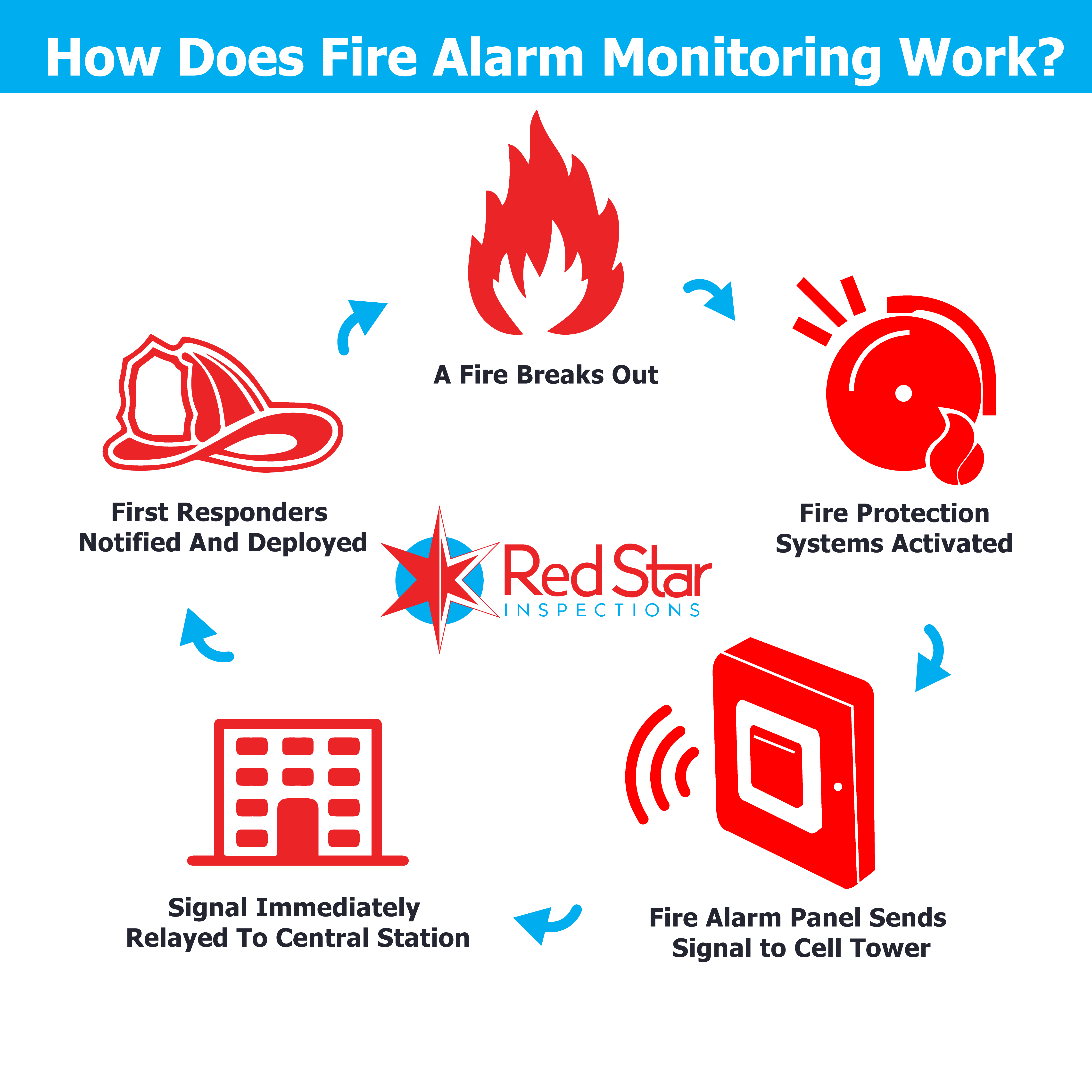
The cost of fire alarm monitoring represents a critical investment in life safety, property protection, and regulatory compliance. Beyond the monthly subscription fee, these costs reflect the infrastructure, staffing, and technology required to maintain a 24/7 link between your building’s fire panel and emergency services. Understanding this expenditure is essential for balancing operational budgets with the non-negotiable requirement of reliable fire detection and rapid response.
The Foundation of Fire Alarm Monitoring
Fire alarm monitoring is the service that ensures that if your fire detection system triggers an alarm, a signal is transmitted to a central station or emergency communication center. Without this link, a fire alarm system is merely a local notification device—it creates noise to alert occupants, but it does not summon help if the building is unoccupied or if staff are unable to dial emergency services.
When you pay for monitoring, you are paying for a secure, redundant communication path. Modern systems use a combination of technologies, including IP-based communicators, cellular communicators, and, in some legacy cases, traditional copper telephone lines. The "cost" covers the monitoring center’s overhead: trained operators available around the clock, the maintenance of the receivers that listen for your signal, and the verification protocols required to ensure the alarm is genuine before dispatching fire services.
Breaking Down the Cost Structure
The price of monitoring is rarely a flat fee across the industry because the service levels and hardware requirements vary significantly based on building use and local jurisdiction requirements. Several factors dictate the monthly or annual premium:
1. Communication Infrastructure
The medium used to send the signal is a primary cost driver. Cellular communicators, which are now the standard due to the sunsetting of legacy copper telephone networks, require data plans and specific hardware. Relying on high-availability cellular networks ensures that your signal bypasses potential outages in local phone lines, but the service provider must pass the cost of these encrypted, dedicated data links to the end user.
2. Service Level Agreements (SLAs) and Response Times
Not all monitoring is created equal. Premium services offer faster "handshake" times and redundant monitoring centers (geographically dispersed facilities). If one station goes offline due to a power grid failure or natural disaster, another center assumes control. The cost increases as you require higher tiers of reliability, particularly for high-rise buildings, hospitals, or manufacturing plants where downtime is not an option.
3. Regulatory and Code Requirements
The National Fire Protection Association (NFPA) 72, the National Fire Alarm and Signaling Code, dictates the requirements for signal transmission. Jurisdictions may have specific local amendments that mandate how quickly a signal must be processed or what level of encryption must be used. Systems that must meet rigorous standards—such as those requiring dual-path reporting—carry higher operational costs because they necessitate double the hardware and double the communication pathways.
The True Cost of "Low-Cost" Monitoring
In the industry, there is a clear distinction between budget monitoring and professional-grade monitoring. Opting for the lowest monthly rate can sometimes lead to hidden risks.
- Communication Delays: Budget providers may use shared or lower-priority bandwidth for alarm signals. In a fire event, seconds determine the severity of the damage.
- Verification Protocols: Professional monitoring stations employ strict verification protocols to reduce false alarms. If a provider is too cheap, they might lack the staff to verify signals correctly, leading to unnecessary fire department dispatches, which often carry significant fines from the city or county.
- Support and Technical Debt: If your alarm system experiences a communication failure, the cost of a "no-fault" service call can exceed the annual savings of a cheap subscription. High-quality providers often bundle basic remote diagnostics, which can save you from paying an expensive technician for a simple software fix.
Comparison of Monitoring Service Tiers
| Feature | Basic Monitoring | Enterprise/Life-Safety Monitoring |
|---|---|---|
| Connectivity | Single-path (Cellular or IP) | Dual-path (Cellular + IP) |
| Redundancy | Single station | Multi-site redundant stations |
| Response Time | Standard | Expedited / Priority |
| Compliance | Meets minimum code | Exceeds NFPA 72; UL-listed |
| Value Add | Basic signal pass-through | Real-time diagnostic reporting |
The Legal and Financial Risks of Inadequate Monitoring
Choosing to minimize the budget at the expense of quality can result in substantial financial liability. Most property insurance policies require active, code-compliant fire alarm monitoring as a condition of coverage. If a fire occurs and your monitoring system was offline due to non-payment or poor-quality infrastructure, the insurance company may deny the claim.
Furthermore, local ordinances often mandate fines for unmonitored systems or those that do not meet the minimum UL (Underwriters Laboratories) certification requirements for monitoring centers. These fines, coupled with the potential loss of life and massive property damage, far outweigh the marginal savings of a lower-tier monthly contract.
Maintenance and Monitoring Synergy
The cost of monitoring is inextricably linked to the cost of maintenance. Your fire alarm system is an integrated whole. If your sensors are dirty, your panel is malfunctioning, or your backup batteries are dead, the monitoring service has nothing to report—or worse, it reports a "trouble" signal that you are forced to address.
Smart facility managers treat monitoring and maintenance as a single lifecycle cost. Providers that offer comprehensive contracts usually provide better value because they keep the system in a "ready" state, reducing the frequency of trouble signals and the resulting emergency repair bills.
Frequently Asked Questions
Why does fire alarm monitoring cost more than standard security alarm monitoring? Fire alarm monitoring requires higher reliability standards under NFPA 72. Unlike security alarms, which might be ignored by a homeowner, fire alarms trigger an automatic life-safety response. The equipment must be more durable, the communication paths must be redundant, and the response time from the monitoring center must be strictly documented and verifiable by the Authority Having Jurisdiction (AHJ).
What is the impact of the sunset of analog telephone lines? The transition away from POTS (Plain Old Telephone Service) has forced most buildings to upgrade to cellular or IP communicators. While this increases the monthly cost due to data fees, it provides significantly faster signal transmission and the ability to perform remote diagnostics, which improves overall safety.
Do I need a UL-listed monitoring station? In most commercial environments, yes. An Underwriters Laboratories (UL) listed monitoring station is audited to ensure they follow specific procedures for signal receipt, record keeping, and operator training. Many building codes and insurance companies specifically mandate that your system must be monitored by a facility with this certification.
Can I bundle monitoring with my fire inspection contract? Yes, and it is often recommended. Bundling allows for a single point of accountability. If the monitoring system reports a problem, the service provider already has your system history and can often identify if the issue is a system-wide failure or a single faulty device before they arrive on-site, saving on labor costs.
What happens if I change my monitoring provider? Changing providers usually requires a technician to reprogram the fire alarm communicator with the new receiver numbers and account codes. Ensure that any new provider uses equipment compatible with your existing fire alarm control panel. Some panels are proprietary and require specific communicators, which can influence the total cost of ownership.
Strategic Next Steps
To manage the cost of fire alarm monitoring effectively, property owners and facility managers should follow these steps:
- Audit Your Requirements: Review your local fire codes and insurance policy. Understand exactly what level of monitoring (e.g., dual-path, UL-listed) is mandatory for your specific building classification.
- Evaluate Current Reliability: Review the last 12 months of "trouble" signals reported by your current provider. If they are frequent, you may be paying for a reactive system rather than a preventative one.
- Request a Comprehensive Quote: When shopping for providers, ask for a total cost of ownership (TCO) estimate that includes both the monthly monitoring fee and the estimated annual cost for hardware upgrades or firmware maintenance.
- Consolidate Services: Where possible, consolidate your inspection, maintenance, and monitoring services with a single, reputable provider. This usually results in better pricing and, more importantly, a more reliable safety posture.
By viewing fire alarm monitoring as a vital safeguard rather than a utility bill, you ensure your facility remains both legally compliant and physically secure.
Image Gallery
Select an image to open it in a new tab.

Celine Dubois
Contemporary Living and Global Arts Columnist
