
Cesare Maldini was a legendary Italian footballer and manager whose association with AC Milan spanned over half a century. As the first Italian captain to lift the European Cup in 1963, he established the club's continental prestige and founded a multi-generational legacy that defines the "Milanismo" identity to this day in 2026.
The Foundation of a Legend: Arrival at San Siro
Cesare Maldini’s journey with AC Milan began in 1954 when he transferred from his hometown club, Triestina. At the time, Milan was a club with domestic ambitions but had yet to conquer the European stage. Maldini, a tall and elegant defender, quickly became the cornerstone of a backline that would change the trajectory of Italian football.
During his twelve seasons as a player at San Siro, Maldini amassed 412 appearances across all competitions. He was not merely a defender; he was a pioneer of the "Libero" or sweeper role. In an era where many defenders relied on brute force, Cesare was noted for his technical grace, composure on the ball, and an uncanny ability to read the game. This elegance allowed him to transition the ball from defense to midfield, a tactical hallmark that would become a requirement for future Milan captains.
His domestic success was immediate and sustained. Maldini helped the Rossoneri secure four Serie A titles (1954–55, 1956–57, 1958–59, and 1961–62). However, his greatest contribution to the club’s lore occurred on the international stage, specifically on a spring evening in London.
The 1963 European Cup: A Historic Milestone
The 1962–63 European Cup campaign remains one of the most significant chapters in AC Milan’s history. Under the guidance of the legendary Nereo Rocco—the man who popularized the Catenaccio system—Cesare Maldini led the team as captain.
The final, held at Wembley Stadium against a formidable Benfica side led by Eusébio, was a clash of titans. Benfica were the two-time defending champions, but Milan’s tactical discipline and Maldini’s leadership at the back neutralized the Portuguese threat. Milan won 2-1, with José Altafini scoring both goals.
When Cesare Maldini hoisted the trophy into the London night, he became the first Italian to captain an Italian club to European glory. This victory was the catalyst for Milan’s identity as "The Kings of Europe," a reputation the club has spent decades defending. It established a standard of excellence that every subsequent Milan captain—including his son, Paolo—would be measured against.
Technical Profile: The Style of the "Cesarone"
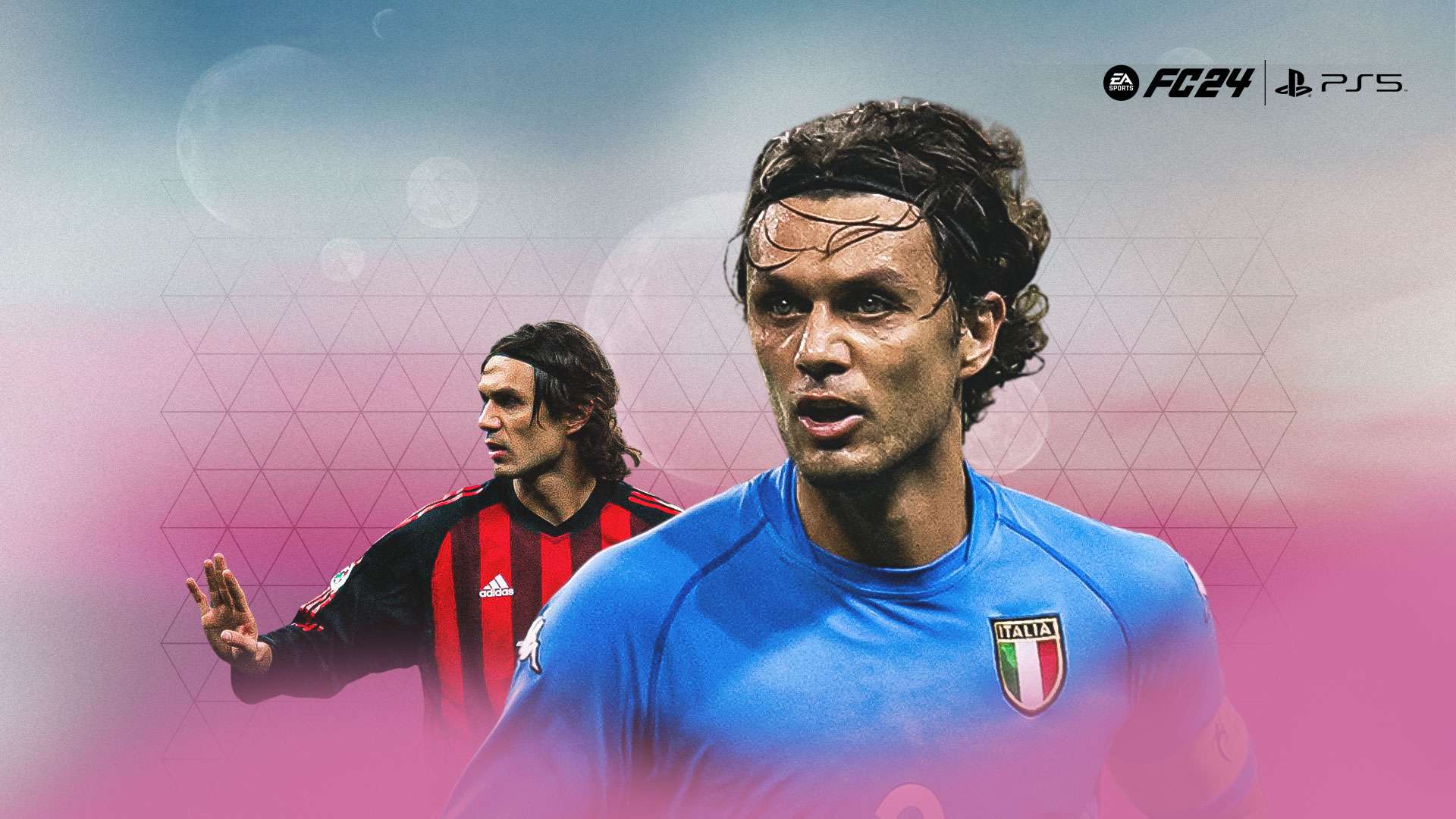
To understand Cesare Maldini’s impact on AC Milan, one must analyze his technical contribution to the game. He was often referred to by the nickname "Cesarone" (Big Cesare), both for his physical stature and his outsized personality.
The Role of the Libero
Maldini was one of the first true ball-playing defenders. In Nereo Rocco’s system, the sweeper was often the "last man," responsible for cleaning up mistakes. Maldini evolved this role by adding a layer of sophistication. He possessed the vision of a midfielder, allowing Milan to bypass high presses—a concept that was ahead of its time in the late 1950s.
The "Maldinate"
Despite his brilliance, Cesare was famous for the "Maldinate"—occasional, high-profile lapses in concentration or overly ambitious maneuvers that sometimes led to goals for the opposition. While these moments were frustrating for the tifosi (fans), they were seen as a byproduct of his confidence and desire to play out from the back. These eccentricities only served to humanize him, making him one of the most beloved figures in the club’s history.
Transition to Management: Two Stints on the Bench
After retiring as a player following a short stint at Torino, Cesare Maldini returned to AC Milan to begin his coaching career. His managerial relationship with the club was characterized by loyalty and a willingness to step in during times of transition.
The Early 1970s Success
His first major managerial tenure at Milan (1972–1974) was remarkably successful. He worked alongside his mentor Nereo Rocco (who served as a technical director). During this period, Maldini guided the team to a double in 1973: the Coppa Italia and the European Cup Winners' Cup. The victory in the Cup Winners' Cup final against Leeds United cemented his status as a coach capable of maintaining Milan’s winning tradition.
The 2001 Caretaker Role and the 6-0 Derby
Perhaps his most emotional return to the bench occurred in 2001. Milan was enduring a difficult season under Alberto Zaccheroni, and Cesare was called upon to act as a caretaker manager.
The highlight of this brief tenure was the Milan Derby on May 11, 2001. Under Cesare’s guidance, Milan demolished Inter 6-0, the largest margin of victory in the history of the Derby della Madonnina. Seeing Cesare on the touchline while his son, Paolo, wore the captain's armband on the pitch remains one of the most iconic images in Rossoneri history.
The Maldini Dynasty: A Family Legacy
It is impossible to discuss Cesare Maldini and Milan without addressing the dynasty he founded. The Maldini name has become synonymous with the club, representing a level of loyalty rarely seen in professional sports.
- Cesare Maldini: The pioneer who lifted the first European Cup.
- Paolo Maldini: Cesare’s son, who many consider the greatest defender in football history. Paolo surpassed his father’s achievements, winning five Champions League titles and making 902 appearances for the club.
- Daniel Maldini: Cesare’s grandson, who continued the tradition into the 2020s, becoming the third generation to play and score for the senior team.
The retirement of the number 3 jersey in honor of Paolo—with the caveat that it can only be unretired for one of his sons—is a testament to the family’s impact. This tradition began with Cesare’s arrival in 1954. He didn't just play for a club; he helped build a culture of "Milanismo," which emphasizes elegance, respect, and a deep-seated winning mentality.
Cesare Maldini’s Career Statistics at AC Milan
The following table summarizes Cesare Maldini’s contributions to AC Milan during his primary years as a player.
| Category | Statistic | Details |
|---|---|---|
| Years Active (Player) | 1954–1966 | 12 Seasons |
| Total Appearances | 412 | All competitions |
| Serie A Titles | 4 | 1955, 1957, 1959, 1962 |
| European Cup Titles | 1 | 1963 (Captain) |
| Latin Cup Titles | 1 | 1956 |
| Managerial Trophies | 2 | Coppa Italia (1973), Cup Winners' Cup (1973) |
| Milan Hall of Fame | Inducted | Recognized for his historic contribution |
Beyond Milan: The National Team and Scout Roles
While his heart belonged to Milan, Cesare Maldini’s influence extended to the Italian National Team (Gli Azzurri). He served as the assistant coach to Enzo Bearzot during Italy’s 1982 World Cup triumph. Later, he managed the Italy Under-21 side to an unprecedented three consecutive European Championships (1992, 1994, 1996), developing a generation of talent that would later dominate at Milan.
In his later years, Cesare returned to Milan in various capacities, including chief scout and technical advisor. His eye for talent helped the club navigate the competitive transfer markets of the early 2000s. He remained a constant presence at the San Siro and the Milanello training ground until his passing in April 2016.
Legacy and Impact in 2026
As of 2026, Cesare Maldini is remembered not just as a former player, but as the patriarch of the club. His statue and various memorials at Milanello serve as reminders to young players of what it means to represent the Rossoneri.
His legacy is felt in the defensive DNA of the club. Even as modern football tactics evolve, the principles Cesare embodied—positional intelligence, composure under pressure, and leadership—remain the gold standard for the AC Milan academy. The "Maldini Way" continues to be a point of pride for fans, distinguishing Milan from other European giants who rely more heavily on external transfers than on deeply rooted family traditions.
Frequently Asked Questions
Did Cesare Maldini ever play for another club besides Milan?
Yes. Cesare began his career at Triestina (1952–1954) before joining Milan. After twelve years with the Rossoneri, he finished his playing career at Torino (1966–1967), where he played one final season before retiring.
How many Champions League titles did Cesare Maldini win?
Cesare Maldini won one European Cup (the predecessor to the Champions League) in 1963. While his son Paolo won five, Cesare’s victory was historically significant as it was the first time an Italian club had ever won the trophy.
What was Cesare Maldini's role in the 1982 World Cup?
Cesare Maldini was the assistant manager to Enzo Bearzot during the 1982 World Cup in Spain. He played a crucial role in tactical planning and defensive organization, helping Italy secure their third World Cup title.
Why is Cesare Maldini considered a "Libero"?
He is considered a Libero because he played as a "free" defender who did not have a specific man-marking assignment. This allowed him to sweep up behind the other defenders and initiate attacks, a role that required superior vision and passing ability compared to traditional center-backs.
Is the number 3 shirt retired because of Cesare?
The number 3 shirt was officially retired in honor of his son, Paolo Maldini. However, the legacy of that shirt began with Cesare, and the club's decision to retire it was a tribute to the entire Maldini family's contribution to AC Milan’s history.
Practical Recommendation for Fans and Historians
For those looking to truly understand the impact of Cesare Maldini on AC Milan, a visit to the Mondo Milan Museum at Casa Milan is highly recommended. The museum houses his original 1963 captain's armband and extensive video archives of the 1963 Wembley final. Additionally, studying the tactical shift in Italian football during the early 1960s provides essential context for why Cesare's style of play was considered revolutionary. To keep up with modern tributes and the ongoing legacy of the Maldini family, fans should follow the official AC Milan website for historical retrospectives and hall-of-fame updates.
Image Gallery
Select an image to open it in a new tab.

Lars Thomsen
Global Labor Markets and Economic Strategy Editor
