What Is Data Center Airflow Management and Why Does It Matter
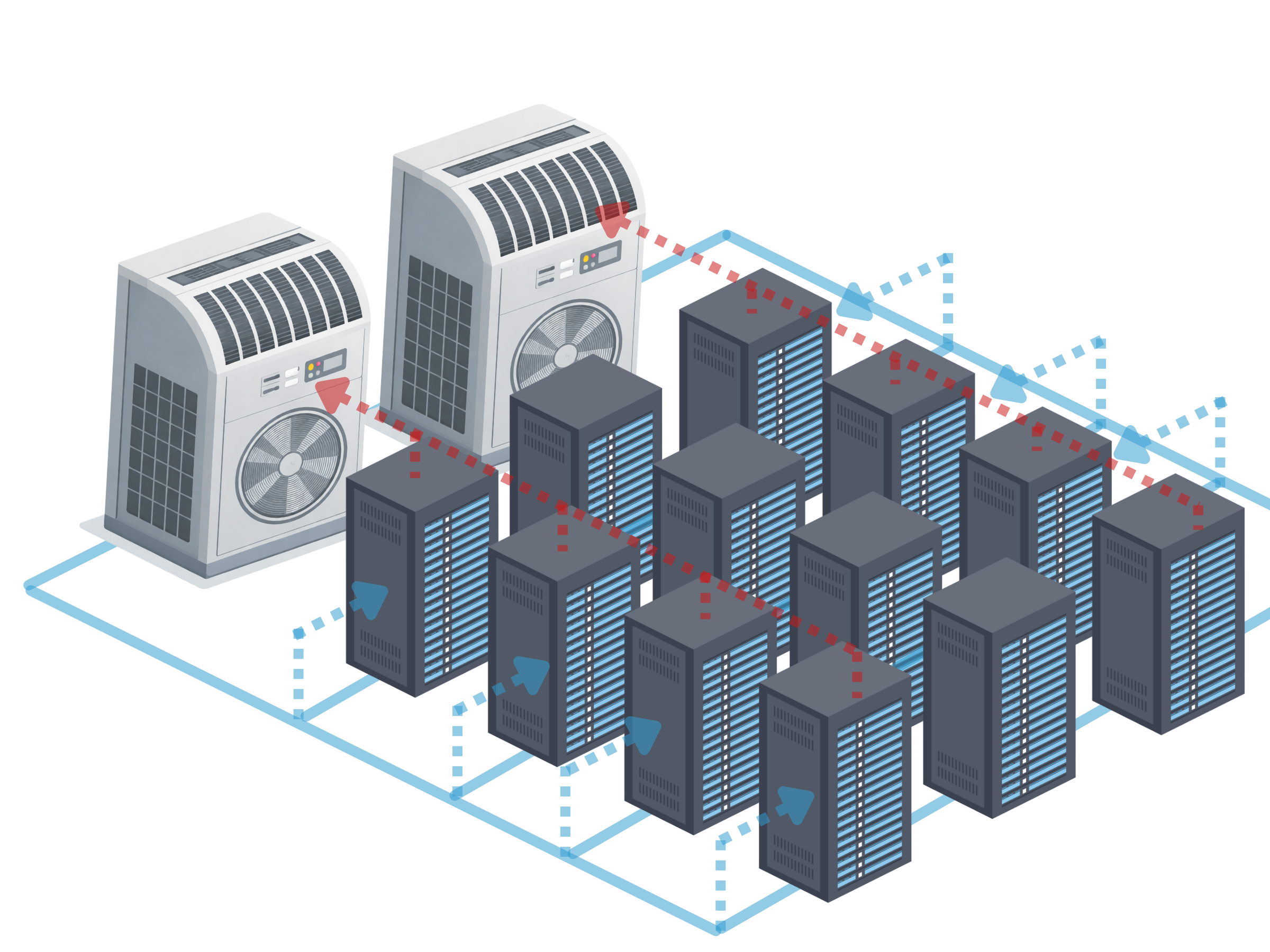
Data center airflow management is the systematic process of controlling and optimizing the distribution of cool air to IT equipment while efficiently exhausting hot exhaust air. By systematically preventing the mixing of hot and cold airstreams, operators can maintain optimal operating temperatures, reduce energy consumption, and prevent catastrophic thermal failures across high-density server deployments.
Understanding the Fundamentals of Data Center Thermal Dynamics
Modern data facilities house thousands of densely packed servers, switches, and storage arrays that continuously draw electrical power and convert it entirely into heat. Without deliberate intervention, this localized heat accumulates rapidly, creating thermal pockets that cause hardware throttling, unexpected shutdowns, and permanent silicon degradation. Airflow management serves as the primary mechanical and architectural defense against these thermal risks.
At its core, thermal management relies on maintaining pressure differentials and directional pathways. Cold air must be delivered precisely to the intake vents of servers, while hot air exhausted from the rear of the equipment must be captured and guided back to cooling units without bypassing into the cold aisles. When these pathways lack proper physical separation, cool air mixes prematurely with hot air—a phenomenon known as bypass airflow or thermal short-circuiting—which forces cooling infrastructure to work harder and consume excessive amounts of energy.
The Evolution of Thermal Densities
Historically, legacy facilities operated at much lower power densities, often requiring fewer than three kilowatts per rack. Under those conditions, imprecise cooling methods and unstructured raised floors were sufficient to prevent overheating.
As virtualization, cloud computing, and high-performance computing clusters push rack densities past 20 to 50 kilowatts and beyond, traditional approaches fail entirely. Contemporary facilities must utilize advanced fluid dynamics modeling, precise containment barriers, and intelligent fan controls to sustain reliable operations.
Core Strategies and Physical Implementation Techniques
Achieving effective airflow management requires a combination of architectural layout planning, physical containment hardware, and rigorous environmental monitoring. Implementing these measures systematically transforms a chaotic thermal environment into a streamlined, predictable ecosystem.
Hot Aisle and Cold Aisle Containment
The foundational strategy in modern facility design is the implementation of hot and cold aisle containment. By orienting equipment racks in alternating rows—front-to-front and back-to-back—operators establish distinct thermal zones:
- Cold Aisle Containment: Physical doors and roof panels enclose the aisle where cool air enters the server intakes, forcing the conditioned air to pass through the IT equipment rather than spilling out into the open room.
- Hot Aisle Containment: Enclosures capture the heated air expelled from the rear of the servers, directing it straight back to the computer room air conditioners (CRACs) or handlers (CRAHs) via overhead plenums or dedicated ductwork.
Containment drastically increases the return air temperature to cooling units, which improves the efficiency of chilled water systems and allows compressors to operate at higher set points for extended periods.
Blanking Panels and Baffle Systems
Even with fully enclosed aisles, gaps within individual racks can disrupt directional airflow. Empty rack spaces allow high-velocity cold air to escape directly to the hot side without performing any cooling work.
Installing blanking panels across all vacant rack units ensures that air is forced exclusively through active hardware chassis. Similarly, vertical and horizontal baffles seal the perimeter gaps between racks, overhead cable trays, and structural walls to eliminate uncontrolled air leakage paths.
Perforated Floor Tile Optimization
In raised-floor environments, the distribution of cool air from underfloor plenums depends heavily on the placement and open-area percentage of perforated tiles. Operators must calculate static pressure profiles to ensure that tiles match the localized cooling demands of high-density equipment.
Unmanaged floor layouts often create areas of extreme positive or negative pressure, leading to uneven cooling where some servers freeze while others overheat.

Key Components and Comparative Performance Metrics
Evaluating airflow strategies requires understanding the hardware components and performance metrics used by facility engineers. The table below outlines the primary mechanisms, their operational purposes, and their impact on overall efficiency.
| Component / Strategy | Primary Purpose | Operational Impact | Implementation Complexity |
|---|---|---|---|
| Cold Aisle Containment | Isolates cold supply air at the server intake face. | Eliminates hot air mixing; allows higher supply temperatures. | Moderate to High (requires retrofitting roofs/doors). |
| Hot Aisle Containment | Captures exhaust air and guides it back to cooling units. | Maximizes return air delta-T; improves chiller efficiency. | Moderate to High (requires overhead ducting/barriers). |
| Rack Blanking Panels | Blocks empty U-spaces in server racks. | Prevents bypass airflow and localized thermal pockets. | Low (simple toolless snap-in installation). |
| Variable Speed Fans | Modulates airflow based on real-time server demand. | Reduces fan energy consumption (cube law savings). | Moderate (requires software integration and sensors). |
| CFD Modeling | Simulates thermodynamic behavior before physical changes. | Identifies optimal tile placements and pressure zones. | High (requires specialized engineering software). |
Operational Benefits and Financial Impact
Deploying comprehensive airflow management yields substantial operational and financial advantages that extend far beyond simple temperature regulation.
Energy Efficiency and PUE Reduction
Cooling infrastructure typically accounts for up to forty percent of a facility's total energy consumption. By eliminating bypass airflow and raising allowable supply air temperatures in accordance with guidelines from organizations such as the American Society of Heating, Refrigerating and Air-Conditioning Engineers (ASHRAE), operators can significantly reduce fan speeds and compressor run times. This optimization directly improves the Power Usage Effectiveness (PUE) ratio, lowering operational expenditures.
Extended Hardware Lifespan
Thermal stress is a primary driver of electronic component failure. Consistent airflow management eliminates thermal cycling—rapid fluctuations between high and low temperatures—that degrades solder joints, circuit boards, and hard drive bearings. Maintaining steady, predictable inlet temperatures ensures hardware operates within manufacturer specifications throughout its intended lifecycle.
Increased Capacity and Density
When cooling is unmanaged, operators are forced to leave empty spaces between high-heat servers to prevent thermal overloads, severely limiting the facility's usable capacity. Effective containment and precise air delivery allow operators to deploy high-density servers densely within standard footprints without risking localized hotspots.
Common Challenges and Troubleshooting Methods
Despite careful planning, data facilities frequently encounter airflow anomalies that compromise thermal stability. Identifying and resolving these issues requires a methodical troubleshooting approach.
Identifying Recirculation and Bypass
Recirculation occurs when hot exhaust air loops back into the server intake due to inadequate containment or improper fan speeds. Operators can detect recirculation using thermal imaging cameras or wireless temperature sensors placed at various elevations along the rack face.
Bypass, conversely, is identified by measuring static pressure under raised floors; excessive pressure differentials indicate that air is escaping through cable cutouts or unsealed penetrations rather than dedicated tiles.
Mitigating Obstructions Under Raised Floors
Cables, conduit, and structural pillars beneath raised floors frequently obstruct airflow, creating turbulence and dead zones. Remediation involves routing cables through overhead trays where possible, bundling underfloor cables neatly, and utilizing Computational Fluid Dynamics (CFD) modeling to redesign the underfloor plenum layout.
Frequently Asked Questions
What is the difference between bypass airflow and thermal recirculation?
Bypass airflow happens when conditioned air escapes directly into the return path without passing through IT equipment, wasting cooling energy. Thermal recirculation occurs when hot exhaust air loops back into the server intake vents, raising inlet temperatures and threatening hardware stability. Both reduce overall cooling efficiency.
How does ASHRAE thermal guidelines affect airflow management?
ASHRAE publishes environmental guidelines that define recommended and allowable temperature and humidity ranges for IT equipment. Modern airflow management allows operators to run facilities safely at the upper limits of these ranges, enabling higher supply air temperatures and significantly reducing cooling energy costs.
Why are blanking panels critical for server racks?
Blanking panels seal unused rack spaces, preventing high-pressure cool air from blowing straight through empty slots. Without them, cool air bypasses the servers, creating low-pressure zones that draw hot exhaust air backward into neighboring equipment intakes.
Can airflow management improve high-density rack performance?
Yes. High-density racks generate massive amounts of heat that standard room-level cooling cannot manage effectively. Dedicated containment systems isolate the thermal load, ensuring that localized cooling units receive adequate airflow and heat rejection capacity to support dense computing clusters.
What role does CFD modeling play in thermal design?
Computational Fluid Dynamics (CFD) software creates a digital simulation of a facility's thermodynamic environment. Engineers use CFD models to visualize air velocity, pressure distributions, and temperature gradients before making physical modifications, ensuring capital investments yield optimal thermal performance.
Next Actions and Operational Recommendations
To optimize a data facility's thermal profile, begin by conducting a comprehensive thermal audit using handheld infrared thermometers or permanent sensor grids to map existing hot spots and bypass zones.
Next, immediately install blanking panels across all vacant rack units as a low-cost, high-impact first step. For long-term efficiency, evaluate the feasibility of deploying rigid aisle containment systems and integrating variable-speed fan controls into your building management software to dynamically match cooling output with real-time IT workloads.
Image Gallery
Select an image to open it in a new tab.


Celine Dubois
Contemporary Living and Global Arts Columnist
