The mathematical constant e, approximately equal to 2.71828, is an irrational and transcendental number that serves as the unique base for natural logarithms. It acts as the fundamental mathematical descriptor for continuous growth processes, appearing ubiquitously in calculus, compound interest formulas, complex number theory, and the modeling of natural phenomena ranging from radioactive decay to population dynamics.
The Origins and Nature of e
To understand e, one must first move beyond basic arithmetic and into the realm of analysis. The number e is not a number you can arrive at by simple counting; it emerges from the mechanics of change. It was popularized by Leonhard Euler in the 18th century, though its conceptual roots are tied to the study of compound interest by Jacob Bernoulli in 1683.
Defining Irrationality and Transcendence
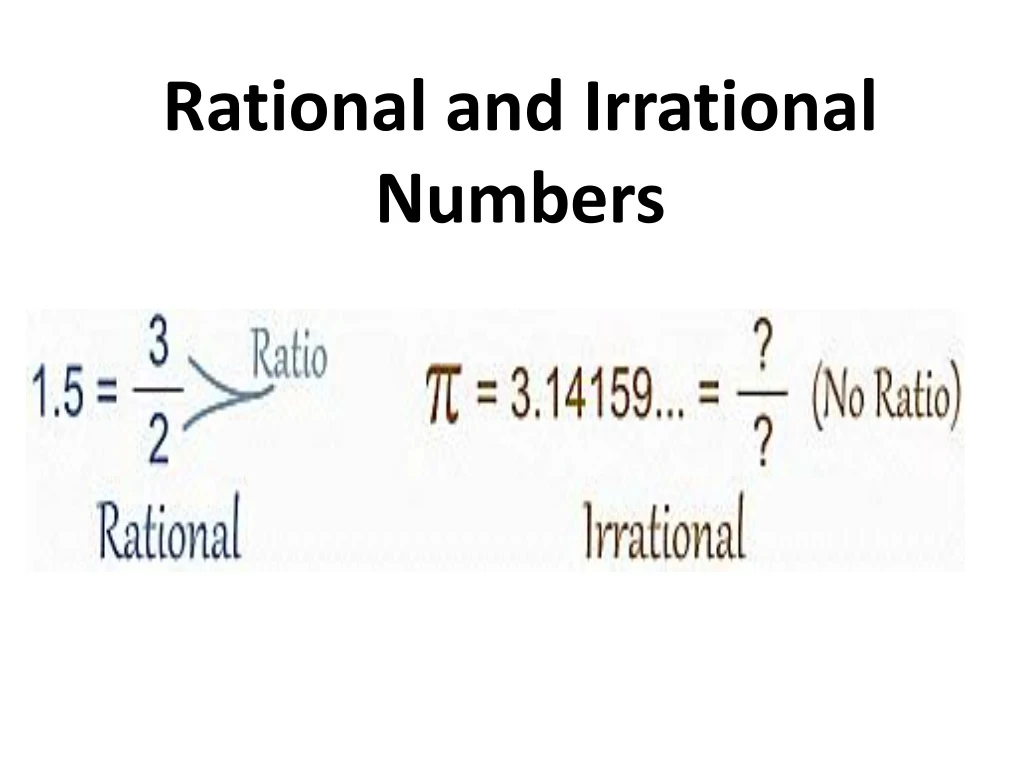
As an irrational number, e cannot be expressed as a simple fraction of two integers. Its decimal expansion is infinite and non-repeating. Furthermore, e is transcendental, meaning it is not the root of any non-zero polynomial equation with rational coefficients. Unlike algebraic numbers like the square root of 2, e exists outside the reach of basic algebraic solutions, necessitating the use of infinite series or limits to define its value precisely.
The Limit Definition
The most intuitive introduction to e involves the concept of compounding. If you have an investment that earns 100% interest annually, compounded once per year, you end up with 200% of your initial capital. If you compound it twice, you get more. If you compound it infinitely many times—the mathematical definition of continuous compounding—your investment grows by the factor of e. Mathematically, this is expressed as:
e = lim (1 + 1/n)^n as n approaches infinity.
Why e is the Base of Natural Growth
In calculus, the primary reason e holds such a revered position is the unique property of the exponential function f(x) = e^x. For this specific function, the derivative—the measure of its rate of change—is identical to the function itself.
The Derivative of Change
When you graph the function y = e^x, the slope of the tangent line at any point x is equal to the value of y at that point. This makes e the "natural" base for calculus. While other bases (like 10 or 2) can be used for exponential functions, they require scaling factors involving natural logarithms to reconcile their rates of change. Using e eliminates these messy constants, creating a streamlined relationship between a function and its growth rate.
Comparison of Exponential Bases
The following table illustrates why e is distinct from other common bases when applied to calculus and growth modeling.
| Base | Function | Derivative | Scaling Factor Required |
|---|---|---|---|
| e | e^x | e^x | None (1) |
| 2 | 2^x | (ln 2) * 2^x | ln 2 (≈ 0.693) |
| 10 | 10^x | (ln 10) * 10^x | ln 10 (≈ 2.303) |

Practical Applications in Modern Science
The ubiquity of e is not limited to theoretical mathematics. It is a necessary tool for engineers, physicists, and economists to accurately model systems that change at a rate proportional to their current size.
Continuous Compounding in Finance
In modern financial mathematics, the formula for continuous compounding is A = Pe^(rt), where A is the final amount, P is the principal, r is the annual interest rate, and t is time. This formula is the bedrock of derivative pricing, risk management, and the valuation of complex financial instruments used in markets today. It allows analysts to calculate the value of an investment as if the interest were being added at every possible nanosecond.
Natural Phenomena and Decay
e is essential for describing physical systems that evolve over time:
- Radioactive Decay: The quantity of a radioactive isotope remaining over time is modeled using a negative exponential function of e.
- Thermal Dynamics: Newton’s Law of Cooling, which describes how an object reaches equilibrium with its surroundings, relies on e to model the temperature drop over time.
- Population Modeling: While simple models use linear growth, accurate biological models of population growth—where the growth rate is tied to the current population density—invariably utilize e.
How to Calculate e Using Infinite Series
Because e is not a simple fraction, mathematicians define it using an infinite sum of factorials. This is known as the Taylor series expansion for e^x where x = 1:
e = 1/0! + 1/1! + 1/2! + 1/3! + 1/4! + ...
Each term in this sequence gets progressively smaller, allowing for highly accurate approximations with just a few terms. By 2026, computational mathematics allows us to compute e to trillions of decimal places, yet for almost all scientific applications, the first 15 to 20 digits are sufficient to maintain extreme precision in calculations.
Common Misconceptions
Is e just a number for interest rates?
No. While it was discovered through interest rate logic, it is a fundamental property of the number system itself. It would exist even if humans had never invented banking or interest. It is a feature of the geometry of space and the nature of growth.
Is e the same as Euler’s constant?
This is a frequent point of confusion. e is often called "Euler's number," but it is distinct from the "Euler-Mascheroni constant," denoted by the Greek letter gamma (γ), which appears in the analysis of the harmonic series. Ensure you do not conflate the two when performing advanced mathematical analysis.
Frequently Asked Questions
Why is e called the natural base?
It is called the "natural" base because it is the base that makes the calculus of exponential functions work without additional coefficients. It arises naturally from the definition of a limit, representing the simplest possible state of continuous growth.
How do I remember the value of e?
A common mnemonic is to remember the first few digits: 2.71828. You can then remember that the next digits are 1828—the same number repeated twice. This sequence gives you 2.718281828, which is accurate to nine decimal places.
Can e be calculated exactly?
No, e cannot be expressed as a finite decimal or a fraction, so it cannot be written down "exactly" in standard notation. It is represented by the symbol e or defined by its infinite series, which provides the absolute precision required for advanced mathematics.
Does e appear in geometry?
Yes, e is deeply connected to geometry through Euler’s formula, e^(ix) = cos(x) + i sin(x). This formula relates exponential functions to trigonometric functions, providing a bridge between the linear growth of exponentials and the circular motion of trigonometry.
Conclusion and Next Steps
Understanding e is essentially the gateway to mastering calculus and understanding how systems change over time. If you are preparing to study advanced mathematics or quantitative finance, your next step should be to explore the Taylor series in greater detail and practice applying the formula A = Pe^(rt) to various scenarios. By viewing e as a bridge between simple arithmetic and the complex reality of continuous change, you gain a vital tool for analyzing the world around you.
Image Gallery
Select an image to open it in a new tab.


Akira Tanaka
International Academic Trends Correspondent
