Building and Maintaining a Personal Net Worth Database
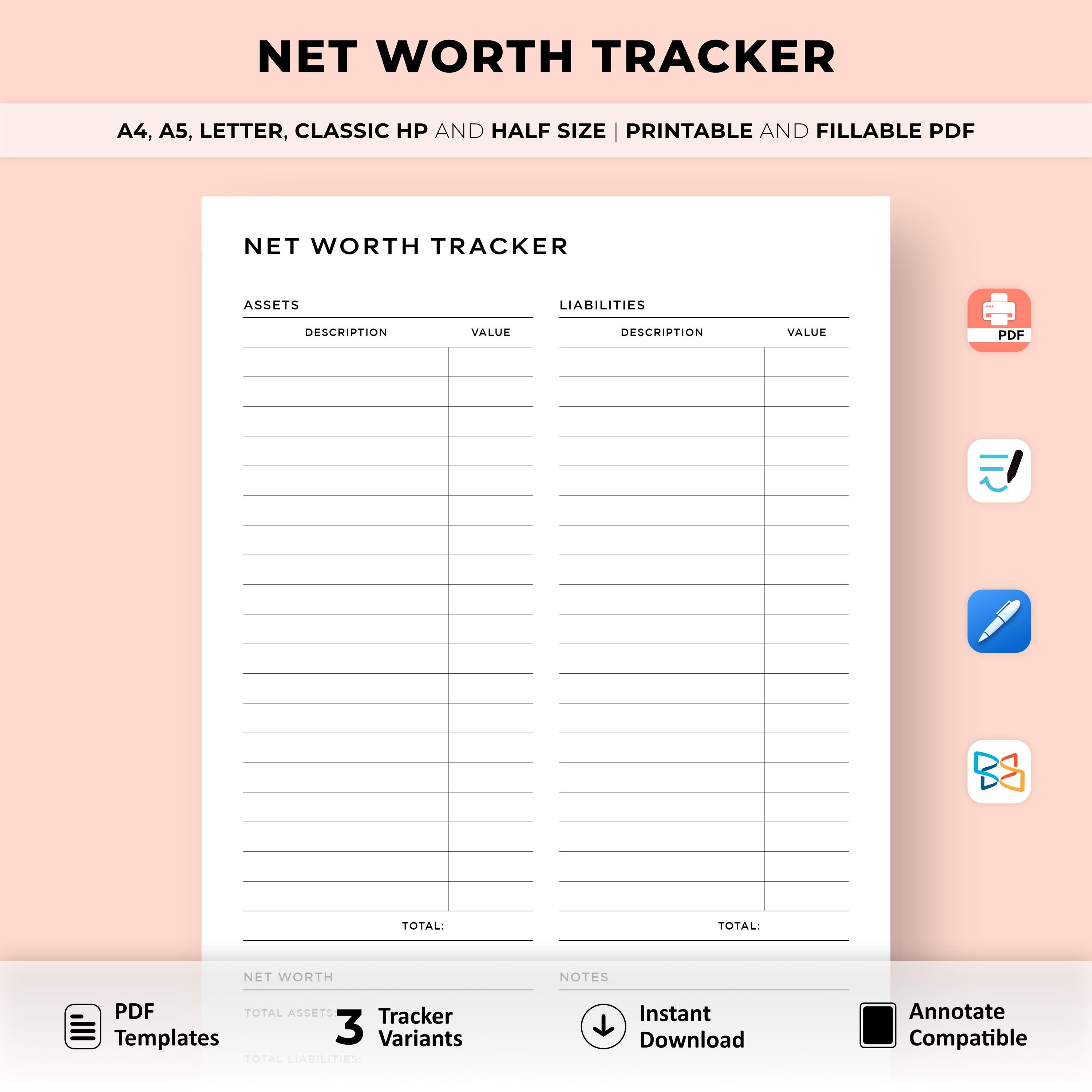
Tracking your personal net worth effectively requires moving beyond basic spreadsheets and assembling a centralized, secure personal net worth database. By structuring your financial accounts, physical properties, tangible assets, and liabilities into a single cohesive system, you gain an accurate, historical view of your overall financial health, tax compliance readiness, and long-term trajectory.
As financial portfolios grow more complex—spanning retirement accounts, cryptocurrency wallets, real estate holdings, private equity, and structured debt—relying on memory or scattered paperwork introduces errors and blinds spots. A dedicated database environment empowers you to run regular balance sheet audits, monitor liquidity ratios, and establish a repeatable audit trail. Whether you build this system using custom relational software, self-hosted open-source tools, or advanced spreadsheet architecture, implementing a structured framework transforms raw asset and liability figures into actionable financial intelligence.
Understanding the Core Architecture of a Personal Net Worth Database
A robust personal net worth database functions on the fundamental accounting equation: Assets minus Liabilities equal Net Worth. However, designing a database to track these elements requires more than a simple subtraction formula. It demands a systematic architecture capable of handling fluctuating valuations, multiple currencies, liquidity timelines, and secure data storage.
When designing or choosing a system, you must categorize your financial footprint into structured tables or modules. The primary division separates assets from liabilities, but secondary and tertiary classifications provide the granular detail necessary for meaningful financial analysis.
Asset Classifications
- Liquid Assets: Cash, checking accounts, high-yield savings accounts, money market funds, and certificates of deposit that can be converted to cash within days without penalty.
- Investments: Taxable brokerage accounts, traditional and Roth IRAs, 401(k) plans, pensions, municipal bonds, and mutual funds.
- Alternative Investments: Private equity stakes, angel investments, peer-to-peer lending portfolios, and digital assets such as cryptocurrencies or non-fungible tokens.
- Real Estate and Physical Assets: Primary residences, commercial properties, raw land, precious metals, vehicles, fine art, and high-value collectibles.
Liability Classifications
- Short-Term Liabilities: Credit card balances, personal lines of credit, utility bills, and short-term promissory notes due within 12 months.
- Long-Term Liabilities: Mortgages, home equity loans, student loans, auto loans, and business debt obligations.
Establishing these categories within a relational or structured layout allows you to run queries or pivot tables to analyze your asset-to-debt ratio, emergency fund runway, and net asset allocation over time.
Evaluating Methods for Implementing Your Database
Choosing the right technological approach depends on your technical proficiency, privacy requirements, and the complexity of your financial holdings. Below is a comparative analysis of the primary methods used to build a personal net worth database.
| Method / Platform | Technical Barrier | Security & Privacy Control | Customization & Flexibility | Maintenance Overhead |
|---|---|---|---|---|
| Relational Databases (SQL / PostgreSQL) | High | Maximum (Self-Hosted / Local) | Unlimited | High (Requires manual query writing) |
| Self-Hosted Open-Source (Firefly III, Actual) | Medium | High (Local Server / Docker) | High | Medium (Software updates, backups) |
| Advanced Spreadsheets (Excel / Google Sheets) | Low to Medium | Variable (Depends on cloud encryption) | High (Formulas, scripts) | Medium (Manual data entry or API scripts) |
| Aggregator Apps (Empower, Monarch Money) | Low | Low-Medium (Third-party server storage) | Low (Pre-set categories and layouts) | Low (Automated bank syncing) |
Relational Databases and SQL
For individuals with software engineering or database administration experience, constructing a custom relational database using PostgreSQL, MySQL, or SQLite offers ultimate control. You can create normalized tables for accounts, historical valuations, transaction logs, and asset metadata. This method eliminates reliance on third-party software vendors and supports complex SQL queries to calculate annualized return rates, moving averages of net worth growth, and debt amortization trajectories.
Self-Hosted Financial Software
Open-source self-hosted applications bridge the gap between raw SQL databases and user-friendly interfaces. Platforms like Firefly III or Actual Budget allow you to host your financial database locally or on a private virtual private server (VPS). These tools provide built-in dashboard visualizations, currency conversion modules, and recurring transaction tracking while keeping your sensitive financial data entirely off commercial aggregator servers.
Spreadsheet Frameworks
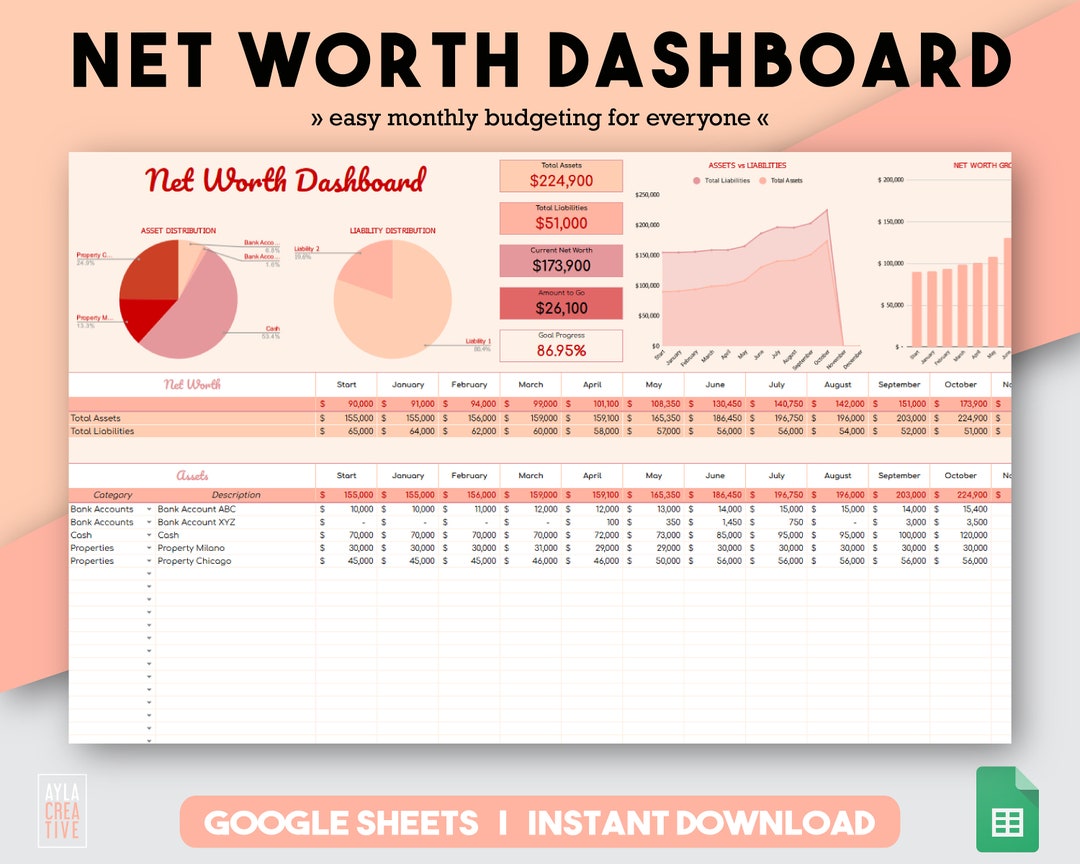
For most individuals, a meticulously structured Microsoft Excel or Google Sheets workbook serves as an ideal personal net worth database. By utilizing dedicated tabs for asset inventories, liability amortization schedules, monthly snapshots, and visual charts, you achieve complete design freedom without writing application code. Spreadsheets also integrate easily with external market data feeds to update stock tickers and cryptocurrency prices automatically.

Step-by-Step Implementation Guide
Building a sustainable database requires a disciplined, step-by-step workflow. Rushing the setup often leads to broken formulas, missing accounts, and inaccurate historical baselines.
Step 1: Define Your Data Schema and Taxonomy
Before entering a single dollar amount, outline the structure of your database. Define your primary tables or sheets:
- Account Registry: Lists every financial institution, account number (masked), account type, and ownership status.
- Valuation Ledger: Records snapshots of account balances and asset values at fixed intervals (typically the last day of each month).
- Asset Metadata: Captures acquisition dates, purchase prices, depreciation rates, and estimated liquidation costs for physical items like real estate or vehicles.
- Liability Schedule: Details interest rates, minimum monthly payments, maturity dates, and remaining principal balances for all debts.
Step 2: Establish Secure Authentication and Backup Protocols
Because your personal net worth database contains sensitive financial data, security must be prioritized from day one.
- If using local spreadsheets, encrypt the file using AES-256 encryption and store backups on an encrypted external drive or zero-knowledge cloud storage provider.
- If deploying a self-hosted database or open-source tool, enforce multi-factor authentication (MFA) and secure your server environment with robust firewall configurations and regular database dumps.
Step 3: Input Baseline Data and Historical Snapshots
Gather your most recent statements for every checking account, investment portfolio, retirement fund, loan, and credit card. Enter these figures into your baseline valuation ledger. To make your database immediately useful, reconstruct historical month-end balances for the past 12 to 36 months if statements are available. Historical data provides the trend lines necessary to evaluate your savings rate and asset appreciation accurately.
Step 4: Automate or Schedule Valuation Updates
Decide how frequently you will update your database. While automated aggregators sync daily, manual databases benefit from a disciplined monthly audit routine.
- Set a recurring calendar reminder for the final day of each month.
- Log into all financial institutions, record the exact closing balances, and input them into your valuation ledger.
- For illiquid assets—such as a primary residence or private business equity—conduct quarterly or annual valuations using conservative appraisals or comparable market data rather than monthly guesses.
Managing Complex Assets and Valuation Challenges
Maintaining an accurate personal net worth database becomes challenging when dealing with non-liquid, volatile, or illiquid assets. Proper accounting standards help prevent artificial inflation of your net worth.
Real Estate and Physical Property Valuation
Your primary residence or investment properties should not be updated based on casual online estimates, which often fluctuate wildly. Instead, anchor your database valuation to a conservative baseline:
- Use recent local comparable sales (comps) for real estate.
- Apply a standard depreciation formula to vehicles and machinery.
- For fine art, jewelry, or collectibles, rely on professional certified appraisals rather than retail replacement value, as liquidation values are typically much lower.
Private Equity and Business Interests
If you own shares in a private operating company or startup, valuing your equity requires careful judgment. Conservative database management dictates recording these assets at cost basis until a verified liquidity event occurs, such as a priced funding round, a third-party acquisition, or a formal independent valuation. Avoid marking up private equity based on optimistic projections.
Digital Assets and Foreign Currencies
For cryptocurrency holdings, link your database to reliable API price feeds or record the spot price from a major exchange at your designated valuation timestamp. For foreign currency accounts, apply the official exchange rate applicable on the final day of the reporting period to maintain ledger consistency.
Troubleshooting Common Database Errors
As your personal net worth database evolves, you may encounter structural, mathematical, or operational issues. Addressing these errors promptly preserves the integrity of your long-term financial reporting.
Discrepancies Caused by Pending Transactions
One of the most frequent errors in financial tracking occurs when asset balances shift due to pending deposits, unsettled stock trades, or processing credit card payments. To resolve this:
- Always pull valuations after market close on your designated reporting date.
- Ensure all transfers in transit are accounted for to prevent double-counting or temporary gaps in your liquidity ledger.
Formula and Data Reference Breakage
In spreadsheet-based databases, inserting or deleting rows can break summary formulas and chart data ranges.
- Utilize named ranges, dynamic array formulas, or structured table references rather than fixed cell coordinates (e.g., use
SUM(Assets[Balance])instead ofSUM(C2:C50)). - Periodically audit your balance sheet formulas to verify that net worth calculations correctly subtract total liabilities from total assets.
Valuation Inconsistencies Over Time
If your net worth graph displays erratic spikes and drops that do not align with your actual savings or market performance, check your asset valuation methodology. Ensure you are consistently tracking either gross asset values or net asset values (after accounting for sales commissions or capital gains taxes on taxable accounts), rather than mixing methodologies across different reporting periods.
Professional Financial Planning and Security Limitations
While a personal net worth database provides exceptional clarity regarding your assets and liabilities, it is an organizational and analytical tool, not formal financial or legal advice.
When utilizing your database for estate planning, tax structuring, or major investment decisions, consult qualified professionals such as Certified Public Accountants (CPAs), Certified Financial Planners (CFPs), or estate planning attorneys. Furthermore, ensure that your local storage methods comply with relevant data privacy regulations if you manage multi-jurisdictional assets or share access with financial executors.
Frequently Asked Questions
How often should I update my personal net worth database?
Most individuals benefit from a monthly update cycle. Updating your database on the last day of each month captures salary deposits, investment contributions, debt paydowns, and market fluctuations without overwhelming you with daily data entry noise.
Should I include my primary residence in my net worth calculation?
Yes, your primary residence should be included as an asset under your real estate category, while the remaining mortgage balance must be recorded as a liability. However, because a primary residence is illiquid, many financial planners track "liquid net worth" separately by excluding personal real estate and vehicles.
How do I account for future tax liabilities on retirement accounts?
Traditional 401(k) and IRA balances represent pre-tax income, meaning withdrawals will be subject to ordinary income tax. While standard net worth calculations record the gross balance, advanced database users often apply an estimated tax discount rate to retirement accounts to calculate an after-tax net worth figure for more conservative long-term planning.
What is the safest way to store a personal net worth database file?
If you store your database in a spreadsheet, use strong file encryption (such as AES-256) and store backups on a password-protected local drive or zero-knowledge cloud storage service. Avoid uploading unencrypted financial spreadsheets to standard consumer cloud folders.
Can I automate my personal net worth database without using third-party apps?
Yes. If you use Google Sheets or Microsoft Excel, you can write custom scripts using JavaScript or VBA to pull live stock prices via financial APIs, or you can import CSV statement files exported directly from your financial institutions.
Conclusion and Next Actions
Constructing a personal net worth database provides a definitive foundation for managing your financial life, clarifying asset allocation, and measuring long-term wealth accumulation. Begin by selecting the architectural method that aligns with your technical skill level and privacy preferences—whether that is a secure encrypted spreadsheet, a self-hosted open-source platform, or a custom SQL database. Outline your asset and liability categories, establish a secure backup protocol, and schedule your first monthly valuation audit today to take complete control of your financial data.
Image Gallery
Select an image to open it in a new tab.



Zara El-Hashem
Sociocultural Dynamics and Academics Writer
