The Menendez Brothers Basketball Card: The History and Value of 1990-91 Hoops Mark Jackson #176

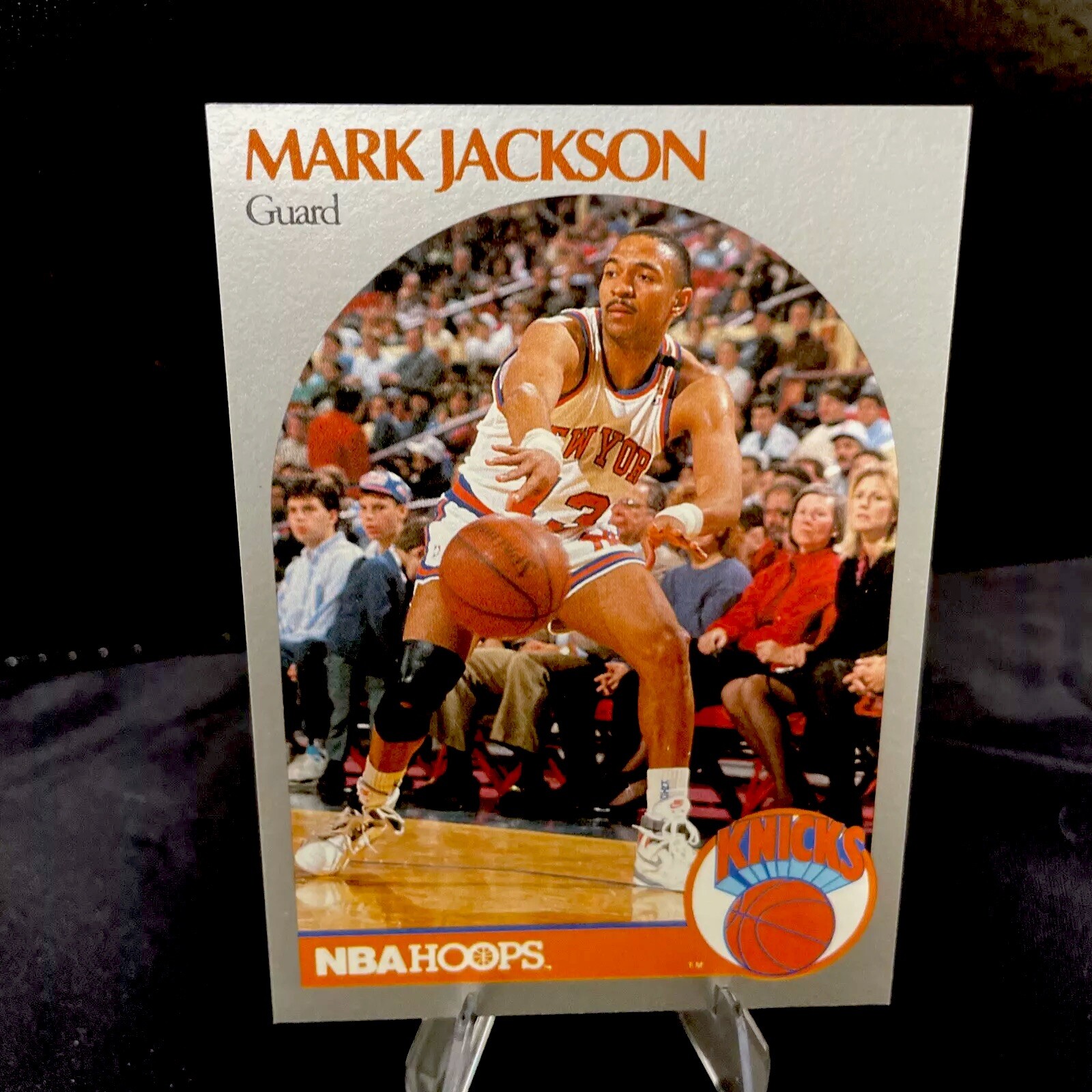
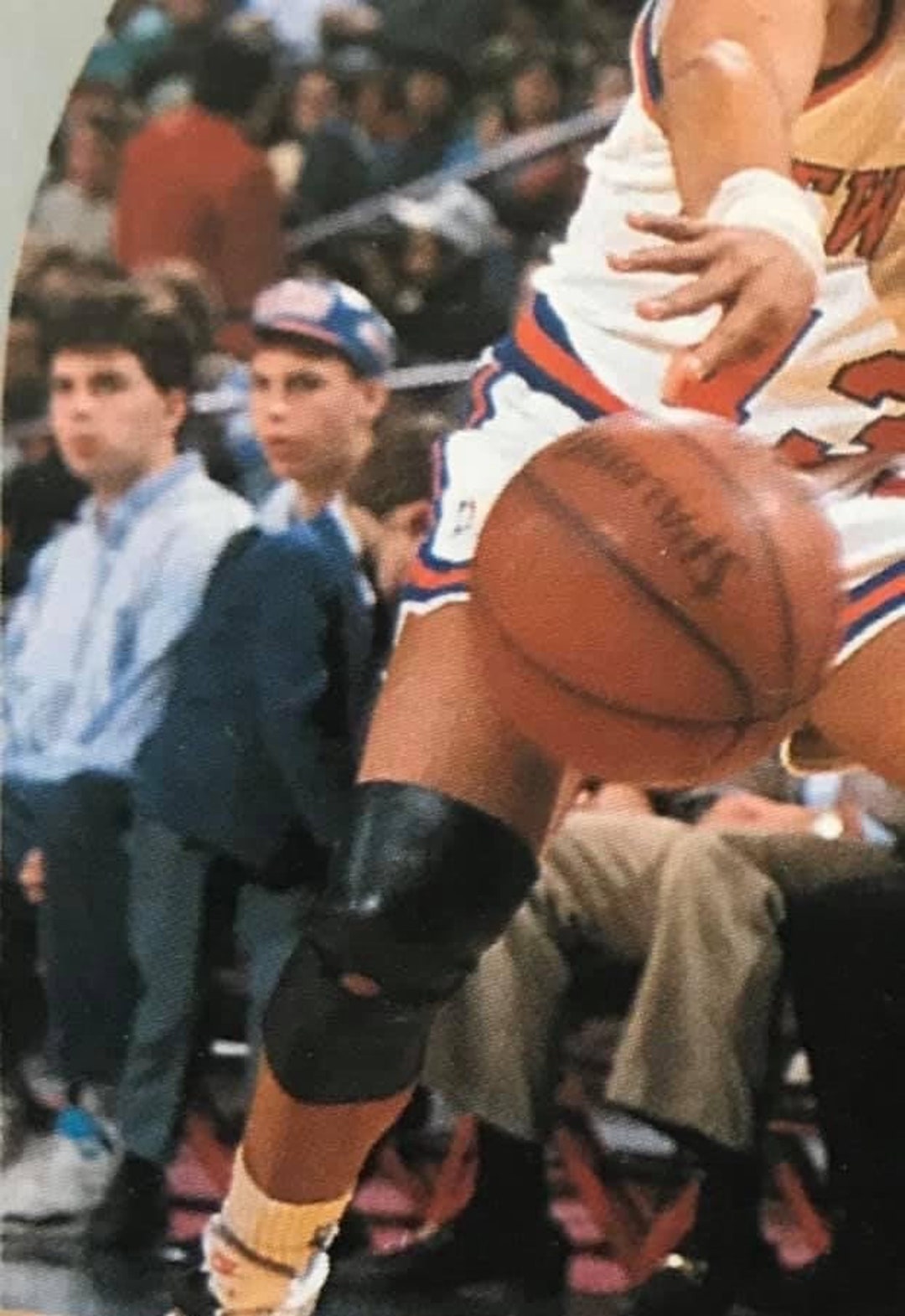
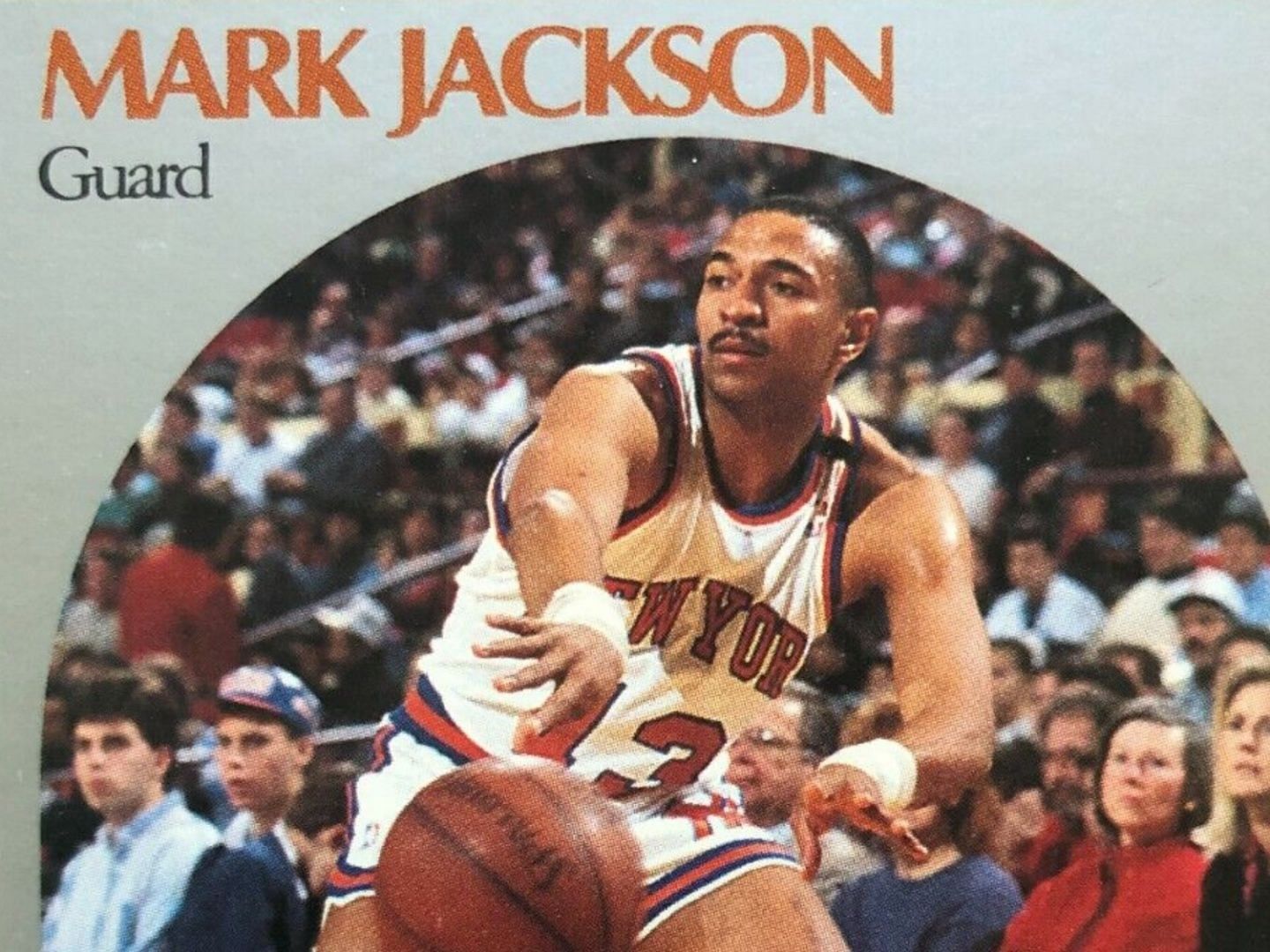
The Menendez brothers basketball card refers to the 1990-91 Hoops Mark Jackson card (#176), which features convicted murderers Lyle and Erik Menendez sitting courtside in the background. The photo was taken at Madison Square Garden during the 1989-90 NBA season, shortly after the brothers killed their parents but before their arrest.
The intersection of sports memorabilia and true crime is a rare phenomenon, but no item captures this crossover quite like the 1990-91 Hoops Mark Jackson trading card. For decades, this card was a staple of the "junk wax" era—a period in the late 1980s and early 1990s characterized by massive overproduction. It held little value beyond its status as a common card of a solid NBA point guard. However, a viral discovery in late 2018 transformed this piece of cardboard into a morbid piece of history, sparking a surge in demand that continues to influence the secondary market in 2026.
The Historical Context: A Timeline of the Photo
To understand the significance of the card, one must look at the timeline of the Menendez brothers' crimes. On August 20, 1989, Lyle and Erik Menendez shot and killed their parents, Jose and Kitty Menendez, in their Beverly Hills home. In the months following the murders, before they became suspects, the brothers engaged in a high-profile spending spree, exhausting roughly $700,000 of their parents' estate on luxury cars, clothing, and travel.
Part of this spending spree included a trip to New York City. During this visit, they attended a New York Knicks game at Madison Square Garden. It was during this specific game that a photographer for Hoops (a brand produced by NBA Properties) captured Mark Jackson in a standard action pose. Unbeknownst to the photographer, the editorial team, or the public for nearly 30 years, the two young men sitting courtside on the left side of the frame were Lyle and Erik Menendez.
The card was released as part of the 1990-91 Hoops Set (Series 1). Because the brothers were not arrested until March 1990, the production cycle for the card was already well underway or completed by the time their faces were splashed across national news as murder suspects. For nearly three decades, millions of these cards sat in shoeboxes, binders, and junk wax bins, their dark secret hidden in plain sight.
Identifying the Card: Visual Markers and Specifications
For collectors and curious observers, identifying the "Menendez card" is straightforward. While Mark Jackson has many cards from this era, only one features the brothers.
- Set: 1990-91 Hoops
- Card Number: #176
- Subject: Mark Jackson (New York Knicks)
- Visual Cue: Look at the bottom left-hand corner of the card's front. Two men are seated behind the court boundary. Lyle Menendez is seen clearly in a beige sweater, and Erik Menendez is seated next to him.
The card's design is typical of the early 90s Hoops style, featuring a wood-grain border on the front and a basketball-shaped cutout for the player's photo. The back of the card lists Jackson’s statistics and biographical information, mentioning his 1988 Rookie of the Year honors. There is no mention of the spectators on the card itself, as their identity was irrelevant at the time of printing.
The Viral Discovery and the Collector "Gold Rush"
The card remained an obscure trivia point until December 2018, when a Twitter user and a Reddit enthusiast (Stephen Zerance) publicized the discovery. Zerance, a true crime fan, had spent months scouring old basketball cards looking for the brothers after hearing a rumor they might appear in one. Once the image was corroborated against news photos of the brothers from late 1989, the story went viral.
The impact on the market was instantaneous. A card that could previously be purchased for five cents in a "common" bin suddenly began selling for $15, $20, and even $50 for raw copies. As of 2026, the market has stabilized, but the card remains the most sought-after "common" card from the entire 1990-91 Hoops set. It has transcended sports collecting to become a "crossover" item sought by true crime aficionados and "oddity" collectors.
Market Value and Rarity in 2026
While the card is historically significant, it is not "rare" in the traditional sense of the word. Hoops produced millions of copies of the 1990-91 set. Almost any collector who was active in the early 90s likely owns at least one copy of Mark Jackson #176.
The value of the card is driven entirely by its "Easter egg" status and the condition of the specific copy. Because these cards were mass-produced with relatively low quality control, finding a "Gem Mint" copy can be difficult.
Estimated Market Values (2026)
| Condition / Grade | Estimated Price (USD) | Market Liquidity |
|---|---|---|
| Raw (Ungraded) | $10 – $25 | Very High |
| PSA 8 (Near Mint-Mint) | $40 – $60 | Moderate |
| PSA 9 (Mint) | $100 – $150 | Moderate |
| PSA 10 (Gem Mint) | $400 – $600 | Low |
| SGC 10 (Gem Mint) | $350 – $500 | Low |
Note: Prices fluctuate based on the release of new documentaries or media coverage regarding the Menendez case.
In 2026, the "premium" on this card remains strong. While the initial 2018 hype has subsided, the card's inclusion in various "strange facts" videos and true crime podcasts ensures a steady stream of new buyers entering the market.
The eBay Controversy: Policy and Bans
Shortly after the card’s discovery became mainstream news, eBay—the world’s largest secondary market for trading cards—initially began removing listings for the Mark Jackson #176 card. The company cited its "Offensive Material Policy," which prohibits the sale of items that "promote or glorify hatred, violence, or racial or religious intolerance," as well as its specific "Murderabilia" policy.
eBay’s murderabilia policy generally prevents the sale of items created by or belonging to convicted murderers if the sale profits the criminal. However, the Mark Jackson card presented a unique gray area:
- The card was produced by a legitimate third-party (NBA/Hoops).
- The brothers do not profit from the sale of the cards.
- The card was not intended to be about the brothers.
After a period of inconsistent enforcement, eBay largely relaxed its stance. Today, in 2026, you can freely list and purchase the card on most major platforms, provided the listing does not explicitly use the "Menendez" name to glorify the crime in a way that violates updated safety guidelines. Most sellers now list it as "1990-91 Hoops Mark Jackson #176 (Menendez Background)" to ensure visibility while staying within platform rules.
Grading and Authentication Considerations
For collectors looking to maximize the value of their Menendez card, professional grading is a common route. Third-party graders like PSA (Professional Sports Authenticator), BGS (Beckett Grading Services), and SGC (Sportscard Guaranty Corporation) evaluate the card for centering, corners, edges, and surface quality.
Common Condition Issues
- Centering: The 1990-91 Hoops set is notorious for poor centering. The image is often shifted too far to the left or right, which can disqualify a card from a PSA 10 grade.
- Edgewear: The brown wood-grain borders show "chipping" very easily. Any small white speck on the edge is highly visible against the dark background.
- Surface Scratches: Because the cards were often kept in rubber-banded stacks, surface scratches are common.
If you are buying a graded copy in 2026, ensure the slab (the plastic case) is authentic by checking the certification number on the grader's official website. There have been instances of counterfeit "slabs" for high-value pop-culture cards, though the Mark Jackson card's relatively moderate price point makes it a less frequent target for forgers than a Michael Jordan rookie.
The "Junk Wax" Era and the Menendez Card's Legacy
The Menendez card serves as a fascinating case study in how "worthless" cards from the junk wax era can find new life. Between 1987 and 1994, card companies produced billions of units, leading to a market crash where most cards from that era lost 99% of their value.
The Mark Jackson #176 card is one of the few exceptions that has maintained a value significantly higher than its original pack price. It shares this distinction with other "error" or "notorious" cards, such as:
- The 1989 Fleer Bill Ripken "FF" Card: Which featured an obscenity on the bat knob.
- The 1990 Pro Set Ludvig Borga: A card featuring a wrestler with a controversial tattoo that was later airbrushed out.
These cards are valued not for the athlete depicted, but for the story behind the image. In the case of the Menendez card, it serves as a morbid "time capsule"—a freeze-frame of a specific moment in 1989 when two of the most infamous figures in American legal history were simply two wealthy young men enjoying a basketball game.
FAQ: Common Questions About the Card
How can I be sure the people in the background are actually the Menendez brothers?
Multiple investigative journalists and hobbyists have cross-referenced the clothing worn by the brothers in the card with news footage and photos from their 1989 spending spree. The timeline matches perfectly with the Knicks' home schedule and the release of the 1990 Hoops Series 1 set.
Is the card rare?
No. Millions of copies were printed. However, many were thrown away or damaged over the last 35 years. While the card is "common," the demand for it is significantly higher than the demand for other cards of the same production volume.
Did Mark Jackson ever comment on the card?
Mark Jackson has acknowledged the card in interviews, often expressing surprise that it took so long for the world to notice the figures in the background. He generally treats it as a strange footnote in his long NBA and broadcasting career.
Are there any other cards with the Menendez brothers?
To date, this is the only known licensed trading card featuring Lyle and Erik Menendez. While they appeared in many newspapers and magazines, this is their only appearance on a sports card.
Is it legal to own or sell this card?
Yes. It is a mass-produced consumer product. It is not classified as "contraband." While some platforms may have specific internal rules about how it is marketed, owning or selling the card is perfectly legal in the United States and most other jurisdictions.
Practical Advice for Buyers and Sellers
If you are looking to buy the Menendez card in 2026:
- Check for Authenticity: Ensure it is the 1990-91 Hoops #176. Avoid "reprints" or "custom" cards that sometimes pop up on social media.
- Inspect the Corners: If buying a raw copy, look for sharp corners. Even a small "soft" corner can drop the value by 50%.
- Look for the "Eye Appeal": Because of the centering issues, find a copy where the borders look even.
If you are looking to sell the card:
- Use Keywords Wisely: Include "Mark Jackson," "1990 Hoops," and "Background" in your title.
- Don't Over-Hype: While it's a cool card, avoid using clickbait terms like "Ultra Rare," as most savvy collectors know the production numbers are high.
- Consider Grading: If your copy looks absolutely flawless (perfect centering and no chips), it may be worth spending the $20-$30 to have it graded by SGC or PSA to potentially unlock a $400+ valuation.
The Menendez brothers basketball card remains a haunting reminder of how true crime can seep into the most unexpected corners of popular culture. Whether you view it as a piece of sports history or a dark curiosity, its place in the world of collectibles is firmly cemented.
Image Gallery
Select an image to open it in a new tab.



Omar Farooq
EdTech Innovation and Virtual Pedagogy Journalist
