Understanding the Spectrum of Energy: A Comprehensive Guide to Electromagnetic Radiation

Understanding the spectrum of energy, formally known as the electromagnetic (EM) spectrum, involves recognizing the entire range of radiation frequencies and wavelengths that exist in our universe. This continuum spans from low-energy radio waves to high-energy gamma rays, dictating how we observe the cosmos, transmit data, and interact with the physical world in 2026.
The Fundamental Nature of the Energy Spectrum
The spectrum of energy is not a series of disconnected categories but a continuous scale of electromagnetic radiation. At its core, electromagnetic radiation consists of synchronized oscillations of electric and magnetic fields that propagate through a vacuum at the constant speed of light—approximately 299,792,458 meters per second.
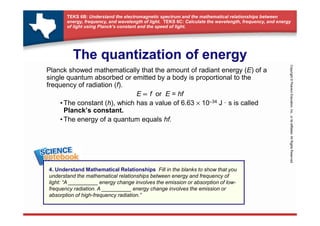
Every point on this spectrum represents a "photon," a quantum of light that carries energy. The amount of energy a photon carries is directly proportional to its frequency and inversely proportional to its wavelength. This relationship is defined by the Planck-Einstein relation ($E = hf$), where energy ($E$) equals Planck’s constant ($h$) times frequency ($f$). Consequently, the "spectrum" is simply a way for scientists and engineers to organize these photons based on how much energy they pack and how they interact with matter.
In 2026, our reliance on this spectrum has reached unprecedented levels. From the quantum-encrypted satellite links to the precise industrial lasers used in manufacturing, understanding the nuances of these energy bands is essential for navigating modern technology. The spectrum is divided into seven primary regions, though the boundaries between them are often fluid rather than rigid.
The Mechanics: Frequency, Wavelength, and Photon Energy
To grasp the spectrum, one must understand the three interdependent properties that define every wave: wavelength, frequency, and energy.
Wavelength ($\lambda$)
Wavelength is the physical distance between successive crests of a wave. In the energy spectrum, wavelengths vary dramatically. Radio waves can be kilometers long, while gamma rays have wavelengths smaller than the nucleus of an atom. Wavelength determines how a wave interacts with objects; for instance, waves larger than an object tend to diffract around it, while waves smaller than an object are more likely to be reflected or absorbed.
Frequency ($f$)
Frequency refers to the number of wave cycles that pass a given point per second, measured in Hertz (Hz). There is an inverse relationship between wavelength and frequency: as the wavelength shortens, the frequency must increase to maintain the constant speed of light. This is why high-frequency waves, such as X-rays, occupy the short-wavelength end of the spectrum.
Photon Energy
As frequency increases, so does the energy of the individual photons. This is a critical distinction in the spectrum of energy because it separates non-ionizing radiation (low energy) from ionizing radiation (high energy). Ionizing radiation possesses enough energy to liberate electrons from atoms, which can cause chemical changes in biological tissues—a factor that necessitates strict safety protocols for X-rays and gamma radiation.

The Long-Wave Frontier: Radio and Microwaves
At the lowest energy end of the spectrum lie radio waves and microwaves. These bands are characterized by long wavelengths and low frequencies, making them ideal for long-distance communication and heat transfer.
Radio Waves
Radio waves occupy the range from roughly 30 Hz to 300 GHz. Because of their long wavelengths, they can penetrate many non-metallic materials and travel through the atmosphere with minimal interference. In 2026, the management of the radio spectrum is more complex than ever, with the rollout of advanced 6G networks requiring precise allocation of sub-terahertz frequencies to prevent interference between terrestrial systems and burgeoning satellite constellations like Starlink and Kuiper.
Microwaves
Microwaves range from 1 GHz to 300 GHz. Their primary characteristic is their ability to cause dielectric heating in water molecules, which is the principle behind microwave ovens. However, their technical utility extends far beyond the kitchen. Microwaves are the backbone of modern radar systems, GPS (Global Positioning System), and high-bandwidth point-to-point communication. They are particularly susceptible to atmospheric conditions, such as "rain fade," where moisture absorbs the signal, a challenge that 2026-era telecommunications engineers solve through adaptive modulation and spatial diversity.
The Thermal and Optical Realm: Infrared and Visible Light
Moving up the energy scale, we reach the segments of the spectrum that humans interact with most directly: heat and light.
Infrared (IR) Radiation
Infrared sits just below the visible red light and is primarily associated with heat. Everything with a temperature above absolute zero emits some form of IR radiation. This band is divided into near-infrared (closest to visible light), mid-infrared, and far-infrared.
- Near-IR: Used in fiber optic communications and remote controls.
- Mid/Far-IR: Essential for thermal imaging and astronomy.
Instruments like the James Webb Space Telescope (JWST) utilize the infrared spectrum to peer through cosmic dust clouds, allowing scientists in 2026 to observe the formation of the earliest galaxies that would otherwise be invisible to the human eye.
Visible Light
The visible spectrum is the tiny sliver of energy (roughly 380 to 750 nanometers) that the human eye is biologically tuned to detect. It is composed of the colors of the rainbow: red, orange, yellow, green, blue, indigo, and violet. While it represents a very small portion of the total EM spectrum, it is the primary source of information for the human brain. In 2026, advanced Li-Fi (Light Fidelity) systems utilize the visible light spectrum for ultra-secure, high-speed indoor wireless networking, modulating light waves faster than the human eye can perceive to transmit data.
High-Energy Radiation: Ultraviolet, X-rays, and Gamma Rays
Beyond visible light, the energy of photons increases to the point where they can begin to interact with the atomic structure of matter in more aggressive ways.
Ultraviolet (UV) Radiation
UV radiation is categorized into UV-A, UV-B, and UV-C. While the Earth's atmosphere (specifically the ozone layer) filters out most high-energy UV-C, enough UV-A and UV-B reach the surface to cause DNA damage in skin cells, leading to sunburns or long-term health risks. Conversely, UV radiation is essential for the production of Vitamin D in humans and is widely used in 2026 for water purification and surface sterilization due to its ability to disrupt the genetic material of pathogens.
X-rays
X-rays possess extremely high frequencies and can pass through soft tissues but are absorbed by denser materials like bone or metal. This differential absorption makes them indispensable for medical diagnostics and industrial non-destructive testing. Because X-rays are ionizing, their use is strictly regulated. Modern 2026 medical facilities utilize "photon-counting" X-ray detectors, which provide higher-resolution images with significantly lower radiation doses compared to traditional digital radiography.
Gamma Rays
Gamma rays sit at the pinnacle of the energy spectrum. They are produced by nuclear transitions, supernova explosions, and the decay of radioactive isotopes. Because they have the highest energy, they have the greatest penetrating power, requiring thick layers of lead or concrete for shielding. In 2026, gamma-ray bursts are a focal point of "Multi-messenger Astronomy," where scientists correlate gamma-ray detections with gravitational wave data to understand the most violent events in the universe.
Comparison of Energy Spectrum Segments
The following table summarizes the physical characteristics and primary 2026 applications of each major segment of the spectrum of energy.
| Spectrum Segment | Wavelength Range | Frequency Range | Primary Use/Application (2026) |
|---|---|---|---|
| Radio | > 1 mm | < 300 GHz | 6G Mobile Data, TV/Radio Broadcast |
| Microwave | 1 mm – 1 meter | 300 MHz – 300 GHz | Wi-Fi 8, Radar, Satellite Navigation |
| Infrared | 750 nm – 1 mm | 300 GHz – 400 THz | Thermal Imaging, Fiber Optics |
| Visible | 380 nm – 750 nm | 400 THz – 790 THz | Human Sight, Li-Fi Networking |
| Ultraviolet | 10 nm – 380 nm | 790 THz – 30 PHz | Sterilization, Vitamin D Synthesis |
| X-ray | 0.01 nm – 10 nm | 30 PHz – 30 EHz | Medical Imaging, Airport Security |
| Gamma Ray | < 0.01 nm | > 30 EHz | Cancer Treatment, Nuclear Research |
Ionizing vs. Non-Ionizing Energy: Safety and Physical Impact
One of the most critical aspects of understanding the spectrum of energy is the distinction between ionizing and non-ionizing radiation. This threshold occurs in the ultraviolet range.
- Non-Ionizing Radiation: This includes radio waves, microwaves, infrared, and visible light. The photons in these bands do not have enough energy to break chemical bonds or remove electrons from atoms. The primary biological effect of non-ionizing radiation is thermal; for example, high-intensity microwaves or lasers can burn tissue, but they do not cause the cellular mutations associated with radiation sickness or cancer.
- Ionizing Radiation: High-frequency UV, X-rays, and gamma rays are ionizing. When these photons strike an atom, they can eject an electron, creating an ion. In biological systems, this can damage the DNA molecule directly or create free radicals that cause indirect damage.
In 2026, safety standards for the energy spectrum are governed by organizations like the International Commission on Non-Ionizing Radiation Protection (ICNIRP) and national regulators. These bodies set exposure limits based on the specific absorption rate (SAR) for non-ionizing bands and cumulative dose limits (measured in Sieverts) for ionizing bands.
Measuring and Utilizing the Spectrum in 2026
The measurement of the energy spectrum requires specialized sensors tailored to specific wavelengths. For example, radio waves are measured using antennas and spectrum analyzers, while visible light is quantified using photometers or spectrophotometers.
One of the significant advancements in 2026 is the democratization of spectrum monitoring. Advanced software-defined radios (SDRs) allow researchers to monitor radio frequency (RF) environments in real-time to identify "white spaces"—unused portions of the spectrum that can be dynamically allocated for temporary communication needs. This "Dynamic Spectrum Access" is crucial for managing the billions of IoT (Internet of Things) devices that now populate urban environments.
Furthermore, the study of spectroscopy—observing how matter absorbs or emits specific frequencies—remains the most powerful tool in chemistry and physics. By analyzing the "spectral fingerprint" of a substance, scientists can determine its chemical composition, temperature, and density without ever making physical contact. This technique is as applicable to a blood sample in a lab as it is to an exoplanet's atmosphere light-years away.
FAQs About the Spectrum of Energy
Is 5G or 6G radiation harmful to humans? No, according to current scientific consensus in 2026. 5G and 6G operate in the radio and microwave portions of the spectrum, which are non-ionizing. They lack the energy required to damage DNA or cause cancer. Health standards ensure that thermal exposure remains well below levels that could cause tissue heating.
Why is the visible spectrum so small compared to the rest? The visible spectrum is small because it is a biological adaptation. Our eyes evolved to detect the wavelengths where the sun emits its peak intensity and where the Earth's atmosphere is most transparent. Most of the EM spectrum is actually blocked or absorbed by our atmosphere, making visible light the most reliable "window" for biological life to navigate the planet.
What is the difference between a "light wave" and a "radio wave"? Fundamentally, they are the same phenomenon: electromagnetic radiation. The only difference is their frequency and wavelength. A light wave has a much higher frequency and shorter wavelength than a radio wave, which allows light to carry more energy and interact with smaller particles, like the pigments in our eyes.
Can we create "new" parts of the spectrum? No, the spectrum is a fundamental property of the universe. However, we can discover new ways to use existing parts of the spectrum. For instance, the "terahertz gap" between microwaves and infrared was once difficult to utilize, but in 2026, new semiconductor materials have allowed us to use these frequencies for high-speed imaging and sensing.
Does light travel at different speeds across the spectrum? In a vacuum, all electromagnetic radiation travels at exactly the same speed ($c$). However, when traveling through a medium like water or glass, different frequencies can slow down by different amounts—a phenomenon called "dispersion." This is why a prism can split white light into its constituent colors.
Recommendations for Further Exploration
To truly master the spectrum of energy, it is recommended to bridge the gap between theory and observation. In 2026, individuals can utilize affordable spectroscopes to observe the emission lines of various light sources (LEDs vs. incandescent vs. sunlight) to see how different technologies utilize the spectrum.
For those interested in the technical management of energy, exploring resources from the Federal Communications Commission (FCC) or the International Telecommunication Union (ITU) provides insight into how the physical reality of the spectrum is translated into the legal and economic framework that powers the global economy. Understanding the spectrum is not just a physics exercise; it is the study of the very fabric that connects modern civilization.
Image Gallery
Select an image to open it in a new tab.


Omar Farooq
EdTech Innovation and Virtual Pedagogy Journalist
