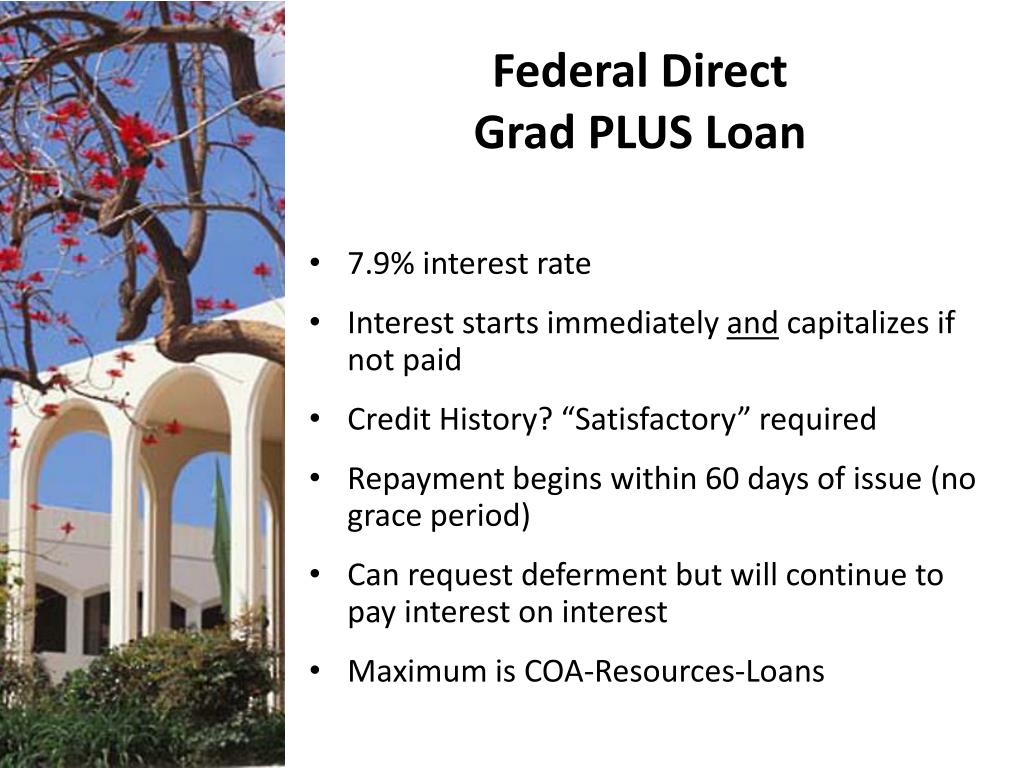
A Federal Direct Graduate PLUS loan is a non-need-based credit product offered by the U.S. Department of Education designed specifically for graduate and professional students to cover the full cost of attendance not met by other financial aid. Unlike standard Stafford loans, these require a credit check to ensure the applicant does not have an "adverse credit history."
Navigating the financial landscape of graduate and professional school requires a clear understanding of the tools available to bridge the gap between tuition, fees, living expenses, and existing financial aid packages. The Direct PLUS Loan for Graduate and Professional Students serves as a secondary layer of funding, offering flexibility but also carrying unique requirements, interest structures, and repayment implications that differ significantly from undergraduate federal student loan options.
The Role of Graduate PLUS Loans in Higher Education
For many students pursuing master’s degrees, doctorates, or professional certifications, the annual limit for Federal Direct Unsubsidized Loans is often insufficient to cover the total cost of attendance. The Cost of Attendance (COA) is determined by each individual institution and includes tuition, fees, room and board, books, supplies, transportation, and personal expenses.
When a student’s total federal financial aid, scholarships, and fellowships do not reach the COA, the Graduate PLUS Loan is designed to fill that remainder. Because it is a federal loan, it comes with specific protections, such as access to income-driven repayment plans, deferment options, and eligibility for Public Service Loan Forgiveness (PSLF), which are generally not available through private commercial lenders.
Eligibility Requirements and the Credit Check
The primary distinction between the standard Unsubsidized Loan and the Graduate PLUS Loan is the credit requirement. While the U.S. Department of Education does not require a minimum credit score for eligibility, it does perform a review of your credit history.
To be eligible for a Graduate PLUS loan, you must:
- Be a graduate or professional student enrolled at least half-time at an eligible institution.
- Meet the general federal student aid eligibility requirements, such as being a U.S. citizen or eligible non-citizen.
- Not have an adverse credit history.
"Adverse credit history" is defined specifically by federal regulation. It generally means having one or more debts with a total combined outstanding balance greater than $2,000 that are 90 days or more delinquent as of the date of the credit report, or having been subject to a default determination, bankruptcy discharge, foreclosure, repossession, tax lien, wage garnishment, or write-off of a federal student debt within the five years preceding the date of the credit report.
If you are found to have an adverse credit history, you are not necessarily disqualified. You may still obtain a PLUS loan if you can either document to the satisfaction of the Department of Education that there are extenuating circumstances regarding your credit, or if you obtain an endorser—someone who does not have an adverse credit history and agrees to repay the loan if you do not.
Application Process and Timing
The application process for a Graduate PLUS loan occurs separately from the standard FAFSA (Free Application for Federal Student Aid). Even if you have already filed your FAFSA and received a financial aid award letter, you must specifically request a PLUS loan.
- Complete the FAFSA: This remains the foundation for all federal aid.
- Submit the Direct PLUS Loan Request: This is typically done through the official StudentAid.gov website.
- Credit Check: Upon submission, the Department of Education performs the credit inquiry.
- Master Promissory Note (MPN): If approved, you must sign an MPN, which is a legal document in which you promise to repay your loan(s) and any accrued interest and fees to the U.S. Department of Education.
- Entrance Counseling: If you have not previously received a Graduate PLUS loan, you must complete online entrance counseling to ensure you understand your obligations.
It is advisable to apply for these loans during the late spring or early summer prior to the academic year for which you need funding. This allows sufficient time for the credit review process and for the loan funds to be disbursed to your school's bursar office before tuition deadlines.
Costs: Interest Rates and Origination Fees
Unlike subsidized loans, where the government pays the interest while you are in school, Graduate PLUS loans are unsubsidized. Interest begins to accrue as soon as the loan is first disbursed. You have the option to pay this interest while in school or allow it to be "capitalized," meaning the unpaid interest is added to your principal balance, which then grows over time.
Additionally, every federal student loan carries an origination fee, which is a percentage of the total loan amount deducted proportionally from each disbursement. It is crucial to account for this fee when calculating how much to borrow. If you need exactly $10,000 to cover your balance, borrowing $10,000 will result in a lower net amount due to the fee. You should use a net-calculator or speak with your financial aid office to determine the gross amount required.
Comparing Loan Options for Graduate Students
The following table outlines the key differences between the primary federal loan options available to graduate students.
| Feature | Direct Unsubsidized Loan | Direct Graduate PLUS Loan |
|---|---|---|
| Credit Check | No | Yes (Adverse credit review) |
| Loan Limits | Annual/Aggregate caps apply | Up to Cost of Attendance |
| Interest Rate | Generally lower | Generally higher |
| Origination Fee | Lower | Higher |
| Repayment Grace | 6 months | 6 months |
Repayment Strategies and Deferment
By default, repayment on a Graduate PLUS loan begins once the loan is fully disbursed, but you are typically granted an automatic in-school deferment as long as you remain enrolled at least half-time. A six-month grace period usually follows graduation or dropping below half-time status.
Because interest accrues throughout your education, it is highly recommended that you pay at least the interest portion of your loan while you are still in school. This prevents the "interest-on-interest" effect that occurs during capitalization, which can significantly inflate your total debt burden by the time you enter repayment.
Once you enter the repayment phase, you should evaluate the various repayment plans offered by the Department of Education:
- Standard Repayment Plan: Fixed monthly payments for up to 10 years.
- Graduated Repayment Plan: Payments start lower and increase every two years.
- Income-Driven Repayment (IDR) Plans: These plans, such as the SAVE plan or other contemporary variations, cap your monthly payments based on your discretionary income. These are particularly useful for students entering lower-paying fields or public service roles.
Common Mistakes and Troubleshooting
The most common mistake students make is borrowing more than they need. While the Graduate PLUS loan is available up to your full cost of attendance, it is a debt that must be repaid with interest. Always calculate your living expenses conservatively and prioritize lower-interest sources of funding, such as scholarships, fellowships, or personal savings, before utilizing federal loan products.
If you experience issues with your loan disbursement, the first point of contact is the financial aid office at your specific university. They act as the liaison between the student and the Department of Education’s loan servicing centers. If you have been denied a loan due to adverse credit and are unsure why, you have the right to request a copy of the credit report used by the Department of Education to verify the findings.
Legal and Financial Advice Limitations
This article provides an overview of federal student loan programs based on current regulations as of 2026. It is not intended to serve as professional financial or legal advice. Student loan policies, interest rates, and federal regulations are subject to change by legislative action. Students are encouraged to consult with their institutional financial aid counselors and review their personalized student loan portal at StudentAid.gov for the most accurate, account-specific information. Always ensure that any information you receive regarding your specific loan balance comes directly from your assigned loan servicer.
Frequently Asked Questions
Can I use a Graduate PLUS loan for expenses other than tuition? Yes. The loan can be used for any legitimate "Cost of Attendance" expenses, including housing, food, transportation, and textbooks. However, you cannot use these funds for non-educational expenses, such as credit card debt or personal entertainment unrelated to your studies.
Is it possible to appeal a denial for a Graduate PLUS loan? Yes. If you are denied due to an adverse credit history, you can appeal the decision if you believe the information in the credit report is inaccurate. Alternatively, you can apply with an endorser or provide evidence of extenuating circumstances to the Department of Education to have the decision reconsidered.
Does the Graduate PLUS loan affect my credit score? Applying for the loan will result in a hard credit inquiry, which may cause a temporary, minor dip in your credit score. However, once the loan is active, consistent, on-time monthly payments can help build a positive credit history, whereas default can significantly damage your credit rating.
Can I refinance my Graduate PLUS loan into a private loan? Yes, private lenders allow you to refinance federal loans, including Graduate PLUS loans. However, doing so means you will lose access to all federal protections, such as income-driven repayment plans, loan forgiveness programs, and generous deferment or forbearance options. This is a permanent decision that should be made with extreme caution.
When do I have to start paying back my Graduate PLUS loan? Repayment typically begins 60 days after the loan is fully disbursed, but you are automatically placed in an in-school deferment status while you are enrolled at least half-time. You will enter mandatory repayment six months after you graduate, leave school, or drop below half-time status.
Next Steps
If you believe you will need a Graduate PLUS loan for the upcoming academic term, log in to your account at StudentAid.gov. Verify that your FAFSA has been processed and contact your university's financial aid office to confirm their specific internal deadlines for loan processing. Planning your borrowing needs before the start of the semester will prevent delays in your funding and ensure that you are not left scrambling for cash when tuition and fees are due.

Image Gallery
Select an image to open it in a new tab.

Ingrid Bjornson
Global Cyber Policy and Regulation Analyst
