Who Qualifies for a Federal Pell Grant? Eligibility, Requirements, and Application Guide

To qualify for a Federal Pell Grant in 2026, you must be an undergraduate student who demonstrates exceptional financial need through the Free Application for Federal Student Aid (FAFSA). Applicants must be U.S. citizens or eligible non-citizens, have not yet earned a bachelor’s or professional degree, and remain enrolled in an eligible certificate or degree program.
Federal Pell Grants serve as the foundation of American financial aid, providing billions of dollars annually to help low-income students access higher education. Unlike a student loan, a Pell Grant does not typically need to be repaid, making it one of the most sought-after forms of assistance. However, eligibility is not a flat "yes" or "no" for everyone; it is determined by a complex interplay of your financial health, your academic history, and your enrollment status.
As we navigate the 2026-2027 academic year, the eligibility rules reflect the updates from the FAFSA Simplification Act, which shifted the focus to the Student Aid Index (SAI). Understanding these nuances is essential for any student or parent planning to finance a college education.
Basic Eligibility Requirements for All Applicants
Before the government evaluates your financial need, you must meet several foundational criteria. These are the "gatekeeper" requirements that apply to nearly all federal student aid programs, not just the Pell Grant.
1. Citizenship and Residency Status
To receive a Federal Pell Grant, you must be a U.S. citizen or a U.S. national. However, the program also extends to eligible non-citizens. This category includes:
- U.S. permanent residents (holders of a "Green Card").
- Individuals with an Arrival-Departure Record (I-94) from U.S. Citizen and Immigration Services (USCIS) showing "Refugee," "Asylum Granted," "Cuban-Haitian Entrant," or "Parolee."
- Holders of T-nonimmigrant status (for victims of human trafficking).
- "Battered immigrant-qualified aliens."
Individuals in the U.S. on a temporary student visa (F-1, F-2, J-1, J-2, etc.) or those under the DACA (Deferred Action for Childhood Arrivals) program generally do not qualify for federal Pell Grants, though they may qualify for state or institutional aid in specific jurisdictions.
2. Academic Level and Degree Status
The Federal Pell Grant is strictly reserved for undergraduate students. Once you have earned a bachelor's, graduate, or professional degree (such as a JD or MD), you are no longer eligible for Pell funds. Even if you are pursuing a second undergraduate degree in a completely different field, the federal government considers your initial degree as the completion of your Pell eligibility.
There is one narrow exception: students enrolled in a post-baccalaureate teacher certification program may be eligible for a Pell Grant if the school does not offer a graduate degree in that field and the program is required for state certification.
3. Valid Social Security Number
With the exception of students from the Republic of the Marshall Islands, the Federated States of Micronesia, or the Republic of Palau, all applicants must have a valid Social Security Number (SSN) to process their FAFSA and link it to their federal tax records.
Calculating Exceptional Financial Need: The Student Aid Index (SAI)
In 2026, the primary metric for determining Pell Grant eligibility is the Student Aid Index (SAI). This figure replaced the older "Expected Family Contribution" (EFC) to provide a more accurate representation of a family’s financial capacity.
How the SAI is Calculated
The SAI is calculated using a formula established by law, which considers the student's (and, if applicable, their parents') adjusted gross income (AGI), assets, and family size. For the 2026-2027 cycle, the system uses "prior-prior year" tax data. For example, the 2026-2027 FAFSA uses tax information from 2024.
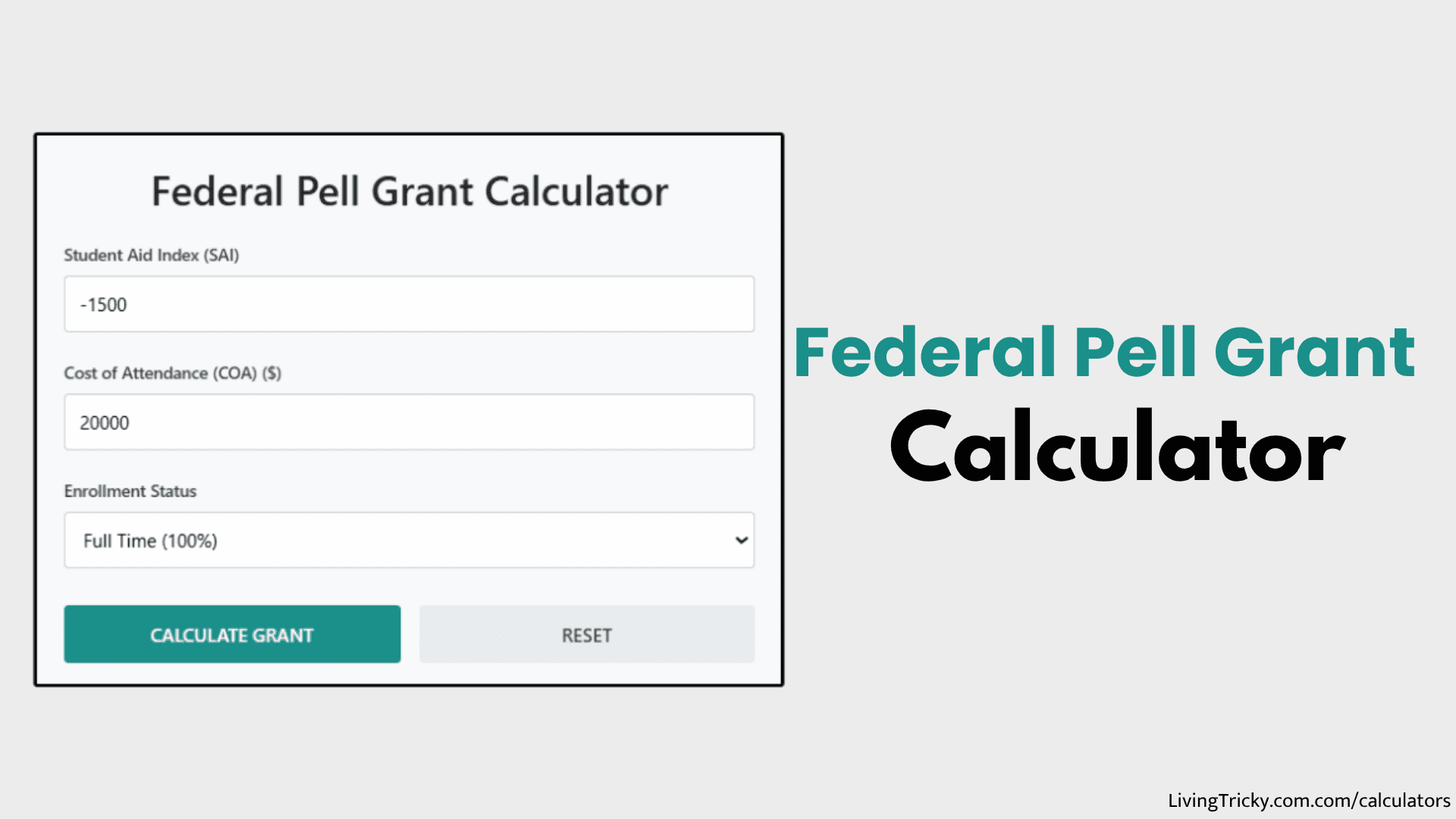
Unlike the EFC, the SAI can be a negative number, as low as -1,500. A lower SAI indicates a higher level of financial need. Students with a very low or negative SAI are often eligible for the "Maximum Pell Grant" amount.
The Relationship Between SAI and Poverty Guidelines
The 2026 eligibility rules link Pell Grant amounts to Federal Poverty Guidelines. If a student’s family income falls below a certain percentage of the poverty level for their family size and state of residence, they may automatically qualify for the Maximum Pell Grant, regardless of their specific SAI number. This transparency was designed to allow families to estimate their eligibility long before they even apply to college.

Enrollment Requirements and "Enrollment Intensity"
Historically, Pell Grants were awarded based on broad categories: full-time, three-quarter-time, half-time, or less-than-half-time. As of the recent simplifications, the government transitioned to a concept known as enrollment intensity.
Enrollment intensity is a percentage that represents how many credits a student is taking compared to a full-time load (usually 12 credit hours). For example, if a student is taking 9 credit hours, their enrollment intensity is 75%.
How Intensity Affects Your Payout
The Pell Grant amount you are eligible for is multiplied by your enrollment intensity. If you qualify for a $7,000 grant based on your SAI but only enroll at 50% intensity (6 credits), your actual disbursement for that term will be $3,500. This system allows for more flexibility, ensuring that students who cannot attend full-time due to work or family obligations still receive a proportional share of their aid.
Lifetime Eligibility Used (LEU) Limits
The Federal Pell Grant is not an infinite resource. Federal law limits the amount of Pell Grant funding a student can receive over their lifetime to the equivalent of six years (12 semesters). This is referred to as Lifetime Eligibility Used (LEU).
The Department of Education tracks this as a percentage. Since one full year of Pell Grant eligibility equals 100%, the total lifetime limit is 600%.
- If you receive a full Pell Grant for four years of college, you have used 400%.
- If you then take two years of half-time classes, you use another 100% (50% per year).
- Once you hit 600%, you can never receive another Federal Pell Grant, regardless of your financial need or whether you have finished your degree.
Students can monitor their LEU by logging into their StudentAid.gov dashboard. It is vital to plan your degree path carefully to ensure you do not run out of funding before graduation.
Maintaining Eligibility: Satisfactory Academic Progress (SAP)
Getting the grant is only the first step; keeping it requires maintaining Satisfactory Academic Progress (SAP). Each college or university has its own SAP policy, but federal regulations require these policies to include:
- GPA Requirement: Usually, students must maintain at least a 2.0 GPA on a 4.0 scale.
- Pace of Progression: Students must complete a certain percentage of the credits they attempt (often 67%). If you consistently drop or fail classes, you may lose your Pell Grant.
- Maximum Timeframe: You must complete your degree within 150% of the published length of the program. For a 120-credit bachelor's degree, you must finish within 180 attempted credits.
If you fall below these standards, your school will typically place you on "Financial Aid Warning" for one term. If you fail to improve during that term, your Pell Grant eligibility will be suspended. In cases of family emergencies, medical issues, or other extenuating circumstances, students can often file a SAP Appeal to regain their eligibility.
Summary Table: Pell Grant Eligibility Factors at a Glance
| Factor | Requirement for Eligibility | Impact on Award Amount |
|---|---|---|
| Academic Level | Undergraduate only (No bachelor's degree) | Fixed (Must be undergraduate) |
| Financial Need | Determined by SAI (lower is better) | Higher SAI = Lower Grant Amount |
| Enrollment Intensity | Can be as low as 1 credit hour | Award is prorated by percentage |
| Lifetime Limit | Max 600% (approx. 6 years) | Once reached, award drops to $0 |
| Academic Standing | Must meet school's SAP policy | Failure results in total loss of aid |
| Citizenship | U.S. Citizen or Eligible Non-citizen | Fixed eligibility requirement |
Special Circumstances and Professional Judgment
While the FAFSA is a standardized form, it cannot account for every unique family situation. In 2026, financial aid administrators have the authority to use Professional Judgment to adjust a student’s eligibility.
Examples of Valid Adjustments
- Recent Job Loss: If the 2024 tax data used for the 2026 FAFSA no longer reflects your family's current income due to a 2025 layoff, you can appeal to your school's financial aid office.
- Unusual Medical Expenses: Significant out-of-pocket medical costs that were not covered by insurance can be used to lower your SAI.
- Dependency Overrides: If a student is under 24 but has an abusive or estranged relationship with their parents, they may be granted "Independent Student" status, which often leads to a higher Pell Grant.
Additionally, specific groups have expanded access:
- Incarcerated Students: Students in federal or state penal institutions who are enrolled in approved Prison Education Programs (PEPs) are eligible for Pell Grants.
- Children of Fallen Heroes: Children of service members or public safety officers who died in the line of duty may be eligible for the Maximum Pell Grant if they were under 24 years old or enrolled in college at the time of the parent's death.
How to Apply for a Federal Pell Grant in 2026
The only way to officially apply for a Federal Pell Grant is to complete the FAFSA at StudentAid.gov. For the 2026-2027 academic year, the application typically opens in late 2025.
Step-by-Step Application Process
- Create an FSA ID: Both the student and any "contributors" (parents or spouses providing info) must create a username and password. This acts as your legal electronic signature.
- Consent for Data Exchange: You must provide consent for the IRS to transfer your federal tax information directly into the FAFSA via the Future Act Direct Data Exchange (FADDX). Refusing consent makes you ineligible for federal aid.
- List Your Schools: You can list up to 20 colleges on the web version of the FAFSA. These schools will receive your SAI and determine your specific award package.
- Review the FAFSA Submission Summary (FSS): After submitting, you will receive an FSS. This document will state your calculated SAI and provide an estimate of your Pell Grant eligibility.
Frequently Asked Questions
What is the maximum income to qualify for a Pell Grant in 2026?
There is no hard "income cap" for a Pell Grant, as eligibility depends on family size, assets, and the number of dependents. However, most Pell Grant recipients come from families with a total income below $60,000. Families with very large households or multiple children in college may still qualify with higher incomes.
Can I get a Pell Grant if I go to school part-time?
Yes. Unlike some other federal programs, the Pell Grant does not require half-time enrollment. You can receive a Pell Grant even if you are only taking one or two classes, provided you meet the financial need criteria. Your award will be prorated based on your enrollment intensity.
Do I have to pay back a Pell Grant if I fail a class?
Generally, you do not have to pay back a Pell Grant if you finish the term, even if you fail a class. However, if you withdraw from all your classes before a certain point in the semester (usually the 60% mark), the school may be required to return a portion of the funds to the government, and you may end up owing the school that balance.
Can I receive a Pell Grant for summer classes?
Yes, this is often called "Year-Round Pell." Students can receive up to 150% of their scheduled Pell Grant award in a single award year. This allows students to take classes in the fall, spring, and summer while remaining funded, provided they are enrolled at least half-time during the summer term in most cases.
Is the Pell Grant amount the same at every college?
The maximum eligibility is the same regardless of the school. However, your total financial aid package (which includes the Pell Grant) cannot exceed the Cost of Attendance (COA) at your specific school. If you attend a very low-cost community college where the tuition is less than your Pell Grant, the remaining funds are usually refunded to you for books and living expenses.
Next Steps for Prospective Students
If you believe you qualify for a Federal Pell Grant, your first action should be to verify your citizenship and academic status. Ensure you have access to your 2024 tax returns (or your parents' returns) to double-check the figures that will be pulled into the FAFSA.
Once the 2026-2027 FAFSA opens, submit it as early as possible. While the Pell Grant is an entitlement program (meaning the government must fund every student who qualifies), many states and individual colleges have "priority deadlines" for their own pots of money, which are often distributed on a first-come, first-served basis. By applying early, you ensure that your Pell Grant is the foundation of a much larger, more comprehensive financial aid package.
Image Gallery
Select an image to open it in a new tab.


Simon Caldwell
Enterprise Technology and Systems Editor
