Leaf Length Explained: Botanical Metrics, Environmental Drivers, and Measurement Methods
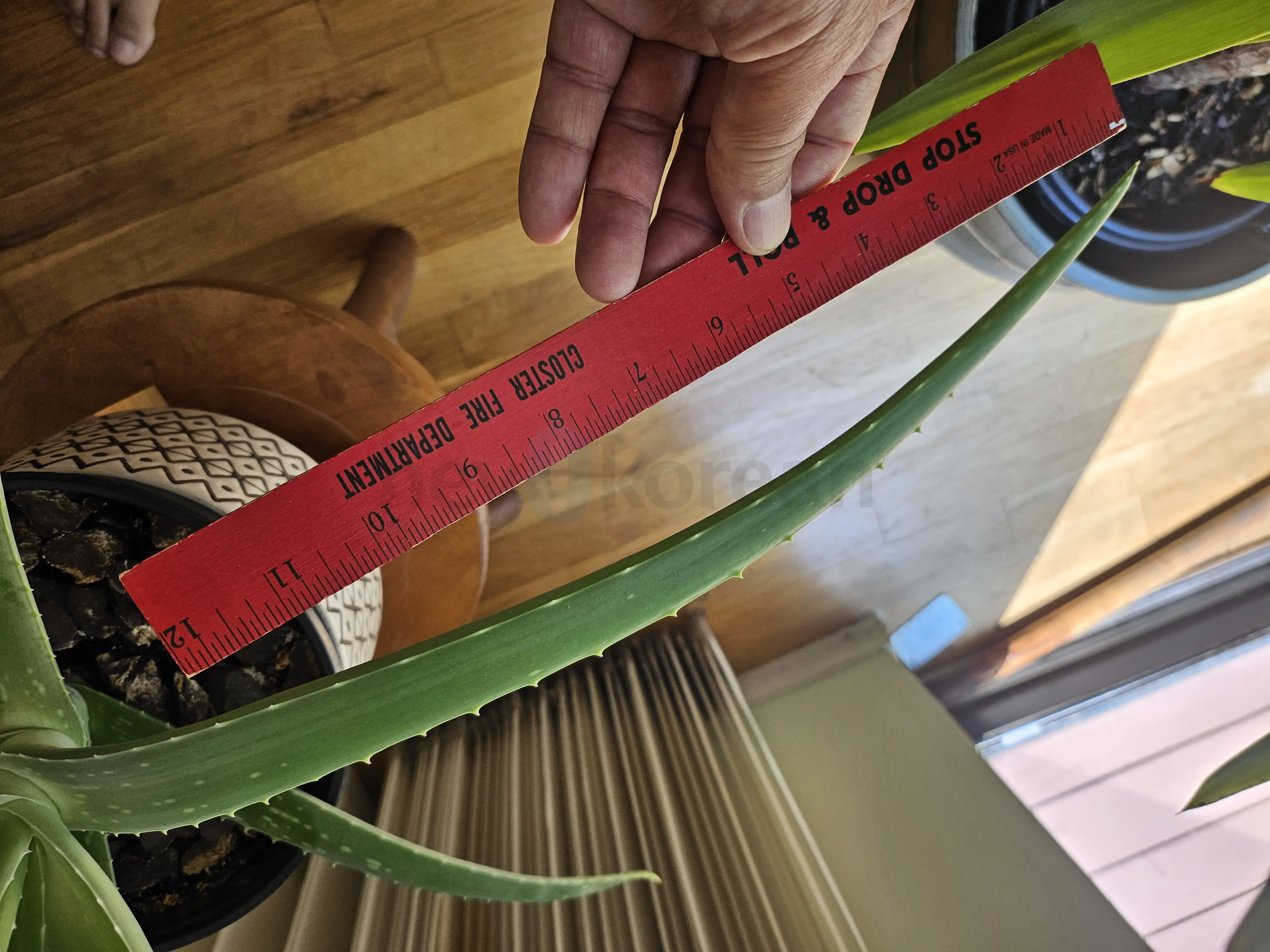
Leaf length is a primary morphological trait defined as the linear distance from the base of the leaf blade—where it intersects the petiole or stem—to its furthest apex. This critical dimension varies widely across the plant kingdom, reflecting evolutionary adaptations to light capture, moisture regulation, and thermal stress. Botanists, ecologists, and horticulturists utilize leaf length metrics to classify species, assess plant health, model canopy productivity, and study how vegetation responds to shifting environmental conditions.
The Fundamentals of Leaf Morphology
Understanding leaf length requires a firm grasp of basic plant anatomy. A typical angiosperm leaf consists of the blade (lamina), which is the broad, flat photosynthetic surface, and the petiole, the stalk that attaches the blade to the stem. In sessile leaves, the petiole is absent, and the blade attaches directly to the plant axis.
When measuring leaf length, standard botanical convention measures strictly along the primary midrib—the central vascular bundle that runs from the base to the tip. This distinguishes true length from diagonal measurements or overall leaf span, which might include twisted or curved tips.
Furthermore, compound leaves introduce a distinct layer of complexity. In a compound leaf (such as those found on ash, walnut, or tomato plants), the single structure consists of multiple distinct leaflets arranged along a central axis known as the rachis. In these cases, botanists must differentiate between the total length of the entire compound leaf structure and the individual length of separate leaflets.
[Stem] ---> [Petiole] ---> [Leaf Blade Base] =====( Midrib )=====> [Apex / Tip]
Why Leaf Length Matters in Botany and Ecology
Leaf length is far more than a simple physical dimension; it serves as a functional trait intimately tied to a plant's survival strategy. Ecologists group leaf length alongside specific leaf area (SLA) and leaf dry matter content (LDMC) to understand global spectrums of plant form and function.
Ecological Adaptation and the Leaf Economics Spectrum
Plants allocate carbon and nutrients in distinct ways. Species with short leaves often operate under a conservative resource-use strategy, producing tough, durable foliage that resists herbivory and desiccation, often observed in arid or nutrient-poor environments. Conversely, species with exceptionally long leaves frequently prioritize rapid resource acquisition, maximizing light capture in competitive, high-light, or mesic environments.
Microclimate and Thermal Regulation
The physical dimensions of a leaf directly influence its boundary layer—a thin layer of still air surrounding the leaf surface that acts as resistance to heat and mass transfer.
- Short leaves maintain thin boundary layers, allowing heat to dissipate rapidly in hot environments to prevent overheating and scorching.
- Long leaves develop thicker boundary layers, which can retain heat and moisture more effectively, though they risk thermal damage if wind speeds are insufficient to cool the surface.

Key Factors Influencing Leaf Length
A plant's genetic blueprint establishes the baseline parameters for its leaf dimensions, but environmental variables heavily modulate final growth outcomes.
Environmental and Climatic Drivers
- Water Availability: Drought stress typically inhibits cell expansion, resulting in significantly shorter, narrower leaves. Abundant moisture during the flush of growth supports turgor pressure, allowing cells to expand to their maximum genetic potential.
- Light Intensity (Irradiance): Sun-exposed leaves often exhibit different morphologies compared to shade leaves on the same plant. Shade leaves frequently adapt by growing larger surface areas and longer dimensions to optimize photon capture under low-light canopy layers.
- Nutrient Supply: Nitrogen and phosphorus availability directly limits protein synthesis and cellular division. Deficiencies stunt overall foliage expansion.
- Temperature: Thermal regimes dictate enzymatic activity rates during leaf expansion phases. Sub-optimal temperatures reduce growth velocity, leading to diminished final dimensions.
Ontogenetic and Spatial Variation
It is crucial to recognize that leaf length is not uniform across an individual plant.
- Juvenile vs. Adult Phases: Many species exhibit heteroblasty, producing significantly shorter or differently shaped leaves during their juvenile phase compared to mature, reproductive stages.
- Canopy Position: Leaves near the top of a tree crown—exposed to high wind, high light, and high vapor pressure deficit—often differ markedly in length and thickness from protected lower-canopy or inner-canopy leaves.
Methods for Measuring Leaf Length Accurately
Obtaining reliable measurements requires standardized techniques to ensure data consistency across research studies, agricultural monitoring, or horticultural selection.
| Measurement Approach | Equipment Needed | Best Suited For | Advantages | Limitations |
|---|---|---|---|---|
| Manual Linear Measurement | Ruler, caliper, or measuring tape | Field botany, herbarium specimens, small-scale gardening | Low cost, high portability, requires no specialized technology | Labor-intensive, prone to human reading error on curved leaves |
| Planimetric / Grid Analysis | Grid overlays, scanned sheets | Educational settings, basic laboratory work | Visual verification, straightforward mapping | Inefficient for large datasets, low throughput |
| Digital Image Processing | Flatbed scanner, digital camera, software (e.g., ImageJ) | Academic research, high-throughput phenotyping | High precision, records multiple dimensions simultaneously, digital archiving | Requires hardware access and software familiarity |
| Automated Optical Scanners | Dedicated leaf area meters (e.g., CI-202, LI-3100C) | Commercial agriculture, forestry research | Extremely fast, high accuracy, handles hundreds of samples rapidly | High capital equipment cost, stationary or heavy field gear |
Step-by-Step Field Measurement Protocol
- Selection: Randomly sample fully expanded, undamaged leaves from the target stratum of the plant canopy to avoid skewing data with immature or senescing tissue.
- Flattening: Gently flatten pressed or fresh leaves against a rigid, non-reflective surface. If leaves are curled or desiccated, rehydration may be necessary before measurement to restore natural dimensions.
- Alignment: Align the zero mark of the measuring instrument precisely with the basal intersection of the lamina and petiole.
- Execution: Extend the measurement along the primary midrib to the absolute furthest tip of the apex, ignoring any torn marginal tissue. Record values to the nearest millimeter or decimal fraction depending on required precision.
Practical Applications in Agriculture and Horticulture
Monitoring leaf length provides actionable insights for crop management, breeding programs, and landscape maintenance.
Crop Management and Irrigation Scheduling
In precision agriculture, sudden reductions in average leaf length or expansion rates can serve as an early indicator of abiotic stress—such as subsurface drought or salinity accumulation—before visible wilting occurs. Agronomists track leaf elongation rates (LER) daily to fine-tune irrigation schedules for crops like maize, wheat, and cotton.
Plant Breeding and Phenotyping
Crop scientists measure leaf architecture to optimize planting densities. Upright, narrower, and moderately sized leaves often allow better light penetration into lower crop tiers, increasing whole-canopy photosynthetic efficiency and crop yield in dense monocultures.
Frequently Asked Questions
Does maximum leaf length correlate directly with total plant height?
Not universally. While some large trees possess very large leaves (such as certain palms or Magnolia species), many tall conifers possess needle-like leaves of minimal length. Conversely, some small herbaceous understory plants produce remarkably long leaves to capture fleeting sun flecks on the forest floor.
How do I measure a leaf that has a curved or undulating margin?
To accurately measure length, you must follow the path of the primary midrib from base to apex, rather than taking a straight-line chord measurement from tip to base. If the leaf is heavily curled, gently press it flat without tearing the vascular tissue to measure the true length along the central axis.
Can leaf length change over the course of a single growing season?
Once an individual leaf reaches full expansion, its physical dimensions remain fixed. However, successive flushes of growth on the same perennial plant can produce leaves of differing lengths depending on seasonal shifts in temperature, rainfall, and nutrient availability.
Why do shade-grown leaves often differ in length from sun-grown leaves?
Shade leaves typically maximize their light interception surface area by growing longer and wider with thinner lamina layers. Sun leaves face high light and heat loads, adapting by remaining smaller, thicker, and often more deeply lobed or cut to facilitate convective cooling.
What is the difference between leaf length and specific leaf area?
Leaf length is a simple linear dimension measured along the midrib in units of distance (e.g., centimeters). Specific leaf area (SLA) is a compound ratio calculated by dividing the leaf's surface area by its dry mass (e.g., square meters per kilogram), reflecting tissue density and thickness.
Conclusion and Next Actions
Mastering the principles of leaf length equips researchers, growers, and nature enthusiasts with a reliable metric for plant identification and physiological assessment. To apply this knowledge effectively, begin by establishing a consistent sampling protocol for your specific target species, utilize calibrated measuring instruments, and record environmental variables alongside physical measurements to contextualize your findings.
Image Gallery
Select an image to open it in a new tab.

Declan O'Connor
Higher Education and Campus Culture Reporter
