The Equinox Sentence Explained: Understanding the Myths and Realities of Equal Day and Night

The "equinox sentence" refers to the widely taught astronomical claim that on the day of an equinox, day and night are of equal length—exactly 12 hours each—everywhere on Earth. While this statement serves as a foundational concept in introductory science, it is technically a geometric simplification that does not account for atmospheric physics or the physical diameter of the sun.
The Literal Definition of the Equinox Sentence
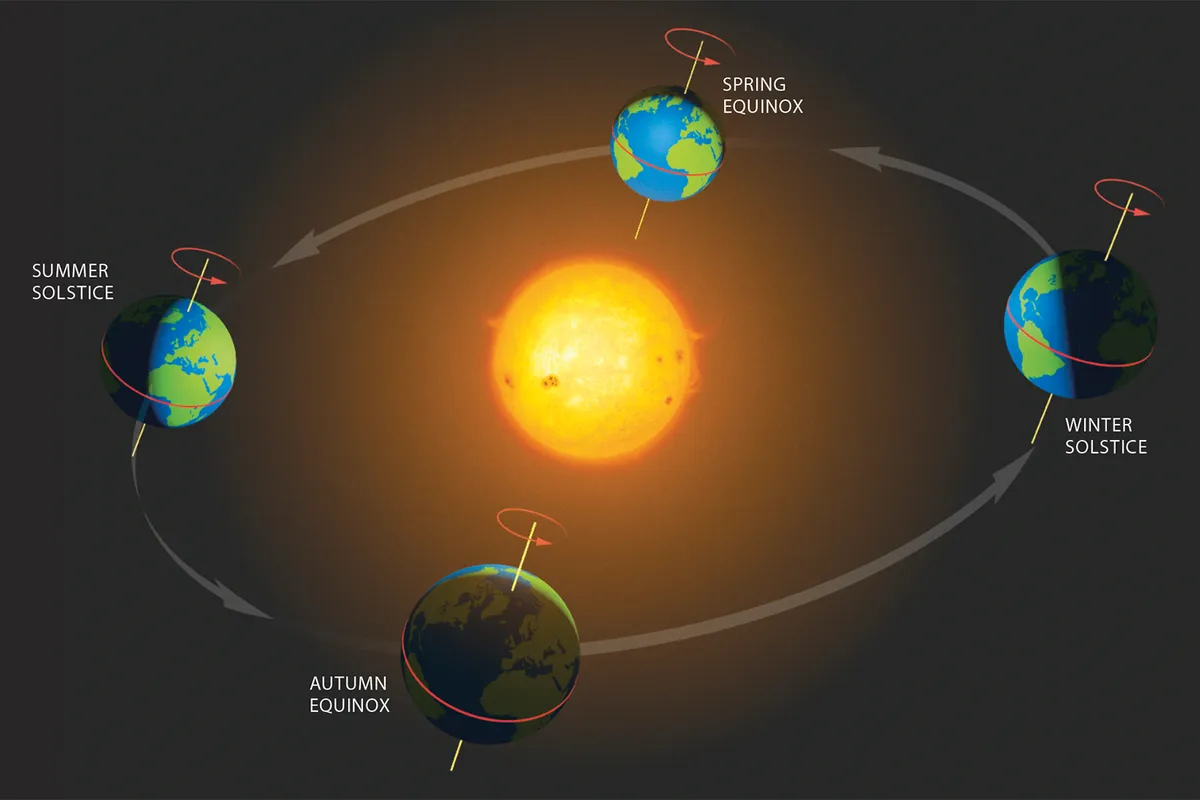
To understand why the common "equinox sentence" requires explanation, we must first look at the astronomical definition of the event. Astronomically, an equinox is the precise moment when the plane of Earth's equator passes through the geometric center of the Sun's disk. This occurs twice a year: once in March (the Vernal or Spring Equinox) and once in September (the Autumnal or Fall Equinox).
In the context of the year 2026, these moments are calculated with high precision by the US Naval Observatory and other international standards bodies. The 2026 March equinox occurs on March 20 at 14:46 UTC, while the September equinox occurs on September 22 at 00:05 UTC. During these specific moments, the Sun is directly above the equator, and the Earth's axis is tilted neither toward nor away from the Sun.
The "sentence" that day and night are equal is derived from this geometry. If the Earth had no atmosphere and the Sun were a singular point of light rather than a massive disk, the sentence would be perfectly accurate. However, the reality of living on a planet with a thick atmosphere and a large, nearby star creates a discrepancy that makes "equal day and night" a myth of approximation rather than a literal fact.
The Geometry of the Celestial Sphere
The "equinox sentence" is built upon the relationship between the celestial equator and the ecliptic. The celestial equator is an imaginary projection of Earth's equator into space. The ecliptic is the apparent path that the Sun follows across the sky over the course of a year as Earth orbits it.
Because Earth’s axis is tilted at approximately 23.5 degrees, the ecliptic and the celestial equator are not the same. They intersect at only two points. These intersection points are the equinoxes. When the Sun reaches these points, its declination is exactly 0 degrees. At this moment, the solar terminator—the line dividing day and night—is perpendicular to the equator and passes through both the North and South Poles.
If we were to observe this from a geometric perspective without environmental interference, the "equinox sentence" would hold true. The "circle of illumination" would bisect every latitude on Earth equally, providing 12 hours of light and 12 hours of darkness. However, three primary factors "break" this sentence in practice: atmospheric refraction, the angular diameter of the solar disk, and the speed of Earth's orbital motion.

Why the "Equal Day and Night" Sentence is Technically Incorrect
The most significant reason the equinox sentence is misleading is atmospheric refraction. Earth’s atmosphere acts like a giant lens. As sunlight enters the atmosphere at an angle, it is bent (refracted) toward the surface. This effect is most pronounced when the Sun is near the horizon.
Because of refraction, we see the Sun appear above the horizon before it has actually risen geometrically, and we continue to see it after it has geometrically set. This bending of light adds approximately six to eight minutes of daylight to the equinox date at most latitudes. Even when the center of the Sun is geometrically below the horizon, the light is curved over the curve of the Earth, effectively "stealing" time from the night.
The Solar Disk Factor
The second reason the equinox sentence fails is the definition of "sunrise" and "sunset." In the equinox sentence, "day" is often assumed to be the time the Sun is above the horizon. However, the equinox itself is defined by the center of the Sun’s disk.
Sunrise is officially defined as the moment the upper edge (limb) of the Sun first appears above the horizon. Sunset is defined as the moment the upper edge disappears below the horizon. Because the Sun has a significant angular diameter (about 0.5 degrees), it takes time for the entire disk to cross the horizon. By the time the center of the Sun is on the horizon (the equinox condition), half of the Sun is already visible. This adds another two to three minutes of daylight to the day of the equinox.
Orbital Speed and Latitude
The "equal day and night" sentence also overlooks that Earth does not move at a constant speed in a perfect circle. Our orbit is elliptical. Furthermore, the duration of twilight—the period after sunset and before sunrise where the sky is still light—varies significantly by latitude. Near the equator, the Sun rises and sets nearly vertically, making the transition quick. Near the poles, the Sun moves at a shallow angle, extending the period of light.
Equinox vs. Equilux: Resolving the Ambiguity
Because the "equinox sentence" is factually flawed regarding the 12-hour split, astronomers use a different term for the day when light and dark are actually equal: the equilux.
The equilux (from the Latin for "equal light") is the day when the Sun is above the horizon for exactly 12 hours. Because of the refraction and solar disk factors mentioned above, the equilux always occurs several days away from the equinox.
- In the Northern Hemisphere (Spring): The equilux occurs a few days before the March equinox.
- In the Northern Hemisphere (Autumn): The equilux occurs a few days after the September equinox.
The following table provides the 2026 timeline for these events at a mid-latitude (approximately 40°N, such as New York, Madrid, or Beijing).
| Event Type | Date in 2026 | Geometric Status | Actual Day Length (Approx.) |
|---|---|---|---|
| Spring Equilux | March 17, 2026 | Day and Night are equal | 12 hours, 0 minutes |
| Spring Equinox | March 20, 2026 | Sun crosses equator | 12 hours, 8 minutes |
| Autumn Equinox | September 22, 2026 | Sun crosses equator | 12 hours, 8 minutes |
| Autumn Equilux | September 25, 2026 | Day and Night are equal | 12 hours, 0 minutes |
The Precession of the Equinoxes
When explaining the equinox sentence, one must also account for the "sentence" of time known as the Precession of the Equinoxes. This is a long-term cycle caused by the Earth’s axial wobble, similar to a spinning top that is slowing down. This wobble is caused primarily by the gravitational pull of the Moon and the Sun on Earth’s equatorial bulge.
The precession cycle takes approximately 25,772 years to complete. This means that the position of the equinox against the background of the stars slowly shifts. Historically, the spring equinox was associated with the constellation Aries (hence the "First Point of Aries"). However, due to precession, the equinox has moved into Pisces and is heading toward Aquarius.
This technical detail is crucial for navigation, star mapping, and even the calculation of the calendar. Without accounting for this shift, our seasons would eventually drift out of alignment with the months. The "sentence" of the equinox is therefore not just a daily occurrence, but a moving target in the history of the cosmos.
Cultural and Media Interpretations of "The Equinox Sentence"
While the primary search intent for "the equinox sentence" is usually scientific, there are two prominent cultural entities that may cause ambiguity. It is important to distinguish the astronomical explanation from these creative works.
- The "Equinox" Mystery (Netflix Series): In the 2020 Danish thriller series Equinox, the "sentence" refers to a mythological bargain involving the "King of Hares" and the "Ostara" ritual. The plot hinges on the idea that every 21 years, a "sentence" or fate is fulfilled where a human sacrifice is required to maintain the balance of the seasons.
- Aleister Crowley’s The Equinox: This is a series of publications (a "sentence" of books) that serve as the official organ of the A.A., a magical order. In this context, "The Equinox Sentence" often refers to the core law of Thelema: "Do what thou wilt shall be the whole of the Law." This sentence was purportedly revealed during the "Equinox of the Gods," a transition of aeons.
While these cultural touchstones use the term "equinox" to denote balance and transition, they should not be confused with the technical astronomical definition that governs our calendar and the physical reality of daylight hours.
Common Mistakes and Troubleshooting the Equinox Sentence
When students or amateur astronomers attempt to verify the "equinox sentence" using local weather apps or sunset calculators, they often encounter confusion. Here are the most common mistakes when trying to find "equal day and night":
- Relying on "Sunrise" times: Remember that sunrise is the top of the sun, not the center. If you measure from the center, you get closer to 12 hours, but your eyes (and your weather app) use the edge.
- Ignoring Elevation: If you are on a mountain or in a high-rise building, you will see the sun earlier and longer than someone at sea level. This further extends the "day" and makes the equinox sentence even less accurate for you personally.
- Confusing UTC with Local Time: The equinox is a moment in time that happens simultaneously for the whole world. However, your local day length depends on your specific longitude and latitude.
- The Egg Balancing Myth: A common folk "sentence" is that you can only balance an egg on its end during the equinox. This is entirely false. Egg balancing depends on the texture of the shell and the steadiness of your hand; gravity on the equinox is no different than any other day.
FAQ: Deep Dive into Equinox Specifics
Is the equinox the same day everywhere? Yes, the equinox is a single moment in time. However, because of time zones, it may fall on different calendar dates depending on where you are. In 2026, the March equinox happens late enough in the day (UTC) that it will be March 20 for almost the entire world.
Why is the equinox called the "Vernal" equinox? "Vernal" comes from the Latin word ver, meaning spring. In the Northern Hemisphere, this marks the beginning of spring. However, in the Southern Hemisphere, this same moment marks the beginning of autumn. To avoid confusion, many modern astronomers prefer the terms "March Equinox" and "September Equinox."
Does the equinox affect satellite communications? Yes. Around the time of the equinox, "sun outages" or "solar interference" can occur. Because the Sun is directly over the equator, it aligns perfectly with geostationary satellites. The Sun's massive electromagnetic radiation can briefly overwhelm the satellite's signal to Earth, causing minor service disruptions.
What is the "First Point of Aries"? This is the historical name for the location of the Sun at the March equinox. Even though the Sun is now actually in the constellation Pisces at that time (due to precession), the name is still used in celestial navigation and astrology as a reference point for 0 degrees of celestial longitude.
Practical Recommendations for 2026
If you are planning to observe the equinox in 2026, do not expect your local sunrise and sunset to be exactly 12 hours apart on March 20 or September 22. Instead, look for the Equilux (March 17 and September 25) for the most balanced day.
To witness the "equinox sentence" in action, the best method is to observe the position of the sunset. On the equinox, the Sun rises due east and sets due west, regardless of where you are on Earth (except at the poles). This is the only time of year when the Sun's path follows the celestial equator so closely. For those interested in photography or ancient architecture, this is the ideal time to align shots with east-west corridors or monuments designed to capture the equinox light, such as Stonehenge or Chichen Itza.
Image Gallery
Select an image to open it in a new tab.


Ingrid Bjornson
Global Cyber Policy and Regulation Analyst
