Amityville House the 1974 Incident Explained: The True Story of the DeFeo Murders
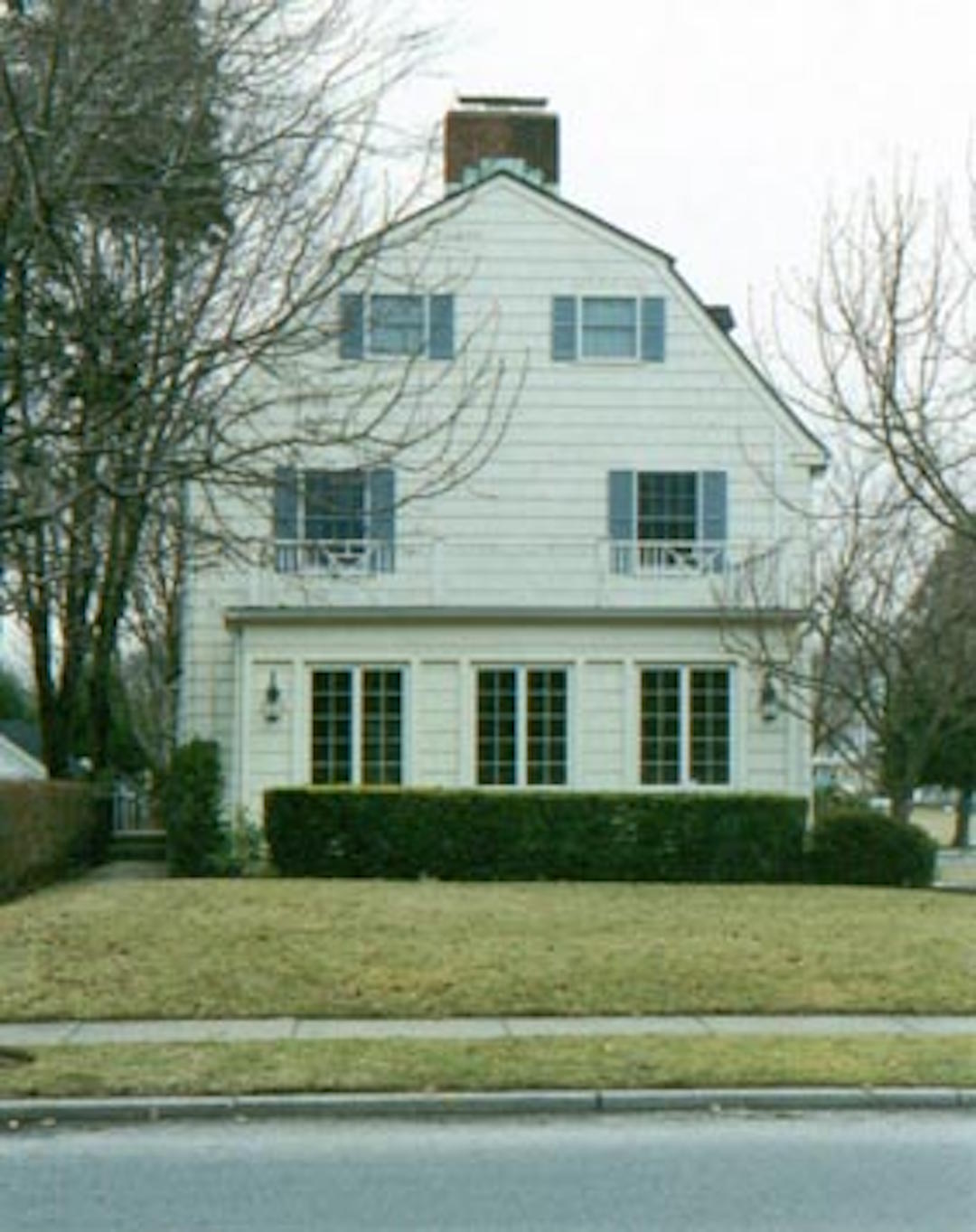
The 1974 Amityville incident refers to the mass murder of six members of the DeFeo family by Ronald "Butch" DeFeo Jr. at 112 Ocean Avenue. Occurring in the early hours of November 13, this factual tragedy remains one of America’s most notorious true crime cases, predating and providing the grim foundation for the subsequent paranormal claims known as "The Amityville Horror."
The DeFeo Family and the "High Hopes" Estate
To understand the 1974 incident, one must first look at the residents of the large Dutch Colonial home in Amityville, Long Island. In 1965, Ronald DeFeo Sr. purchased the property, which the family nicknamed "High Hopes." The household consisted of Ronald Sr., his wife Louise, and their five children: Ronald Jr. (known as "Butch"), Dawn, Allison, Marc, and John Matthew.
By 1974, the atmosphere within the home was reportedly volatile. Ronald DeFeo Sr. was known for a domineering and sometimes violent temperament, and his relationship with his eldest son, Butch, was particularly fraught with conflict. Butch, who was 23 at the time of the murders, had a history of drug use and petty crime. The tension between the father and son reached a breaking point in the months leading up to November, characterized by frequent arguments and a failed attempt by Butch to stage a robbery of his father’s business funds.
The house itself was a symbol of upper-middle-class success, featuring a boathouse and a heated swimming pool. However, the internal reality was far from the suburban dream. This dichotomy between the prestigious exterior of 112 Ocean Avenue and the domestic turmoil within is a central theme when explaining the environmental factors that preceded the incident.
A Timeline of the Night of November 13, 1974
The technical timeline of the murders is established through forensic evidence and the eventual confession of Ronald DeFeo Jr. At approximately 3:15 AM on Wednesday, November 13, 1974, Ronald Jr. took a .35 caliber Marlin 336C lever-action rifle and systematically moved through the house to execute his family members while they slept.
The Order of the Killings
The massacre began in the master bedroom on the second floor. DeFeo Jr. first shot his father, Ronald Sr., twice in the back, followed by his mother, Louise, who also received two shots. Despite the noise of a high-powered rifle, the other children remained in their beds.
Butch then entered the bedrooms of his siblings. He shot his two brothers, Marc (12) and John Matthew (9), at point-blank range. Finally, he moved to the room shared by his sisters, Dawn (18) and Allison (13), killing them both. All six victims were found in their beds, lying on their stomachs in a prone position.
The Aftermath and Attempted Cover-Up
Following the killings, DeFeo Jr. showered, dressed for work, and discarded his bloodied clothing and the murder weapon in a storm drain in Brooklyn. He spent the remainder of the day acting as though nothing had happened. He reported to his job at his grandfather’s car dealership and made several phone calls to his home, feigning concern when no one answered.
In the late afternoon, DeFeo arrived at Henry’s Bar, a local establishment in Amityville, shouting that someone had shot his parents. A group of friends accompanied him back to 112 Ocean Avenue, where they discovered the bodies and alerted the Suffolk County Police Department.

Forensic Anomalies and Investigative Challenges
The investigation into the 1974 incident revealed several details that fueled decades of speculation. One of the most persistent questions is why none of the victims appeared to have been awakened by the sound of the rifle shots. A .35 Marlin is an exceptionally loud firearm, and the house was located in a quiet residential neighborhood.
The Sound and the Silence
Initial police reports indicated that neighbors did not hear any gunshots, only the barking of the family dog, Shaggy. Forensics confirmed that no silencer was used. Investigators explored the possibility that the victims had been drugged to ensure they would not wake up, but toxicology reports performed by the Suffolk County Medical Examiner’s office returned negative for any sedatives or narcotics in the victims' systems.
The fact that all six victims were found in the same position—face down, with their heads resting on their arms—led to theories ranging from a second shooter to more fringe, supernatural explanations. However, ballistic experts noted that the sound of the rifle in a confined space might have been muffled by the heavy blankets and the specific acoustics of the Dutch Colonial's construction, or that the victims simply went into shock and remained paralyzed.
Identifying the Perpetrator
Butch DeFeo initially claimed that the murders were a "mob hit" carried out by a hitman named Louis Falini. However, his story quickly unraveled under police interrogation. Detectives found the empty box for a .35 Marlin rifle in Butch’s room, and inconsistencies in his timeline of the day's events became impossible to ignore. Within 24 hours of the discovery of the bodies, Ronald DeFeo Jr. confessed, stating, "Once I started, I just couldn’t stop. It went so fast."
The Trial and the Insanity Defense
The trial of Ronald DeFeo Jr. began in 1975. His defense attorney, William Weber, mounted an affirmative defense of "not guilty by reason of insanity." Weber argued that DeFeo was in a state of paranoid psychosis and claimed that his client heard voices telling him that his family was plotting against him.
The "Voices" Claim
This is where the 1974 incident first intersected with themes of the supernatural. DeFeo testified that he heard voices in the house that commanded him to kill. However, the prosecution, led by Gerard Sullivan, presented a more calculated motive: the collection of a significant life insurance policy.
The prosecution’s psychiatric expert, Dr. Harold Zolan, testified that while DeFeo had an antisocial personality disorder and was a heavy user of LSD and heroin, he was legally sane and fully aware of his actions at the time of the murders. The jury agreed, and on November 21, 1975, DeFeo was found guilty of six counts of second-degree murder. He was subsequently sentenced to six concurrent sentences of 25 years to life.
| Victim | Age | Relationship to Perpetrator | Location Found |
|---|---|---|---|
| Ronald DeFeo Sr. | 43 | Father | Second-floor Master Bedroom |
| Louise DeFeo | 43 | Mother | Second-floor Master Bedroom |
| Dawn DeFeo | 18 | Sister | Third-floor Bedroom |
| Allison DeFeo | 13 | Sister | Second-floor Bedroom |
| Marc DeFeo | 12 | Brother | Second-floor Bedroom |
| John Matthew DeFeo | 9 | Brother | Second-floor Bedroom |
Shifting Narratives: The Many Versions of Butch DeFeo
Over the decades following his conviction, Ronald DeFeo Jr. changed his story multiple times, which has complicated the historical record of the 1974 incident. These shifting narratives often sought to shift blame or introduce accomplices.
- The Second Shooter Theory: In the 1980s, DeFeo claimed that his sister, Dawn, had actually killed their father and several other siblings, and that he had only killed Dawn after discovering her actions. He claimed there was a second gun involved.
- The Mother's Involvement: In another variation, he suggested his mother, Louise, was the primary instigator.
- The Professional Hit: He occasionally returned to his original claim that the mob was involved.
None of these claims were ever supported by physical evidence. Forensic experts reiterated that the ballistics at the scene matched a single weapon—the Marlin rifle recovered from the storm drain. DeFeo's attempts to gain a retrial based on these new stories were consistently denied by the New York State courts. Ronald DeFeo Jr. died in medical custody at Albany Medical Center on March 12, 2021, at the age of 69, taking the absolute truth of his motivations to the grave.
The Connection to "The Amityville Horror"
It is impossible to explain the 1974 incident without acknowledging its role in the 1975 Lutz family haunting. In December 1975, George and Kathy Lutz purchased 112 Ocean Avenue for a significantly reduced price because of the murders. They moved in with their three children but fled just 28 days later, claiming the house was infested by demonic entities.
Their story became the basis for Jay Anson's 1977 book, The Amityville Horror, and a subsequent film franchise. While the 1974 murders are a documented historical fact, the 1975 haunting is widely regarded by investigators and skeptics—including the late Ed and Lorraine Warren’s critics—as a financial hoax. William Weber, DeFeo's own lawyer, later admitted that he and the Lutzes "created this horror story over many bottles of wine" to potentially help with DeFeo's legal appeals and the Lutzes' financial situation.
In 2026, the distinction between the DeFeo murders and the Lutz haunting remains a crucial point for historians. The murders were a human tragedy of domestic violence and substance abuse, while the "haunting" was a cultural phenomenon that eventually overshadowed the actual victims.
The Physical Legacy of 112 Ocean Avenue
As of 2026, the house at 112 Ocean Avenue still stands, though it has undergone significant changes to discourage "dark tourism." The iconic quarter-moon windows, which many associated with the "eyes" of the house in the movies, were replaced with square windows decades ago.
The address was also changed to 108 Ocean Avenue to make it more difficult for tourists to locate via older records. Despite the house’s dark history, it has had several owners since the Lutzes, none of whom have reported any paranormal activity. The property remains a high-value piece of real estate in the Amityville community, though it is frequently subject to local ordinances regarding privacy and trespassing due to its notoriety.
Frequently Asked Questions
Why didn't the DeFeo children run away when they heard the first shots?
The most likely explanation is sleep inertia and the speed of the events. Forensic analysis suggests the killings occurred in rapid succession. Furthermore, the use of a high-powered rifle in a small space can create a "concussive" effect that disorients individuals. There is no evidence they were sedated, but the psychological shock of hearing gunfire within a home often leads to freezing rather than a flight response.
Was there ever proof of a second shooter in the 1974 incident?
No. While Butch DeFeo later claimed his sister Dawn assisted him or was the primary shooter, the ballistics evidence only accounted for one weapon. The entry wounds and the angles of the shots were consistent with a single person moving from room to room with the Marlin rifle.
Where is Ronald DeFeo Jr. buried?
Following his death in 2021, Ronald DeFeo Jr. was buried in a cemetery in the New York area. His family members, the victims of the 1974 incident, are buried together at Saint Charles Cemetery in Farmingdale, Long Island.
Can you visit the Amityville house today?
The house is a private residence. While you can drive past it on a public street, the owners and the Amityville Police Department are very strict about trespassing. There are no tours of the interior, and the town does not promote the house as a landmark.
Was the house built on an Indian burial ground?
This is a common myth popularized by the 1977 book and the 1979 movie. Local historical records and the Shinnecock Indian Nation have found no evidence to support the claim that the property was an ancient burial ground or a site of ritualistic importance.
Final Guidance for Researchers
When researching the 1974 Amityville incident, it is essential to separate court-verified facts from sensationalized media. Focus on the Suffolk County police records and the 1975 trial transcripts for the most accurate information. For those interested in the forensic aspects, the work of the original investigators provides the most grounded explanation of how such a tragedy occurred without modern forensic technology.
Image Gallery
Select an image to open it in a new tab.


Declan O'Connor
Higher Education and Campus Culture Reporter
