Capital gains tax on a house sale is a federal levy on the profit realized from selling a residential property. It is calculated as the difference between the sale price and the property's adjusted basis. Most homeowners qualify for a primary residence exclusion of up to $250,000 for individuals or $500,000 for married couples.
When you sell a piece of real estate in 2026, the financial implications extend far beyond the final offer accepted at the closing table. For many Americans, a home is their most significant financial asset, and understanding how the Internal Revenue Service (IRS) treats the proceeds from its sale is essential for effective tax planning. Capital gains tax is not a tax on the total amount of money you receive; rather, it is a tax specifically on the "gain"—the portion of the proceeds that exceeds what you originally paid for the home, plus certain adjustments.
The complexity of capital gains tax lies in the various exclusions, deductions, and rate tiers that apply depending on how long you owned the home, how you used it (as a primary residence or an investment), and your total annual income. In a housing market that has seen significant appreciation over the last several years, many sellers who previously thought they were "tax-exempt" are finding themselves crossing the threshold where capital gains tax becomes a reality.
The Fundamentals of Capital Gains in Real Estate
At its core, a capital gain is the profit from the sale of an asset. For a house, this is the "Realized Amount" minus the "Adjusted Basis." While this sounds like a simple subtraction problem, each variable contains specific legal definitions that can drastically change the final tax bill.
The Realized Amount is the total sale price of the home minus the selling expenses. Selling expenses typically include real estate agent commissions, legal fees, title insurance, and advertising costs. For example, if you sell a home for $600,000 but pay $36,000 in commissions and $4,000 in other closing costs, your realized amount is $560,000.
The Adjusted Basis is your starting point for tax purposes. Usually, this begins with the price you paid for the home. However, it is "adjusted" over time. You add the cost of capital improvements (like a new roof or a kitchen remodel) and subtract any depreciation you may have claimed if you used part of the home for business or as a rental. Understanding your adjusted basis is the most effective way to legally reduce your capital gains tax liability, as a higher basis results in a smaller taxable gain.
The Section 121 Exclusion: The Primary Residence Shield
The most important provision for homeowners is found in Section 121 of the Internal Revenue Code. This rule allows many taxpayers to exclude a significant portion of their profit from federal income tax entirely. As of 2026, the exclusion limits remain at:
- $250,000 for single filers or those married filing separately.
- $500,000 for married couples filing a joint return.
To qualify for this exclusion, you must meet both the Ownership Test and the Use Test. These tests ensure that the tax break is reserved for genuine homeowners rather than real estate speculators or short-term flippers.
The Ownership Test
You must have owned the home for at least two years during the five-year period ending on the date of the sale. These two years do not have to be consecutive. For married couples filing jointly, only one spouse needs to meet the ownership requirement to qualify for the exclusion.
The Use Test
You must have lived in the home as your main residence for at least two years (730 days) during the same five-year period. Unlike the ownership test, if you are filing a joint return, both spouses must meet the use test to claim the full $500,000 exclusion. If only one spouse meets the use test, the couple is generally limited to a $250,000 exclusion.
It is important to note that you can only use this exclusion once every two years. If you sold another home and used the Section 121 exclusion within the 24 months preceding your current sale, you generally cannot use it again, even if you meet the ownership and use requirements.

Calculating the Adjusted Basis: Why Improvements Matter
To determine if you owe tax, you must accurately calculate your adjusted basis. This is where many homeowners leave money on the table. The IRS distinguishes between "repairs" and "improvements."
Repairs are considered maintenance. These are actions taken to keep the home in good condition without adding significant value or prolonging its life. Examples include fixing a leaky faucet, replacing a broken window pane, or repainting a room. Repairs do not increase your basis and cannot be used to offset capital gains.
Capital Improvements, however, are additions that increase the home’s value, prolong its useful life, or adapt it to a new use. These are added to your original purchase price to increase your adjusted basis. Common capital improvements include:
- Additions: New bedrooms, bathrooms, decks, or garages.
- Systems: Installing a new HVAC system, central security system, or solar panels.
- Exterior: A new roof, siding, or replacement windows.
- Interior: Complete kitchen or bathroom remodels, new flooring, or built-in appliances.
- Landscaping: New fences, retaining walls, or underground sprinkler systems.
Keeping meticulous records and receipts for these projects is vital. If the IRS audits your sale, you must be able to prove the cost of the improvements to justify the higher basis. In the 2026 tax environment, digital record-keeping has made this easier, but the requirement for documentation remains strict.
Short-Term vs. Long-Term Capital Gains
The duration of your ownership significantly impacts the tax rate applied to your profit. The IRS categorizes gains into two groups based on a 12-month holding period.
Short-Term Capital Gains
If you sell a house after owning it for one year or less, any profit is considered a short-term capital gain. This gain is taxed as ordinary income. This means the profit is added to your wages and other income and taxed at your marginal income tax bracket, which can be as high as 37% depending on current 2026 tax law. Short-term selling is common for "fix-and-flip" investors, but it is rarely tax-efficient for traditional homeowners.
Long-Term Capital Gains
If you hold the property for more than one year, the profit is taxed at long-term capital gains rates. These rates are traditionally lower than ordinary income tax rates. For the 2026 tax year, long-term rates are typically 0%, 15%, or 20%, depending on your total taxable income.
| Taxable Income Level (Approx. 2026) | Long-Term Capital Gains Rate |
|---|---|
| Low Income (e.g., Single < $47,000) | 0% |
| Moderate Income (e.g., Single $47,001 – $518,000) | 15% |
| High Income (e.g., Single > $518,000) | 20% |
Note: These brackets are subject to annual inflation adjustments and specific filing statuses (Head of Household, Married Filing Jointly).
Additionally, high-income earners may be subject to the Net Investment Income Tax (NIIT), which adds an extra 3.8% tax on investment gains, including house sales, for those whose modified adjusted gross income exceeds specific thresholds ($200,000 for singles, $250,000 for married filing jointly).
Special Exceptions and Partial Exclusions
The IRS recognizes that life is unpredictable. If you are forced to sell your primary residence before meeting the two-year ownership and use tests, you may still qualify for a partial exclusion. This is common in cases of "unforeseen circumstances."
- Work-Related Moves: If you sell because your new place of work is at least 50 miles farther from your home than your old workplace was.
- Health Issues: If the primary reason for the sale is to obtain, provide, or facilitate diagnosis, cure, or treatment for a disease, illness, or injury for yourself or a family member.
- Unforeseen Events: This includes divorce, legal separation, multiple births from a single pregnancy, death of a co-owner, or destruction of the home by a natural disaster or act of terrorism.
The partial exclusion is calculated as a fraction of the full $250,000/$500,000 exclusion based on the amount of time you actually lived in the home. For example, if a single person lived in a home for 12 months (50% of the required two years) before moving for a new job, they might qualify for a $125,000 exclusion (50% of $250,000).
Inherited Property and the "Step-Up in Basis"
One of the most powerful tax advantages in the U.S. tax code is the step-up in basis for inherited property. When you inherit a home, your "cost basis" is not what the original owner paid for it decades ago. Instead, the basis is "stepped up" to the fair market value of the home on the date of the original owner's death.
For example, if you inherit a home from a parent that they bought for $50,000 in 1980, but it is worth $500,000 when they pass away in 2026, your new basis is $500,000. If you sell the home immediately for $500,000, you owe zero capital gains tax, even though the property appreciated by $450,000 during your parent's lifetime. If you choose to keep the home and sell it later, you only pay tax on the appreciation that occurs after the date of death.
Investment Properties and Depreciation Recapture
If the house you are selling was used as a rental property or for business, the tax rules change significantly. You cannot use the Section 121 primary residence exclusion unless you converted the property back to a primary residence and met the 2-out-of-5-year rule (and even then, only for the portion of time it was a residence).
Furthermore, when you sell an investment property, you must deal with depreciation recapture. Throughout the years you owned the rental, you likely claimed depreciation deductions to offset rental income. When you sell, the IRS requires you to "pay back" those deductions at a flat rate, currently capped at 25%. This is taxed in addition to the standard capital gains rates on any appreciation.
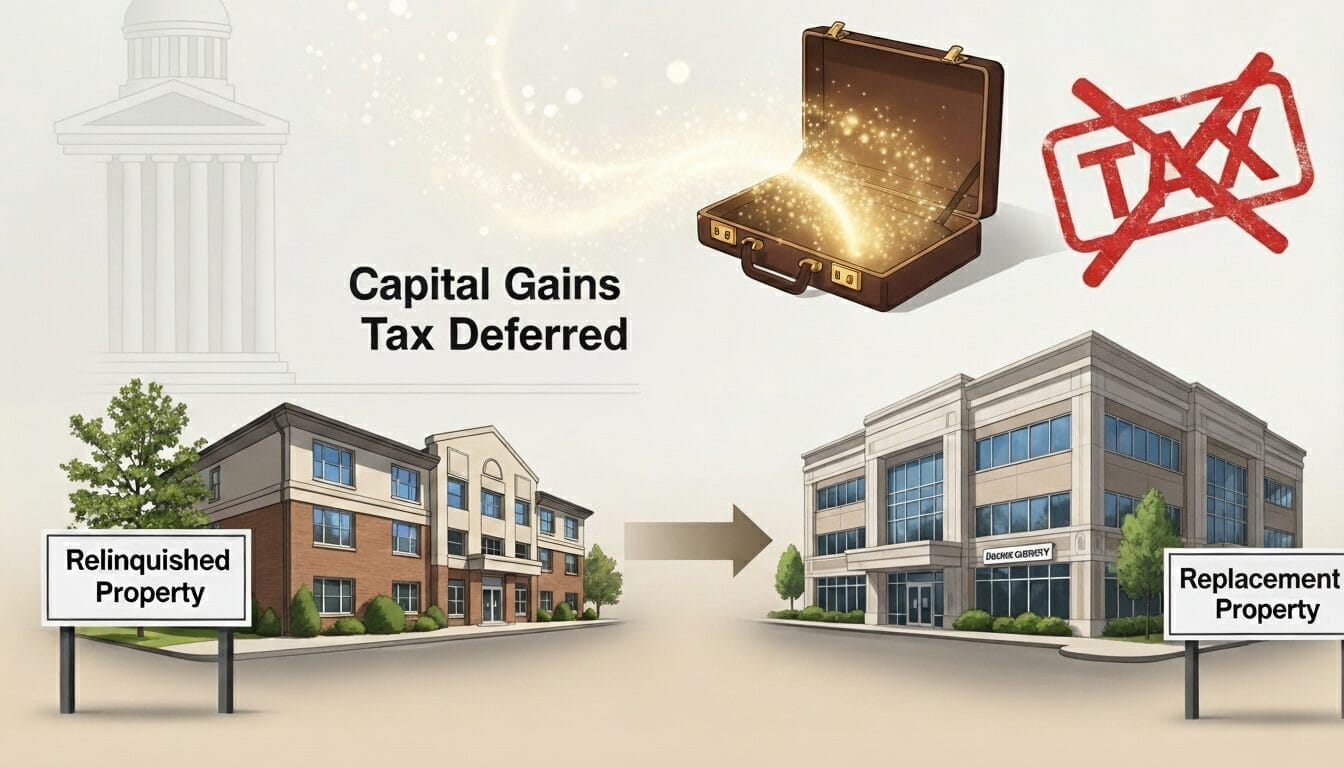
To defer these taxes, many investors use a 1031 Exchange. This allows a seller to reinvest the proceeds from an investment property sale into a "like-kind" property. By doing so, the capital gains tax and depreciation recapture are deferred until the new property is eventually sold without an exchange.
Practical Comparison: Tax Liability Scenarios
The following table illustrates how different factors influence the final tax bill for a home sale in 2026.
| Scenario | Sale Price | Adjusted Basis | Gain | Exclusion | Taxable Amount |
|---|---|---|---|---|---|
| Single, Primary Home | $550,000 | $200,000 | $350,000 | $250,000 | $100,000 |
| Married, Primary Home | $800,000 | $400,000 | $400,000 | $500,000 | $0 |
| Inherited Home | $600,000 | $590,000* | $10,000 | $0** | $10,000 |
| Rental Property | $500,000 | $250,000 | $250,000 | $0 | $250,000*** |
*Based on Fair Market Value at time of death. **Assuming the heir does not live in the property as a primary residence for 2 years. ***Subject to depreciation recapture rates.
Frequently Asked Questions
1. Do I have to report the sale of my home if I don't owe any taxes?
If you qualify for the full exclusion and your gain is less than the exclusion limit ($250k or $500k), you generally do not need to report the sale on your tax return. However, if you receive a Form 1099-S (Proceeds from Real Estate Transactions) from the closing agent, you must report the sale on Schedule D of your tax return, even if no tax is due, to show the IRS that the gain was excluded.
2. Can I deduct a loss on the sale of my home?
No. While you must pay taxes on the gain from a personal residence, you cannot deduct a loss if you sell your home for less than your adjusted basis. Deductible losses are only available for investment or business properties.
3. How do state taxes affect capital gains on a house sale?
Most states follow federal guidelines for capital gains, but some do not offer the same $250,000/$500,000 exclusion, or they may tax capital gains as ordinary income regardless of the holding period. Residents of states with no income tax (like Florida or Texas) only need to worry about federal capital gains. Always check the specific laws of the state where the property is located.
4. What happens if I use a portion of my home for a home office?
If you claimed depreciation for a home office, you cannot exclude the portion of the gain equal to the depreciation you took after May 6, 1997. You will likely have to pay the 25% depreciation recapture tax on that specific amount, even if the rest of the gain is excluded under the primary residence rules.
5. Does the exclusion apply to second homes or vacation homes?
No. The Section 121 exclusion is strictly for your principal residence. If you sell a vacation home, the entire gain is taxable at long-term capital gains rates (assuming you held it for over a year). To get the exclusion on a second home, you would have to move into it and make it your primary residence for at least two years.
Strategic Recommendations for Sellers
To minimize your tax burden when selling a house in 2026, take the following steps:
- Audit Your Improvements: Before listing your home, compile all receipts for renovations and improvements made over the years. Increasing your basis is the most direct way to lower your taxable gain.
- Time Your Sale Carefully: If you are close to the two-year mark for the use test, it is almost always financially beneficial to wait until you hit the 730-day threshold to secure the exclusion.
- Consult a Professional: Tax laws in 2026 can be influenced by recent legislative shifts. If your gain is near or above the exclusion limits, or if you have a complex situation involving a home office or rental period, consult a Certified Public Accountant (CPA) or tax attorney.
- Review Closing Statements: Ensure that all eligible selling expenses (commissions, transfer taxes, title fees) are correctly subtracted from the sale price to arrive at the correct "Realized Amount."
Disclaimer: This information is for educational purposes and does not constitute legal or financial advice. Tax laws are subject to change, and jurisdictional variations may apply. Consult with a tax professional regarding your specific situation.
Image Gallery
Select an image to open it in a new tab.
Simon Caldwell
Enterprise Technology and Systems Editor
