
Complications of acute glomerulonephritis (AGN) primarily stem from the sudden loss of the kidneys' ability to filter waste and excess fluid. Common risks include acute kidney injury, severe hypertension, electrolyte imbalances like hyperkalemia, and fluid overload leading to congestive heart failure or pulmonary edema. Prompt medical intervention is essential to mitigate long-term renal damage.
The Pathophysiology of Glomerular Damage
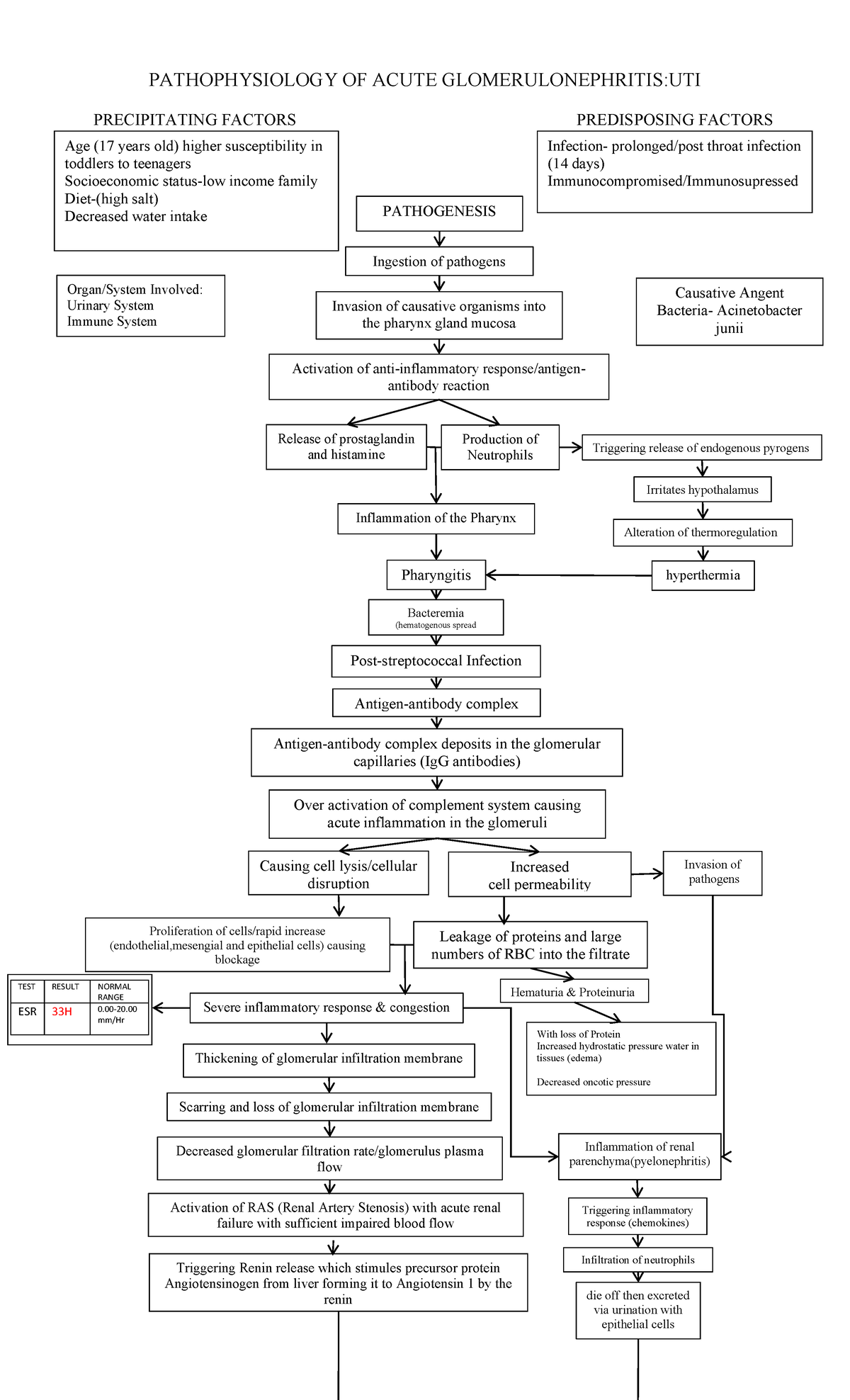
To understand the complications of acute glomerulonephritis, one must first grasp the physiological role of the glomeruli. These are microscopic clusters of capillaries within the nephrons of the kidney that act as the body’s primary filtration barrier. In the state of AGN, these filters become acutely inflamed, typically due to an overactive immune response following an infection (such as post-streptococcal glomerulonephritis) or an autoimmune condition like systemic lupus erythematosus.
When inflammation occurs, the glomerular basement membrane—the "sieve" of the kidney—becomes damaged and permeable. This leads to two primary mechanical failures. First, the kidneys begin to leak essential components into the urine that should remain in the blood, such as red blood cells (hematuria) and proteins (proteinuria). Second, the inflammation causes the glomerular filtration rate (GFR) to plummet. As the GFR decreases, the body loses its ability to excrete metabolic waste products and regulate fluid and electrolyte balance. This failure is the "ticking clock" that leads to the systemic complications discussed below.
Acute Kidney Injury and Renal Failure
One of the most immediate and life-threatening complications of AGN is the progression to Acute Kidney Injury (AKI). In severe cases, the inflammatory process is so aggressive that the kidneys effectively shut down over a period of hours or days.
When the kidneys fail to filter blood, nitrogenous waste products like urea and creatinine accumulate in the bloodstream, a condition known as uremia. Uremia is toxic to almost every organ system. It can cause pericarditis (inflammation of the heart lining), platelet dysfunction leading to easy bruising or bleeding, and profound nausea. If the AKI is "oliguric"—meaning the patient produces very little urine—the risk of internal toxicity increases exponentially. While many cases of AKI in AGN are reversible with proper treatment (such as corticosteroids or plasmapheresis), some patients require temporary hemodialysis to perform the work the kidneys cannot do. Failure to manage AKI can lead to permanent loss of renal function.
Cardiovascular Complications and Fluid Overload
The kidneys are the body’s primary regulators of blood pressure and fluid volume. When AGN impairs their function, the resulting fluid retention and hormonal imbalances create significant strain on the cardiovascular system.
Severe Hypertension
The kidneys respond to perceived low blood flow (caused by the inflammation and debris clogging the filters) by activating the Renin-Angiotensin-Aldosterone System (RAAS). This system is designed to raise blood pressure to maintain filtration. However, in AGN, this activation is maladaptive. It leads to systemic vasoconstriction and further sodium and water retention, resulting in acute, severe hypertension. If left unchecked, this can escalate into a hypertensive crisis, damaging the delicate blood vessels in the eyes, brain, and heart.
Congestive Heart Failure and Pulmonary Edema
As the body retains sodium and water, the total volume of blood increases beyond what the heart can effectively pump. This fluid overload can cause the heart to work harder, eventually leading to acute congestive heart failure. One of the most frightening manifestations is pulmonary edema, where the excess fluid is pushed into the air sacs of the lungs. This creates a medical emergency characterized by extreme shortness of breath, a persistent cough, and a "drowning" sensation. Immediate diuretic therapy or dialysis is often required to remove the excess fluid and restore respiratory function.
Electrolyte and Metabolic Imbalances
The kidneys precisely tune the levels of electrolytes in the blood. In the context of acute glomerulonephritis, this "fine-tuning" mechanism fails, leading to dangerous chemical shifts.
- Hyperkalemia (High Potassium): This is perhaps the most dangerous electrolyte complication. Potassium is vital for electrical signaling in the heart. When the kidneys cannot excrete it, levels rise, which can lead to cardiac arrhythmias or sudden cardiac arrest.
- Metabolic Acidosis: The kidneys normally excrete hydrogen ions and regenerate bicarbonate to maintain a stable blood pH. In AGN, the buildup of acids can lead to metabolic acidosis, causing rapid breathing, confusion, and further cardiovascular instability.
- Hyperphosphatemia and Hypocalcemia: Disruption in phosphorus excretion can lead to low calcium levels, potentially causing muscle spasms, cramps, or seizures.
Progression to Chronic Kidney Disease (CKD)
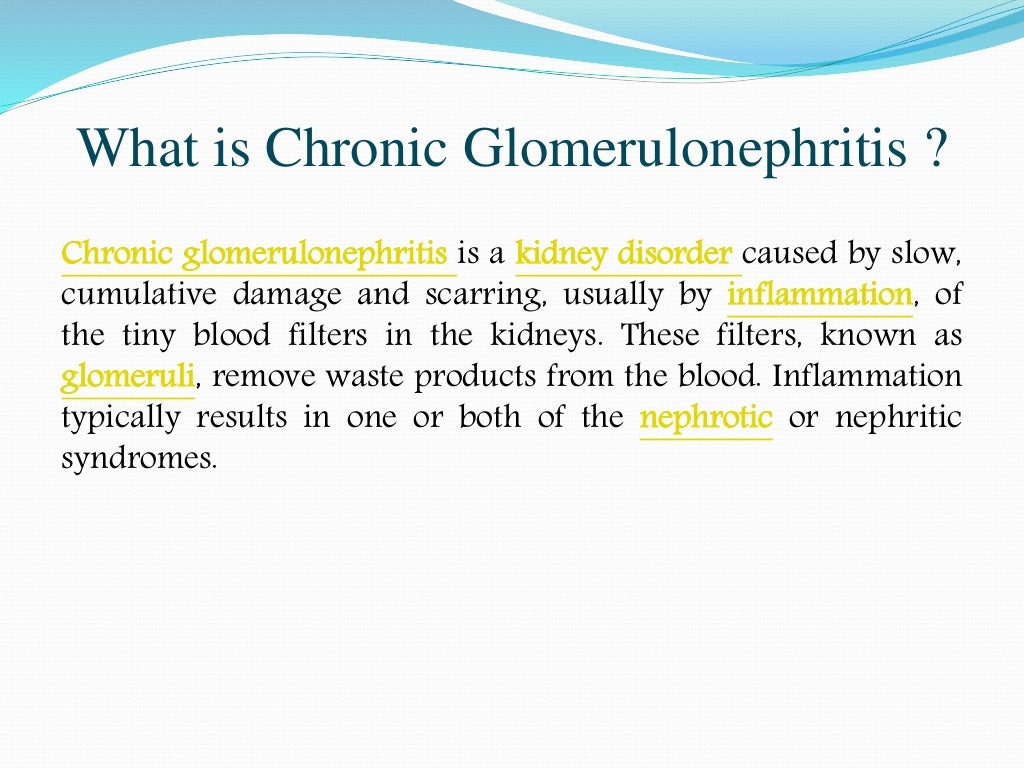
While many forms of AGN, particularly post-infectious varieties in children, have an excellent prognosis, not every patient recovers fully. A significant complication of the acute phase is the transition into Chronic Kidney Disease (CKD).
This occurs when the initial inflammatory damage triggers a cascade of scarring (fibrosis). As the glomeruli heal, they may be replaced by non-functional scar tissue. If a large enough percentage of nephrons are scarred, the remaining kidney tissue must work harder to compensate (hyperfiltration). Over years, this "overwork" leads to further damage. Patients who do not see a full resolution of their proteinuria or who have persistent hypertension are at the highest risk for this long-term progression. By 2026, clinical guidelines place a heavy emphasis on long-term monitoring of GFR and albuminuria levels for at least five years following an acute episode to catch early signs of CKD.
Neurological Complications: Hypertensive Encephalopathy
When blood pressure rises rapidly due to AGN-related fluid retention and RAAS activation, the brain's ability to regulate its own blood flow can be overwhelmed. This leads to hypertensive encephalopathy.
Symptoms of this complication include severe headaches, confusion, altered consciousness, and visual disturbances (such as blurred vision or temporary blindness). In severe cases, it can trigger generalized seizures. This is considered a neurological emergency. The management requires a delicate balance; lowering the blood pressure too quickly can cause a stroke (ischemic event) in the brain, but leaving it too high risks permanent brain damage or hemorrhage.
Comparison of AGN Complication Risks by Severity
The following table outlines the common complications of acute glomerulonephritis and the typical clinical indicators that suggest their onset.
| Complication | Primary Clinical Indicator | Potential Intervention | Severity Level |
|---|---|---|---|
| Acute Kidney Injury | Rapid rise in Serum Creatinine; Oliguria | Hemodialysis, Fluid management | Critical |
| Hypertension | Blood pressure > 140/90 mmHg | ACE inhibitors, Calcium channel blockers | High |
| Pulmonary Edema | Crackles in lungs; Shortness of breath | Intravenous diuretics, Oxygen therapy | Emergency |
| Hyperkalemia | Peaked T-waves on EKG; Potassium > 5.5 mEq/L | Insulin/Glucose, Kayexalate, Dialysis | Critical |
| Nephrotic Syndrome | Heavy Proteinuria (>3.5g/day); Edema | Steroids, Low-sodium diet | Moderate-High |
| Encephalopathy | Seizures, Confusion, Severe headache | IV Antihypertensives (Labetalol) | Emergency |
Nephrotic-Range Proteinuria and Systemic Effects
In some instances, the damage to the glomerular basement membrane is so severe that it results in nephrotic-range proteinuria. This means the patient is losing more than 3.5 grams of protein in their urine per day.
The loss of albumin (the primary protein in the blood) leads to a drop in oncotic pressure. This causes fluid to leak out of the blood vessels and into the surrounding tissues, leading to generalized swelling known as anasarca. This isn't just a cosmetic issue; the loss of specific proteins involved in blood clotting can increase the risk of deep vein thrombosis (DVT) or pulmonary embolism. Furthermore, the loss of immunoglobulins (antibodies) in the urine can leave the patient immunocompromised and more susceptible to secondary infections.
FAQ: Understanding AGN Complications
Can acute glomerulonephritis cause permanent kidney damage?
Yes, it can. While many patients recover, especially children with post-streptococcal AGN, severe inflammation can lead to permanent scarring of the glomeruli. This scarring reduces the kidney's total filtration capacity, potentially leading to chronic kidney disease (CKD) or eventually end-stage renal disease (ESRD) requiring long-term dialysis or a transplant.
How do I know if the fluid overload is becoming dangerous?
Signs of dangerous fluid overload include a sudden, rapid increase in weight (several pounds in a few days), swelling in the ankles and legs that leaves an indentation when pressed (pitting edema), and most importantly, any difficulty breathing while lying flat. If you feel you need to prop yourself up with multiple pillows to breathe at night, seek immediate medical attention.
Why is high blood pressure so common with AGN?
High blood pressure occurs because the inflamed kidneys cannot filter out enough salt and water, which increases blood volume. Additionally, the kidneys release hormones like renin that cause blood vessels to tighten. This combination of "too much fluid" and "tight pipes" creates a significant spike in blood pressure.
Does diet play a role in managing complications?
Diet is a cornerstone of managing AGN complications. Patients are typically placed on a low-sodium diet to reduce fluid retention and a low-potassium diet to prevent heart-rhythm issues. In cases where urea is building up (uremia), a temporary reduction in protein intake may also be recommended to lower the workload on the kidneys.
Is the treatment for AGN complications the same for everyone?
No. Treatment depends on the underlying cause (e.g., infection vs. autoimmune) and the specific complication present. For example, if the AGN is caused by an infection, antibiotics are used. If it is caused by an autoimmune flare, high-dose steroids or immunosuppressants are required. The management of the complications themselves (like using diuretics for edema) is generally standardized across causes.
Recommendations for Monitoring and Recovery
If you or a loved one are recovering from acute glomerulonephritis, the most important next step is consistent follow-up with a nephrologist. Because many complications—such as the transition to chronic kidney disease—can be "silent" in their early stages, regular blood and urine tests are mandatory.
- Monitor Blood Pressure Daily: Use a home monitor to track trends. Sudden spikes can indicate a worsening of the renal inflammation.
- Track Daily Weights: A gain of more than 2-3 pounds in a single day is usually fluid, not fat, and should be reported to a physician immediately.
- Adhere to Medication Regimens: Do not stop taking blood pressure medications or steroids abruptly, as this can trigger a "rebound" effect that exacerbates kidney damage.
- Avoid NSAIDs: Medications like ibuprofen and naproxen can further reduce blood flow to the kidneys and must be avoided during the recovery phase of AGN.
By staying vigilant regarding fluid balance and blood pressure, most patients can successfully navigate the acute phase and minimize the risk of long-term renal failure.
Image Gallery
Select an image to open it in a new tab.

Simon Caldwell
Enterprise Technology and Systems Editor
