
The official currency used in Thailand is the Thai Baht (THB), subdivided into 100 satang. As of 2026, it remains the sole legal tender for all transactions within the country, including retail, government services, and taxation. Visitors and residents must rely on physical banknotes, coins, and increasingly prevalent digital payment systems to navigate the local economy effectively.
Understanding the Thai Baht (THB)
The Thai Baht is issued and regulated by the Bank of Thailand (BoT). Unlike many currencies that experience frequent redesigns, Thai currency carries significant cultural weight, featuring portraits of the Thai monarchy on both banknotes and coins. Understanding the structure of the currency is the first step toward managing your financial affairs while traveling or living in the kingdom.
Banknotes in Circulation
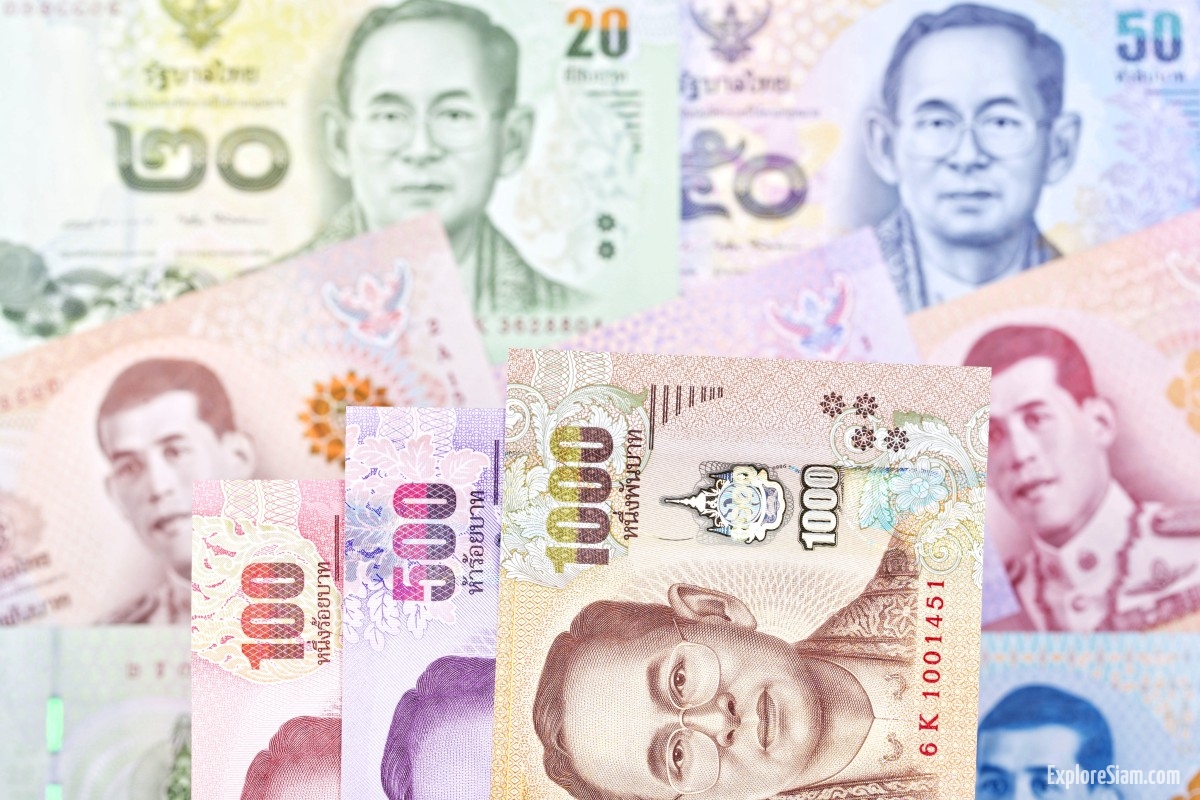
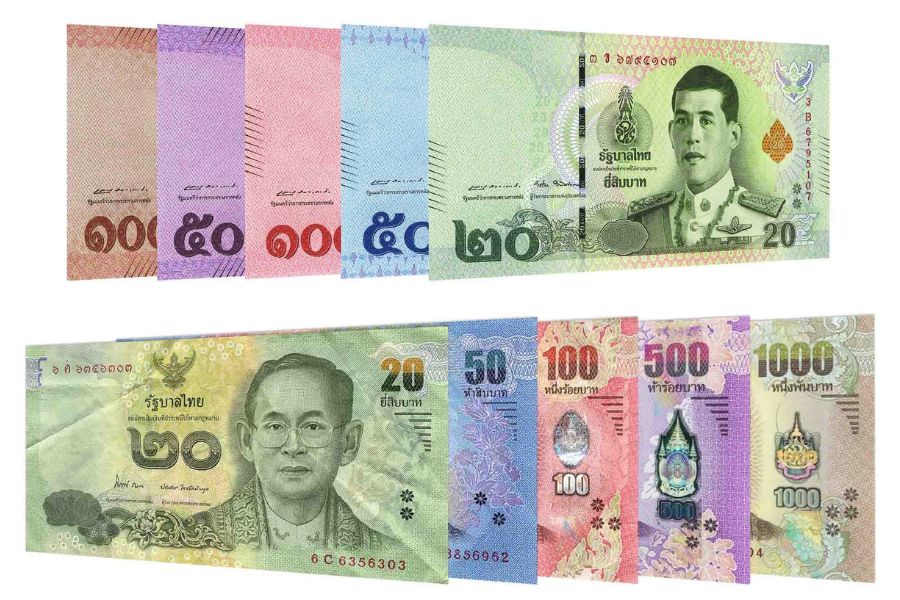
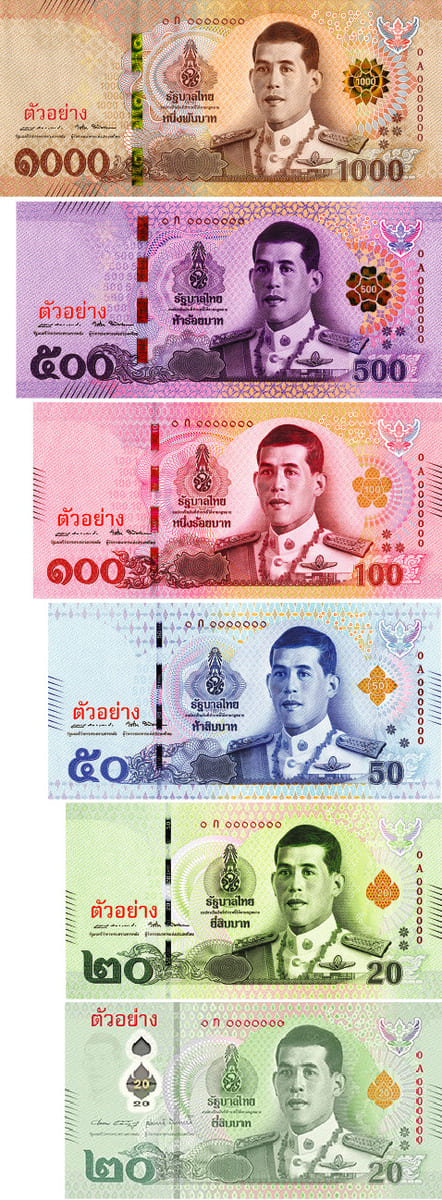
Thai banknotes are produced in denominations of 20, 50, 100, 500, and 1,000 Baht. Each denomination is color-coded and varies in physical size to assist individuals with visual impairments.
- 20 Baht: Green.
- 50 Baht: Blue.
- 100 Baht: Red.
- 500 Baht: Purple.
- 1,000 Baht: Brown/Grey.
These notes are printed on a mix of cotton-based paper and, in some newer series, polymer. They contain advanced security features, including watermarks, holographic foils, and raised ink, which are used to prevent counterfeiting. When receiving change, especially from street vendors or taxis, it is good practice to quickly inspect the notes for these features.
Coins and the Role of Satang
While 100 satang make up one Baht, you will rarely encounter denominations smaller than 1 Baht in daily transactions. Coins are minted in values of 1, 2, 5, and 10 Baht. There are also 25 and 50 satang coins, though these are typically only seen in supermarkets or hypermarkets where prices are calculated down to the decimal point. If you accumulate a large volume of satang coins, most local banks or larger retailers are happy to exchange them for Baht notes.
Practical Financial Management: Cash vs. Digital
Thailand has undergone a rapid digital transformation in the financial sector over the last decade. While the country was once strictly a "cash economy," the landscape in 2026 is a hybrid of traditional physical currency and highly sophisticated digital infrastructure.
The Dominance of PromptPay
The most significant development in Thai finance is the PromptPay system. This is a government-backed digital payment infrastructure that links a user’s bank account to their mobile phone number or National ID number. Most vendors, from high-end malls to small neighborhood noodle shops, display a QR code for PromptPay payments.
For visitors, the lack of a local bank account limits access to the full PromptPay ecosystem. However, many tourists now use cross-border QR payment integration if their home country supports it, allowing for seamless transfers from foreign bank apps to Thai merchant QR codes.
Why Cash Remains King
Despite the rise of digital wallets, cash remains essential. Street food stalls, local markets (wet markets), rural transport services, and smaller taxi operations often do not accept credit cards or digital transfers from international accounts. Always carry a small reserve of 20, 50, and 100 Baht notes for minor purchases, as vendors may struggle to provide change for a 1,000 Baht note on small items.
Currency Exchange and ATM Usage
For those arriving in Thailand with foreign currency, obtaining Thai Baht is a standardized process, though fees can vary significantly depending on your choice of provider.
Exchanging Foreign Cash
You will find currency exchange kiosks at every international airport and major tourist hub. Banks like Kasikornbank, Bangkok Bank, and Siam Commercial Bank (SCB) provide consistent, competitive rates. Avoid exchanging money at hotel front desks, as the rates are almost universally unfavorable.
Private exchange booths, such as those operated by SuperRich (typically recognized by their green or orange branding), often offer better rates than major commercial banks. To exchange money, you must present a valid passport, as this is a legal requirement for tracking international financial movement.
ATM Operations and Fees
ATMs are ubiquitous in Thailand, located outside almost every convenience store and shopping center. Most international debit and credit cards are accepted.
- The Foreign Transaction Fee: Thai ATMs charge a flat fee for every withdrawal using a non-Thai issued card—currently 220 Baht per transaction as of 2026. This fee is in addition to whatever fees your home bank may charge for international withdrawals.
- Withdrawal Limits: Most machines have a maximum withdrawal limit of 20,000 to 30,000 Baht per transaction.
- Dynamic Currency Conversion (DCC): Always choose "No" or "Decline Conversion" if the ATM asks if you want the bank to handle the exchange rate. Letting your home bank perform the conversion is almost always cheaper than letting the local ATM processor decide the rate.
Comparison of Currency Acquisition Methods
| Method | Convenience | Cost/Fee | Best For |
|---|---|---|---|
| Bank ATM | High | 220 THB + Home Bank Fee | Medium to large amounts |
| Exchange Booth | Medium | No fee, spread in rate | Cash-to-cash conversion |
| Credit Card | High | Variable (Foreign transaction %) | Large purchases/Hotels |
| Digital Wallet | Very High | Usually low/zero | Everyday merchant payments |
Legal and Practical Considerations
Counterfeit Currency
Counterfeiting of Thai Baht is rare but not unheard of. The Bank of Thailand provides a mobile app that serves as a guide for identifying security features on current banknotes. If you suspect you have received a counterfeit note, do not attempt to pass it along; report it to the nearest police station or take it to a commercial bank for verification.
Currency Regulations
There are no significant restrictions on bringing foreign currency into Thailand, but if you are carrying the equivalent of $20,000 USD or more, you must declare it to Customs upon arrival. Conversely, you may take out up to 50,000 Baht in cash without declaration, or up to 450,000 Baht if you are traveling to a bordering country (such as Laos, Myanmar, Cambodia, Malaysia, or Vietnam).
Tipping Culture
Thailand is not a heavy tipping culture, but it is becoming more common in urban areas. Tipping is not required for taxi drivers or small food stalls. In sit-down restaurants, if a service charge is not already included in the bill, leaving 5%–10% or rounding up to the nearest 100 Baht is appreciated but entirely optional.
Troubleshooting Common Financial Issues
- Card Rejection: If your card is declined at a merchant, it is often due to a security block from your home bank. Always notify your bank of your travel dates before departure to avoid this.
- ATM "Eating" Cards: If an ATM fails to return your card, do not leave the machine. Call the number on the ATM immediately. Most machines are operated by specific banks; the operator can often assist you in verifying if the card was retained for security or if the machine suffered a mechanical failure.
- Inaccessible Digital Wallets: If your local banking app fails to scan a QR code, ensure that your mobile data is active and that your bank has enabled international transactions.
Frequently Asked Questions
1. Can I use USD or EUR directly in Thailand? No. While some high-end resorts may occasionally accept major foreign currencies, they will apply an extremely unfavorable exchange rate. Always convert your money to Thai Baht for better value and wider acceptance.
2. Are credit cards widely accepted? In major shopping malls, chain hotels, and mid-to-high-end restaurants, credit cards are standard. However, do not rely on them for small-scale daily expenses like public transport or street markets.
3. What should I do if I lose my wallet? Immediately contact your home bank to cancel all credit and debit cards. If you have lost cash, there is little recourse, but if you have lost your passport along with your funds, you must visit your embassy or consulate and then file a report at a local Thai police station to obtain documentation for insurance purposes.
4. Is it better to bring cash or withdraw from an ATM? Most travelers find that bringing a mix is best. Have enough home currency to exchange upon arrival for initial expenses, then rely on ATM withdrawals for your main budget. Using an ATM allows you to avoid carrying large, risky amounts of cash on your person.
5. How do I get change for a 1,000 Baht note? If a small vendor cannot provide change, the best strategy is to purchase items at a "7-Eleven" or similar convenience store. Buying a bottle of water or a snack will break the 1,000 Baht note into smaller, more usable denominations.
Recommendation for Travelers and Expats
To minimize financial stress in Thailand, your best approach is a "triad" strategy. First, carry a small amount of home-currency cash for emergency exchange. Second, utilize a bank debit card that offers low or zero international withdrawal fees to pull cash from ATMs as needed. Third, set up a mobile payment solution or ensure your primary banking app is fully functional for QR payments. By balancing these three sources, you ensure that you are never caught without funds, regardless of whether you are in a bustling metropolitan center like Bangkok or a quiet, remote coastal village.
Image Gallery
Select an image to open it in a new tab.

Celine Dubois
Contemporary Living and Global Arts Columnist
