Bank Holidays in 2026: A Complete Guide to Dates, Rights, and Business Impact
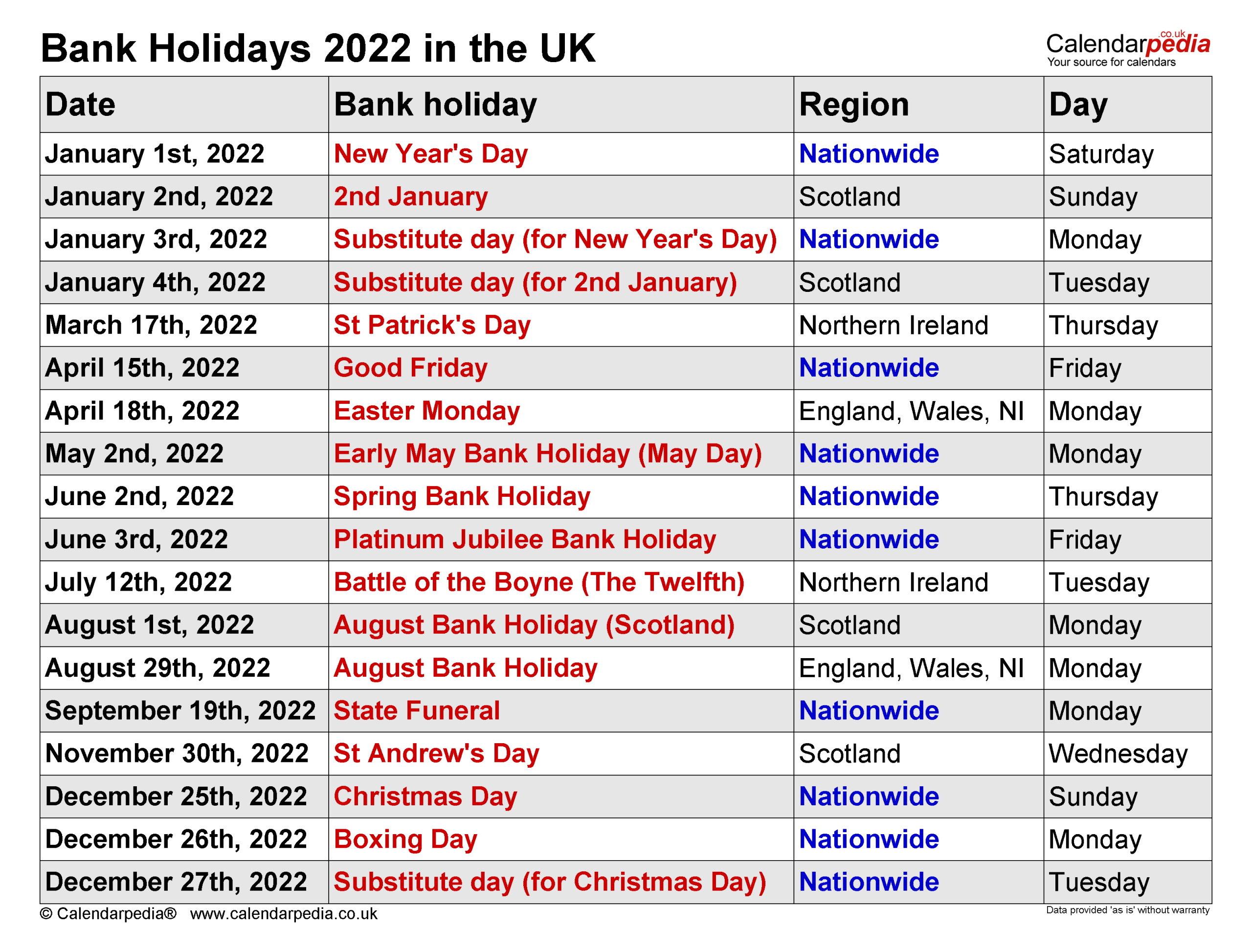
Bank holidays in 2026 are statutory public holidays across the United Kingdom that affect school schedules, retail hours, and financial processing cycles. While many people receive these days as paid leave, entitlement depends entirely on your specific employment contract rather than a universal legal right to the day off.
Understanding the nuances of bank holidays is essential for effective personal planning, financial management, and compliance with UK employment law. In 2026, the calendar follows a standard pattern, though specific regional variations in Scotland and Northern Ireland—along with the mechanics of substitute days—require careful attention. This guide provides a comprehensive breakdown of everything you need to know to navigate the 2026 bank holiday schedule.
The 2026 Bank Holiday Calendar
The schedule for bank holidays varies slightly across England, Wales, Scotland, and Northern Ireland. While the core dates like Christmas and New Year are shared, regional historical and religious observances create distinct calendars.
England and Wales
In 2026, England and Wales observe eight standard bank holidays. Because Boxing Day (December 26) falls on a Saturday, a substitute day is observed on the following Monday to ensure the public benefit of a weekday holiday.
- New Year’s Day: Thursday, January 1
- Good Friday: Friday, April 3
- Easter Monday: Monday, April 6
- Early May Bank Holiday: Monday, May 4
- Spring Bank Holiday: Monday, May 25
- Summer Bank Holiday: Monday, August 31
- Christmas Day: Friday, December 25
- Boxing Day (Substitute Day): Monday, December 28
Scotland
Scotland has a different set of bank holidays, governed by both the Banking and Financial Dealings Act 1971 and local tradition. Notably, Scotland observes January 2 as a bank holiday and has a different Summer Bank Holiday date compared to the rest of the UK.
- New Year’s Day: Thursday, January 1
- 2nd January: Friday, January 2
- Good Friday: Friday, April 3
- Early May Bank Holiday: Monday, May 4
- Spring Bank Holiday: Monday, May 25
- Summer Bank Holiday: Monday, August 3
- St Andrew’s Day (Substitute Day): Monday, November 30 (Observed as St Andrew's Day falls on a Sunday)
- Christmas Day: Friday, December 25
- Boxing Day (Substitute Day): Monday, December 28
Northern Ireland
Northern Ireland shares most dates with England and Wales but includes two additional days: St Patrick’s Day and the Anniversary of the Battle of the Boyne.
- New Year’s Day: Thursday, January 1
- St Patrick’s Day: Tuesday, March 17
- Good Friday: Friday, April 3
- Easter Monday: Monday, April 6
- Early May Bank Holiday: Monday, May 4
- Spring Bank Holiday: Monday, May 25
- Battle of the Boyne (Substitute Day): Monday, July 13 (Observed as July 12 falls on a Sunday)
- Summer Bank Holiday: Monday, August 31
- Christmas Day: Friday, December 25
- Boxing Day (Substitute Day): Monday, December 28
| Holiday Name | England & Wales (2026) | Scotland (2026) | Northern Ireland (2026) |
|---|---|---|---|
| New Year's Day | Jan 1 | Jan 1 | Jan 1 |
| 2nd January | N/A | Jan 2 | N/A |
| St Patrick's Day | N/A | N/A | March 17 |
| Good Friday | April 3 | April 3 | April 3 |
| Easter Monday | April 6 | N/A | April 6 |
| Early May Bank Holiday | May 4 | May 4 | May 4 |
| Spring Bank Holiday | May 25 | May 25 | May 25 |
| Battle of the Boyne | N/A | N/A | July 13* |
| Summer Bank Holiday | Aug 31 | Aug 3 | Aug 31 |
| St Andrew's Day | N/A | Nov 30* | N/A |
| Christmas Day | Dec 25 | Dec 25 | Dec 25 |
| Boxing Day | Dec 28* | Dec 28* | Dec 28* |
*Asterisk denotes a substitute day because the actual date falls on a weekend.
The Legal Reality: Employment Rights and Bank Holidays
One of the most common misconceptions in the UK workforce is that employees have a statutory right to paid leave on bank holidays. In reality, the law is more nuanced and is primarily governed by the Working Time Regulations 1998 and individual contracts of employment.
Statutory Leave Entitlement
Most workers in the UK are entitled to a minimum of 5.6 weeks of paid annual leave. For a full-time worker (5 days a week), this equates to 28 days. An employer can choose to include the eight annual bank holidays as part of this 28-day statutory entitlement. Alternatively, they can provide the 28 days plus bank holidays, though this is a contractual benefit rather than a legal requirement.
Working on a Bank Holiday
Unless your contract specifically states that you are entitled to take bank holidays off, your employer can legally require you to work. This is common in sectors such as healthcare, hospitality, retail, and emergency services.
Furthermore, there is no legal requirement for employers to pay an increased rate (such as "time and a half" or "double time") for working on a bank holiday. Any enhanced pay rates are entirely at the discretion of the employer and must be outlined in the employment contract. For more information on worker rights, the ACAS guide on public holidays provides detailed regulatory context.
Rights for Part-Time Workers
To prevent discrimination, the Part-time Workers (Prevention of Less Favourable Treatment) Regulations 2000 ensure that part-time employees receive a pro-rata share of bank holiday leave. This applies even if the bank holiday falls on a day the employee does not normally work.
For example, if a full-time worker receives 8 bank holidays and a part-time worker works 50% of the hours, the part-time worker is entitled to 4 days of bank holiday leave (or the equivalent in hours). This ensures that someone who works Tuesday through Thursday isn't unfairly disadvantaged compared to someone who works Monday through Wednesday, given that most bank holidays fall on Mondays.
Financial and Banking Impacts
As the name suggests, "bank" holidays are days when financial institutions traditionally close their doors. In the digital age of 2026, while mobile banking apps remain functional, the underlying processing systems for many transactions still pause.
BACS and Faster Payments
The BACS (Bankers' Automated Clearing System) operates on a three-day cycle and does not process payments on Saturdays, Sundays, or bank holidays. If a business schedules a payroll run or a supplier payment that coincides with a bank holiday, the payment will typically be delayed until the next working day.
- Example: If your payday is Monday, August 31, 2026 (a bank holiday), and your employer uses BACS, you will likely receive your wages on Tuesday, September 1, unless the employer proactively moves the payment date forward to the previous Friday.
In contrast, Faster Payments usually process 24/7, including bank holidays. However, some banks may still apply internal limits or delays for very large transfers on non-business days.
Direct Debits and Standing Orders
If a Direct Debit or standing order is scheduled to leave your account on a bank holiday, the funds are usually withdrawn on the next working day. It is vital to ensure that sufficient funds remain in the account over the long weekend to cover these delayed outgoing payments to avoid overdraft fees or failed payment charges.
Benefit Payments
If you are due to receive state benefits (such as Universal Credit or State Pension) on a date that falls on a bank holiday, the Department for Work and Pensions (DWP) usually pays the funds into your account on the last working day before the holiday. For the Christmas 2026 period, this means payments due on Friday, Dec 25, or Monday, Dec 28, would likely arrive on Thursday, Dec 24. For official updates, check the GOV.UK benefits page.
Retail, Travel, and Public Services
The impact of bank holidays extends beyond the office and the bank, affecting how we shop and move across the country.
Retail Operating Hours
In England and Wales, large shops (over 280 square metres) are subject to Sunday Trading Laws. On most bank holidays, these stores can open, but they may operate on reduced "Sunday hours" (e.g., 10:00 am to 4:00 pm).
However, there is one major exception: Christmas Day. Large stores in England and Wales are legally required to remain closed on Christmas Day. While there is no such law for Easter Sunday, most major supermarkets choose to close then as well. Small convenience stores are generally exempt from these restrictions and may stay open longer.
Public Transport Disruption
Bank holidays are the preferred windows for Network Rail and National Highways to perform major engineering works, as commuter volume is lower. In 2026, travellers should expect:
- Reduced Timetables: Many train operators and bus routes run a "Sunday service" on bank holidays.
- Planned Engineering: Significant sections of the rail network may be closed, requiring replacement bus services.
- Increased Road Traffic: Popular getaway routes (such as the M5 toward the South West or the A82 in Scotland) often experience extreme congestion on the Friday afternoon preceding a bank holiday.
School Closures
Virtually all state schools in the UK close for bank holidays. If a bank holiday falls during a scheduled term time (such as the Early May Bank Holiday), parents must arrange for childcare. Most nurseries and private childcare providers also close on these days, though many still charge for the day as part of their monthly fee structure.
Professional Advice and Planning Recommendations
Navigating bank holidays requires a mix of legal awareness and proactive scheduling. To ensure a smooth 2026, consider the following strategic actions:
- Audit Your Employment Contract: Do not assume you have the day off. Check if your "28 days holiday" includes or excludes bank holidays. If the contract is silent on bank holidays, the employer generally decides when you take your leave.
- Book Leave Early: Because bank holidays create "free" days off for many, the surrounding days are the most requested for annual leave. If you want to turn the May 4 bank holiday into a nine-day break by taking four days of annual leave, book it as early as possible in the year.
- Manage Cash Flow: If you are a business owner, remember that BACS transfers will not clear on Monday, August 31, or Monday, December 28. Adjust your payment runs to ensure staff and suppliers are paid on time.
- Verify Travel Plans: Check the National Rail Enquiries website at least two weeks before any bank holiday travel in 2026. Engineering schedules are usually finalized 12 weeks in advance, but specific "leaf-fall" or winter weather schedules can alter plans closer to the date.
Frequently Asked Questions
Am I entitled to extra pay for working a bank holiday?
There is no legal right to "time and a half" or any extra pay for working a bank holiday in the UK. Any extra payment is a matter of your specific employment contract. If your contract does not mention enhanced pay for public holidays, your employer is only required to pay your standard hourly rate.
What happens if a bank holiday falls on a weekend?
When a bank holiday falls on a Saturday or Sunday, a "substitute" weekday becomes a bank holiday, usually the following Monday. In 2026, this occurs for Boxing Day (Dec 26), which falls on a Saturday; consequently, Monday, Dec 28, is designated as the substitute bank holiday.
Can my employer force me to take a bank holiday as annual leave?
Yes. Employers have the legal right to tell their staff when they must take holiday. For example, many businesses close for the Christmas period or on bank holidays and require staff to use their holiday entitlement for those dates. They must, however, give you notice that is twice as long as the amount of holiday they want you to take.
How do bank holidays affect my 28-day statutory leave?
Employers can count bank holidays toward your statutory 5.6 weeks of holiday. If you work 5 days a week and get 28 days of holiday including bank holidays, you essentially have 20 days of "bookable" leave and 8 days tied to the bank holidays.
Are shops open on New Year's Day 2026?
Most major retailers and supermarkets open on New Year's Day, but often with reduced hours (similar to Sunday trading). However, some brands have increasingly chosen to remain closed on Jan 1 to give staff an extra break. It is advisable to check specific store locators closer to the date.
Does the 2026 schedule include any "extra" bank holidays?
As of current scheduling, 2026 is a standard year with no additional "one-off" bank holidays for royal events or anniversaries. The total number of bank holidays remains at eight for England and Wales, nine for Scotland, and ten for Northern Ireland.
Image Gallery
Select an image to open it in a new tab.
Omar Farooq
EdTech Innovation and Virtual Pedagogy Journalist
