Finance Core Skills for Success: What You Actually Learn to Master Money
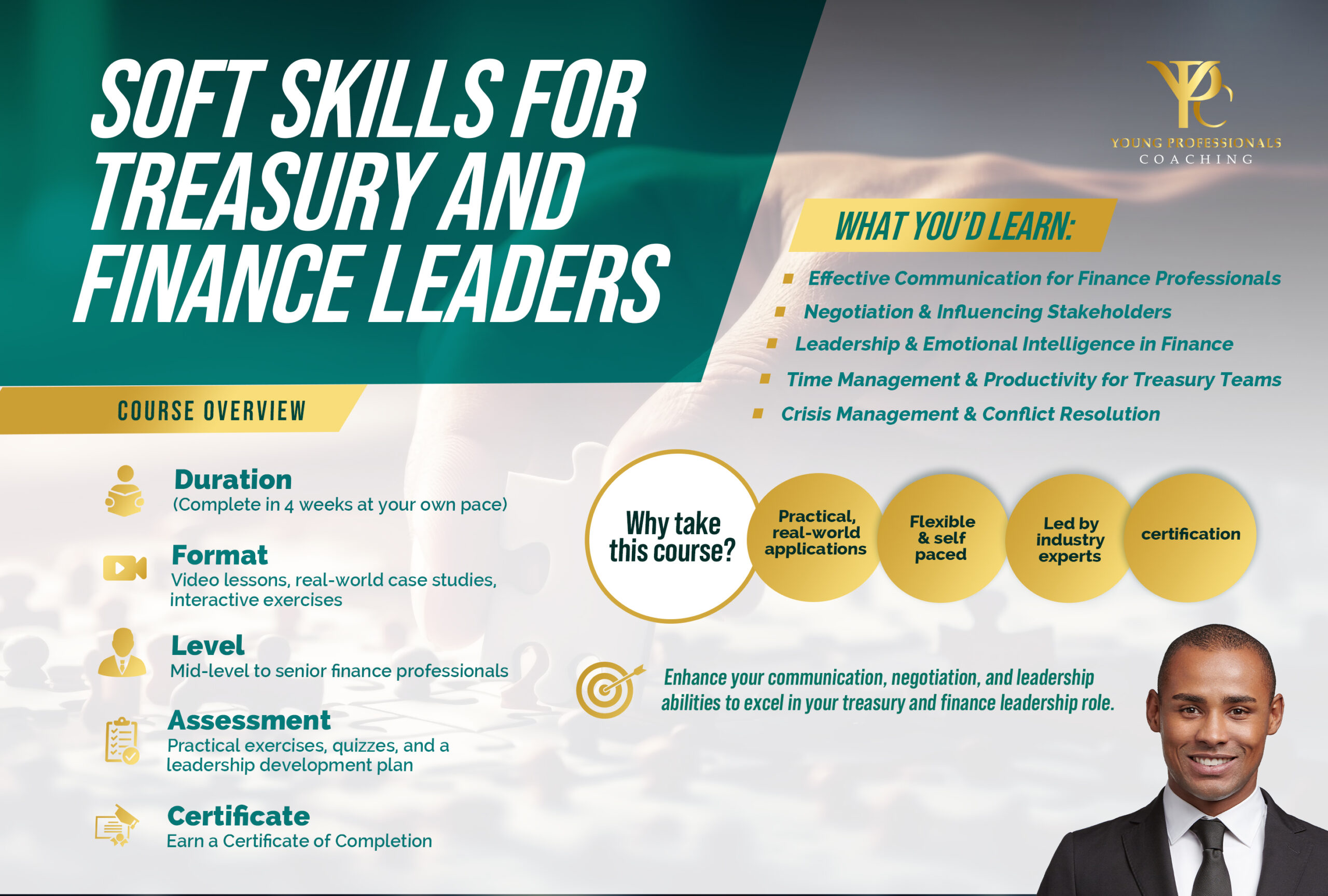
Finance core skills for success encompass the foundational competencies required to interpret, analyze, and manage capital effectively. These skills include mastering financial statement analysis, understanding time value of money, proficiency in quantitative modeling, developing rigorous cash flow management, and cultivating strategic risk assessment capabilities to guide high-level decision-making in professional and personal contexts.
The Foundation: Financial Statement Literacy
At the heart of any finance career lies the ability to read and interpret the "language of business." Financial statements—specifically the balance sheet, income statement, and cash flow statement—act as the primary diagnostic tools for the health of an organization or a personal investment portfolio.
When learning these skills, you move beyond mere recognition of terms. You learn to analyze the relationships between these documents. For instance, you examine how an increase in accounts receivable on a balance sheet impacts the actual cash available on the cash flow statement. This skill, often referred to as "triangulation," prevents the common mistake of assuming that reported profit equates to liquidity. In 2026, proficiency in these areas requires not just manual calculation, but the ability to identify anomalies in automated reports generated by accounting software.
Quantitative Proficiency and Data Modeling
Modern finance is data-driven. The core skill here is moving from static spreadsheets to dynamic financial modeling. A financial model is essentially a mathematical representation of a business or investment scenario, designed to forecast future performance under various assumptions.
You learn to build three-statement models that link the income statement, balance sheet, and cash flow statement through logically consistent drivers. This requires advanced proficiency in software like Microsoft Excel or specialized financial programming environments. The objective is to perform sensitivity analysis, where you alter input variables—such as interest rate hikes, inflation, or revenue growth—to observe the potential impact on final outcomes. Mastering these models allows you to stress-test your financial decisions against hypothetical market volatility.
The Time Value of Money (TVM)
The concept that a dollar today is worth more than a dollar tomorrow is the bedrock of all financial valuation. Understanding TVM is not just about the theory of compounding interest; it is about learning how to discount future cash flows to determine the present value (PV) of an asset, project, or liability.
This skill is essential for capital budgeting and investment analysis. When you evaluate whether to invest in a new venture, you learn to calculate the Net Present Value (NPV) and the Internal Rate of Return (IRR). These metrics allow you to compare the profitability of different opportunities that have different timelines and risk profiles. Without a deep grasp of TVM, you cannot accurately assess the true cost of debt or the real yield of an investment, leading to suboptimal resource allocation.
Strategic Risk Management
Risk management is the systematic process of identifying, analyzing, and responding to financial threats. In a professional finance context, this involves more than buying insurance; it involves understanding market risk, credit risk, and operational risk.
You learn to distinguish between systematic risk (market-wide issues that cannot be diversified away) and unsystematic risk (specific to a company or industry). Through the lens of portfolio theory, you learn that by holding a diversified set of assets, you can optimize the expected return for a given level of risk. This requires understanding standard deviation, beta, and correlation coefficients. In practical terms, this skill teaches you to build "margins of safety" into your projections, ensuring that your financial strategy remains viable even when primary assumptions prove overly optimistic.
Cash Flow Management and Liquidity
Many profitable companies and individuals fail due to insolvency, not lack of profit. Core finance training emphasizes the primacy of cash flow. Learning to manage cash means tracking the timing of inflows and outflows to ensure that obligations can be met as they fall due.
This involves mastering the "Cash Conversion Cycle," which measures how quickly a company can convert its investments in inventory and other resources back into cash. You will learn to identify "liquidity gaps"—periods where expenses exceed available cash—and develop strategies to bridge them, whether through short-term credit lines, aggressive receivables management, or cost-cutting measures. This skill is as vital for corporate treasury departments as it is for individuals managing complex household budgets or small business operations.
Comparison of Key Finance Core Skill Sets
| Skill Area | Primary Focus | Practical Application |
|---|---|---|
| Financial Analysis | Historical Performance | Auditing and trend identification |
| Financial Modeling | Future Projections | Capital budgeting and forecasting |
| Time Value of Money | Valuation | Calculating NPV, IRR, and asset pricing |
| Risk Management | Uncertainty Mitigation | Portfolio diversification and hedging |
| Cash Flow Mgmt | Liquidity & Solvency | Daily operations and credit planning |
Strategic Communication of Financial Data
Possessing technical financial skills is insufficient if you cannot communicate your findings to non-financial stakeholders. A critical component of finance success is the ability to distill complex data into actionable insights for leadership teams, clients, or investors.
This involves narrative building. You must be able to explain the "why" behind the numbers. For example, if your financial model indicates a need for a capital injection, you must be able to articulate the trade-offs between debt financing (interest expense and leverage) and equity financing (dilution of ownership). Learning to draft executive summaries and visual data representations that highlight key performance indicators (KPIs) ensures that your financial expertise directly translates into organizational or personal success.
Common Pitfalls for Finance Beginners
Even those who study core finance skills often fall into predictable traps. Recognizing these early is essential for long-term development:
- Over-reliance on "Black Box" Models: Assuming that because a formula is correct, the underlying assumptions are also correct. Always verify the input data manually.
- Neglecting Qualitative Factors: Finance is not just math. Regulatory changes, management quality, and industry disruption are qualitative factors that no spreadsheet can fully capture.
- Ignoring Inflation: Failing to adjust future returns for inflation leads to a false sense of growth in real purchasing power.
- Confirmation Bias: Actively seeking out data that confirms your pre-existing beliefs about a stock or project while ignoring evidence to the contrary.
Frequently Asked Questions
What is the most important skill in finance?
While technical skills like modeling are vital, the most important skill is analytical thinking—the ability to ask the right questions about the numbers. Numbers only reflect the story of a business or economy; your job is to interpret whether that story is sustainable and profitable.
Do I need a degree in finance to learn these skills?
No. While formal education provides a structured path, these skills are highly accessible through independent study, professional certification programs (such as the CFA or CPA), and practical application. Many industry leaders emphasize experience over academic pedigree.
How do I practice financial modeling without real-world data?
You can practice using publicly available 10-K filings from public companies. By downloading these reports, you can build a model based on historical data and compare your outputs against the actual performance of the company in subsequent quarters.
How often do these core skills change?
The fundamental principles—such as the Time Value of Money—are timeless and do not change. However, the tools used to implement these principles, such as AI-driven analytical software or cloud-based modeling platforms, evolve constantly. Staying current with technology is a supplement to, not a replacement for, core theory.
What is the difference between accounting and finance?
Accounting focuses on recording, summarizing, and reporting past financial transactions to ensure accuracy and regulatory compliance. Finance focuses on using that accounting data to make forward-looking decisions regarding investment, capital allocation, and risk management.
Next Steps for Developing Your Financial Proficiency
To move from theory to mastery, start by selecting one area of focus, such as mastering advanced Excel functions for modeling, and apply it to a real-world project. Whether you are managing your personal investments or contributing to corporate strategy, commit to creating a "feedback loop"—where you project an outcome, track the actual result, and reconcile the differences. This practice of constant calibration is the surest way to build the intuition required for success in the financial field.
Image Gallery
Select an image to open it in a new tab.
Simon Caldwell
Enterprise Technology and Systems Editor
