Why Colin Kaepernick Took a Knee: The Full History and Impact of the Protest Explained

Colin Kaepernick took a knee during the U.S. national anthem starting in 2016 to protest systemic racism, police brutality, and racial inequality in the United States. His silent demonstration was intended to leverage his platform as an NFL quarterback to highlight the lack of accountability for law enforcement involved in the deaths of Black Americans.
The gesture, which began during the NFL preseason, evolved from sitting to kneeling following a consultation with a military veteran. What started as a solo act of conscience transformed into a global symbol of social justice, sparking intense national debate over patriotism, freedom of speech, and the role of athletes in politics. As of 2026, the movement he initiated remains a defining moment in the intersection of sports and civil rights in the 21st century.
The Genesis of the Protest: Preseason 2016
The protest did not begin with a knee. During the first two preseason games of the 2016 NFL season, Colin Kaepernick, then the quarterback for the San Francisco 49ers, remained seated on the bench during the playing of "The Star-Spangled Banner." Because he was not in uniform for those games, his actions went largely unnoticed by the media and the public.
It wasn't until the third preseason game on August 26, 2016, against the Green Bay Packers, that the media spotted him sitting. When asked about his decision after the game, Kaepernick provided a clear and uncompromising explanation for his actions. He stated that he could not show pride in a flag for a country that oppressed Black people and people of color. He specifically cited police brutality and the lack of judicial consequences for officers involved in controversial shootings as his primary motivation.
At the time, the United States was grappling with a series of high-profile deaths of Black individuals at the hands of police, including Alton Sterling in Louisiana and Philando Castile in Minnesota. These events, occurring shortly before the 2016 NFL season, served as the immediate catalyst for Kaepernick’s decision to transition from private citizen to public activist.
From Sitting to Kneeling: The Nate Boyer Consultation
One of the most misunderstood aspects of the protest is the transition from sitting to kneeling. Following the initial backlash, where critics argued that sitting on a bench was disrespectful to military veterans, Kaepernick met with Nate Boyer, a former Green Beret and NFL long snapper.
Boyer wrote an open letter to Kaepernick, expressing how the sight of him sitting during the anthem affected him as a veteran. Rather than ignoring the critique, Kaepernick invited Boyer to meet in San Diego. During this meeting, they discussed how Kaepernick could continue his protest without being perceived as inherently anti-military.
Boyer suggested that kneeling was a more respectful gesture, noting that soldiers kneel at the graves of fallen comrades to show honor and solemnity. On September 1, 2016, during the final preseason game, Kaepernick knelt for the first time alongside teammate Eric Reid. This shift was a deliberate attempt to maintain the protest's focus on racial injustice while adopting a posture that conveyed gravity and respect.
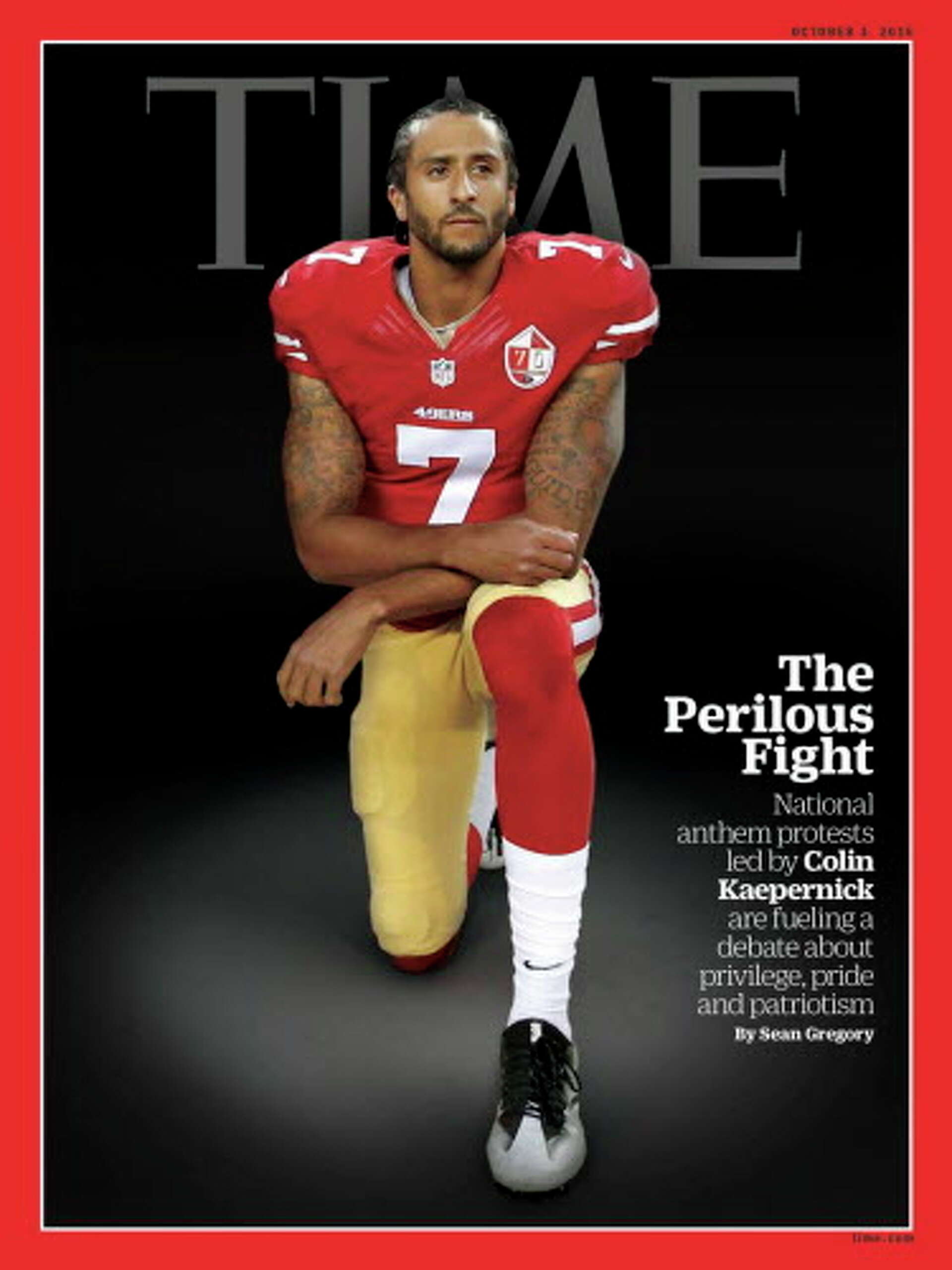
The Socio-Political Climate of 2016-2017
To understand why the protest resonated—and polarized—so deeply, one must look at the broader socio-political environment of the time. The 2016 U.S. Presidential election was in full swing, and the country was experiencing heightened partisan divisions.
Kaepernick’s protest became a flashpoint in the "culture wars." Supporters saw him as a modern-day Muhammad Ali, using his career to fight for human rights. Opponents, however, focused on the symbol of the flag. They argued that the national anthem was a time for unity and that any form of protest during its performance was an affront to the military and the nation's core values.
In September 2017, the controversy reached a fever pitch when then-President Donald Trump, speaking at a rally in Alabama, suggested that NFL owners should fire any "son of a bitch" who "disrespects our flag." This commentary shifted the narrative for many; while Kaepernick remained focused on police brutality, the broader NFL community began to view the act of kneeling as a statement on the First Amendment and a collective pushback against executive overreach.
The Professional and Personal Cost
The 2016 season was Colin Kaepernick's last in the NFL. Despite leading the 49ers to a Super Bowl years earlier and maintaining statistics that many analysts argued were superior to several starting quarterbacks at the time, he became a free agent in March 2017 and was never signed again.
In October 2017, Kaepernick filed a collusion grievance against the NFL, alleging that the league's owners conspired to keep him out of the league because of his activism. Eric Reid, who had joined the protest, filed a similar grievance. In February 2019, the NFL and both players reached a confidential settlement, though the "blackballing" of Kaepernick remained a point of significant contention among fans and civil rights advocates.
While his football career ended prematurely, his philanthropic work expanded. He launched the "Know Your Rights Camp," a campaign for youth fully funded by Kaepernick to raise awareness on higher education, self-empowerment, and instructions on how to properly interact with law enforcement. He also fulfilled a pledge to donate $1 million to various community organizations, documenting each donation to ensure transparency and encourage others to contribute.
Comparative Timeline of the Protest and League Response
The following table outlines the progression of the protest and how the NFL's official stance shifted over a decade.
| Year | Key Event | NFL Official Stance/Action |
|---|---|---|
| 2016 | Kaepernick begins sitting, then kneeling. | "Players are encouraged but not required to stand." |
| 2017 | National anthem protests spread league-wide. | Commissioner Roger Goodell defends players' right to protest. |
| 2018 | NFL announces a new policy requiring standing. | Policy stated players could stay in the locker room if they didn't stand. |
| 2019 | Kaepernick and NFL reach legal settlement. | The league attempts a private workout for Kaepernick (controversial). |
| 2020 | George Floyd protests; NFL re-evaluates stance. | Goodell admits the league was "wrong for not listening" earlier. |
| 2021-2026 | Integration of social justice messaging in end zones. | "End Racism" and "It Takes All of Us" become standard stadium signage. |
The 2020 Re-evaluation and Long-term Legacy
The true impact of Kaepernick’s protest was perhaps most visible in 2020, following the death of George Floyd in Minneapolis. The resulting global protests against systemic racism led to a massive cultural shift in how institutions, including the NFL, viewed social justice activism.
In June 2020, NFL Commissioner Roger Goodell released a video statement apologizing for the league's previous handling of player protests. He stated, "We, the National Football League, condemn racism and the systematic oppression of Black people. We, the National Football League, admit we were wrong for not listening to NFL players earlier and encourage all to speak out and peacefully protest."
By 2026, the gesture of "taking a knee" has transcended American football. It has been adopted by international soccer players, Olympic athletes, and activists worldwide as a universal shorthand for the struggle against inequality. Kaepernick’s sacrifice—giving up his career at its prime—is now frequently cited in academic and historical contexts as a pivotal moment in 21st-century civil rights history.
Public Perception and Media Influence
The role of the media in shaping the narrative around the protest cannot be overstated. In the early stages, sports media often focused on the "distraction" the protest caused in the locker room. However, as independent reporting and social media allowed Kaepernick to speak directly to the public, the focus shifted toward the substance of his message.
The 2018 Nike "Dream Crazy" campaign, featuring Kaepernick with the slogan "Believe in something. Even if it means sacrificing everything," marked a turning point in corporate involvement. It showed that despite the political volatility, a significant segment of the consumer base—particularly younger demographics—supported the protest's underlying message. This emboldened other athletes to speak out on issues ranging from voting rights to gender equity.
Legal and Ethical Considerations of Athlete Protests
The Kaepernick era forced a legal and ethical re-examination of the workplace rights of professional athletes. Unlike many private employees, NFL players operate under a Collective Bargaining Agreement (CBA) that balances their individual rights with the league's commercial interests.
The primary legal tension resided in the "conduct detrimental to the league" clause. Owners argued that protests hurt television ratings and ticket sales, while the NFL Players Association (NFLPA) argued that peaceful protest on social issues did not violate the terms of employment. This debate eventually led to more robust protections for player expression in subsequent CBA negotiations, ensuring that players in 2026 have more clearly defined avenues for activism than they did in 2016.
Frequently Asked Questions
Did Colin Kaepernick protest against the military?
No. Kaepernick repeatedly stated that his protest was not directed at the military or the flag itself, but at the failure of the country to live up to the ideals those symbols represent. His decision to kneel rather than sit was specifically chosen to show respect for the military, following advice from a veteran.
Why did the NFL settle the lawsuit with Kaepernick?
The settlement in 2019 was reached to avoid a public trial. Kaepernick’s legal team argued they had evidence that team owners and league executives collaborated to ensure he remained unsigned. By settling, the NFL avoided the discovery process, which could have forced the release of internal communications regarding the league's strategy toward the protests.
What were the specific police shootings that motivated him?
While Kaepernick spoke about systemic issues, the 2015 shooting of Mario Woods in San Francisco and the 2016 deaths of Alton Sterling and Philando Castile were immediate catalysts mentioned in his early interviews. These incidents were part of a broader pattern of law enforcement violence that the Black Lives Matter movement was highlighting at the time.
How did the "Take a Knee" movement affect NFL ratings?
In 2016 and 2017, there was a measurable dip in NFL television ratings. Analysts attributed this to several factors, including the contentious presidential election, a saturated media market, and a boycott from both sides—those who found the protests offensive and those who felt the league was mistreating Kaepernick. However, by 2018, ratings began to recover, and by 2026, the league's revenue and viewership reached all-time highs.
Is Colin Kaepernick still involved in activism in 2026?
Yes. Since his exit from the NFL, Kaepernick has focused on his publishing house, Kaepernick Publishing, and his "Know Your Rights Camp." He has also been involved in various documentary and media projects aimed at highlighting the history of civil rights struggles in the United States.
Practical Recommendation: To understand the full scope of the protest, it is recommended to read the original transcripts of Kaepernick's 2016 post-game interviews and Nate Boyer's "Open Letter to Colin Kaepernick." This provides the necessary context to distinguish between the protest's actual intent and the political narratives that were later constructed around it. For those interested in the legal aspects, reviewing the 2020 NFL Collective Bargaining Agreement provides insight into how the league currently handles player expression.
Image Gallery
Select an image to open it in a new tab.


Omar Farooq
EdTech Innovation and Virtual Pedagogy Journalist
