Understanding Ferromagnetic Properties in Everyday Materials
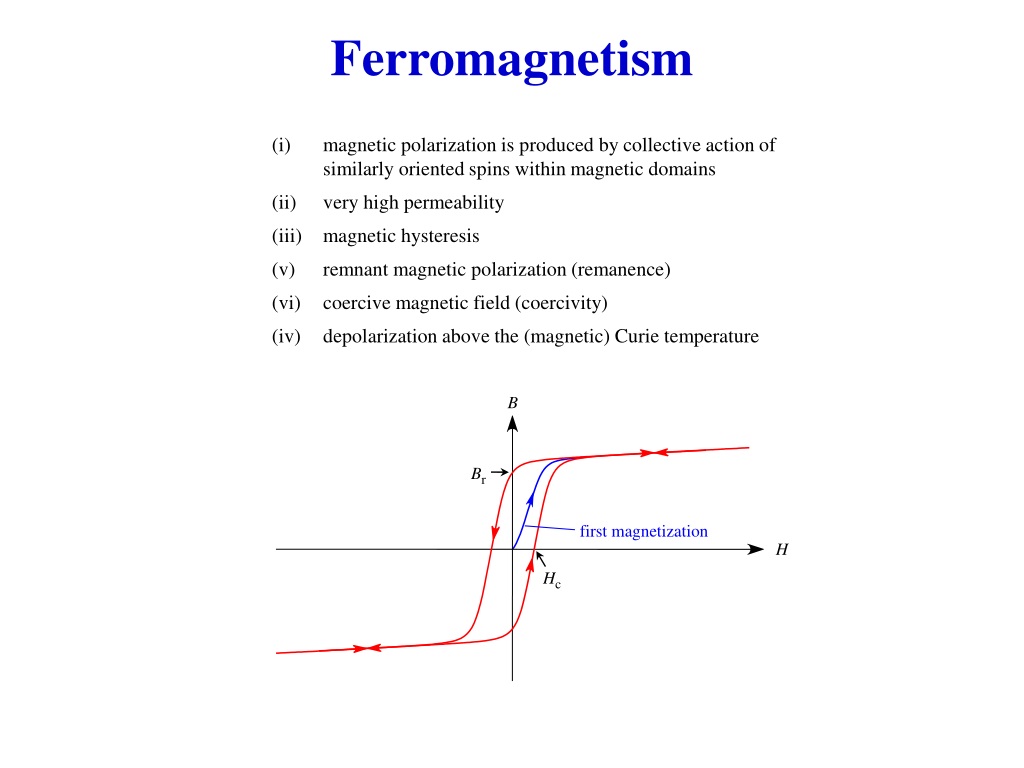
Ferromagnetism is the mechanism by which certain materials, such as iron, cobalt, and nickel, form permanent magnets or interact strongly with external magnetic fields. This phenomenon arises from the alignment of electron spins within the material's atomic structure, creating microscopic regions called magnetic domains. By observing how household objects respond to magnetic forces, you can distinguish between true ferromagnetic materials and other substances that may exhibit diamagnetic or paramagnetic behavior.
The Physics of Ferromagnetism
At the heart of ferromagnetism lies the concept of the magnetic domain. In a ferromagnetic material, the magnetic moments of atoms—driven by the intrinsic spin and orbital motion of electrons—tend to align parallel to each other due to a quantum mechanical effect known as exchange interaction. When these moments align over large regions, they form domains.
In an unmagnetized state, these domains are oriented randomly, causing their individual magnetic fields to cancel each other out. However, when placed in an external magnetic field, the boundaries between these domains shift, or the domains rotate to align with the external field. If the material is "hard" (like high-carbon steel), the domains remain aligned even after the external field is removed, resulting in a permanent magnet. If the material is "soft" (like pure iron), the domains revert to a disordered state once the field is withdrawn.
Identifying Ferromagnetic Materials in Your Home
You can easily categorize the materials in your home by performing simple verification tests. Because ferromagnetism is a structural property, it remains consistent regardless of the object’s shape or age.
Common Ferromagnetic Items
- Carbon Steel (Iron Alloys): This is the most common ferromagnetic material found in the home. It is used in kitchen knives, structural nails, screws, and hand tools. It responds vigorously to even weak neodymium magnets.
- Cast Iron: Used in heavy-duty skillets and Dutch ovens. Its high iron content ensures strong attraction to magnets.
- Nickel and Cobalt: While less common in bulk, these are often found as plating or as alloying elements in various metal fixtures.
- Stainless Steel (Type 400 Series): Not all stainless steel is ferromagnetic. The 400-series (ferritic or martensitic) contains significant iron and carbon without enough nickel to stabilize the austenitic structure, making it magnetic.
Materials Often Mistaken for Ferromagnetic
- Aluminum: Used in soda cans, foil, and window frames. It is paramagnetic but not ferromagnetic; it will show no meaningful attraction to a household magnet.
- Copper and Brass: These are diamagnetic, meaning they are slightly repelled by strong magnetic fields, though this is usually imperceptible to the human hand.
- Stainless Steel (Type 300 Series): The most common kitchen-grade stainless steel (304/316) is austenitic. Due to the high chromium and nickel content, the crystal structure is non-magnetic. You will find that high-quality, corrosion-resistant cutlery or sink basins often do not stick to magnets.
Practical Verification Steps
To test whether an everyday object is ferromagnetic, you do not need laboratory-grade equipment. A standard permanent magnet (preferably a neodymium disc or bar magnet) is sufficient.
- Clean the surface: Remove dust or grime, as this can affect the distance between the magnet and the material.
- Controlled Approach: Slowly move the magnet toward the object. Observe the "pull." A strong, sudden snap indicates a high-permeability ferromagnetic material.
- Test Multiple Points: If you are testing a large object like a stainless steel appliance, test various points. Some refrigerators have ferromagnetic steel panels, while others use non-magnetic alloys.
- Check for Coatings: An object may be ferromagnetic underneath a layer of plastic, paint, or non-magnetic metal. If the magnet attracts through a thin layer of paint, the core metal is likely iron-based.
Table: Magnetic Behavior of Household Materials
| Material | Magnetic Category | Expected Interaction | Example Item |
|---|---|---|---|
| Carbon Steel | Ferromagnetic | Strong Attraction | Hammer head |
| Cast Iron | Ferromagnetic | Strong Attraction | Skillet |
| 300 Series Stainless | Paramagnetic/Non-Magnetic | None/Negligible | Sink basin |
| Aluminum | Paramagnetic | None | Soda can |
| Copper | Diamagnetic | None | Wiring |
| Nickel/Cobalt | Ferromagnetic | Strong Attraction | Plating / Alloys |
Limitations and Safety Considerations
While interacting with ferromagnetic materials is generally safe, there are critical limitations to be aware of in a 2026 household environment.
- Temperature Sensitivity (The Curie Point): Every ferromagnetic material has a Curie temperature. If you heat a steel object (like a tool or skillet) to a high enough temperature—typically several hundred degrees Celsius—it loses its ferromagnetic properties and becomes paramagnetic. The magnetism will return as it cools, but prolonged exposure to extreme heat can permanently alter the magnetic structure of a permanent magnet.
- Electronic Interference: If you are testing ferromagnetic materials near modern electronics—such as smartphones, laptops, or medical implants like pacemakers—keep a safe distance. Strong magnets can erase data on magnetic storage media or interfere with sensitive sensors.
- Surface Damage: Using high-strength neodymium magnets on decorative surfaces can scratch or dent the material. Always use a protective cloth between the magnet and the surface if you are unsure of the finish.
Why Some Steel Doesn't Stick
The most common question from homeowners is: "Why does my kitchen knife stick to a magnet, but my sink doesn't?" The answer lies in metallurgy. Steel is an alloy of iron and carbon, but manufacturers add elements like chromium, nickel, and molybdenum to change its physical properties.
- Chromium provides corrosion resistance, but if added in high quantities alongside Nickel, it changes the atomic structure from a body-centered cubic (BCC) arrangement—which is ferromagnetic—to a face-centered cubic (FCC) arrangement. This FCC structure is non-magnetic at room temperature.
- When purchasing hardware or appliances where magnetic attraction is a functional requirement (such as a magnetic knife rack or a latch), always test the specific item with a magnet before installation, as visual appearance is not a reliable indicator of magnetism.
Frequently Asked Questions
Does a rusty object lose its ferromagnetic properties? No. Rust (iron oxide) is a chemical compound formed by the reaction of iron with oxygen. While the outer layer of rust may weaken the magnetic pull slightly by creating a physical gap, the bulk metal beneath the rust remains ferromagnetic. If the object is rusted through to the point that the iron structure has been replaced by iron oxide, the attraction will significantly diminish.
Can I turn a piece of steel into a permanent magnet? Yes. By stroking a piece of "hard" steel (like a high-carbon screwdriver) with a strong permanent magnet in one direction repeatedly, you can align the magnetic domains. This is known as magnetic induction. The effect is usually temporary unless the material has specific properties that allow it to retain this alignment.
Why are some modern non-stick pans magnetic? Many modern non-stick pans are made of aluminum for heat distribution but include a "ferromagnetic base" (usually a stainless steel plate) pressed into the bottom. This allows the pan to function on induction cooktops, which rely entirely on oscillating magnetic fields to heat the cookware through eddy currents.
Are all magnets ferromagnetic? Yes, all permanent magnets must be made of ferromagnetic or ferrimagnetic materials. These materials have the ability to maintain a collective magnetic orientation. Non-ferromagnetic materials cannot be permanently magnetized.
Is there a way to shield against ferromagnetism? Standard shielding against magnetism is difficult. Unlike electricity, which can be grounded, magnetic fields pass through almost all materials. However, "mu-metal," a nickel-iron alloy with very high magnetic permeability, can be used to redirect magnetic field lines around an object, effectively shielding it.
Next Steps for Verification
If you need to verify the material composition of an object for structural or repair purposes, start by using a small, inexpensive neodymium magnet. If the item shows no attraction, it is likely aluminum, copper, or an austenitic stainless steel. For critical applications, such as construction or high-stress engineering repairs, consult the manufacturer's technical data sheet or the ASTM (American Society for Testing and Materials) grade classification, which will explicitly state the magnetic susceptibility of the alloy.
Image Gallery
Select an image to open it in a new tab.
Lars Thomsen
Global Labor Markets and Economic Strategy Editor
