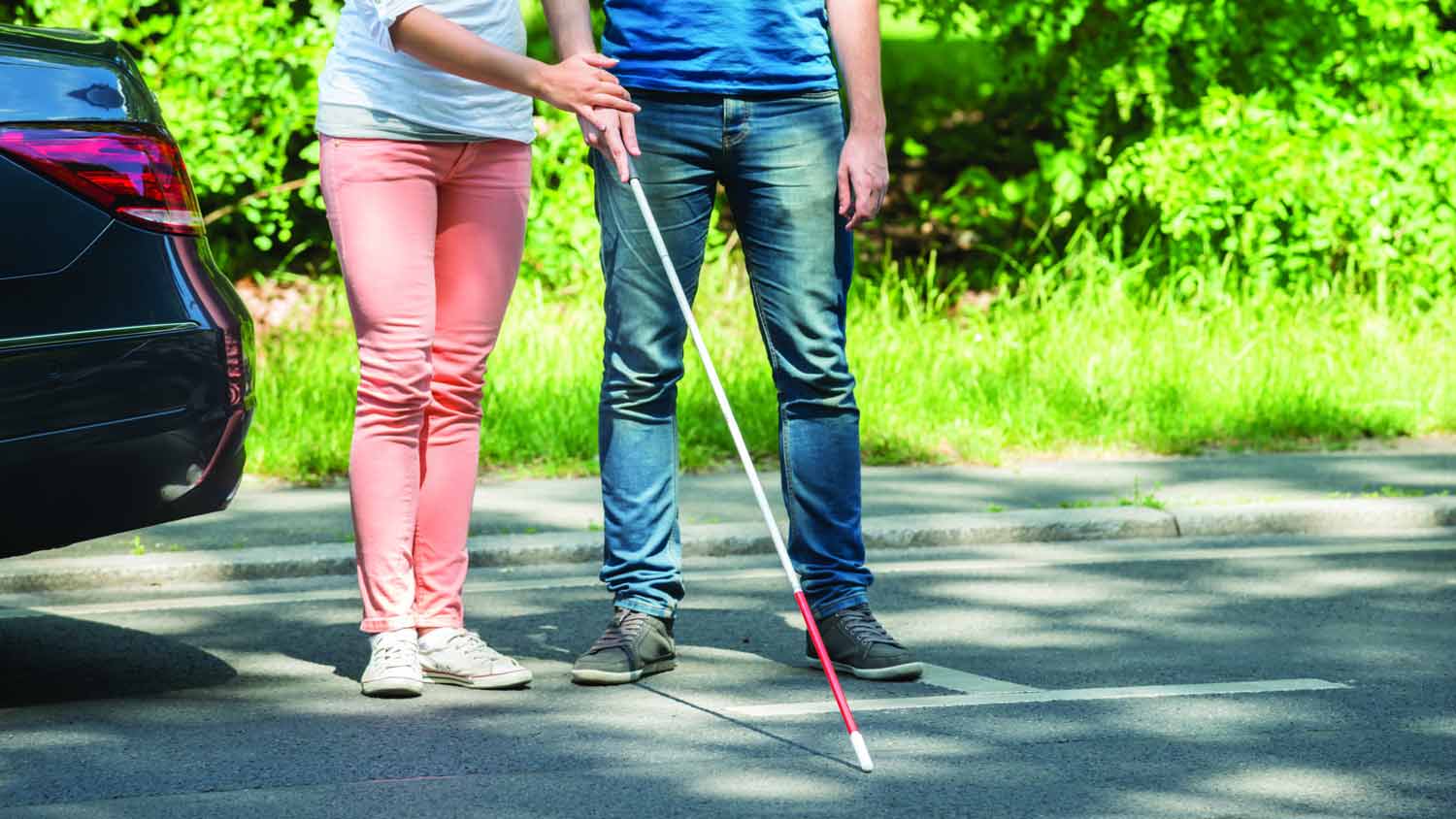
Blindness is not a binary condition of sight or total absence of light, but rather a complex spectrum of vision loss defined by clinical measurements of visual acuity and visual field. Understanding the different blindness categories requires looking past common misconceptions to identify how medical professionals and government agencies classify vision impairment to determine eligibility for support services, specialized equipment, and legal accommodations.
For the purpose of clinical and legal classification, vision impairment is broadly categorized based on the severity of sight loss in the "better eye" when using the best possible corrective lenses. These categories range from low vision and partial sight to legal blindness and total blindness. These classifications serve as a standardized framework for accessing health resources and understanding individual functional requirements in daily life.
Defining the Spectrum of Vision Loss
Vision loss exists on a gradient. While the term "blindness" is often colloquially used to describe anyone with significant vision impairment, medical professionals utilize precise measurements to categorize how a person interacts with their environment. The two primary metrics used are visual acuity and the visual field.
Visual Acuity
Visual acuity refers to the sharpness or clarity of vision. It is most commonly measured using a Snellen chart, which displays letters or symbols of varying sizes at a set distance. A person with "normal" vision has an acuity of 20/20, meaning they can see at 20 feet what a person with standard vision can see at 20 feet. As the denominator increases, visual acuity decreases. For example, 20/200 vision means a person must stand at 20 feet to see what a person with standard vision can see at 200 feet.
Visual Field
The visual field, or peripheral vision, is the total area that can be seen when the eyes are focused on a central point. While acuity measures how clearly you see details, the visual field determines how much of your surroundings you perceive at once. A narrow visual field, often referred to as "tunnel vision," significantly impacts mobility and spatial awareness, even if the central acuity remains relatively sharp.
Understanding Legal Blindness
In many jurisdictions, including the United States, "legal blindness" is a specific administrative definition rather than a measure of total darkness. The Social Security Administration (SSA) defines legal blindness as central visual acuity of 20/200 or less in the better eye with the use of a correcting lens, or a visual field limitation where the widest diameter of the visual field subtends an angle no greater than 20 degrees.
It is critical to note that legal blindness does not mean an individual cannot see anything at all. Many people who meet the criteria for legal blindness have residual vision. They may perceive light, shadows, or even large shapes, but they face significant challenges with activities that require detailed sight, such as reading standard print, driving, or navigating unfamiliar environments without assistance or assistive technology.
The Categories of Vision Impairment
To assist in clinical treatment and the provision of rehabilitation services, the World Health Organization (WHO) and other global health entities often group vision loss into specific categories based on functional impact. These categories provide a baseline for understanding the degree of assistance an individual might require.
1. Mild Vision Loss or Near-Normal Vision
This category includes individuals who may experience slight blurriness or require stronger prescription glasses. While it is categorized as a form of vision impairment, it does not typically interfere with the performance of daily activities.
2. Moderate Vision Impairment
At this stage, individuals often encounter difficulty with reading standard text, recognizing faces at a distance, or navigating in low-light conditions. Standard corrective lenses may improve clarity, but they do not restore vision to a level where the individual can perform all tasks without difficulty.
3. Severe Vision Impairment
Individuals in this category often rely on low-vision aids, such as magnifiers, high-contrast displays, or screen-reading software. Even with the best possible correction, tasks like reading and independent mobility are substantially limited.
4. Profound Vision Impairment
This is frequently synonymous with the threshold for legal blindness. People in this category generally cannot read even with the help of powerful magnification and require significant environmental adjustments, orientation and mobility (O&M) training, or the use of a white cane or guide animal for safe travel.
5. Near-Total Blindness
This describes individuals who have very limited light perception. They may be able to distinguish between light and dark or identify the direction of a strong light source, but they lack the visual input required for pattern recognition.
6. Total Blindness
Total blindness is the complete absence of light perception and form perception. While this is the condition most commonly associated with the word "blindness" in public perception, it represents only a small portion of the total population of people living with vision impairment.
Comparison Table: Vision Impairment Classifications
The following table summarizes the general clinical understanding of these categories, noting that individual experience may vary significantly based on the cause and nature of the impairment.
| Category | Visual Acuity (Better Eye) | Functional Impact |
|---|---|---|
| Normal Vision | 20/20 to 20/30 | Standard function |
| Mild Impairment | 20/30 to 20/60 | Minimal difficulty |
| Moderate Impairment | 20/70 to 20/160 | Difficulty reading, detail work |
| Legal Blindness | 20/200 or worse | Significant functional limitation |
| Profound Impairment | 20/500 to 20/1000 | Dependence on non-visual aids |
| Total Blindness | No light perception | Full reliance on non-visual senses |
Note: Visual field restrictions of 20 degrees or less are also classified as legal blindness regardless of acuity.
The Role of Assistive Technology and Rehabilitation
For individuals across all categories of blindness, the goal is often the preservation of independence through rehabilitation. This process is highly personalized and depends on the specific nature of the vision loss—such as whether the impairment is central (affecting reading) or peripheral (affecting navigation).
Orientation and Mobility (O&M) Training
O&M specialists teach individuals with vision impairment how to navigate their environments safely. This includes learning to use a white cane, utilizing auditory cues, and mastering public transit. For those with peripheral vision loss, this training is essential to maintain safety in busy urban environments.
Digital Accessibility
Modern technology has revolutionized the experience of vision impairment. Screen readers (such as JAWS or NVDA), screen magnifiers, and braille displays allow individuals with even severe or total blindness to participate in the digital workforce and access education. In 2026, the standard for digital accessibility continues to emphasize the importance of high-contrast interfaces, alt-text for images, and keyboard-navigable websites.
Frequently Asked Questions
Is someone who is legally blind considered totally blind?
No. Legal blindness is a statutory definition used to determine eligibility for government benefits, tax exemptions, and vocational rehabilitation. Most people categorized as legally blind retain some level of usable residual vision.
Can blindness categories change over time?
Yes. Vision impairment is often progressive, depending on the underlying cause. Conditions like diabetic retinopathy, macular degeneration, or glaucoma may cause a person’s vision to shift through different categories over years. Regular eye examinations are crucial for monitoring these changes.
Do all blind people need to use a white cane?
No. The use of a white cane or a guide dog is a personal choice based on an individual's specific needs, confidence, and the environment. Some individuals with "tunnel vision" may navigate fine in familiar areas but require a cane in crowded or low-light situations.
How is visual acuity measured for infants or non-verbal individuals?
Clinicians use objective tests, such as Electroretinography (ERG) or Visual Evoked Potential (VEP), which measure the electrical activity of the eye and the brain in response to light stimuli. These tests do not require the patient to identify letters or images, making them useful for assessing infants or those unable to communicate.
What is the difference between "blind" and "low vision"?
"Low vision" is a functional term used to describe vision that cannot be fully corrected by glasses, contact lenses, or surgery, and which interferes with daily tasks. "Blind" is a broader term that encompasses low vision while also including those with no sight at all.
Next Steps for Those Seeking Clarity
If you or a loved one are experiencing symptoms of vision loss, the first and most vital step is a comprehensive clinical examination by an ophthalmologist or optometrist. They can provide a formal diagnosis and, if necessary, an official report on visual acuity and field. Once categorized, you may be eligible for services provided by state agencies for the blind or vocational rehabilitation programs that assist with specialized equipment, training, and workplace accommodations.
For legal and financial inquiries, contact the Social Security Administration or your regional disability services office. These entities provide documentation requirements that are necessary for establishing benefits based on your specific visual category.
Disclaimer: This information is provided for educational purposes and does not constitute medical advice. Please consult with a qualified eye care professional for diagnosis and treatment plans tailored to your specific clinical status.
Image Gallery
Select an image to open it in a new tab.
Omar Farooq
EdTech Innovation and Virtual Pedagogy Journalist
