Sully: A Comprehensive Overview of the Miracle on the Hudson and Its Legacy
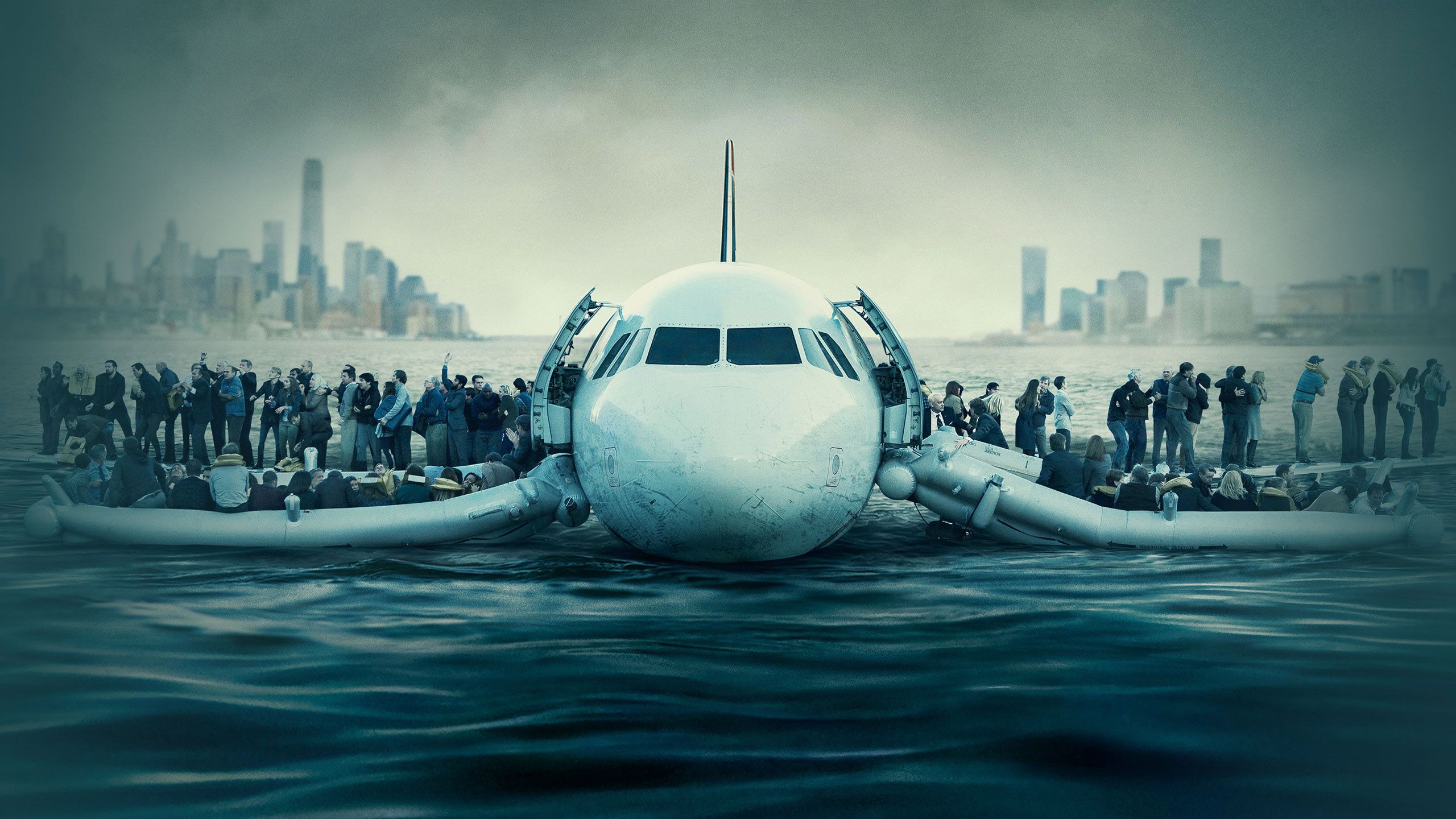
The name "Sully" refers most prominently to Captain Chesley "Sully" Sullenberger and the "Miracle on the Hudson," the 2009 emergency water landing of US Airways Flight 1549. This overview explores the technical execution of the ditching, the NTSB investigation, the 2016 cinematic adaptation, and the lasting impact on global aviation safety.
The Anatomy of US Airways Flight 1549
To understand the full scope of the "Sully" narrative, one must first analyze the precise sequence of events on January 15, 2009. What began as a routine domestic flight from New York’s LaGuardia Airport (LGA) to Charlotte Douglas International Airport (CLT) transformed into one of the most significant events in aviation history within minutes of takeoff.
At 3:25 PM EST, the Airbus A320-214, carrying 150 passengers and five crew members, struck a flock of Canada geese during its initial climb. This encounter occurred at an altitude of approximately 2,800 feet, roughly 4.5 miles north-northwest of LaGuardia. The ingestion of these large birds caused a catastrophic dual-engine failure, a "total loss of thrust" that left the aircraft as a 150,000-pound glider over one of the most densely populated areas on Earth.
Captain Chesley Sullenberger, a veteran pilot with over 19,000 flight hours, and First Officer Jeffrey Skiles were forced to make split-second decisions. The technical challenge was immense: the aircraft had lost both engines at a low altitude and low airspeed, leaving very little potential energy (altitude) to trade for kinetic energy (airspeed). After determining that a return to LaGuardia or a diversion to Teterboro Airport in New Jersey was impossible due to the loss of altitude, Sullenberger made the executive decision to ditch the aircraft in the Hudson River.
Technical Feat: The Physics of an Unpowered Water Landing
A "ditching"—a controlled emergency landing on water—is one of the most difficult maneuvers a pilot can attempt. In the case of Flight 1549, several technical factors converged to make the survival of all 155 people possible.
Aerodynamics and Glide Ratio
Without engine power, the Airbus A320 became a glider. The pilots had to maintain an optimal glide speed to maximize the distance they could cover while descending. If the nose were too high, the plane would stall and fall out of the sky; if too low, it would lose altitude too quickly to reach a safe landing zone. Sullenberger maintained a precise airspeed that allowed the aircraft to clear the George Washington Bridge and line up with the river’s reach.
The "Ditching" Button
The Airbus A320 features a specific "ditching" switch. When activated, this system closes all valves and openings below the waterline, including the outflow valve, the emergency ram air inlet, and the avionics cooling inlet. Closing these seals helps the fuselage remain buoyant for a longer period. While the crew was preoccupied with restarting the engines and maintaining control, the structural integrity of the A320 played a vital role in keeping the aircraft afloat long enough for the evacuation.
Impact Angle and Speed
The success of the landing depended on the angle of entry. If the wingtips had touched the water first, the plane would have cartwheeled. If the nose had been too low, the plane would have "dived" into the river. Sullenberger achieved a near-perfect pitch attitude, touching down with the tail slightly low and the wings level at approximately 125 knots (144 mph). This distributed the force of the impact along the reinforced underbelly of the fuselage.
The NTSB Investigation: Fact vs. Fiction
Following the event, the National Transportation Safety Board (NTSB) conducted a rigorous investigation to determine if the ditching was truly necessary or if the aircraft could have returned to an airport. This investigation became a central point of tension in the 2016 film Sully, though the real-world proceedings were less antagonistic than depicted on screen.
The NTSB utilized flight data recorders (black boxes) and sophisticated flight simulators to recreate the incident. Initial simulations suggested that a return to LaGuardia might have been possible. However, these simulations did not account for the "human factor"—the 20 to 30 seconds of startle response and decision-making time required by the pilots to process the emergency.
When the NTSB factored in a 35-second delay for pilot recognition and reaction, the simulations showed that the aircraft would have crashed short of any runway, likely resulting in a high-casualty event in a residential area. The final NTSB report, AAR-10/03, concluded that the pilots' decision to ditch in the Hudson was the most appropriate course of action given the circumstances.
Comparison of Emergency Water Landings
The "Miracle on the Hudson" is often compared to other ditching events to highlight its rarity and the skill involved.
| Flight / Event | Year | Aircraft | Fatalities | Primary Cause |
|---|---|---|---|---|
| US Airways 1549 | 2009 | Airbus A320 | 0 | Bird Strike / Dual Engine Failure |
| Tuninter Flight 1153 | 2005 | ATR 72 | 16 | Fuel Exhaustion / Improper Parts |
| Ethiopian 961 | 1996 | Boeing 767 | 125 | Hijacking / Fuel Exhaustion |
| ALM Flight 980 | 1970 | DC-9 | 23 | Fuel Exhaustion |
| Garuda Indonesia 421 | 2002 | Boeing 737 | 1 | Engine Flameout (Hail/Rain) |
As shown, Flight 1549 stands out as a "best-case scenario" outcome where everyone survived, largely due to the pilot's experience and the proximity of rescue vessels (the NY Waterway ferries).
Chesley Sullenberger: The Profile of a Modern Aviator
Captain Sullenberger’s background was instrumental in the outcome of Flight 1549. Before joining US Airways, he served as a fighter pilot in the United States Air Force, flying F-4 Phantom IIs. His military training instilled a disciplined approach to emergency procedures and "check-ride" precision.
Beyond his flying skills, Sullenberger was a student of aviation safety. He had served as a local air safety chairman for the Air Line Pilots Association (ALPA) and had participated in several NTSB investigations. This deep understanding of Crew Resource Management (CRM)—the effective use of all available resources, including equipment and personnel—allowed him and Skiles to work in perfect synchronization despite having only met days prior.
In 2026, Sullenberger is remembered not just as a pilot, but as a global advocate for transportation safety. After retiring from commercial aviation in 2010, he served as the U.S. Representative to the International Civil Aviation Organization (ICAO) and has continued to testify before Congress on matters ranging from pilot training standards to the certification of the Boeing 737 MAX.
The 2016 Film: Cinematic Representation of Trauma and Triumph
The 2016 film Sully, directed by Clint Eastwood and starring Tom Hanks, brought the event back into the global spotlight. While generally praised for its technical accuracy regarding the flight sequence, the film took creative liberties with the NTSB's role.
The Conflict of Human vs. Machine
The movie’s central theme is the defense of human intuition against cold, mathematical simulations. It portrays the NTSB investigators as prosecutorial figures attempting to prove Sullenberger was at fault. In reality, NTSB investigators stated that their goal was simply to gather data, and many expressed discomfort with their portrayal as "villains."
Capturing Post-Traumatic Stress
One of the film's strengths is its depiction of the psychological aftermath. Sullenberger is shown suffering from "intrusive thoughts" and nightmares of the plane crashing into Manhattan buildings. This highlighted an often-overlooked aspect of the event: the mental health of the survivors and the "survivor's guilt" or trauma experienced by the crew, even in the wake of a successful outcome.
Global Impact on Aviation Safety Standards
The legacy of "Sully" extends far beyond the 208 seconds of the flight itself. It led to several critical updates in aviation regulations and industry practices that remain in effect in 2026.
- Bird Strike Certification: The FAA and international regulators updated the standards for engine bird ingestion tests. It was discovered that the Canada geese involved in the 1549 incident were significantly heavier than the birds used in standard engine certification tests at the time.
- Low-Altitude Dual Engine Failure Training: Prior to 2009, many pilot training programs focused on engine failures at high altitudes, where there is more time to troubleshoot. Flight 1549 forced a shift in simulator training to include low-altitude "double-engine-out" scenarios.
- Checklist Optimization: The NTSB found that the "Dual Engine Failure" checklist was too long for a low-altitude emergency. The industry has since moved toward "Quick Reference Handbooks" (QRH) that prioritize critical actions (like getting the APU started for electrical power) at the very top of the list.
- Passenger Safety Briefings: The incident highlighted the importance of bracing for impact. Analysis of passenger injuries (mostly minor) helped refine the "brace position" recommendations to prevent limb flailing and head trauma during water impacts.
Frequently Asked Questions
What happened to the aircraft after it was pulled from the Hudson?
The Airbus A320 (N106US) was eventually moved to the Carolinas Aviation Museum (now the Sullenberger Aviation Museum) in Charlotte, North Carolina. It remains on permanent display as a centerpiece for aviation safety education.
How many people were injured in the "Miracle on the Hudson"?
While there were no fatalities, there were several injuries. Five people were seriously injured, including a flight attendant whose leg was deeply lacerated. Many passengers suffered from hypothermia due to the freezing water temperatures (36°F / 2°C) and the external air temperature (21°F / -6°C).
Did the engines really fail because of birds?
Yes. The NTSB investigation recovered organic remains from both engines. DNA analysis confirmed that the engines had ingested several Canada geese. The impact was so severe that it caused the internal fan blades to bend and the engines to lose the ability to compress air, resulting in a total loss of thrust.
Was First Officer Jeff Skiles ever recognized?
Absolutely. While Sullenberger became the face of the event, he has consistently credited Jeffrey Skiles for his essential role. Skiles was the "Pilot Flying" when the bird strike occurred and immediately transitioned to the emergency checklist, performing his duties flawlessly under extreme pressure. Skiles continued his career in aviation and became a leader in the EAA (Experimental Aircraft Association).
What is the "Sully" rule in aviation?
While not a formal regulation named the "Sully Rule," the term is often used informally to refer to the "1,500-hour rule." This FAA regulation (enhanced by the Airline Safety and Federal Aviation Administration Extension Act of 2010) increased the required flight hours for commercial co-pilots, partly influenced by the public's realization of how much veteran experience mattered during the Flight 1549 crisis.
Strategic Recommendation for Further Research
For those seeking a deeper technical understanding of the "Sully" event, the primary source remains the NTSB Accident Report AAR-10/03. It provides a granular look at the flight data, cockpit voice recordings, and structural analysis of the aircraft. For a more personal perspective on the human factors of the incident, Captain Sullenberger’s memoir, Highest Duty: My Search for What Really Matters, offers insight into the lifelong preparation required for a few minutes of crisis management. In 2026, as the industry moves toward increased automation, the story of Flight 1549 remains the definitive case study for why human expertise and decisive leadership remain irreplaceable in the cockpit.
Image Gallery
Select an image to open it in a new tab.

Akira Tanaka
International Academic Trends Correspondent
