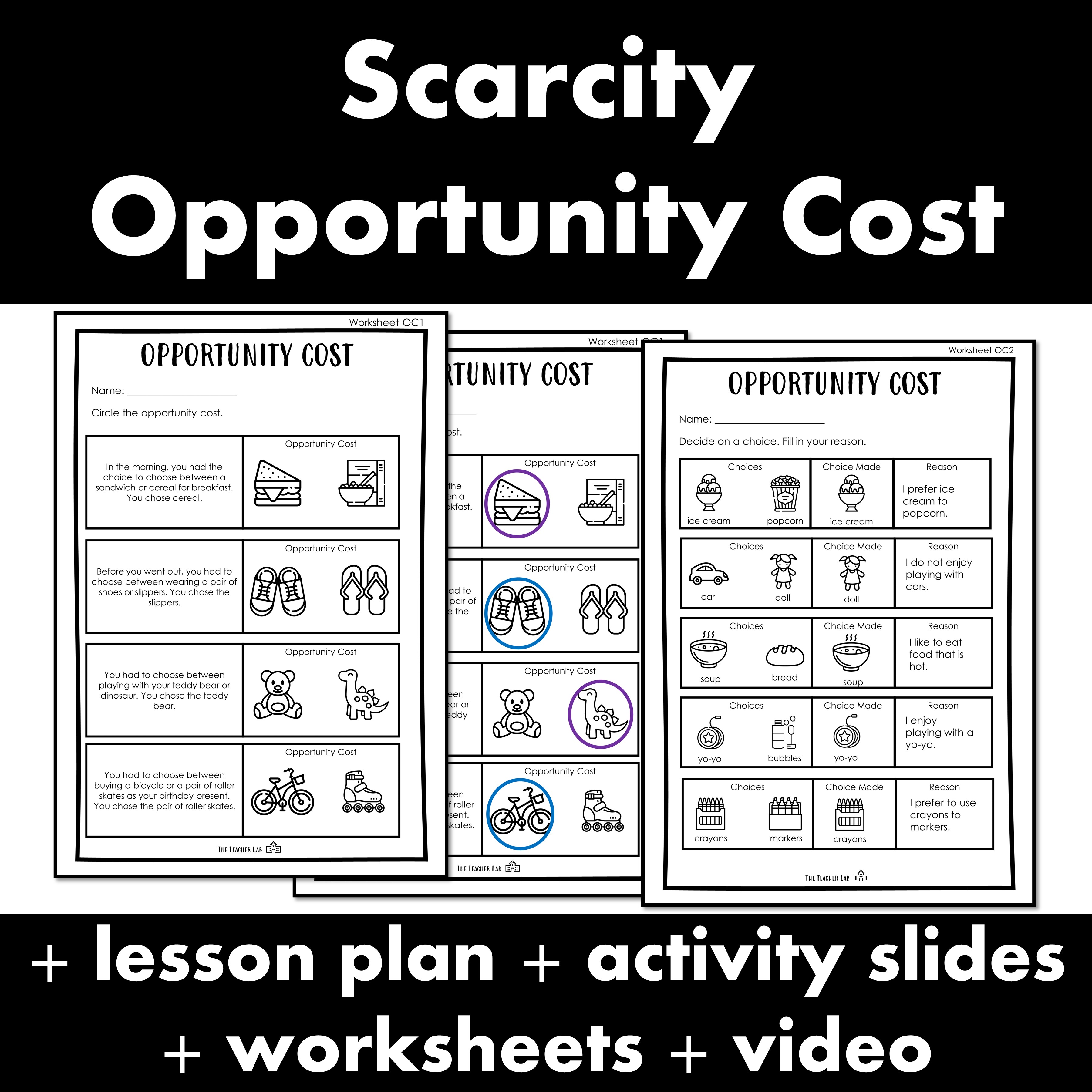
In travel, opportunity cost is the value of the next best alternative you sacrifice when you make a specific choice. For example, if you choose a 12-hour layover to save $200 on airfare, the opportunity cost is the full day of sightseeing, relaxation, or cultural experiences you gave up at your destination.
Understanding opportunity cost is one of the most transformative tools for any traveler in 2026. While most people focus exclusively on the "out-of-pocket" price—the literal dollars deducted from a bank account—smart travelers recognize that every decision involves a trade-off. Time, energy, and access are currencies just as valuable as cash. When you spend these resources on one activity, you are inherently deciding not to spend them on another.
By analyzing travel through the lens of opportunity cost, you move away from being a "cheap" traveler and toward being a "value-optimized" traveler. This distinction is vital for making the most of limited vacation days and hard-earned savings.
The Classic Example: Flight Selection and the Time-Money Trade-off
The most common and relatable example of opportunity cost in travel occurs during the booking phase: choosing between a direct flight and a connecting flight with a long layover.
Imagine you are planning a trip from New York to London. You find two options:
- A direct flight costing $900 that takes 7 hours.
- A connecting flight costing $650 with a 10-hour layover in Reykjavik, totaling 19 hours of travel time.
On the surface, the connecting flight seems like the "winner" because it saves you $250. However, the opportunity cost of choosing the cheaper flight is 12 hours of your life. To determine if this is a good deal, you must ask what those 12 hours are worth to you.
Calculating the "Travel Hourly Rate"
If you have a 10-day vacation, those 12 hours represent 5% of your total trip time. If your entire trip (flights, hotels, food, activities) costs $4,000, each hour of your vacation is effectively "costing" you about $16.60 in overhead (calculated as $4,000 divided by 240 hours). By spending 12 extra hours in transit, you are "wasting" roughly $200 of the overhead you already paid for.
When you add the $200 in "lost overhead" to the potential cost of airport meals and the physical exhaustion that comes with a 19-hour travel day, the $250 savings evaporates. The opportunity cost—a full evening in London, a good night’s sleep, and an energetic first day of sightseeing—is often far higher than the cash saved.
Accommodation: Proximity vs. Price
Another significant example of opportunity cost involves where you choose to stay. Travelers are often tempted by lower hotel rates in the suburbs or outskirts of a major city.
Suppose you are visiting Paris. You have two choices:
- Option A: A hotel in the city center (Le Marais) for $300 per night.
- Option B: A hotel in a distant suburb for $150 per night.
Choosing Option B saves you $150 per night. Over a four-night stay, that is $600. However, the opportunity cost is the time and energy spent commuting. If the suburban hotel requires a 50-minute train ride each way, you are spending nearly two hours every day just sitting on a train.
Beyond the 8 hours of lost time over four days, you lose the ability to "pop back" to your hotel for a quick rest, a shower, or to drop off shopping bags. The opportunity cost of the cheaper hotel includes the flexibility of your schedule and the spontaneous evening walks along the Seine that you are now too tired or too far away to enjoy. In 2026, with urban transit costs rising in many global hubs, the actual monetary savings of Option B may also be lower than they appear once regional rail passes are factored in.
The "Everything" Trap: Itinerary Depth vs. Breadth
Opportunity cost also applies to how you structure your itinerary. Many travelers suffer from the "FOMO" (Fear of Missing Out) and try to squeeze too many locations into a single trip.
Consider a 14-day trip to Italy.
- Strategy 1: Visit Rome, Florence, Venice, Amalfi, and Sicily.
- Strategy 2: Visit only Rome and Florence.
If you choose Strategy 1, the opportunity cost is depth. By choosing to see "everything," you sacrifice the ability to have a slow lunch in a Roman piazza, the chance to discover a hidden leather shop in Florence, or the energy to enjoy the nightlife. You spend a massive portion of your 14 days packing, unpacking, checking into hotels, and sitting on trains or domestic flights.
The opportunity cost of the fifth city is the quality of the experience in the first four. In 2026, as "slow travel" becomes the preferred method for avoiding tourist burnout, understanding this trade-off is essential. Every new destination added to a list subtracts time from the destinations already on it.
The Hidden Cost of "Free" Attractions
In the world of travel, "free" often comes with a high opportunity cost in the form of time. This is most evident in long queues for famous landmarks or museums that offer free admission days.
If a museum normally costs $25 but is free on the first Sunday of the month, the line may be three hours long. If you choose to wait in that line, the opportunity cost is three hours of your vacation. If you are an average traveler who values their vacation time at $30 or $40 an hour, you are essentially "paying" $90–$120 in time to save $25.
For many, it is more economically rational to pay the admission fee on a different day or purchase a "skip-the-line" ticket. The $20 premium for a fast-pass is not an "extra" expense; it is a purchase of time, allowing you to reclaim the opportunity to see another site or enjoy a relaxed meal.
Comparing Travel Decisions via Opportunity Cost
To visualize these trade-offs, we can look at common scenarios where travelers often choose the "cheaper" option without considering the hidden costs.
| Decision Scenario | Direct Cash Saved | Opportunity Cost (The Sacrifice) | True Value Assessment |
|---|---|---|---|
| Budget Bus vs. Fast Train | $40 - $60 | 4-6 hours of travel time + physical comfort | Usually poor value for short trips; good for overnight "sleeper" routes. |
| Suburban AirBnB vs. Central Hotel | $100/night | 90+ mins daily commute + loss of flexibility | Poor value if the commute exceeds 45 minutes or costs >$20. |
| Self-Driving vs. Private Transfer | $100 - $200 | Navigation stress, parking fees, inability to sightsee while moving | Good value for groups; poor value for solo travelers in complex cities. |
| Packing Light vs. Checked Bag | $35 - $70 | Wardrobe variety, souvenir space | High value; saves 45 mins at baggage claim and provides easier mobility. |
| Cooking in vs. Dining Out | $50/day | Local cultural immersion, 1-2 hours of grocery shopping/prep | Good for long-term stays (7+ days); poor for 48-hour city breaks. |
Psychological Factors and Decision Fatigue
Opportunity cost isn't just about time and money; it's also about mental bandwidth. In 2026, the sheer volume of information available—from AR-enhanced travel apps to real-time social media reviews—can lead to decision fatigue.
When you spend hours obsessing over whether to book "Cafe A" or "Cafe B" to save $5 on a sandwich, the opportunity cost is your peace of mind and the joy of spontaneity. Over-researching is a classic example of an invisible opportunity cost. The three hours you spent reading 50 reviews of a gelato shop is time you could have spent actually walking through a park or talking to a local.
Expert travelers learn to "satisfice" (choose an option that is good enough) for low-stakes decisions to save their mental energy for high-stakes choices, such as which region to visit or which major excursion to book.
How to Apply Opportunity Cost to Your 2026 Travel Planning
To use this concept effectively, you don't need a degree in economics. You simply need to change the question you ask yourself. Instead of asking, "How much does this cost?" ask, "What am I giving up by choosing this?"
- Assign a Value to Your Time: Before you start booking, decide what an hour of your vacation is worth. Is it $20? $50? $100? When faced with a choice that saves money but costs time, use this number to see if the math adds up.
- Evaluate the "Recovery Time": A cheap 3:00 AM flight might save you $100, but if it means you arrive exhausted and need a 5-hour nap upon arrival, you haven't just lost the early morning hours—you've lost the entire first day.
- Consider Physical Energy: If you are over 40 or traveling with children, physical energy is a finite resource. The opportunity cost of a "budget" walking tour in the heat might be the energy required to enjoy a nice dinner later that evening.
- Factor in Transaction Costs: Don't forget the "cost of the cost." A cheaper airport that is 60 miles away from the city center requires a taxi or bus ride. The cash cost and the time cost of that transfer often outweigh the savings on the flight ticket.
Frequently Asked Questions
What is the simplest definition of opportunity cost for travelers?
Opportunity cost is the "lost" value of the option you didn't choose. If you spend your afternoon visiting a museum, the opportunity cost is the beach time or shopping experience you could have had during those same hours. It reminds you that time is a finite resource.
Is it always better to spend more money to save time?
No. It depends on your personal "resource scarcity." If you are a college student with plenty of time but very little money, the opportunity cost of a long bus ride is low because your cash is more precious than your hours. If you are a working professional with only five days of leave, your time is more precious than your cash, making the "time-saving" option more valuable.
How does opportunity cost apply to "slow travel"?
Slow travel is actually a way to manage opportunity cost by reducing "transit waste." By staying in one place longer, you minimize the opportunity cost of packing and traveling between cities, allowing you to maximize the value of "immersion" and "relaxation."
Can opportunity cost be calculated in dollars?
Yes, by using the "Travel Hourly Rate" method. Total the entire cost of your trip (including lost wages if you are taking unpaid leave) and divide it by the total number of waking hours you have on vacation. This gives you a dollar value for every hour, helping you decide if "saving $50" is worth "losing 3 hours."
Does opportunity cost include emotional factors?
Absolutely. The stress of navigating a complex transit system to save a few dollars has an emotional opportunity cost. If the "cheaper" option leaves you frustrated, tired, or arguing with your travel partner, the "cost" is the harmony and enjoyment of your trip.
Final Recommendation
When planning your next journey, stop viewing your budget as a list of prices and start viewing it as a distribution of resources. A simple example of opportunity cost in travel—like choosing the direct flight over the layover—proves that the most expensive way to travel is often the one that wastes your most precious, non-renewable resource: your time. For your next trip in 2026, prioritize the experiences that offer the highest "return on time," even if they require a slightly higher upfront investment.
Image Gallery
Select an image to open it in a new tab.


Ingrid Bjornson
Global Cyber Policy and Regulation Analyst
