A Comprehensive Overview of the Japan Police Force: Structure, Ranks, and Operations in 2026

Japan’s policing system is a sophisticated, decentralized model that balances national oversight with local execution. In 2026, the force continues to rely on its iconic Kōban system while aggressively integrating digital forensics and AI-driven predictive policing to maintain one of the world's lowest crime rates across its 47 prefectures through the National Police Agency and local departments.
The Dual-Layered Governance of Japanese Law Enforcement
The organizational structure of law enforcement in Japan is unique among developed nations, characterized by a hybrid system of national coordination and local autonomy. This structure ensures that while policy, standards, and specialized communications remain uniform across the country, the actual day-to-day enforcement is tailored to the specific needs of each prefecture.
The National Public Safety Commission (NPSC)
At the highest level sits the National Public Safety Commission. This is a civilian body designed to ensure the democratic administration and political neutrality of the police. It operates under the jurisdiction of the Cabinet. The Commission consists of a Chairperson (a Minister of State) and five members appointed by the Prime Minister with the consent of both houses of the Diet. The NPSC does not manage daily police operations but focuses on administrative oversight, policy making, and the appointment of high-ranking police officials.
The National Police Agency (NPA)
The National Police Agency (NPA) serves as the central coordinating body. It is the "brain" of the Japanese police system. Unlike the FBI in the United States, the NPA does not have its own operational "agents" who routinely walk the streets making arrests. Instead, its role is to supervise the 47 Prefectural Police departments.
The NPA is responsible for:
- Developing national police budgets and legislation.
- Coordinating large-scale disasters and internal security threats.
- Managing the national police communications network.
- Conducting high-level criminal research and forensic science development.
- Standardizing training, equipment, and recruitment across the country.
Prefectural Police (PP)
The actual "boots on the ground" belong to the Prefectural Police. Japan is divided into 47 prefectures, each of which has its own independent police force. The most famous of these is the Tokyo Metropolitan Police Department (MPD), known locally as the Keishicho. Each Prefectural Police force is responsible for patrolling, traffic control, criminal investigations, and community safety within its borders.
While these forces are "local," they are not entirely disconnected from the national level. High-ranking officers in prefectural forces are often NPA officials on secondment, which ensures a seamless flow of information and standardized command protocols between the local and national levels.
The Kōban and Chuzaisho: The Pillars of Community Policing
The most distinctive feature of the Japan Police Force is the Kōban system. As of 2026, this community-centric model remains the gold standard for preventative policing and is frequently studied by international law enforcement agencies.
Urban Kōban (Police Boxes)
A Kōban is a small neighborhood police station, typically located near major intersections, railway stations, or shopping districts. They are staffed 24 hours a day by a rotating team of officers. The primary goal of the Kōban is to foster a sense of security and visibility.
Officers assigned to a Kōban perform several critical tasks:
- Patrolling: They walk or cycle through the neighborhood to deter crime.
- Public Assistance: They provide directions, handle lost-and-found items, and help intoxicated citizens get home safely.
- Initial Response: They are the first on the scene for accidents or crimes before detectives or specialized units arrive.
- Home Visits: Officers periodically visit households and businesses in their jurisdiction to share safety tips and gather information about neighborhood concerns.
Rural Chuzaisho (Residential Police Boxes)
In rural areas, the equivalent of the Kōban is the Chuzaisho. Unlike the urban police box, a Chuzaisho is typically a residence where a single officer lives with their family. The officer is integrated into the village life, providing a constant law enforcement presence while building deep, personal ties with the local community. This integration is key to the low crime rates in rural Japan, as the officer is seen as a trusted neighbor rather than an external authority figure.
Hierarchy, Ranks, and the Career Path
The Japan Police Force operates under a rigid, nine-rank hierarchical system. A police officer's career trajectory is heavily influenced by the competitive examination they take upon entry.
| Rank (English) | Japanese Title | Primary Role/Responsibility |
|---|---|---|
| Commissioner General | Keisatsu-chō Kanbō | Head of the NPA (not a formal rank, but a unique position). |
| Superintendent General | Keishi-sōkan | Head of the Tokyo Metropolitan Police Department. |
| Senior Commissioner | Keishi-kan | High-level regional or NPA leadership. |
| Commissioner | Keishi-chō | Chiefs of smaller Prefectural Police forces. |
| Assistant Commissioner | Keishi-sei | Senior management in large departments. |
| Superintendent | Keishi | Management of police stations or specialized divisions. |
| Chief Inspector | Keibu | Mid-level management; section chiefs. |
| Inspector | Keibu-ho | Frontline supervisors and lead investigators. |
| Sergeant | Keisatsu-junsa-buchō | Field supervisors and experienced patrol officers. |
| Senior Patrol Officer | Junsa-chō | Honorary rank for experienced officers. |
| Patrol Officer | Keisatsu-junsa | Entry-level officers starting their careers. |
Recruitment Categories
In 2026, there remain two primary entry paths:
- The "National Type I" Path (The Career Track): These are individuals who pass the highest-level civil service examinations. They start as Assistant Inspectors and are fast-tracked into senior leadership roles within the NPA.
- The Prefectural Path (The Non-Career Track): Most officers enter at this level, starting as Patrol Officers after graduating from a Prefectural Police Academy. While they can rise through the ranks via internal promotion exams, reaching the very top levels of the NPA is rare for this group.
Specialized Units and Modern Capabilities
While the Kōban officer is the face of the force, Japan maintains highly specialized units for high-risk and complex scenarios.
The Kidotai (Riot Police)
The Kidotai are elite units trained for crowd control, disaster relief, and anti-terrorism. They are recognizable by their heavy blue protective gear and specialized vehicles. In 2026, their role has expanded significantly into disaster management, utilizing advanced robotics and drones to navigate search-and-rescue operations following earthquakes or typhoons.
SAT (Special Assault Team)
The SAT is Japan’s premier counter-terrorism unit. They are trained for hostage rescue, aircraft hijackings, and dealing with armed criminals. Their operations are shrouded in secrecy, and they are only deployed in the most extreme circumstances where standard police tactics would be insufficient.
Cyber Police and Digital Transformation
With the rise of sophisticated financial crimes and state-sponsored hacking, Japan established a dedicated Cyber Police Bureau within the NPA. By 2026, this unit has become one of the most well-funded branches. They focus on:
- Cryptocurrency fraud and money laundering.
- Protection of critical national infrastructure.
- Combating "Dark Web" marketplaces.
- AI-driven analysis of criminal networks.
Legal Framework and Police Powers
The authority of the Japan Police Force is governed by the Police Law and the Code of Criminal Procedure. Understanding the limits and extensions of these powers is essential for a comprehensive overview.
Arrest and Detention: The 23-Day Rule
One of the most discussed aspects of the Japanese criminal justice system is the detention period. When a suspect is arrested, the police can hold them for up to 48 hours. If the prosecutor believes further investigation is needed, they can request a judge to authorize "kuryu" (detention). This can be extended for up to 20 additional days, totaling 23 days before an official indictment must be made.
During this time, suspects are often interrogated without a lawyer present. While this system has contributed to a 99% conviction rate, it has also faced international criticism regarding human rights and "hostage justice" (the practice of denying bail to those who do not confess).
Use of Force
Japanese police are strictly trained in the principle of "proportionality." While officers carry firearms (typically the 38-caliber Sakura or Smith & Wesson revolvers), the actual discharge of a weapon is extremely rare and subject to intense scrutiny. Instead, officers are highly trained in Taiho-jutsu—a specialized martial art designed for arresting and subduing suspects with minimal injury.
Equipment and Technology in 2026
By 2026, the technological landscape of the Japan Police Force has evolved to incorporate "Society 5.0" initiatives.
- Predictive Policing AI: Utilizing historical data to deploy patrols to high-risk areas before crimes occur.
- Body-Worn Cameras: Following global trends, most frontline officers in 2026 are equipped with body cameras to ensure transparency during interactions.
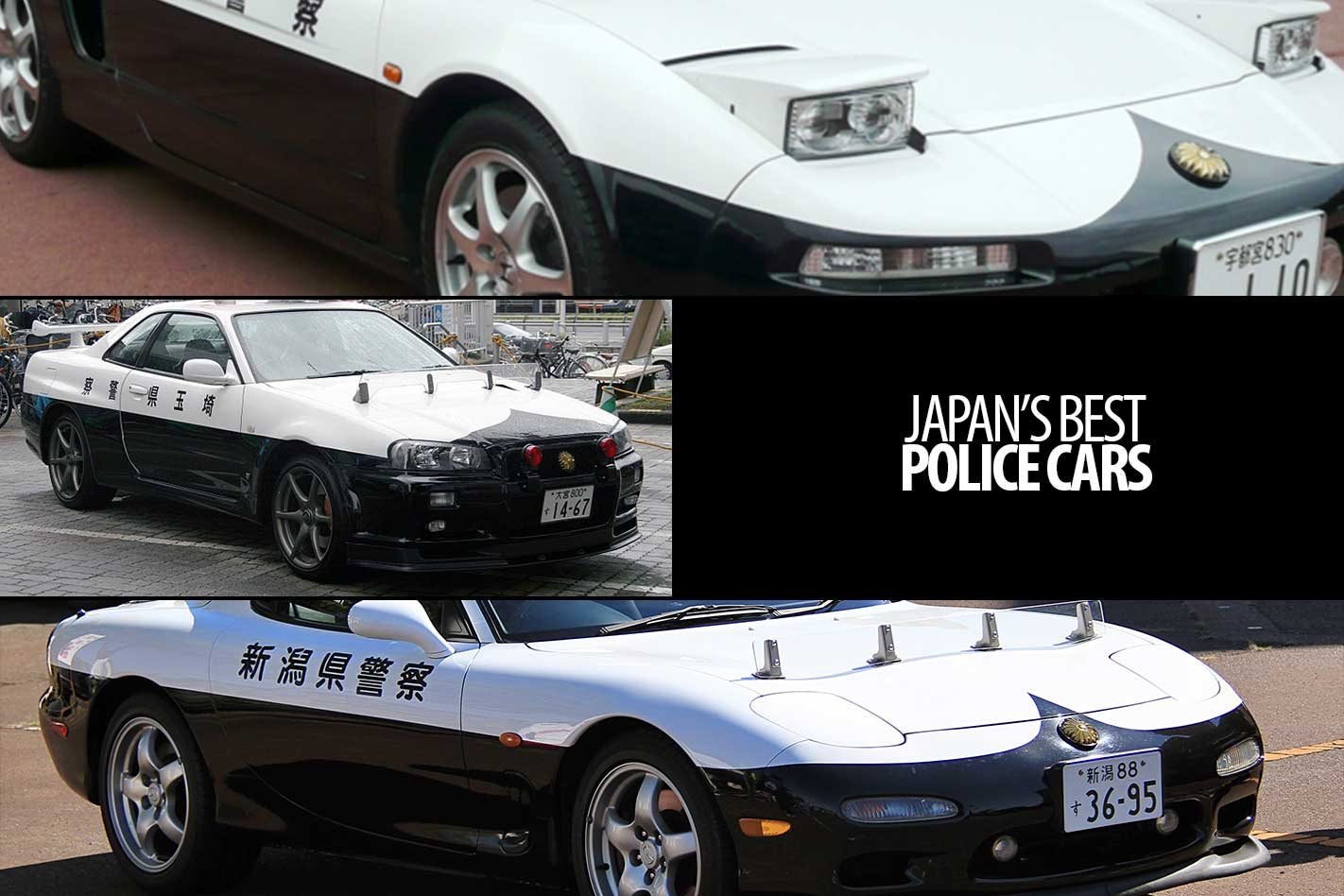
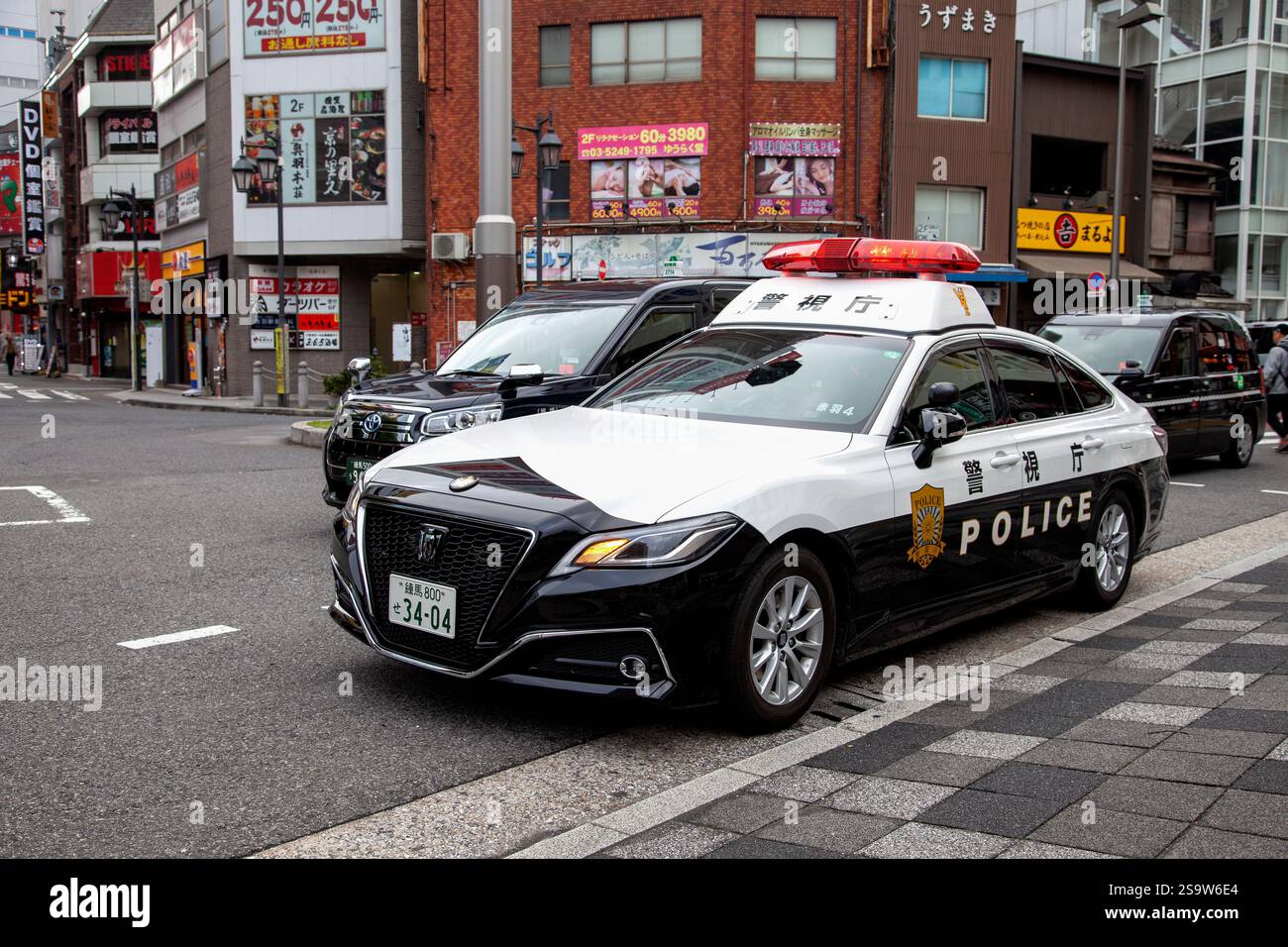
- Electric Patrol Vehicles (EVs): In line with Japan's carbon neutrality goals, many urban patrol cars have been replaced with high-performance electric models.
- Biometric Identification: Real-time facial recognition integrated with street cameras is utilized in major transit hubs like Shinjuku and Shibuya to identify known offenders or missing persons.
Public Perception and Social Role
The relationship between the Japanese public and the police is generally cooperative. The police are seen not just as enforcers, but as a general service agency. It is common to see people asking police for help with mundane tasks, such as finding a lost umbrella or fixing a broken bicycle.
However, challenges remain. The force is under pressure to modernize its views on gender (as of 2026, the percentage of female officers is growing but still lags behind some Western nations) and its handling of domestic violence and stalking cases, which historically were treated as private family matters but are now prioritized under new legislative mandates.
Comparison: Japan Police vs. Other Systems
To understand the scale and focus of Japan’s force, it is helpful to compare it with other international models.
| Feature | Japan (NPA/PP) | United States (Local/State/Federal) | United Kingdom (Constabularies) |
|---|---|---|---|
| Centralization | High (National oversight) | Low (Thousands of independent agencies) | Medium (Regional forces with Home Office oversight) |
| Primary Philosophy | Community (Kōban) | Reactive/Enforcement | Policing by Consent |
| Firearm Usage | Extremely Low | High | Restricted (Specialist units only) |
| Primary Transport | Patrol cars, bikes, foot | Primarily patrol cars | Cars, foot, horse |
| Training Duration | 6–10 months (Academy) | 3–6 months (Average) | 2 years (Probationary) |
Frequently Asked Questions
Can a non-Japanese citizen join the Japan Police Force?
No. In 2026, Japanese citizenship remains a mandatory requirement for joining the police force. This is because police officers exercise "public authority," a role reserved for citizens under Japanese law. However, police departments do hire foreign nationals as civilian consultants or "interpreting officers" to assist with cases involving non-Japanese speakers.
How do I contact the police in Japan?
For emergencies requiring immediate police response, the number is 110. For non-emergency consultations or reporting lost items, it is better to visit the nearest Kōban or call the dedicated consultation line at #9110. Most major city police boxes in 2026 have tablets with translation software to assist foreign residents and tourists.
Are Japanese police officers allowed to stop and search anyone?
Under the Police Duties Execution Act, an officer may stop and question a person if there is "reasonable ground" to suspect they have committed or are about to commit a crime. While "voluntary" searches are common, you have the right to refuse a search of your person or belongings unless the officer has a warrant or you are under arrest. However, persistent refusal often leads to the officer requesting you to accompany them to the station for further questioning.
What is the most common crime the police deal with?
In 2026, while violent crime remains exceptionally low, the most common issues are bicycle theft, petty larceny, and increasingly, specialized fraud (telephone scams targeting the elderly). Traffic violations also make up a significant portion of daily police activity.
Practical Recommendations for Residents and Visitors
- Register Your Bicycle: Police frequently conduct random bicycle registration checks. Ensure your bike is registered at the time of purchase to avoid suspicion of theft.
- Carry Identification: As a foreign national, you are legally required to carry your Residence Card (Zairyū Card) or Passport at all times. Police may ask to see it during routine checks.
- Utilize the Kōban: Do not hesitate to use the Kōban for directions or if you feel unsafe. They are designed to be accessible community resources.
- Report Lost Items: Japan’s lost-and-found system is highly efficient. If you lose something, report it to a Kōban; there is a surprisingly high chance it will be returned.
The Japan Police Force represents a unique blend of traditional community integration and cutting-edge technology. By understanding its structure and legal boundaries, residents and visitors can navigate the country with confidence, knowing they are supported by one of the world's most disciplined law enforcement systems.
Image Gallery
Select an image to open it in a new tab.




Ingrid Bjornson
Global Cyber Policy and Regulation Analyst
