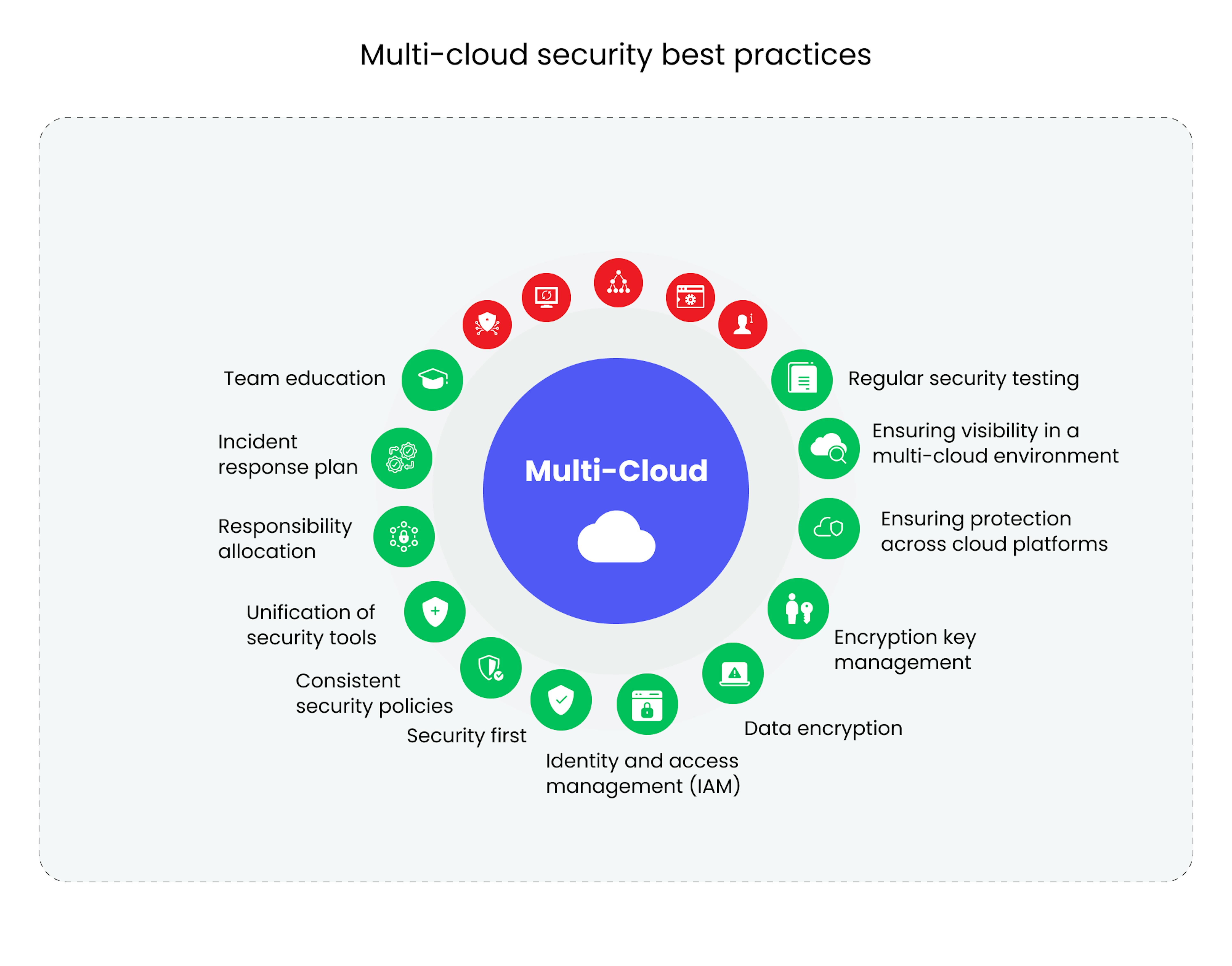
F5’s multi-cloud security solutions provide a unified platform to protect applications and APIs across on-premises, public cloud, and edge environments. By leveraging the F5 Distributed Cloud Services, organizations can enforce consistent security policies, mitigate sophisticated bot attacks, and ensure robust API protection, effectively reducing the operational complexity of managing disparate security silos in a heterogeneous infrastructure.
The Architecture of Multi-Cloud Security in 2026
As we move through 2026, the landscape of enterprise IT has shifted from "cloud-first" to "distributed-everything." Organizations no longer rely on a single cloud provider; instead, they utilize a mosaic of AWS, Azure, Google Cloud Platform (GCP), and private data centers. This fragmentation creates a significant "security gap"—a scenario where security policies are inconsistent across different platforms, leading to vulnerabilities that attackers are eager to exploit.
F5 addresses this challenge by decoupling security from the underlying infrastructure. Traditionally, security was tied to the specific environment (e.g., using AWS WAF for AWS workloads). However, F5’s approach centers on a unified security stack that follows the application, regardless of where it resides. This is primarily achieved through F5 Distributed Cloud Services (XC), a SaaS-based platform that provides a global network and a centralized management console.
The core philosophy of F5’s 2026 security strategy is built on three pillars:
- Uniformity: Applying the same Web Application and API Protection (WAAP) rules across all clouds.
- Visibility: Gaining a single-pane-of-glass view into traffic patterns and threats globally.
- Automation: Integrating security into the CI/CD pipeline so that protection is deployed alongside the code.
Core Components of F5 Distributed Cloud WAAP
The flagship offering for multi-cloud environments is the F5 Distributed Cloud Web Application and API Protection (WAAP). This solution integrates several critical security functions into a single, high-performance service.
Web Application Firewall (WAF)
F5’s WAF technology, evolved from the industry-standard BIG-IP Advanced WAF, uses behavioral analytics and signature-based detection to block the OWASP Top 10 threats. In 2026, this has matured to include heavy reliance on AI-driven threat intelligence. The WAF doesn't just look for known "bad" strings; it analyzes the intent of the traffic. By deploying F5 Distributed Cloud WAF, a security team can write a policy once and push it to instances running in any cloud, ensuring that a "Critical" rule in Azure is identical to the one protecting an on-prem legacy app.
API Security
APIs are the backbone of modern microservices architecture, but they are also the most targeted entry point for data breaches. F5’s multi-cloud solutions emphasize API Discovery and Protection. This feature automatically maps all API endpoints—even "shadow APIs" that developers might have deployed without official oversight. Once discovered, F5 applies schema validation to ensure that only properly formatted requests reach the backend, effectively neutralizing injection attacks and broken object-level authorization (BOLA) attempts.
Bot Defense
By 2026, bot traffic has become indistinguishable from human traffic using standard tools. F5 Distributed Cloud Bot Defense utilizes telemetry and machine learning to identify sophisticated "Grade C" bots that can mimic human keystrokes and mouse movements. This is crucial for multi-cloud retailers and financial institutions that face credential stuffing and inventory hoarding attacks. The solution works by collecting hundreds of signals from the user's browser or mobile device, processing them in the F5 global cloud, and returning a "pass/fail" verdict in milliseconds.
DDoS Mitigation
Multi-cloud environments are often targets for massive Distributed Denial of Service (DDoS) attacks. F5 provides multi-layered protection, capable of scrubbing traffic at the edge of the network before it ever reaches the application's home cloud. This prevents the "cloud bill shock" that occurs when an application scales infinitely to handle an incoming attack, consuming costly cloud resources.

Comparing F5 Security Deployment Options
Depending on the specific needs of an organization—whether they require deep packet inspection for legacy apps or high-speed protection for microservices—F5 offers different deployment vehicles.
| Feature | F5 Distributed Cloud (XC) | F5 BIG-IP (Next/Advanced) | F5 NGINX App Protect |
|---|---|---|---|
| Primary Use Case | SaaS-based multi-cloud & edge | High-performance DC/Hybrid | DevSecOps & Microservices |
| Management | Centralized SaaS Console | Local or BIG-IQ/Central | CI/CD Integrated (YAML) |
| Deployment Speed | Minutes (Global) | Hours/Days (Infrastructure) | Seconds (Container-native) |
| Threat Intelligence | F5 Labs (Real-time) | Periodic Updates | Shared F5 Intelligence |
| API Protection | Automated Discovery | Advanced Schema Validation | Lightweight Signature-based |
| Ideal For | Global consistency, low ops | Complex legacy app requirements | High-speed Kubernetes traffic |
Strategic Integration: BIG-IP Next and NGINX
While the Distributed Cloud is the "glue" for multi-cloud, F5’s software-defined hardware and container-native tools remain vital.
BIG-IP Next in the Multi-Cloud Era
In 2026, BIG-IP Next represents the modern evolution of the classic BIG-IP platform. It is designed to be more modular and lightweight than its predecessors. For organizations that must maintain certain workloads on-premises due to data sovereignty or latency requirements, BIG-IP Next provides the heavy-duty security processing needed for complex traffic. It integrates seamlessly with the F5 Distributed Cloud, allowing for a hybrid security model where the SaaS layer handles global edge traffic while BIG-IP handles deep, localized inspection.
NGINX App Protect for "Shift Left" Security
Security is no longer just the responsibility of the SecOps team. In a multi-cloud environment, developers need to bake security into their applications. NGINX App Protect is a lightweight security module that runs directly on the NGINX Plus ingress controller in Kubernetes environments. It uses the same core WAF engine as BIG-IP and F5 XC, meaning that the security logic used by the developers during the build phase is the same logic used by the security team in production. This alignment reduces "false positives" and ensures that security does not become a bottleneck for deployment.
Implementation Steps for Multi-Cloud Consistency
Achieving a secure multi-cloud posture using F5 solutions typically follows a structured deployment path:
- Inventory and Discovery: Use F5 Distributed Cloud to scan existing cloud environments. Identify where applications live and which APIs are exposed.
- Define a "Global Baseline" Policy: Create a standard WAF policy that includes protection against common threats (OWASP Top 10, common bot signatures).
- Establish Cloud-to-Cloud Connectivity: Utilize F5’s global private network to connect VPCs/VNets across different cloud providers. This creates a secure "overlay" network that bypasses the public internet where possible.
- Deploy Edge Protection: Point DNS to the F5 Distributed Cloud Global Network. Traffic is now scrubbed at the F5 regional edge—closest to the user—before being routed to the application, regardless of its host cloud.
- Enable Continuous Monitoring: Use the centralized observability dashboard to monitor for anomalies. F5’s AI-driven insights can highlight a new attack pattern emerging in one region and automatically update the policy globally to protect other regions.
Challenges and Considerations
While F5 provides a comprehensive suite, multi-cloud security is not without its hurdles. One of the primary challenges is latency. Routing traffic through a global security network can introduce milliseconds of delay. However, F5 mitigates this by maintaining a massive global footprint of Points of Presence (PoPs), ensuring that the "security hop" is as close to the end-user as possible.
Another consideration is cost management. SaaS-based security is often priced based on throughput or the number of protected applications. Organizations must carefully audit their traffic to ensure they are not over-provisioning services. F5 has addressed this in 2026 with more granular, consumption-based pricing models that allow enterprises to scale their security spend alongside their cloud consumption.
Finally, the skills gap remains a factor. Managing a multi-cloud environment requires expertise in both networking and security. F5’s move toward "Low-Code/No-Code" security configuration in their Distributed Cloud console aims to empower generalist IT teams to manage complex security tasks that previously required specialized WAF engineers.
Frequently Asked Questions
Does F5 Distributed Cloud replace the need for cloud-native WAFs?
While AWS or Azure WAFs provide basic protection, they are often siloed. F5 Distributed Cloud replaces the need to manage these individual tools by providing a superior, unified layer of protection that works identically across all clouds. This reduces management overhead and eliminates the "weakest link" problem where one cloud's security is configured differently than another's.
How does F5 handle encrypted traffic in a multi-cloud setup?
F5 solutions are designed for high-performance SSL/TLS termination and inspection. F5 Distributed Cloud can manage certificates centrally and decrypt traffic at the edge to perform deep packet inspection for malware or data exfiltration before re-encrypting it and sending it to the backend application.
Can F5 security solutions protect legacy applications on-premises?
Yes. F5’s hybrid approach is one of its core strengths. By deploying a BIG-IP Next instance or an F5 XC "Customer Edge" (CE) node in your local data center, you can apply the same modern cloud security policies to legacy applications without having to refactor the application code itself.
What makes F5's API security different from a standard API gateway?
A standard API gateway focuses on routing, rate limiting, and authentication. F5’s API security adds a deep layer of behavioral protection. It looks for subtle signs of API abuse—such as a single user scraping data across multiple accounts—and provides automated discovery of undocumented APIs that a gateway might miss.
Is F5 Distributed Cloud Bot Defense effective against AI-driven bots?
F5 Bot Defense is specifically designed to combat AI-driven threats. It uses its own machine learning models to analyze telemetry data that bots cannot easily fake, such as the unique way a human interacts with a mobile device's sensors. This "adversarial AI" approach allows F5 to stay ahead of automated scripts.
Practical Recommendation for Organizations
For enterprises operating across multiple cloud platforms in 2026, the recommended first step is to centralize the security plane. Attempting to maintain separate security configurations for AWS, Azure, and on-prem is no longer sustainable or secure.
Organizations should begin by migrating their most public-facing or high-risk applications to the F5 Distributed Cloud WAAP. This provides immediate, high-level protection and global visibility. Following this, the integration of NGINX App Protect into the development pipeline will ensure that security is maintained through the application lifecycle. By adopting this unified fabric, companies can achieve "Cloud-Agnostic Security," allowing them to move workloads between clouds based on cost or performance without ever compromising their defensive posture.
Image Gallery
Select an image to open it in a new tab.



Ingrid Bjornson
Global Cyber Policy and Regulation Analyst
